The
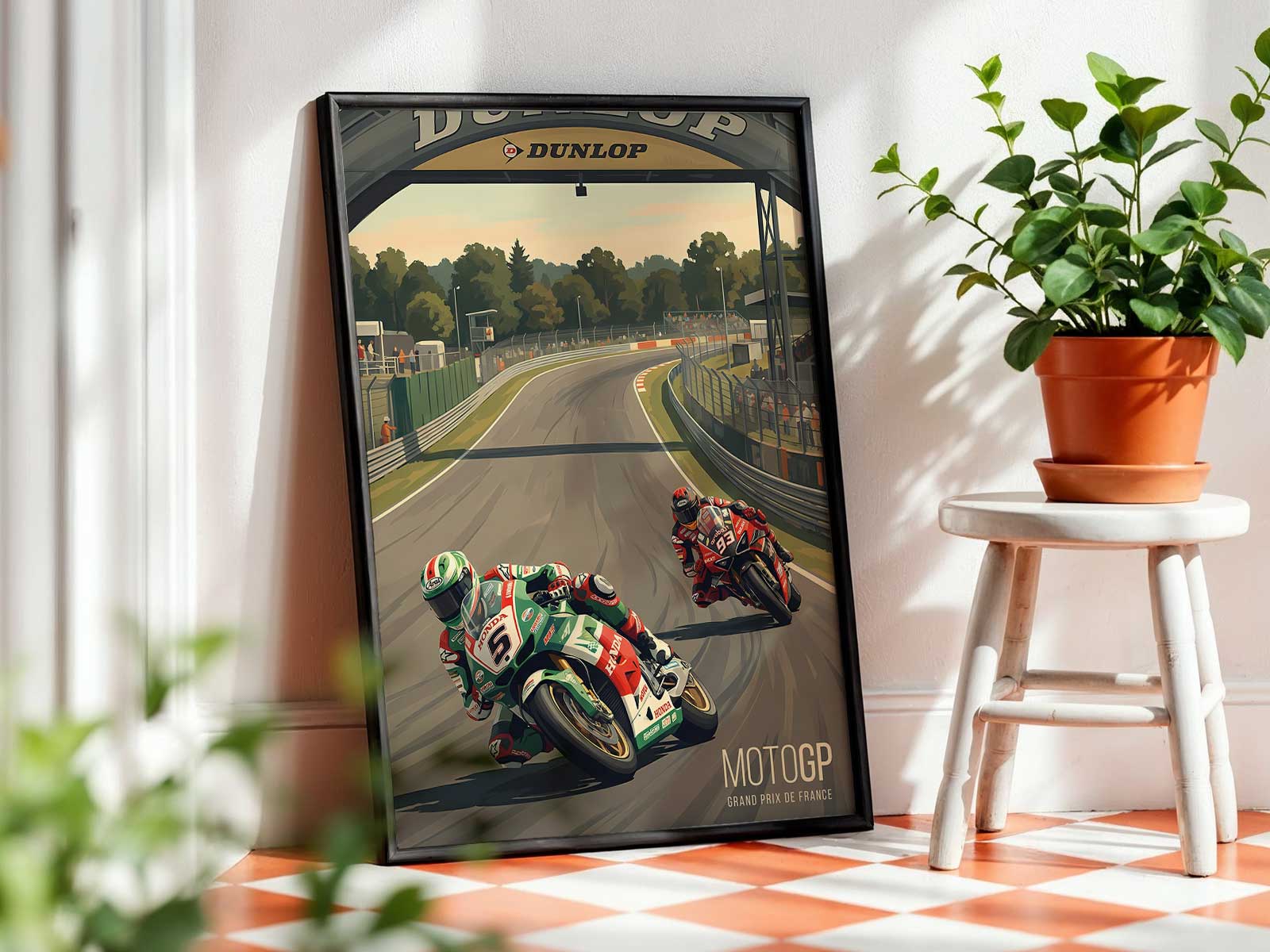
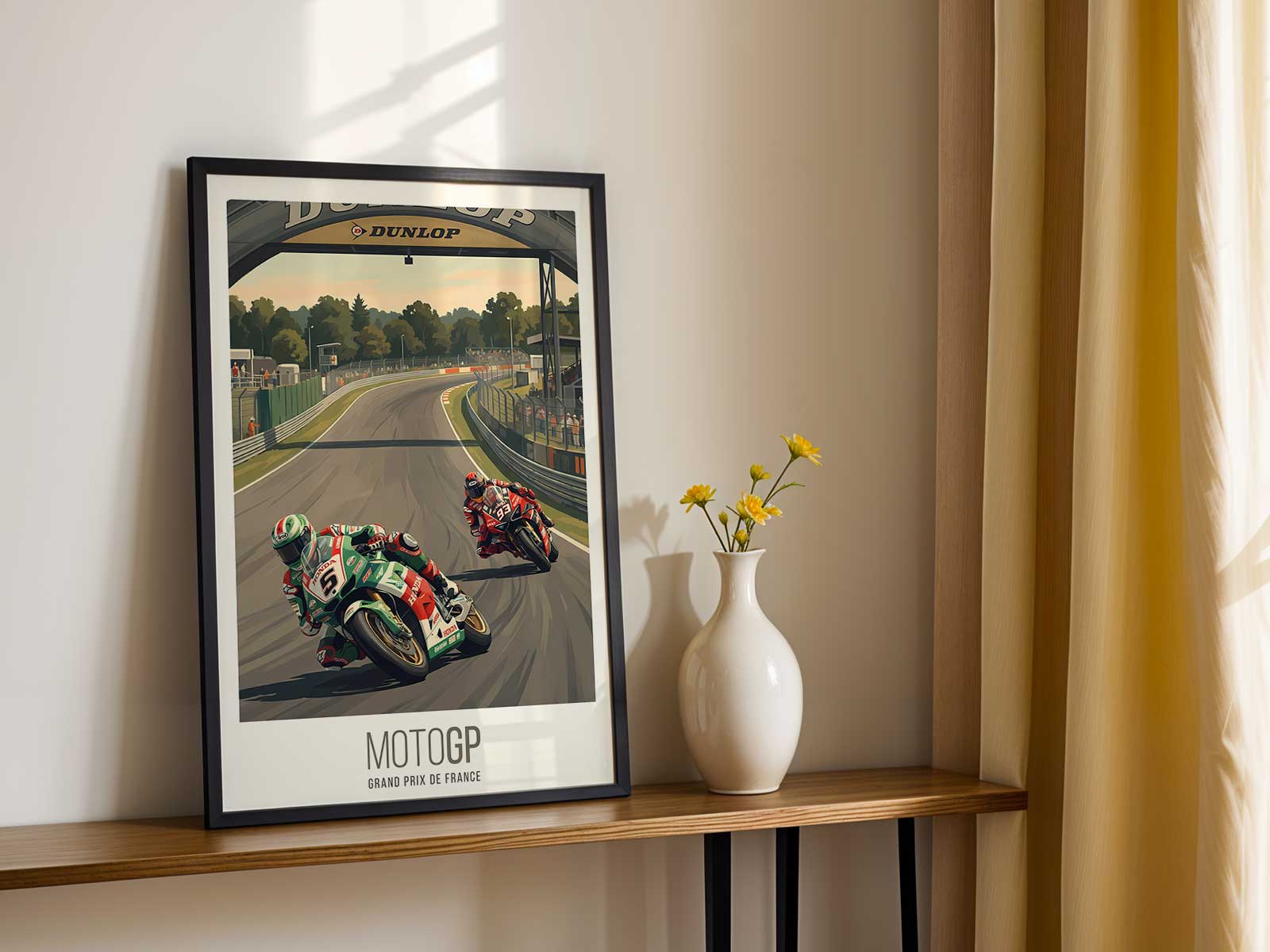
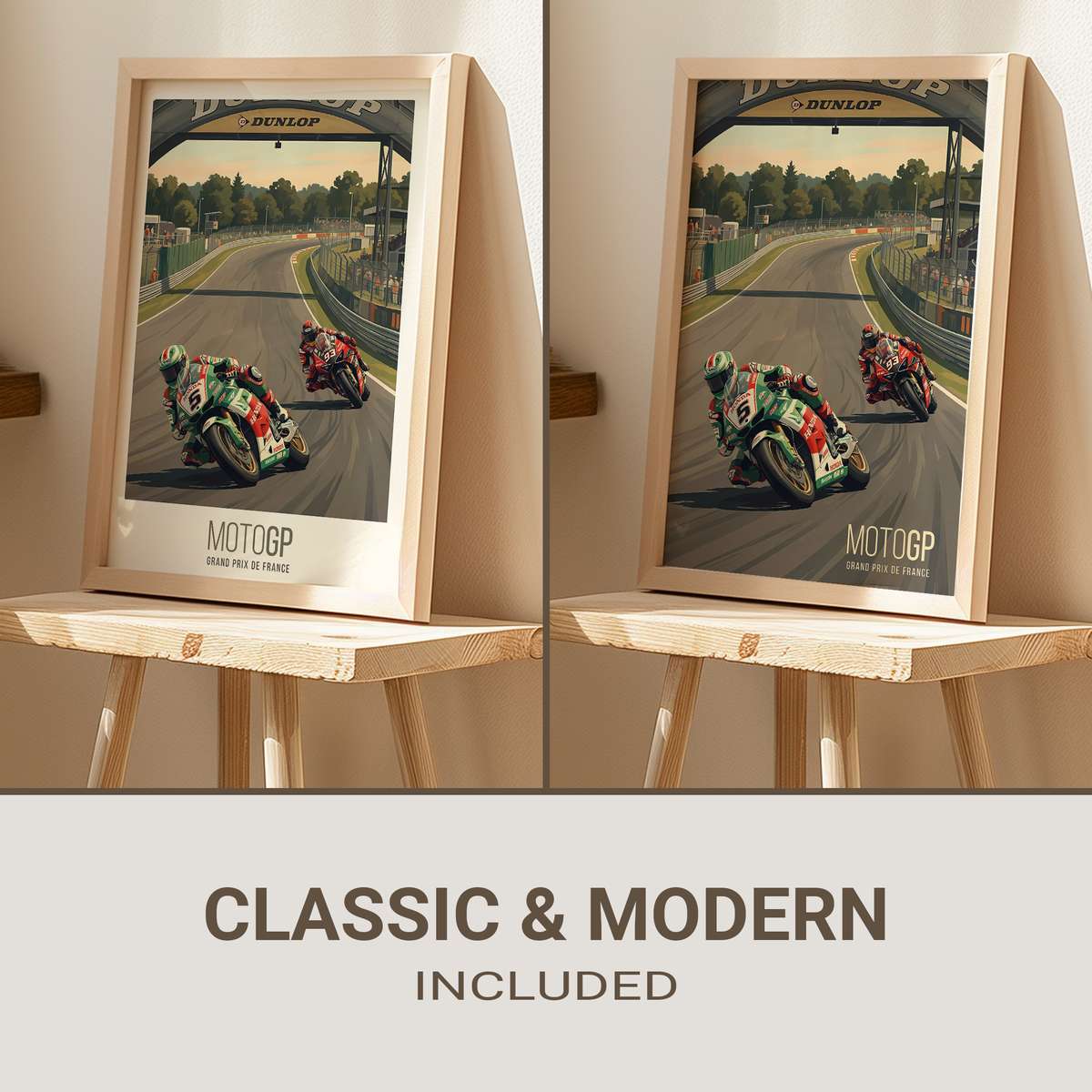
ducati gp doesn’t just move fast. It resists, it compresses, it holds tension in places where most machines would already give up. On the long straight before the Dunlop chicane at the Le Mans
circuit, everything builds toward a moment that defines the machine. The
rider stays tucked, the
motorcycle screaming at full
speed, and then—almost brutally—the brakes are applied. The front dives, the rear becomes light, and the entire structure of the bike is pushed to its limits.
This is where
chassis rigidity stops being a technical detail and becomes something you can almost feel in your chest. The way the
ducati gp reacts here is not soft or forgiving. It’s sharp, direct, almost aggressive. The frame holds the line under extreme deceleration, resisting the forces trying to twist it apart as the
track narrows into a tight sequence. There’s no room for hesitation. Every input translates instantly. In a
race situation, this precision is what separates a clean entry from a lost position in the
championship. Visually, this kind of
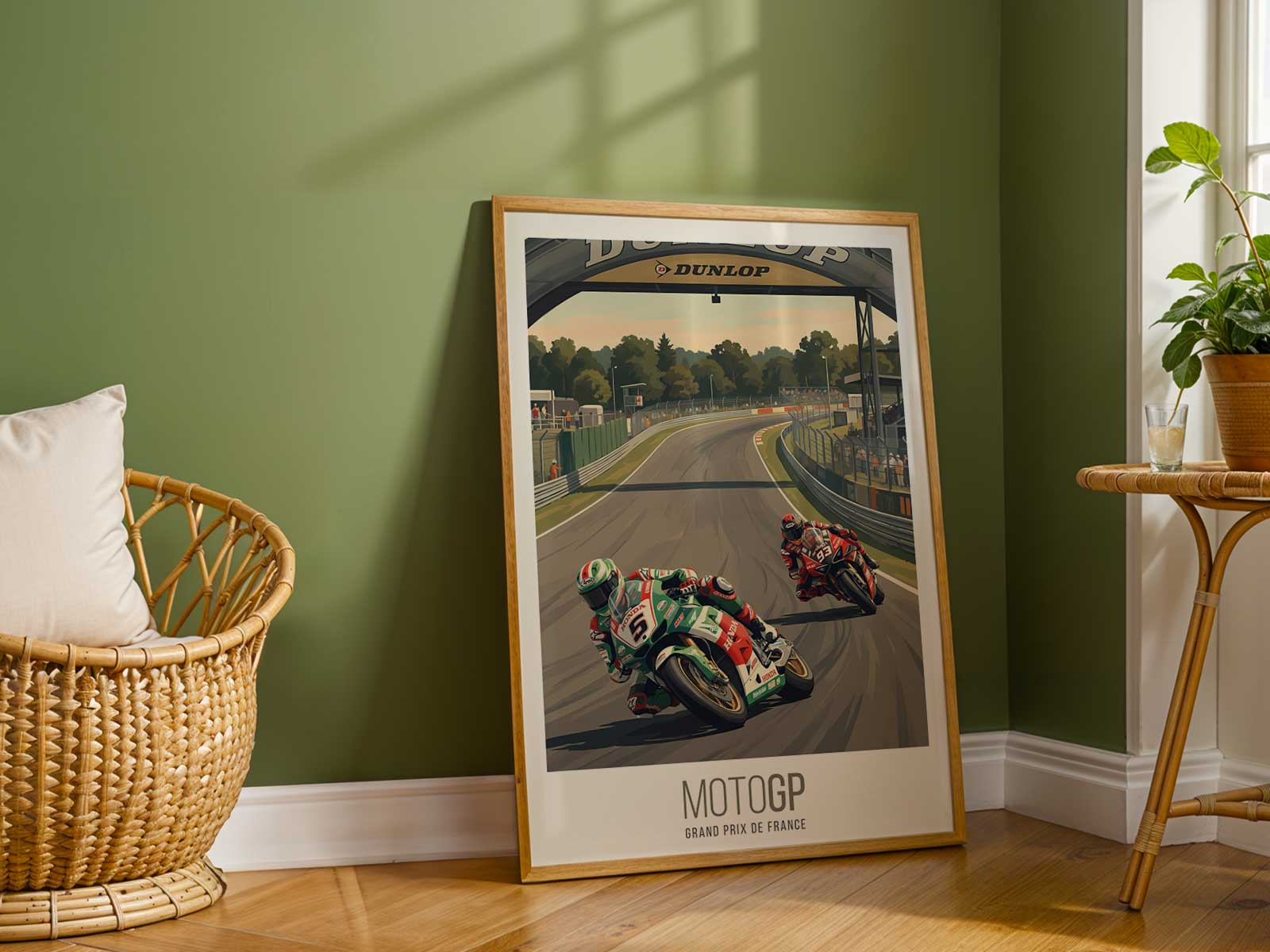
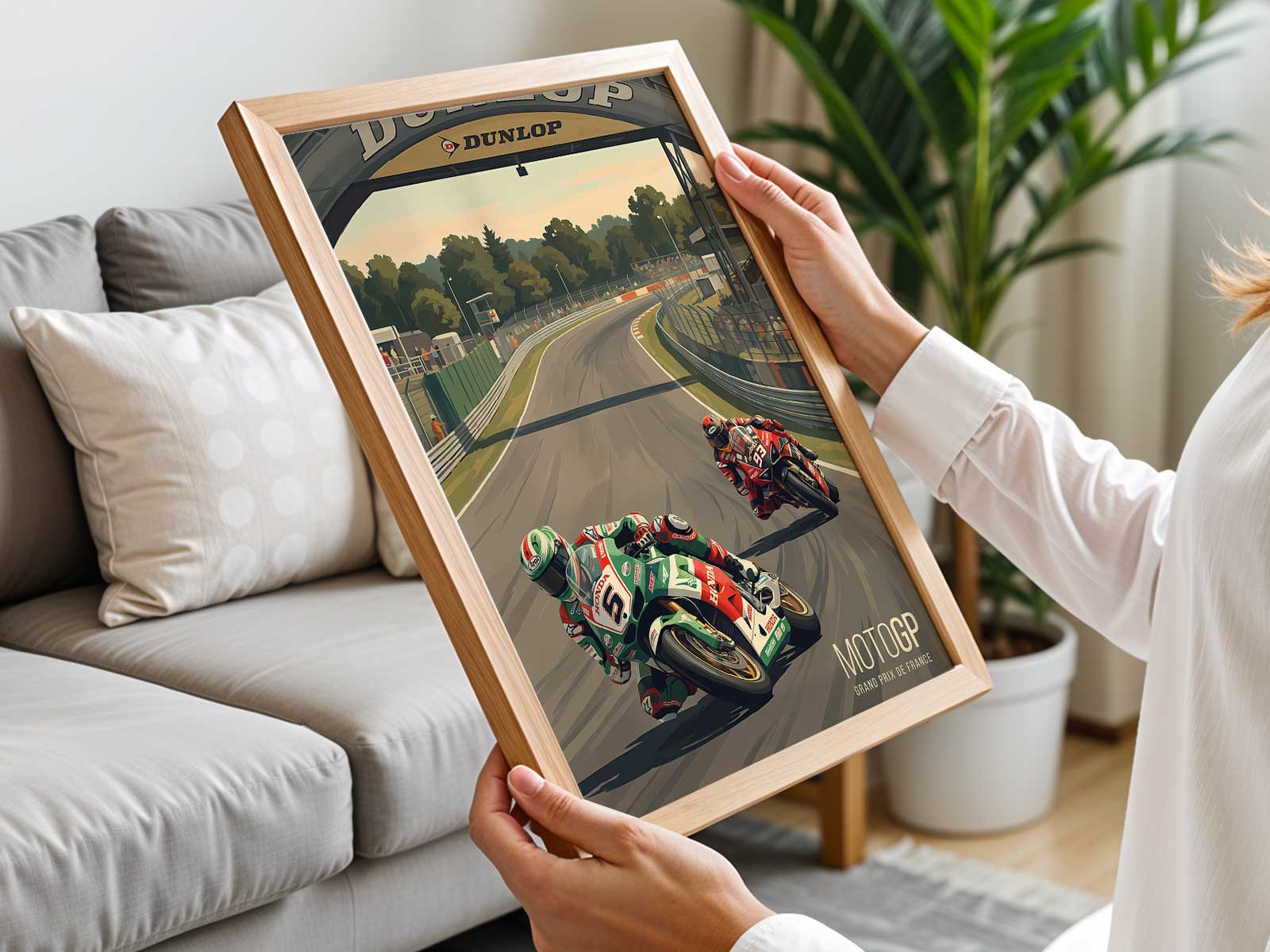
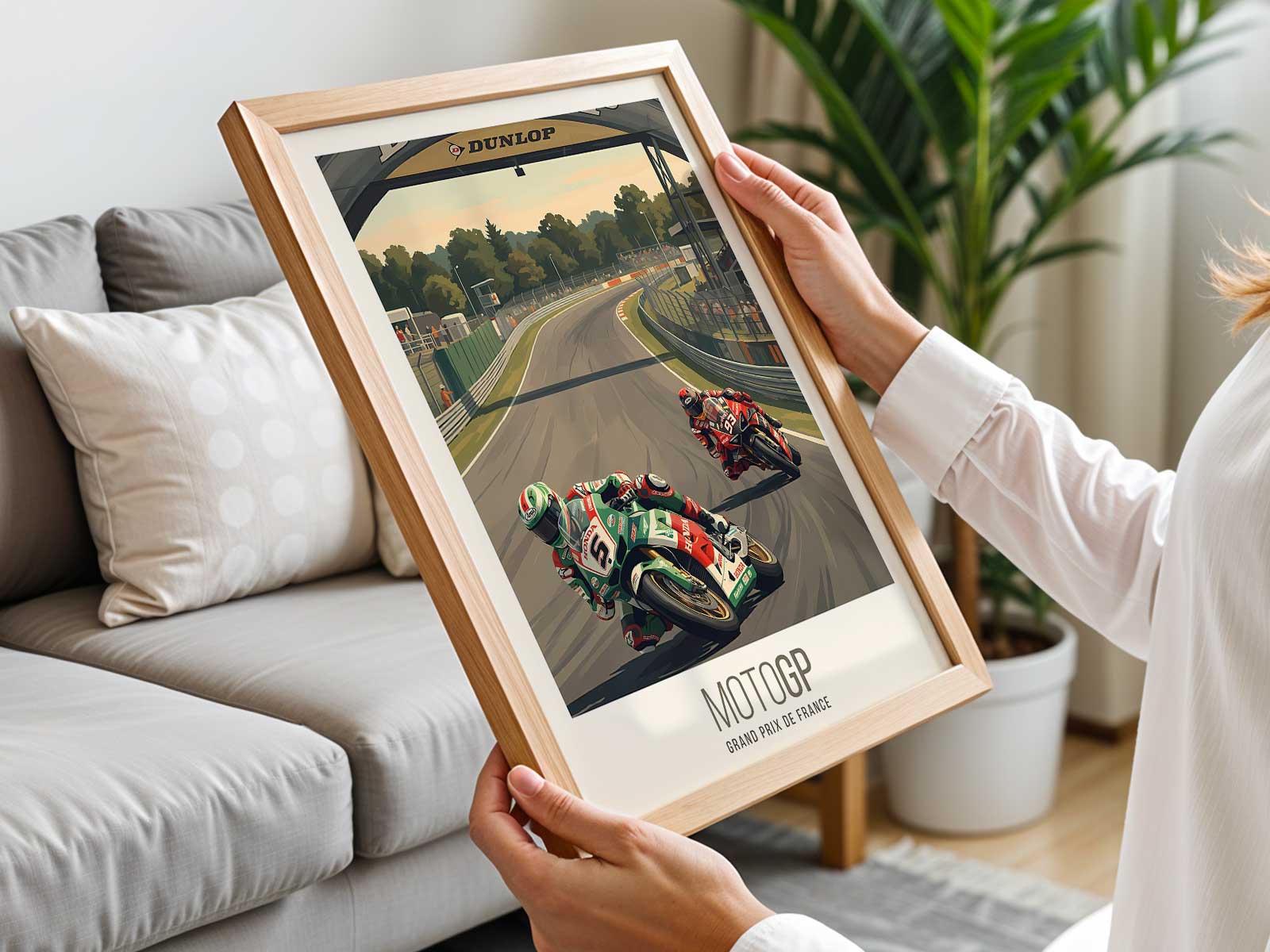
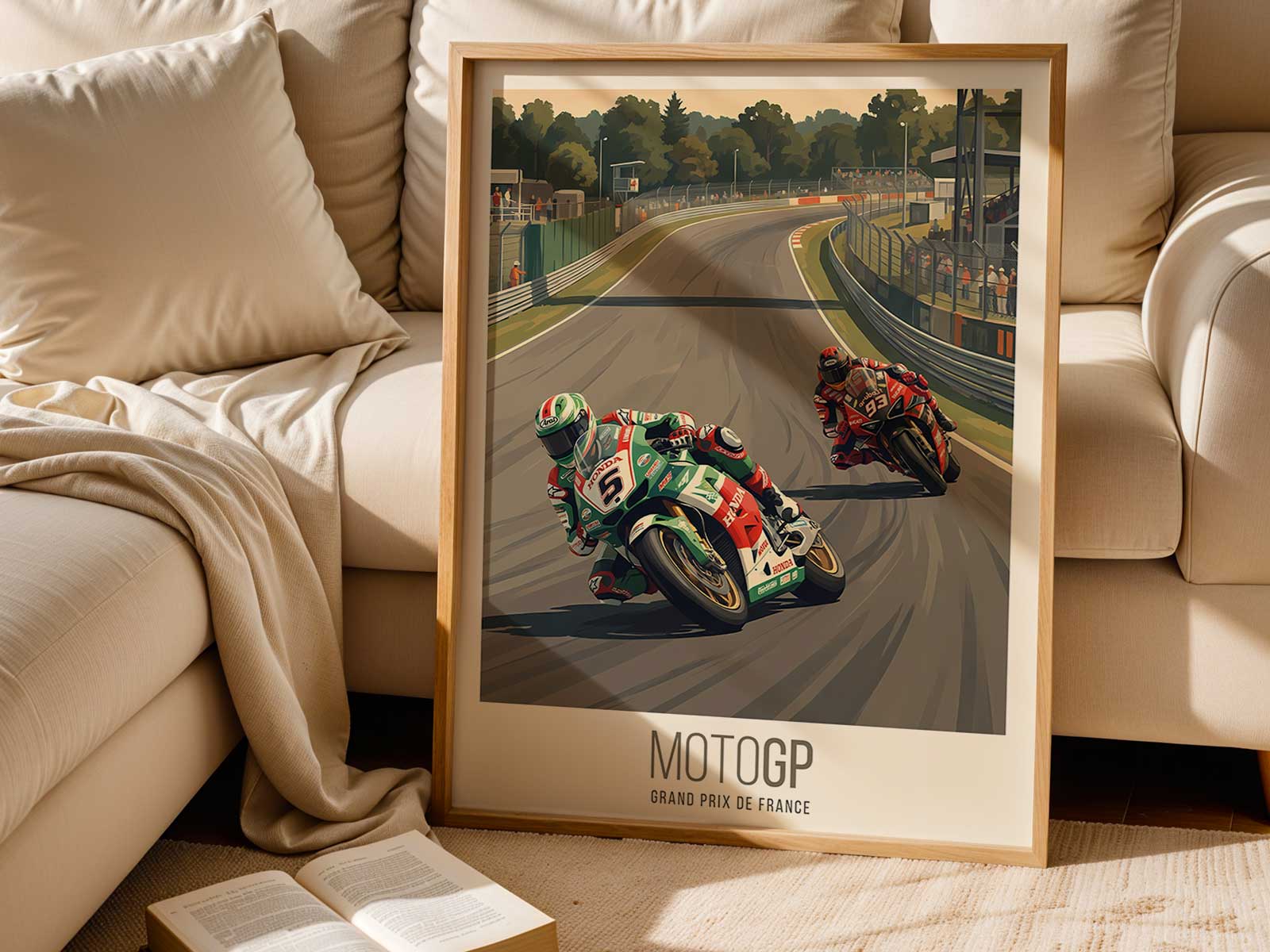
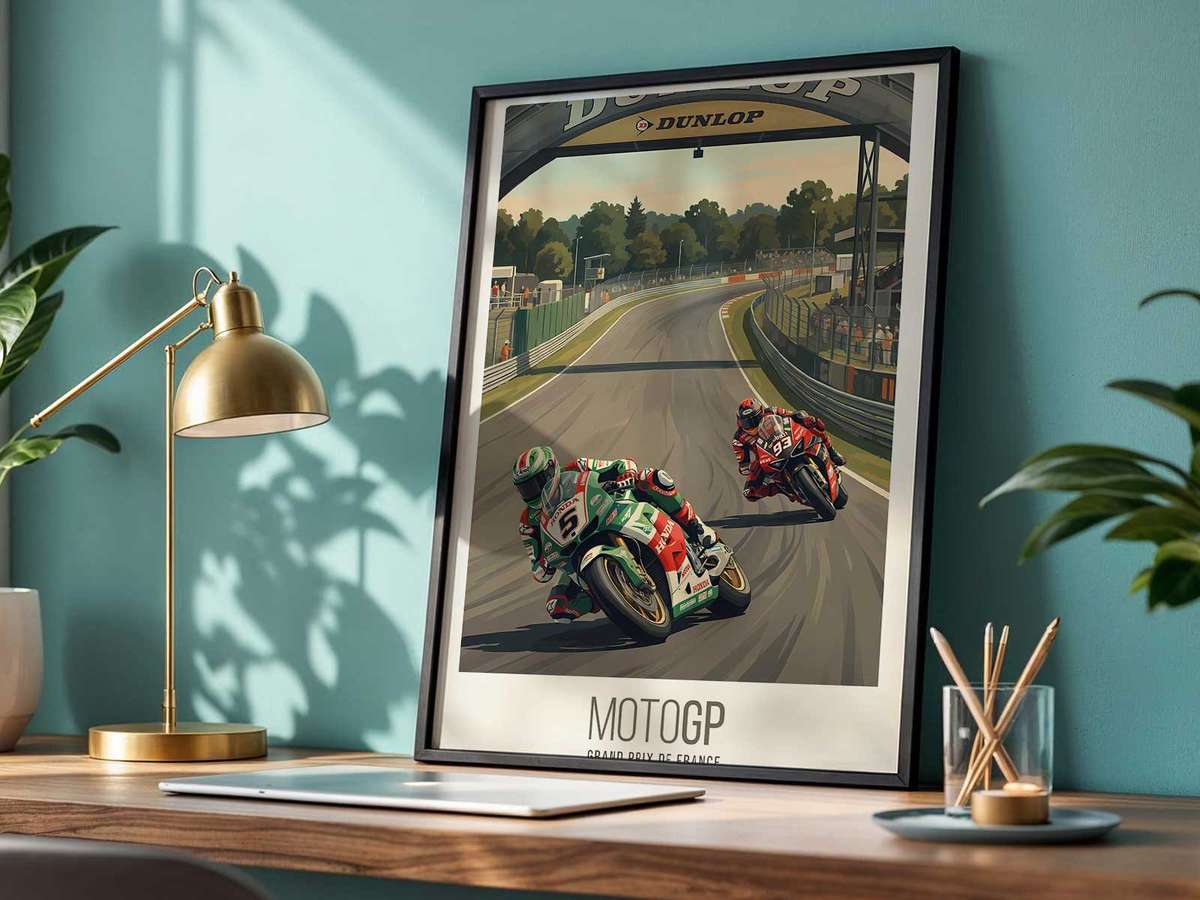
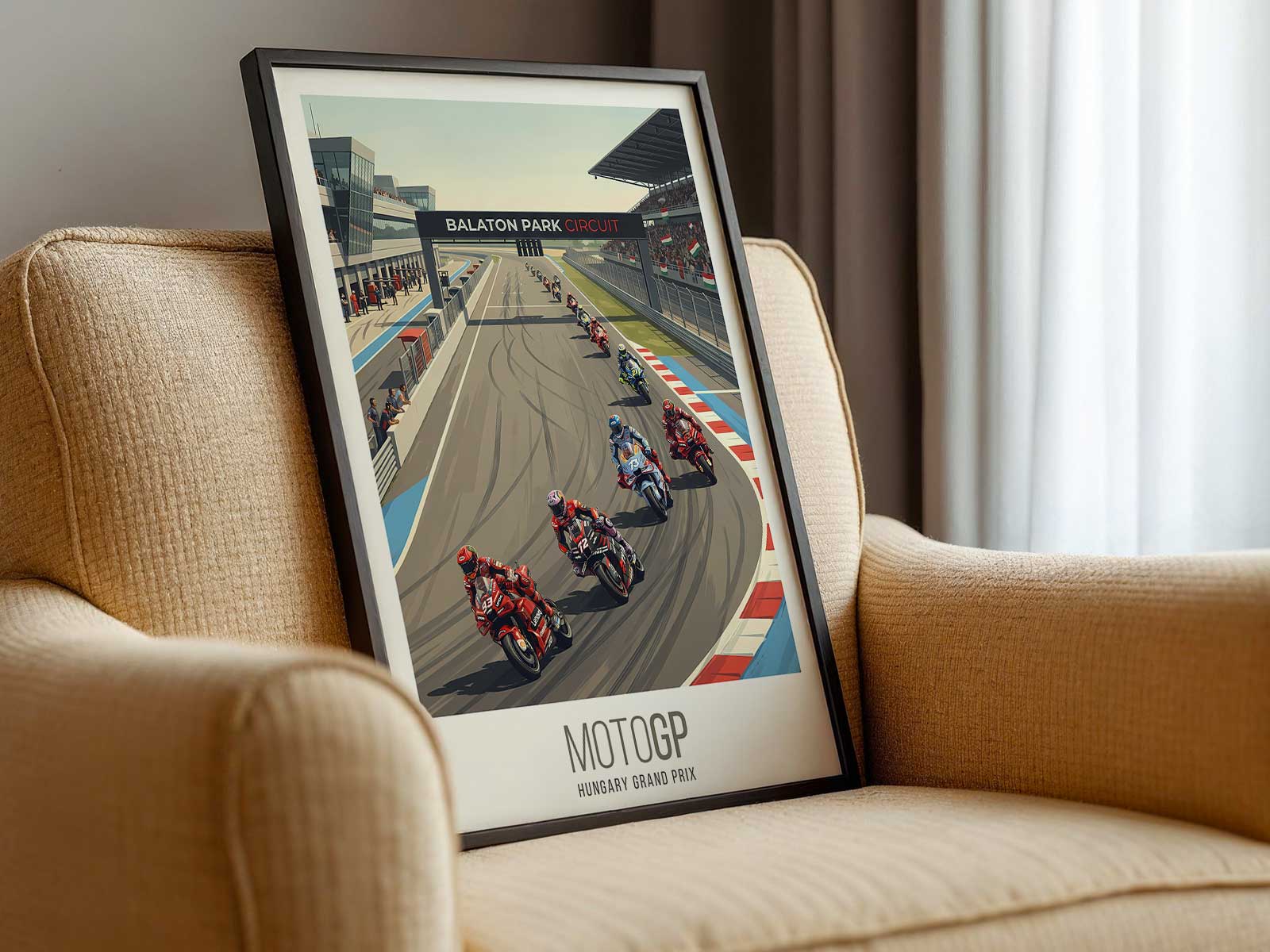
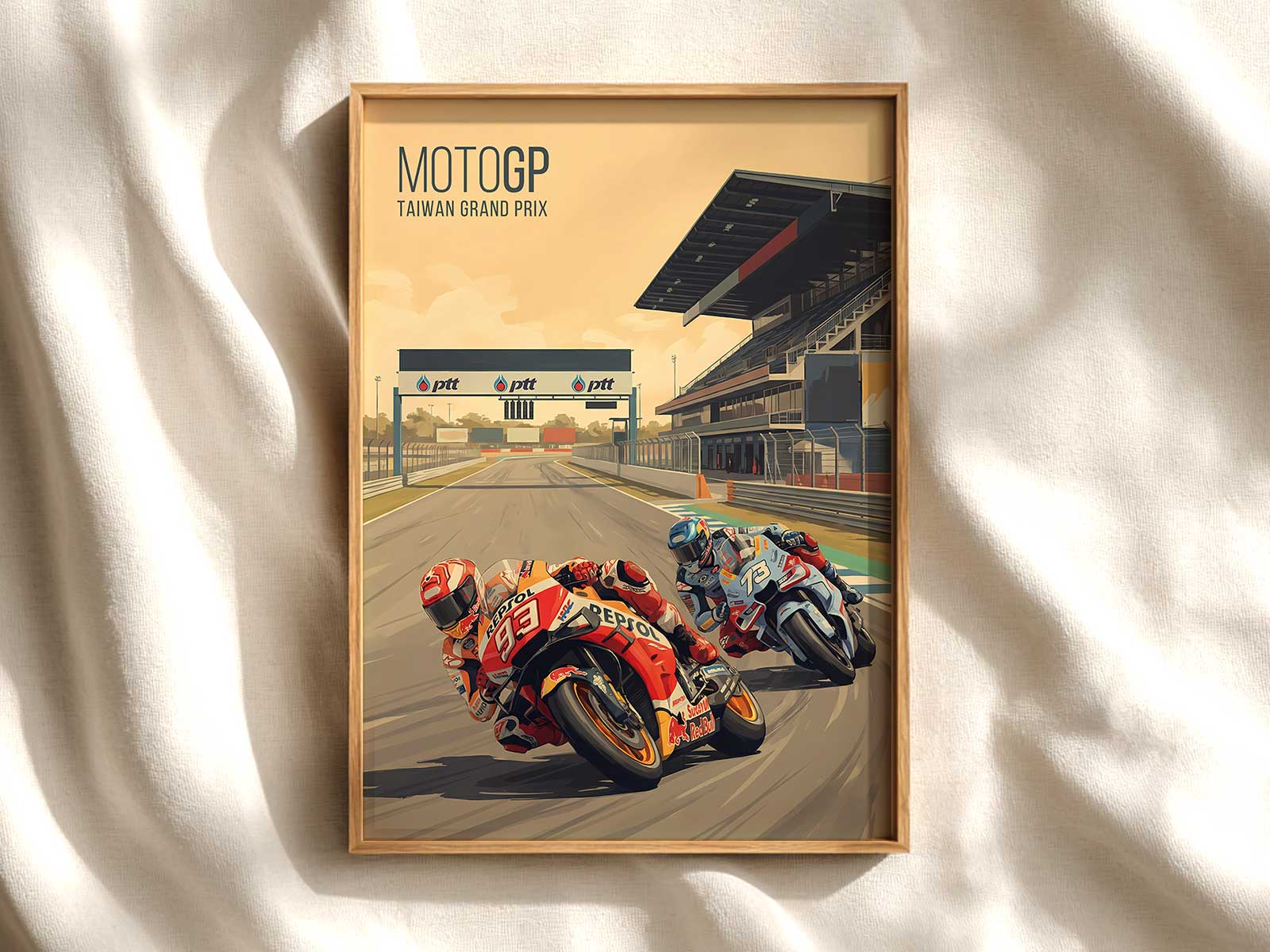
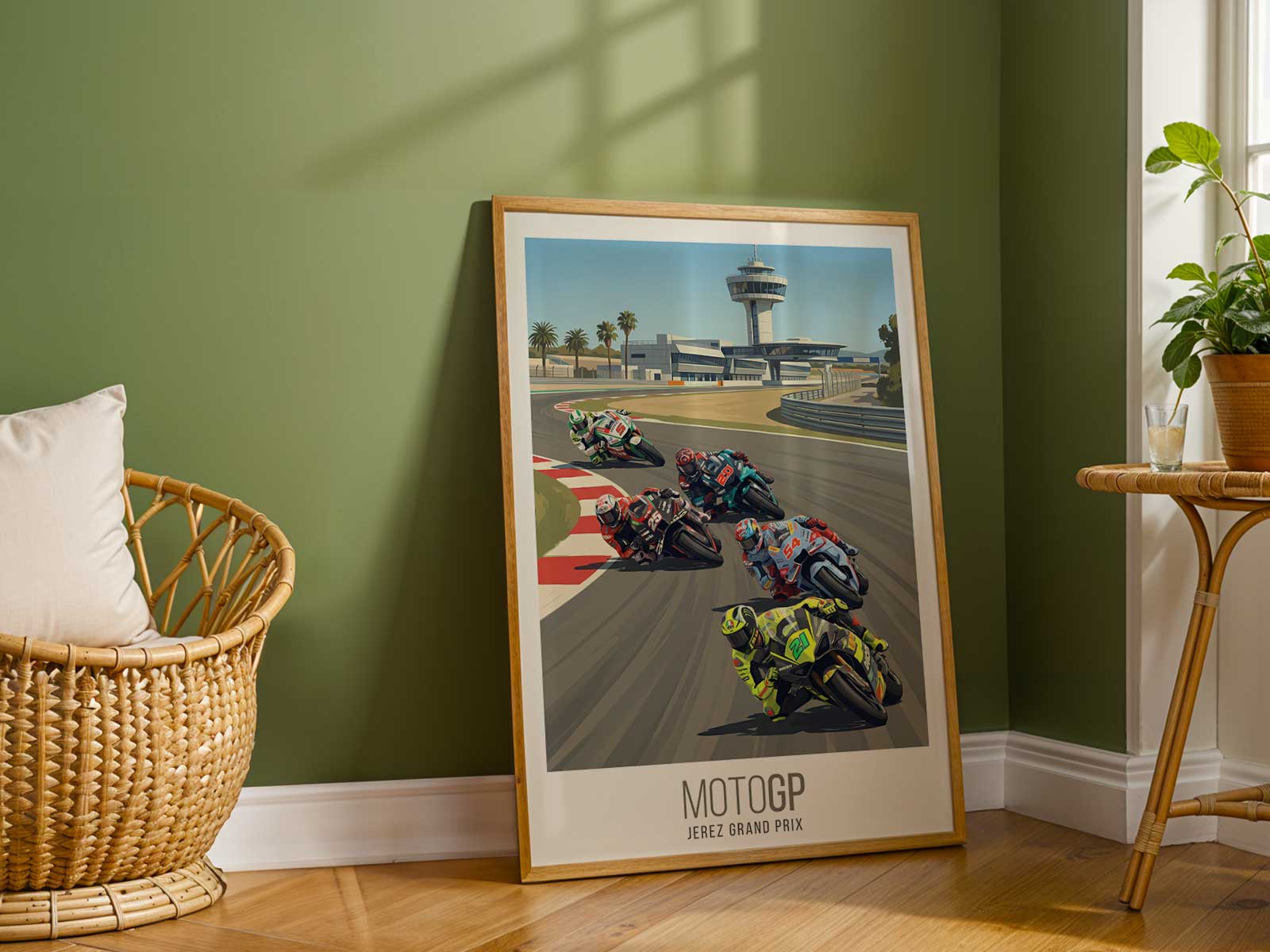
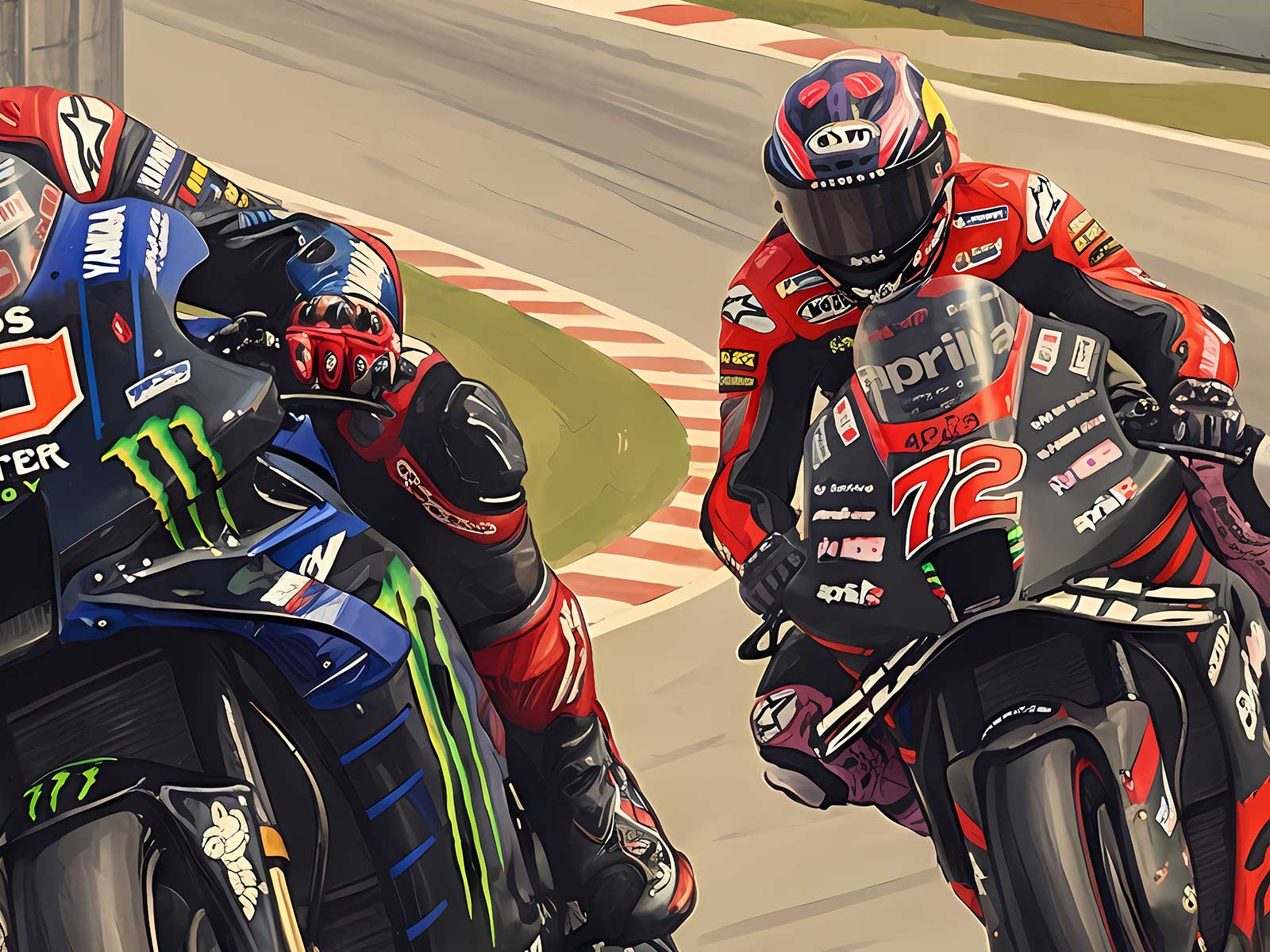
racing scene carries a specific tension. The body position shifts forward, the arms lock slightly, the front tire bites into the asphalt while the rear seems to float. It’s not the elegance of acceleration, it’s the violence of control. Capturing this moment changes how the machine is perceived. It becomes less about speed alone and more about resistance under pressure. Placed on a wall, this type of image creates a different kind of presence. It’s not just decorative.
It adds a sense of mechanical intensity, something grounded and real. In a workspace, a living room, or even a minimalist interior, the visual weight of this braking moment stands out. For someone who understands what happens at the end of a straight, it becomes more than a poster. It’s a fragment of MotoGP reality, frozen right at the point where everything could go wrong—and doesn’t.