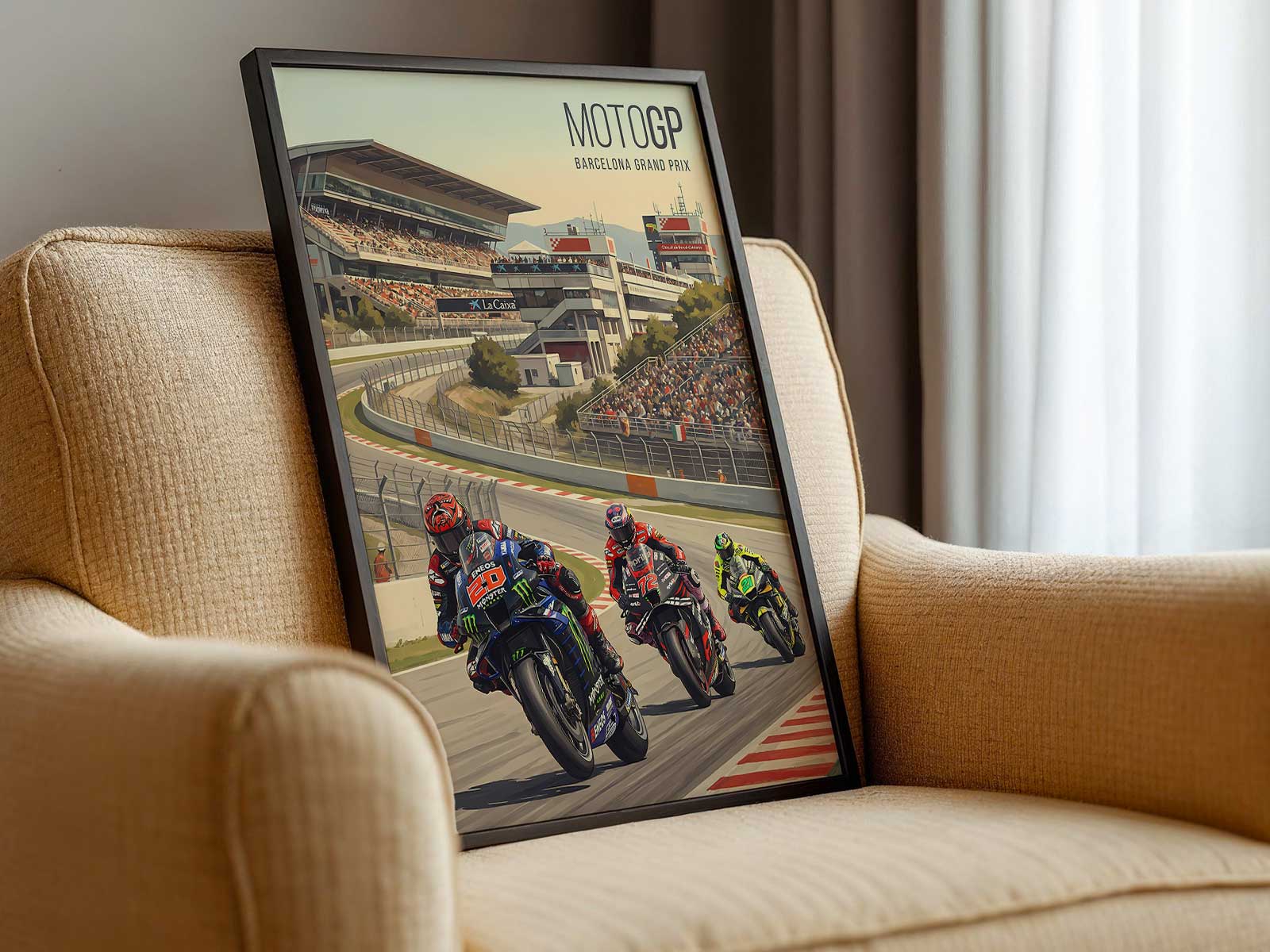
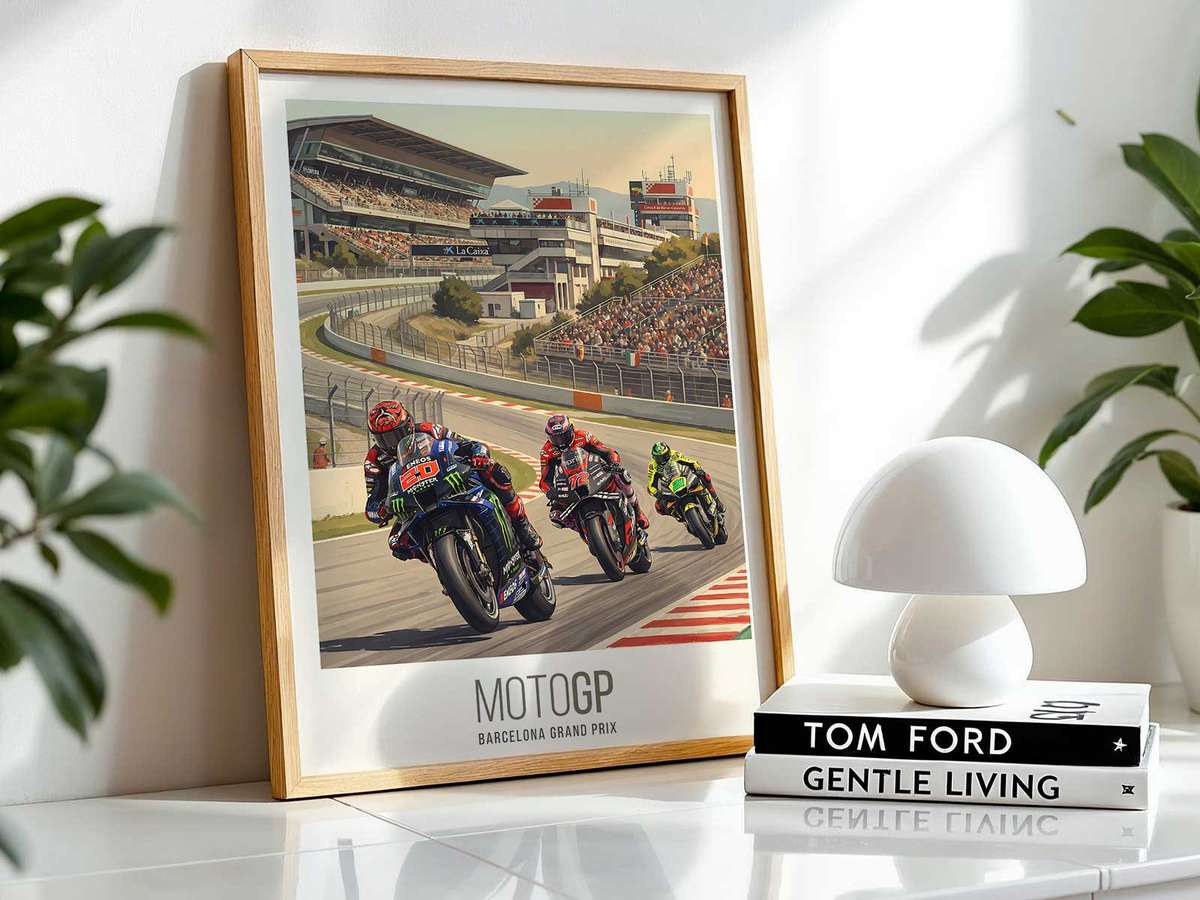
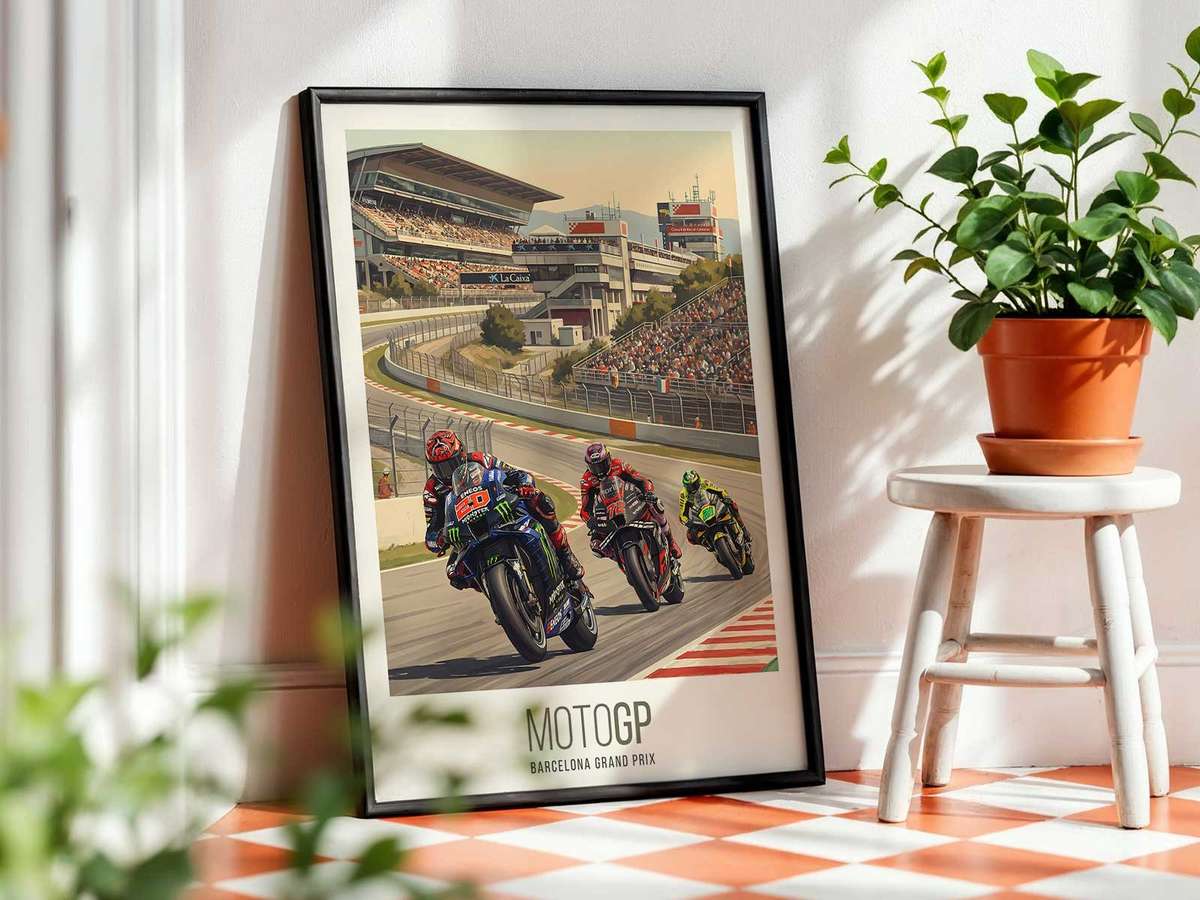
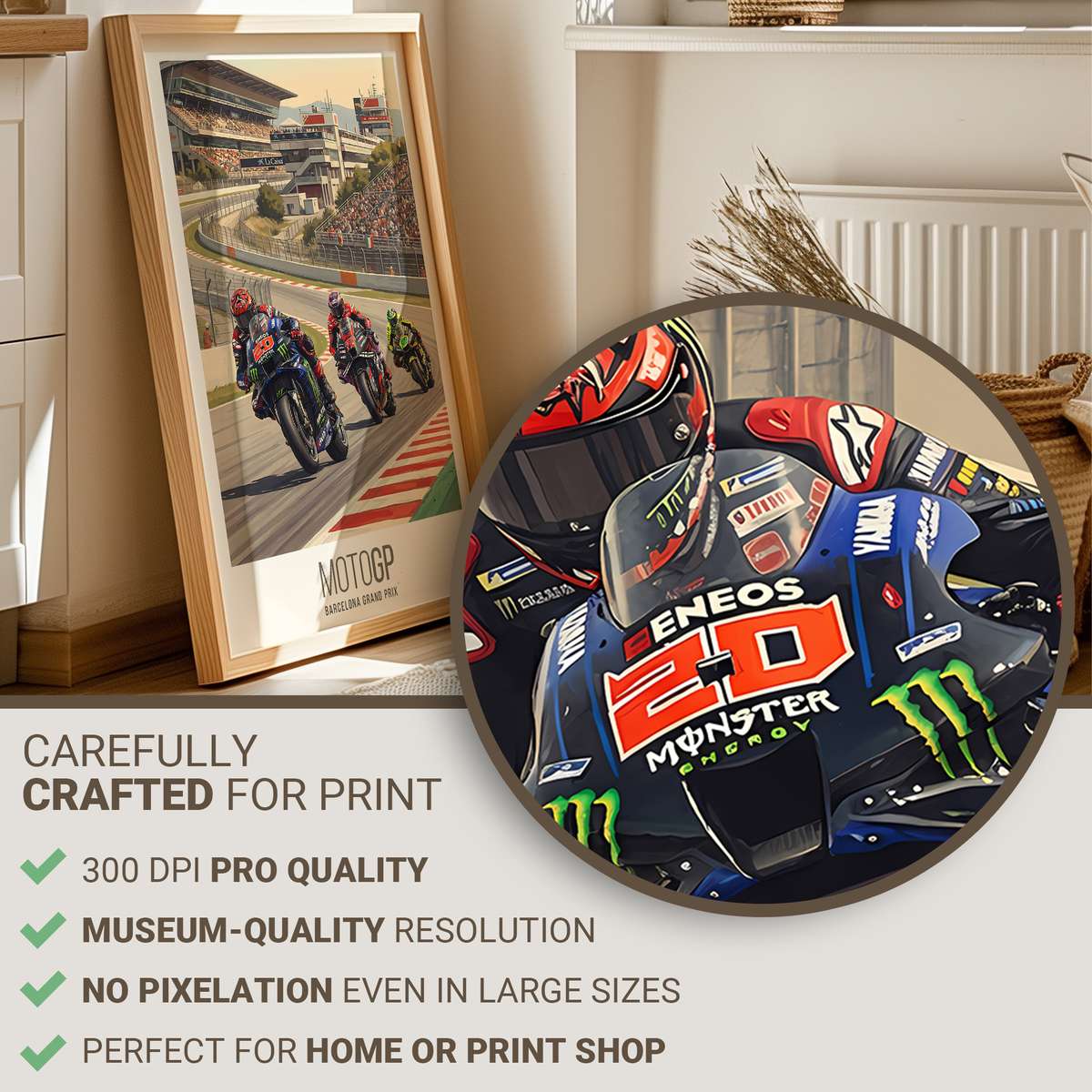
There is a very specific moment on a
motogp yamaha that only becomes visible when you stop looking at top
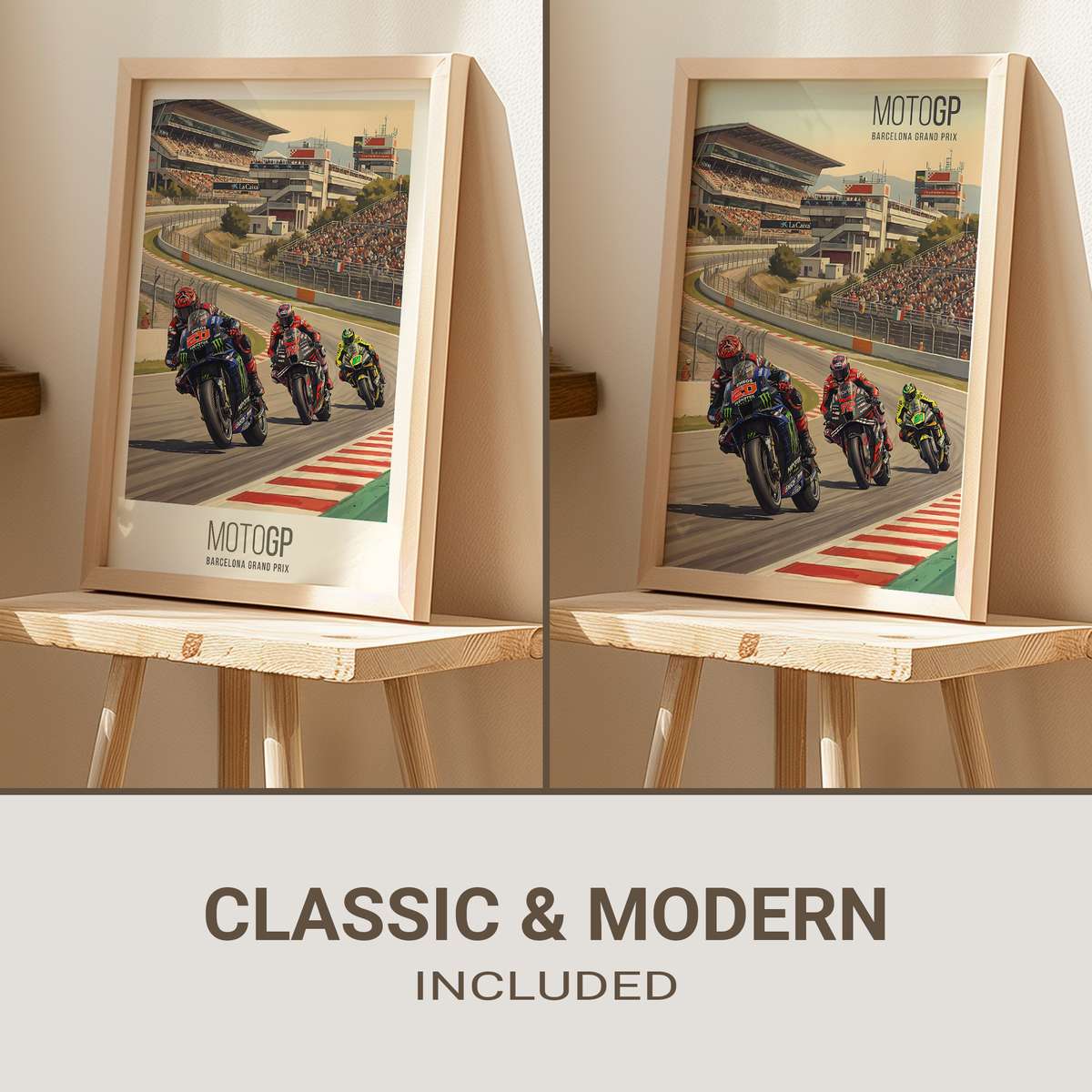
speed and start watching the throttle. At the Barcelona
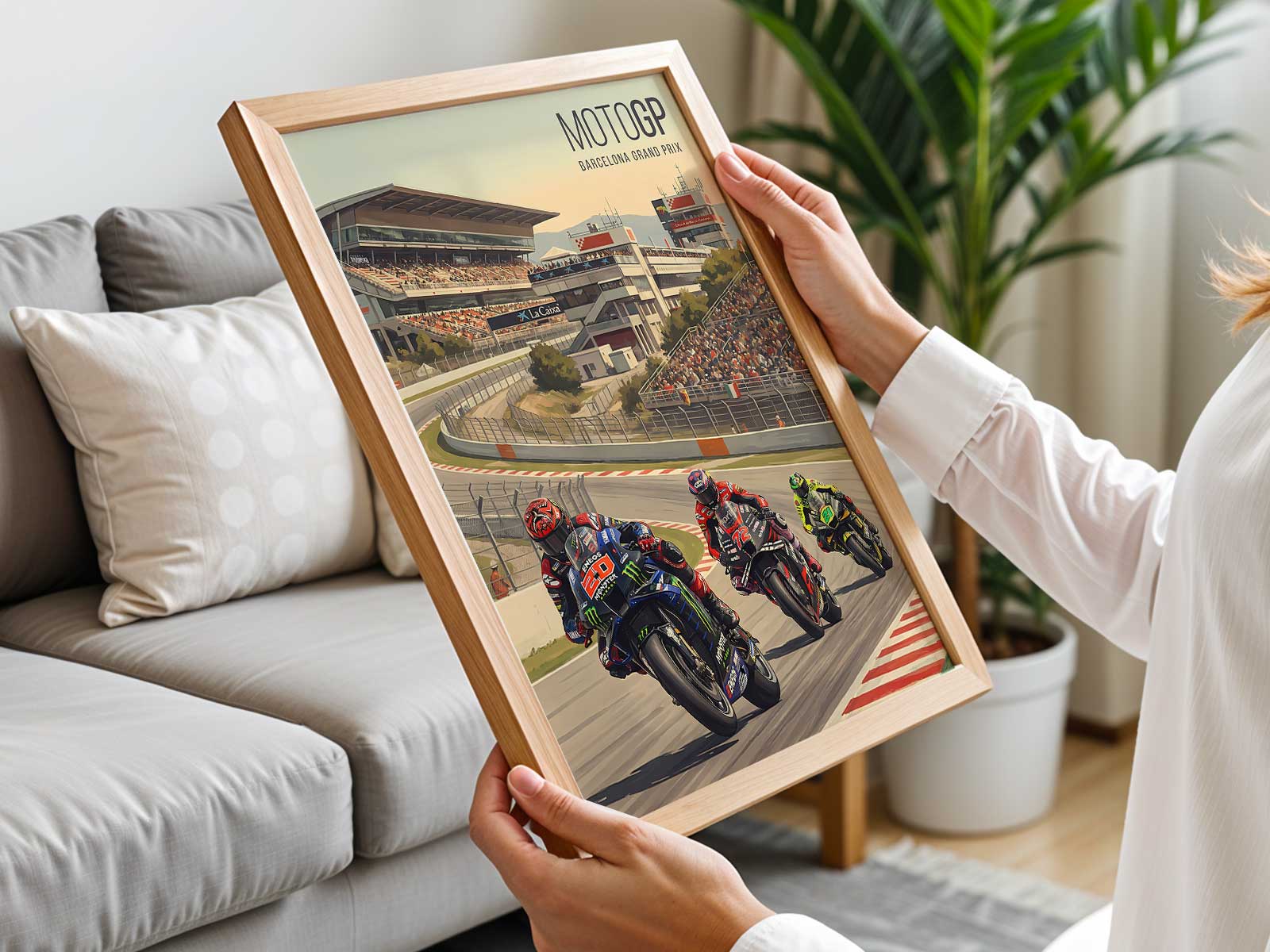
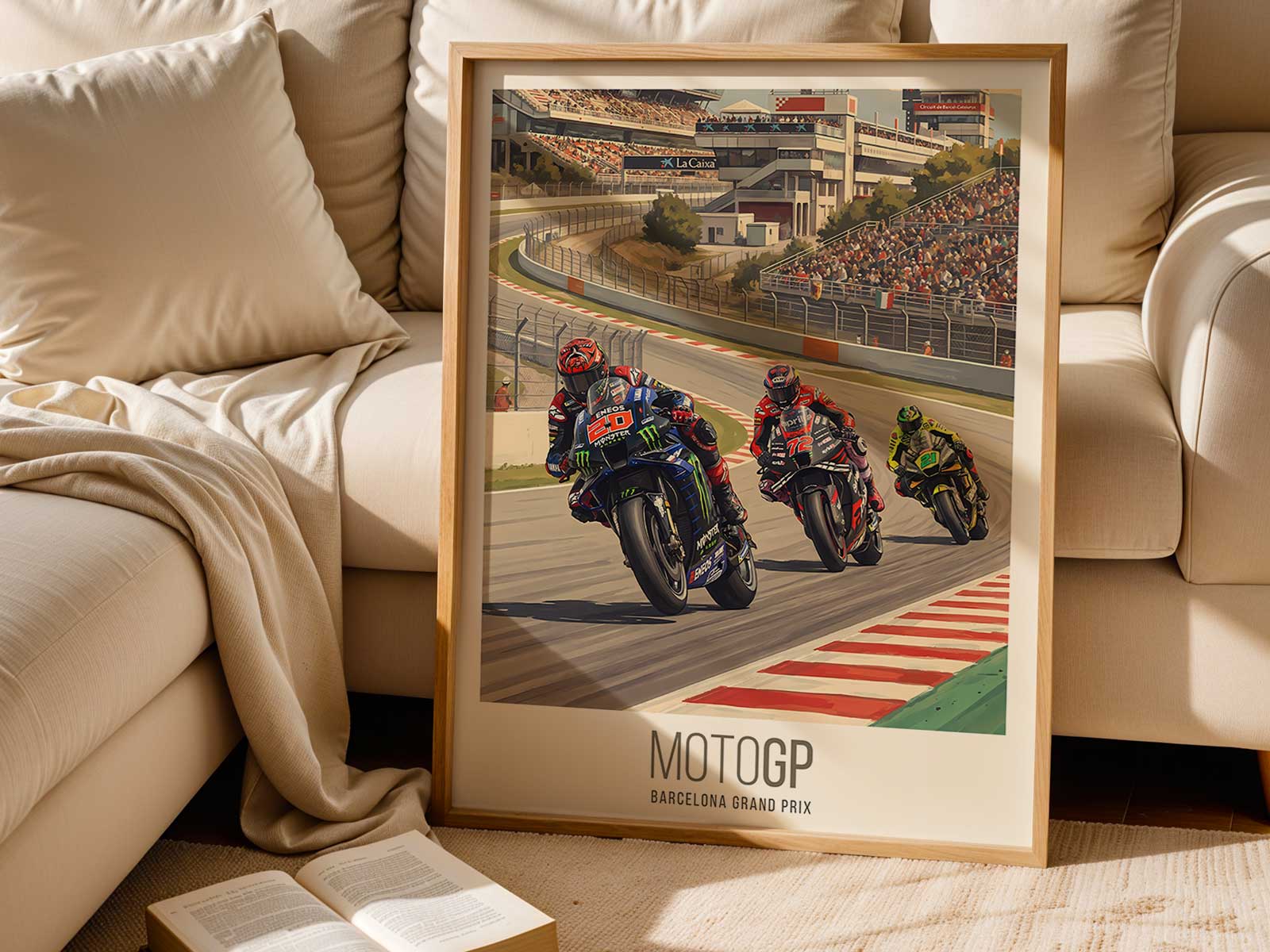
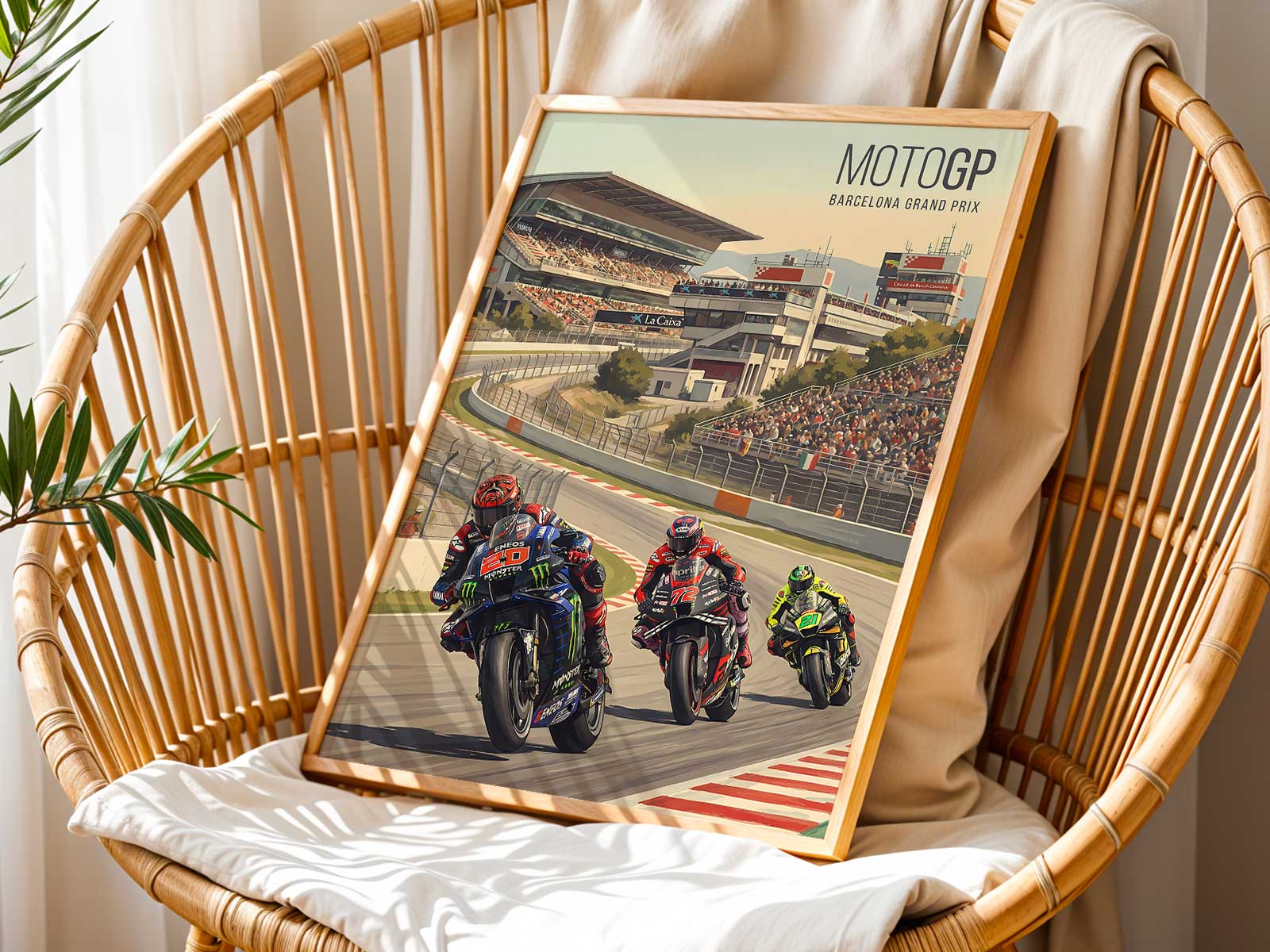
circuit, especially exiting Turn 10, the bike does not explode forward. It builds. Slowly. Precisely. The rear tire hooks into the asphalt, and the
rider feeds power in a way that feels almost restrained. This is not hesitation. It is control. This kind of progressive acceleration defines how a Yamaha behaves in a real
race.
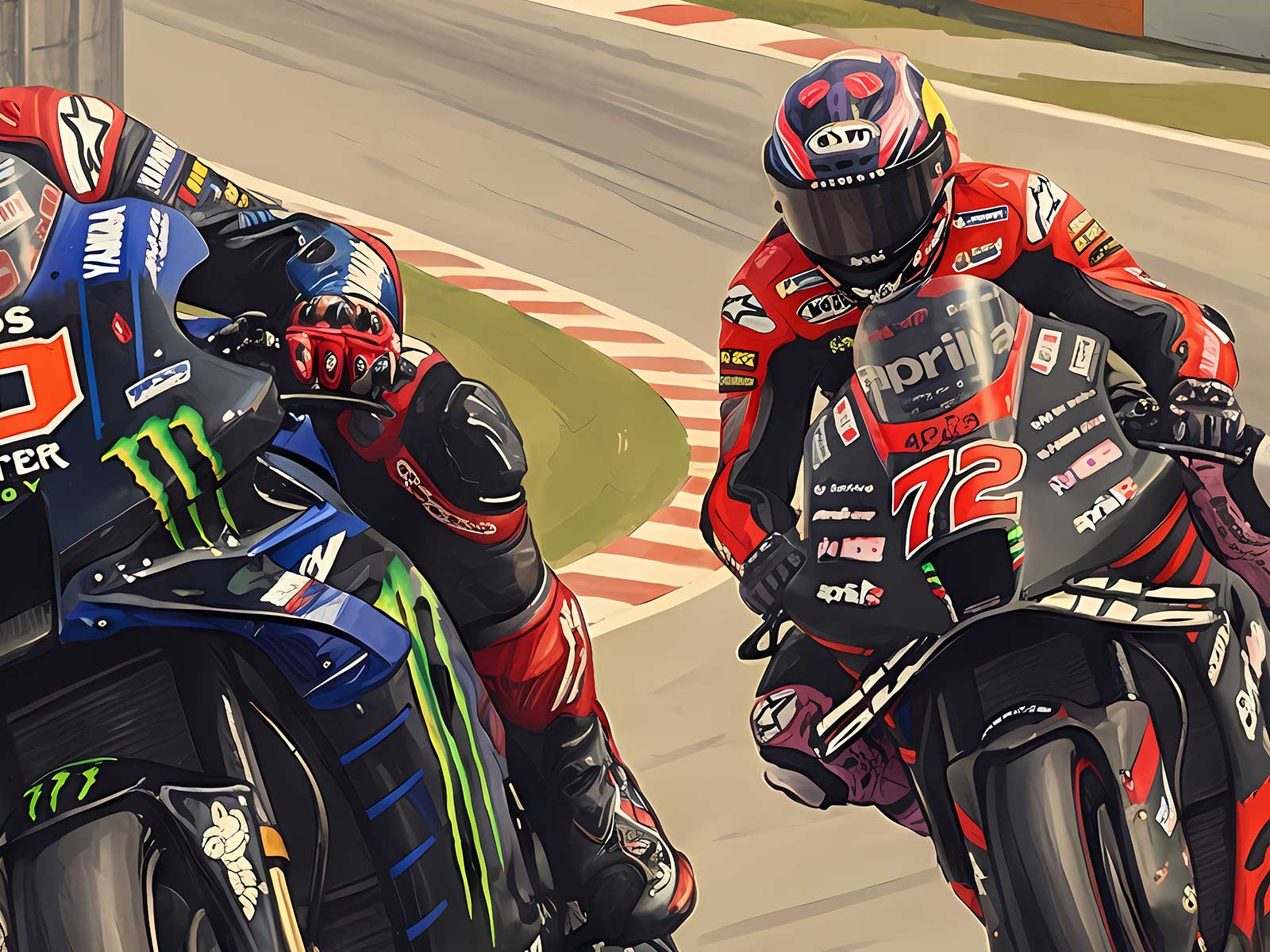
Where other motorcycles might fight for traction, the Yamaha stays composed. The chassis remains stable, the line stays clean, and the rear never fully breaks loose. You can almost see the grip being managed, millisecond after millisecond, as the bike transitions from lean to full drive on the
track. Visually, this creates a very particular
racing scene. The body position is still low, the knee just lifting off the ground, while the bike begins to straighten. The throttle opens, but not brutally. The movement feels continuous, almost fluid, like the machine is stretching out of the corner rather than launching out of it. In the context of the
championship, this is where consistency is built. A clean exit means a better run down the straight, but also less tire degradation over distance.
Yamaha machines have long been associated with this kind of precision riding, where maintaining grip is more valuable than chasing raw power. As a wall piece, this type of moment brings something different.
It is not about chaos or overtaking, but about mastery. Hung in a living space or workspace, it carries a calmer intensity, something that resonates with anyone who understands what controlled performance looks like on a
motorcycle.