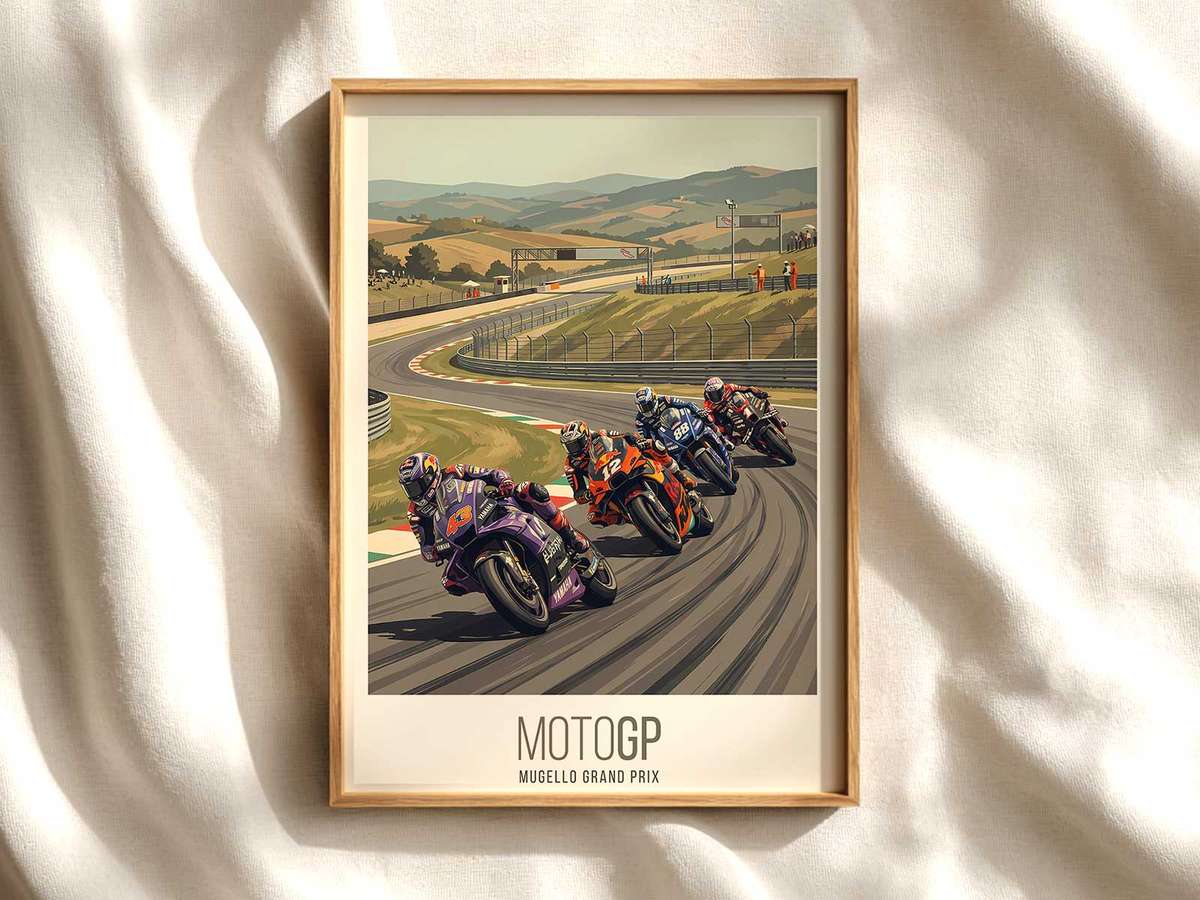
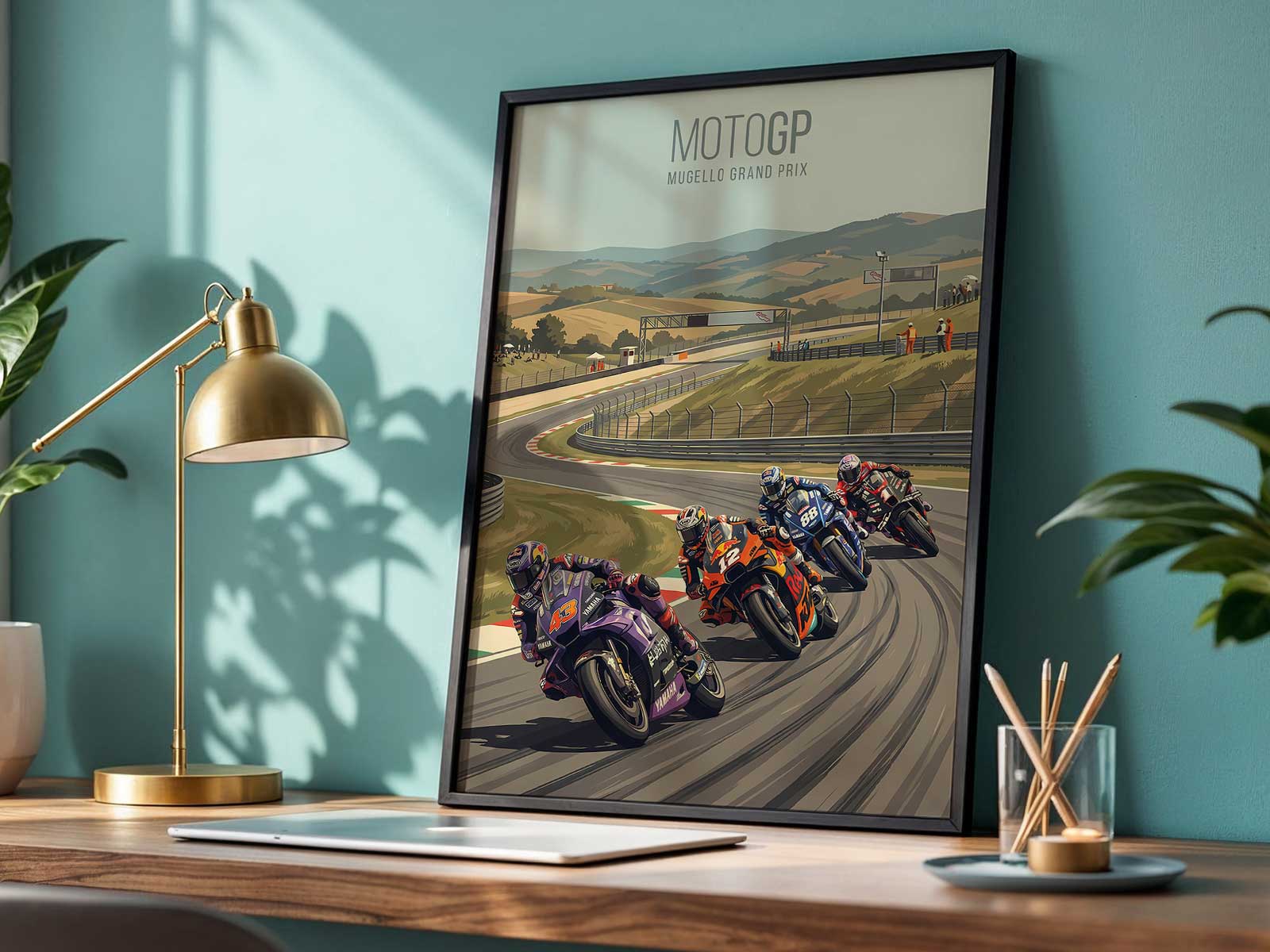
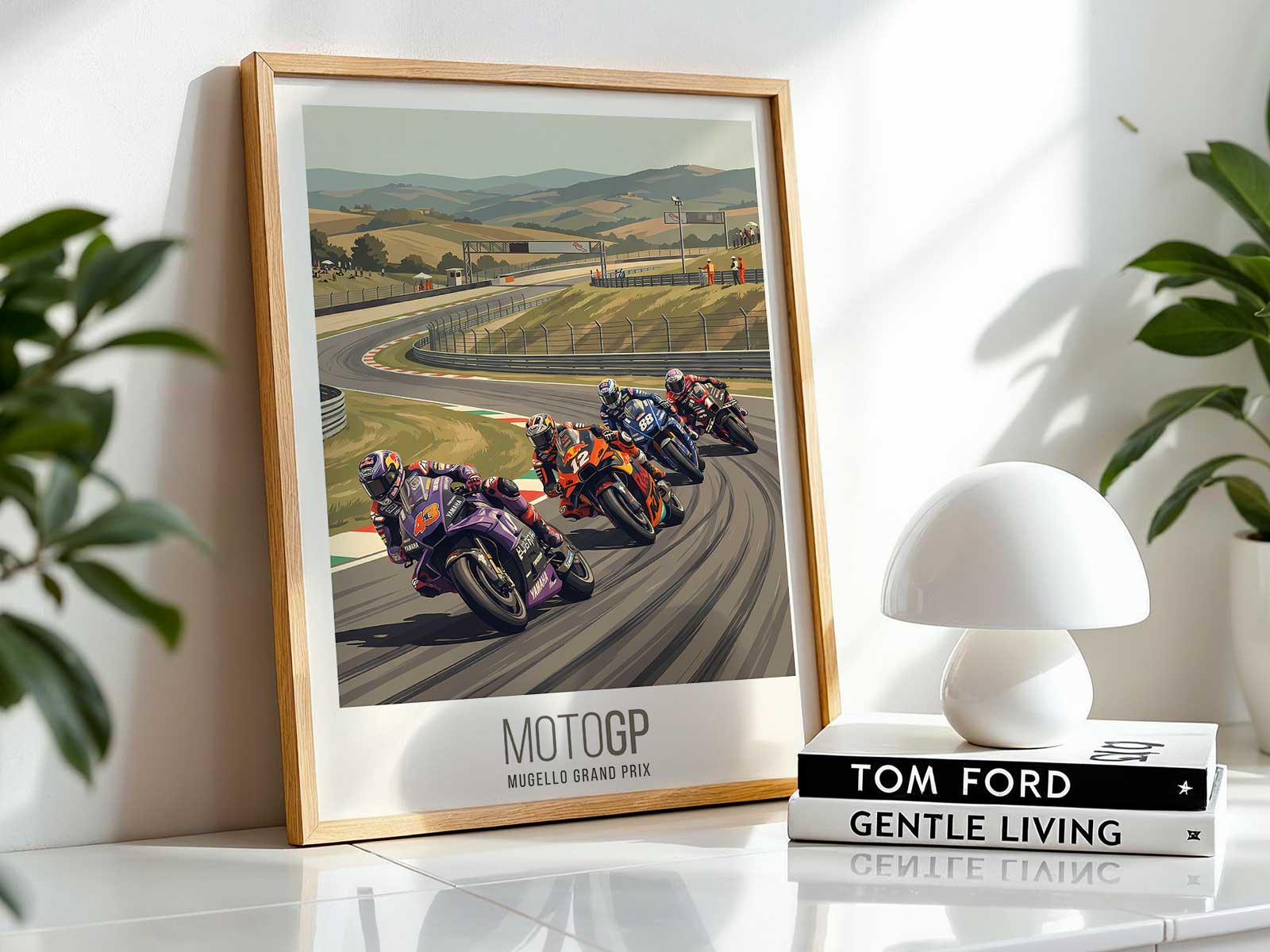
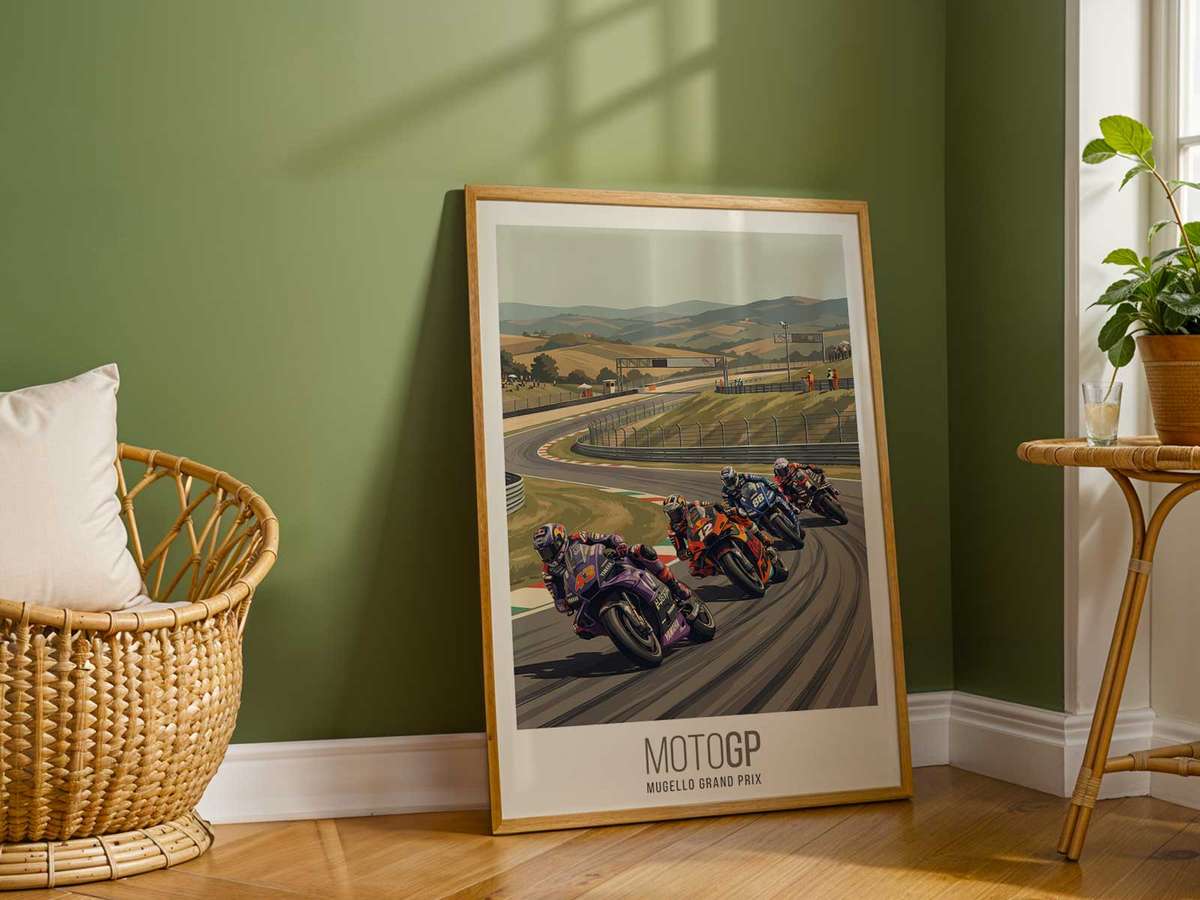
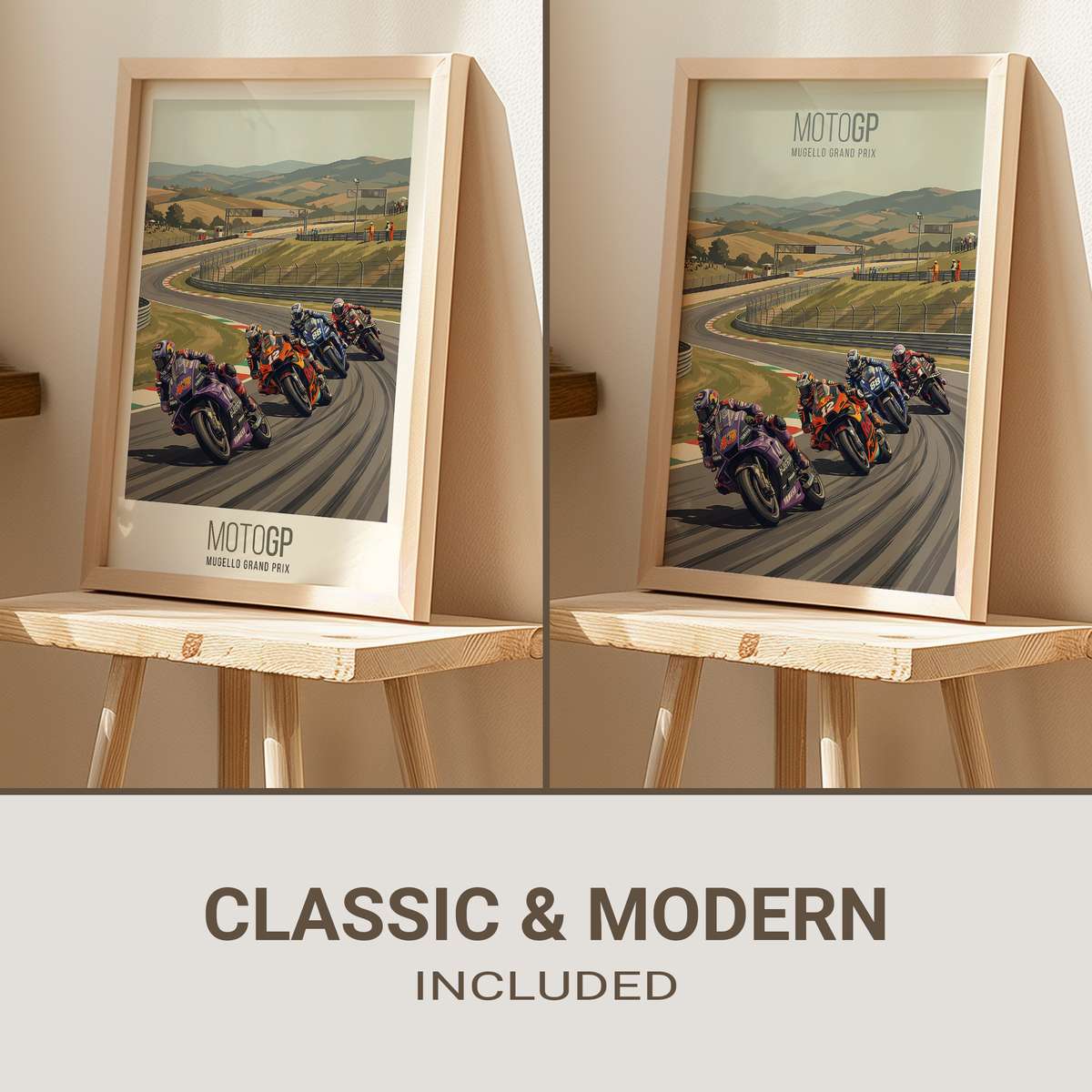
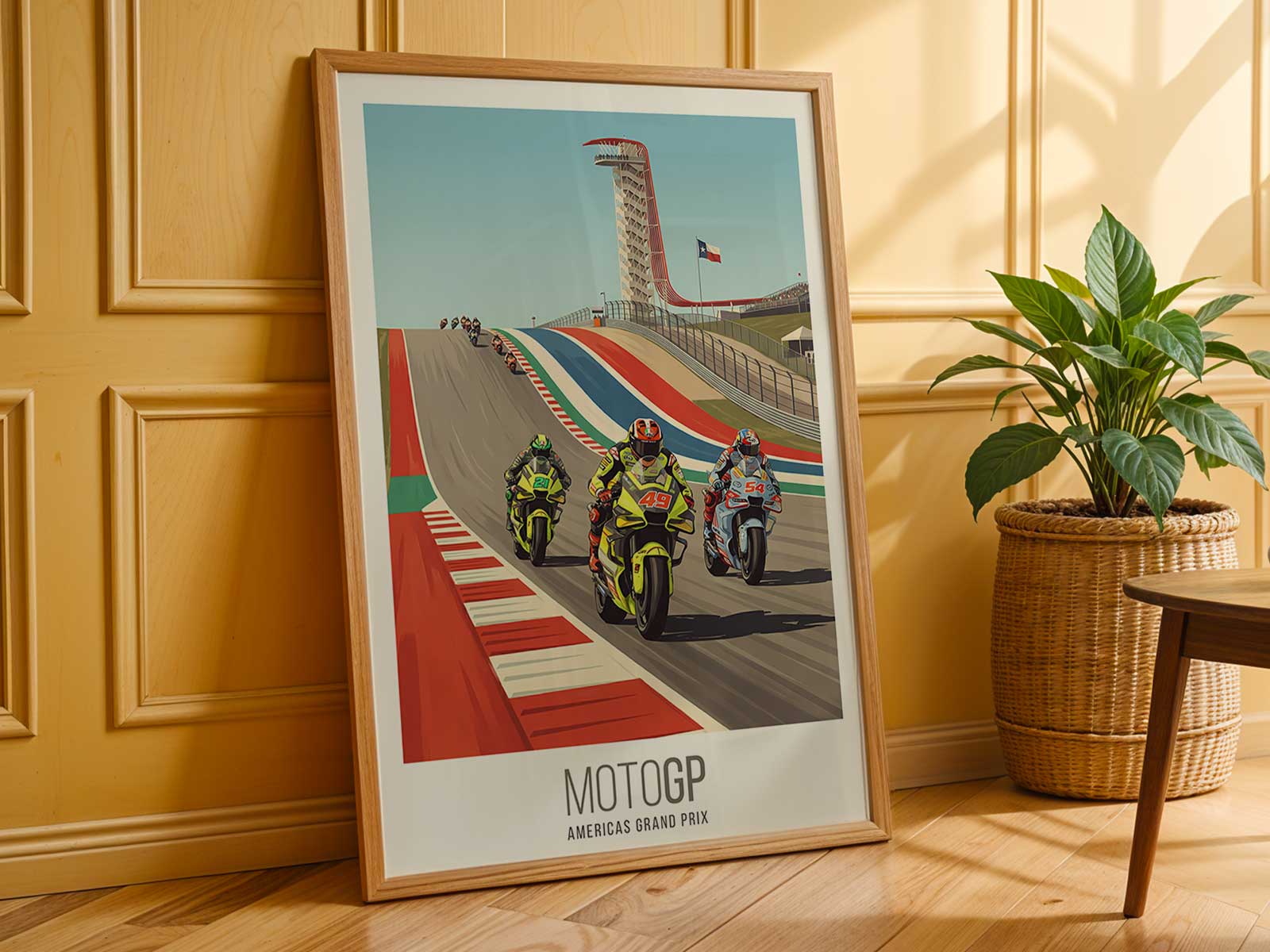
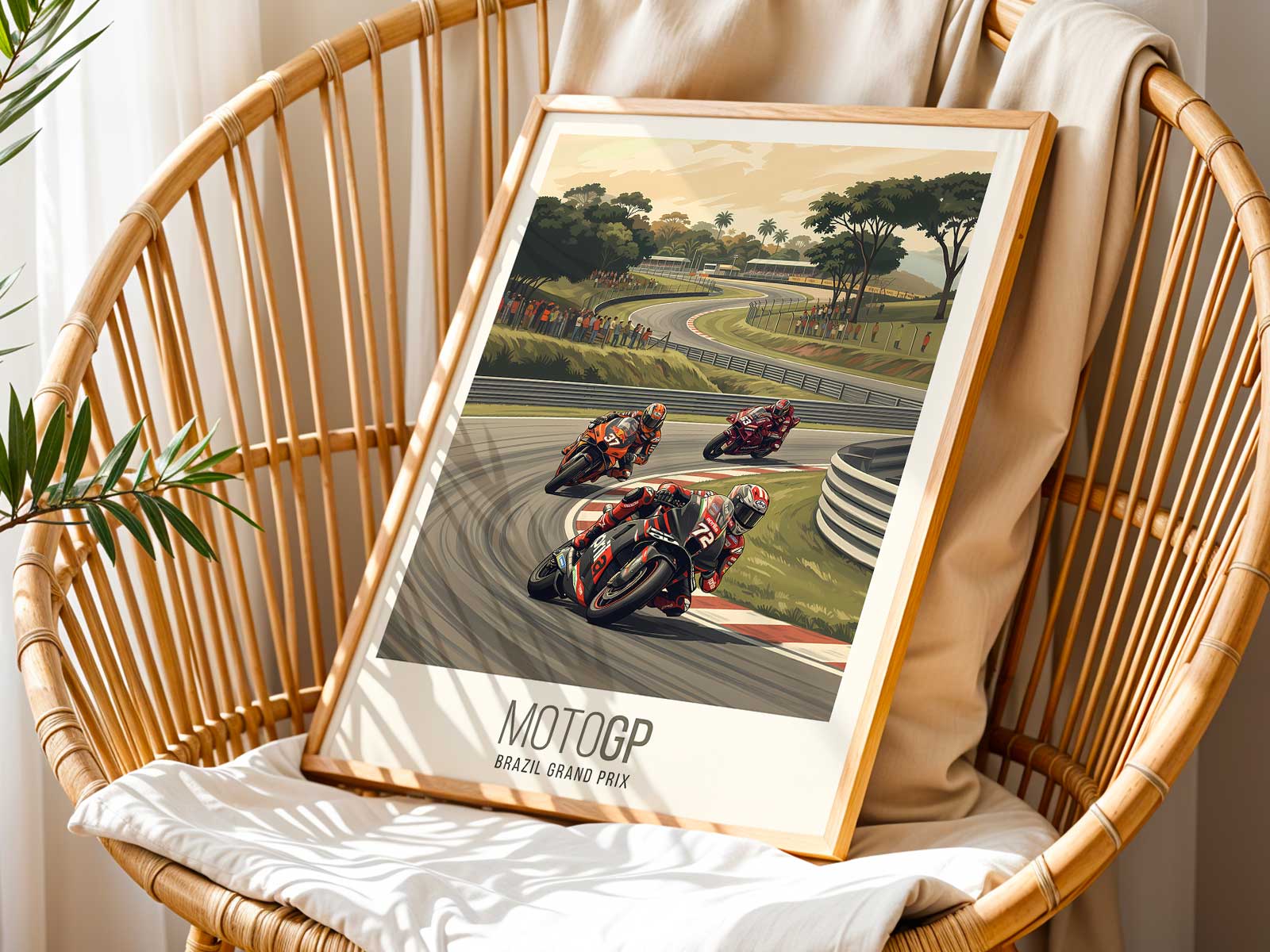
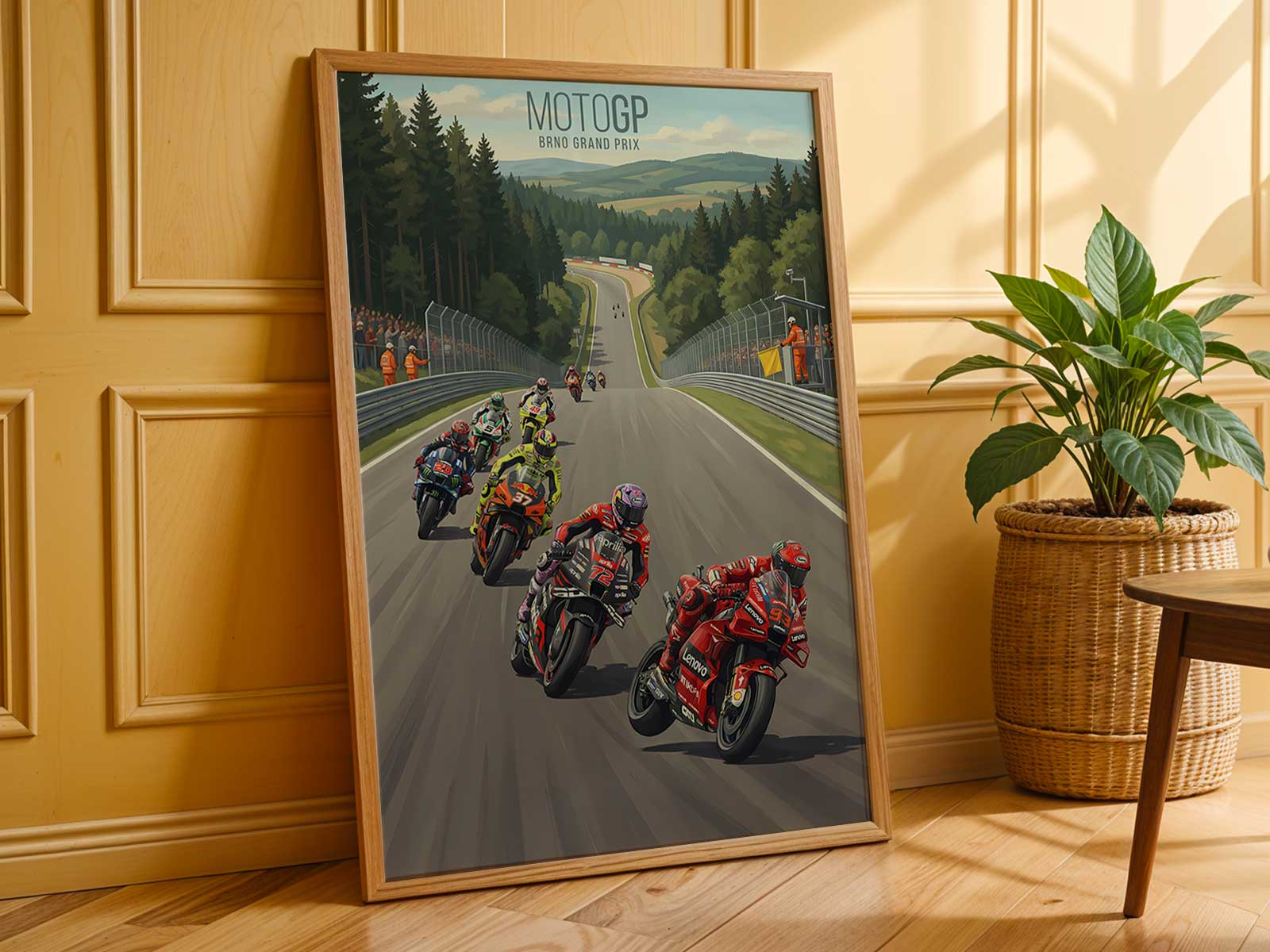
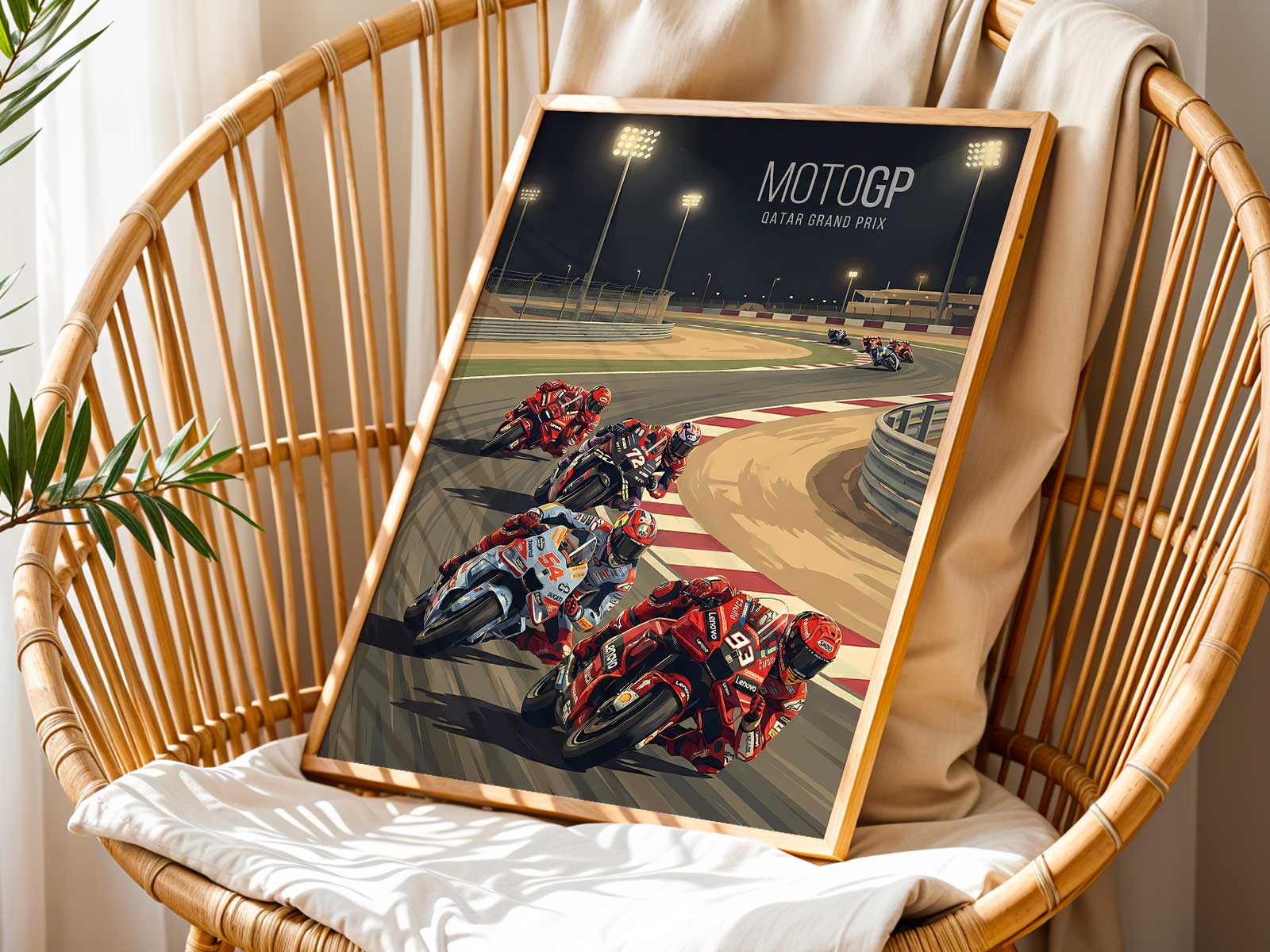
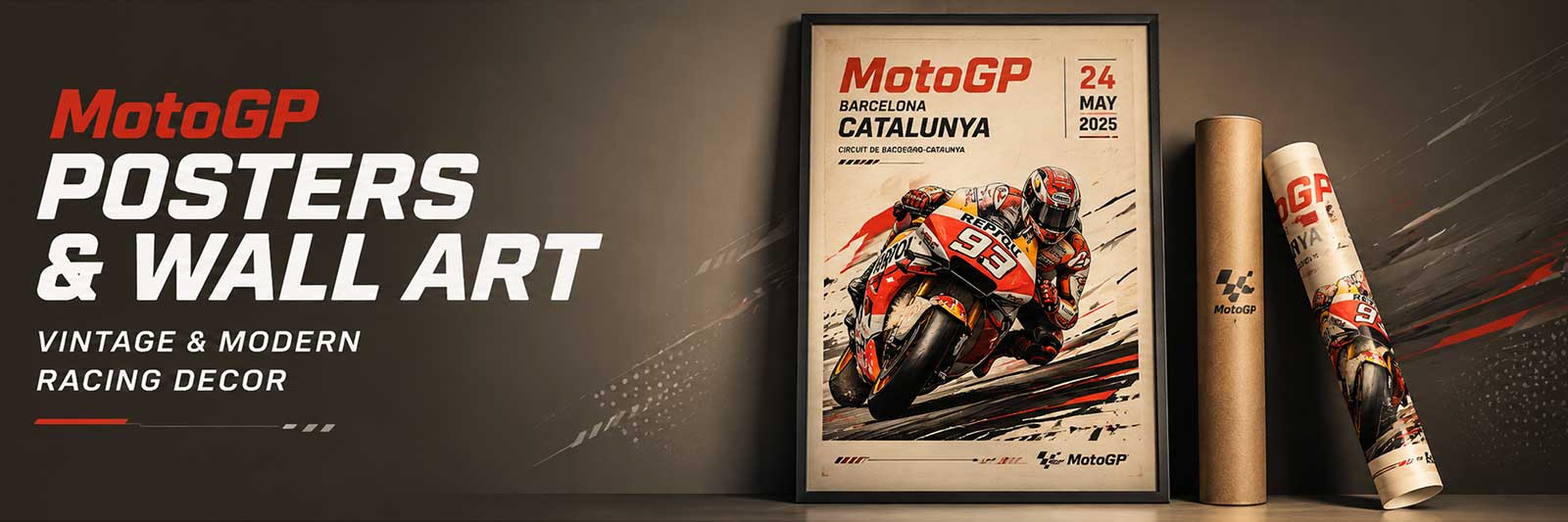
The strongest MotoGP posters do more than freeze a moment of speed; they translate a rider’s physical language into a single, decisive image. A Mugello MotoGP poster built around posture and body language turns the rider into the narrative centre: every shoulder angle, head tilt and hip position reads like a shorthand for effort, determination and intense concentration. Seen on a wall, that posture becomes a visual engine that animates a room.
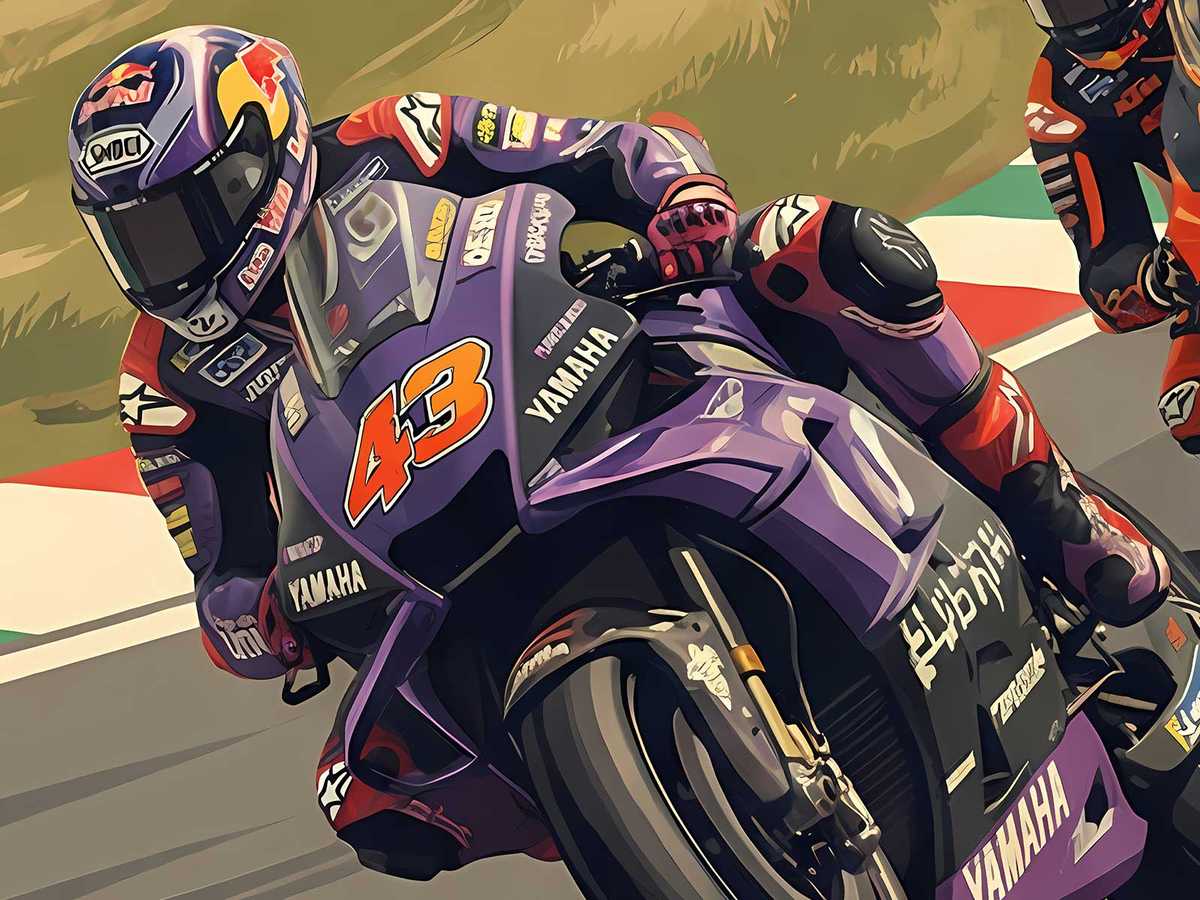
At Mugello the track’s sweeping curves and dramatic elevation changes invite exaggerated body work. In a well-composed poster that relationship is clear: the rider’s torso leans into the corner, the inside shoulder drops and the head remains low and forward, creating a diagonal vector that cuts across the frame. This diagonal is not just aesthetic — it signals control under stress, the negotiation between rider and machine at the physical limit. The lean angle and the way the rider hangs off the bike compress time, making velocity legible in a still image.
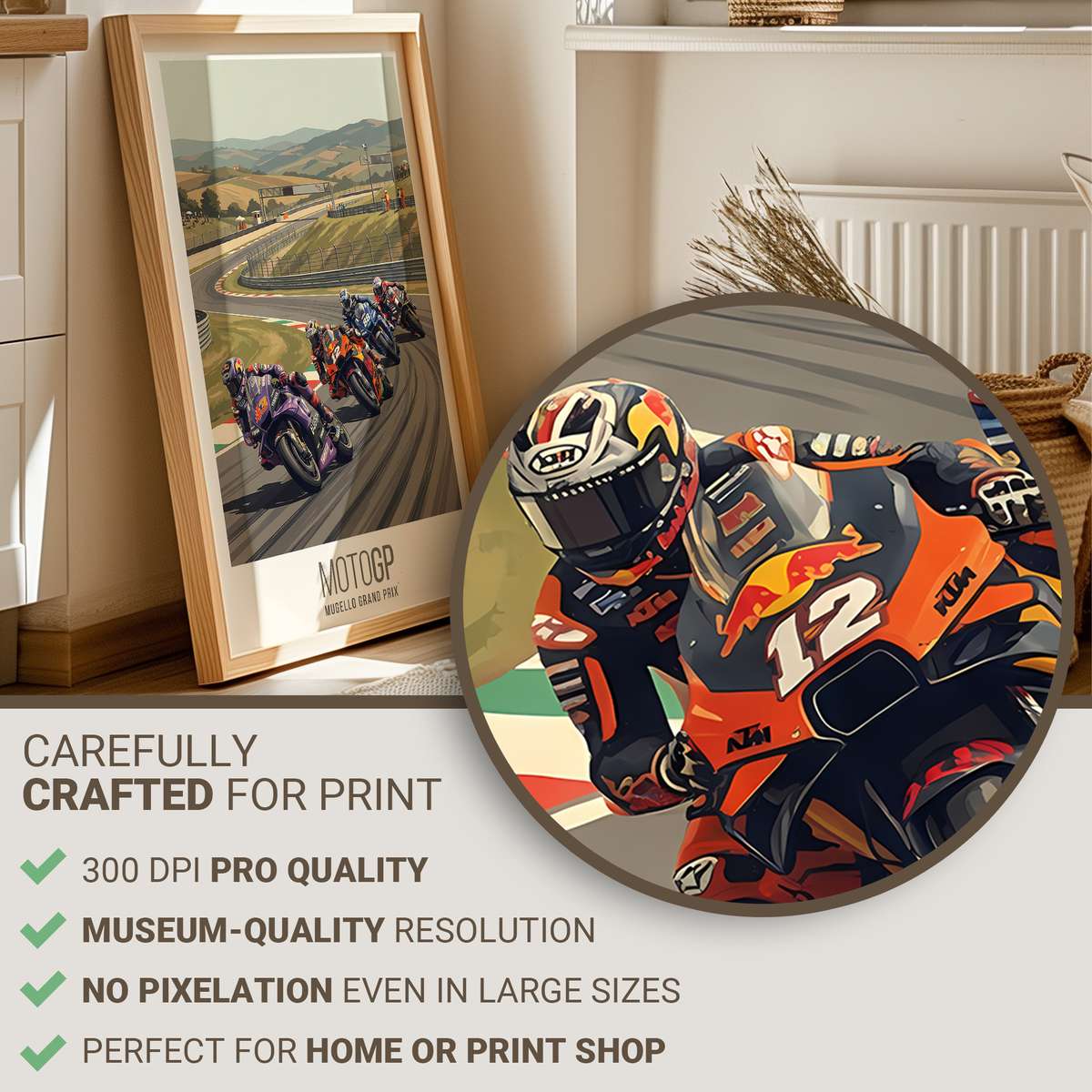
Brake and throttle are expressed visually. A clenched forearm, the visible compression in a rider’s fingers around the lever, the tucked chin — these details convey the micro-mechanics of racing: commitment to a line, a last-moment adjustment, a controlled aggression. Conversely, when the rider’s shoulders appear calm and settled over the tank, the poster reads as confidence: a professional at work, unhurried even in speed. That tension between aggressive intent and composed control is what gives a Mugello poster its emotional charge.
[IMAGE_INSERT_ARTICLE_01]
The helmet line and eye direction are small but critical storytelling devices. A helmet turned slightly toward the apex suggests purposeful vision; eyes (or implied gaze) directed through the corner let the viewer follow the problem-solving moment. Shoulders and hips form the headline: the hips showing counter-steer, the knee grazing asphalt, the boot positioned for feedback — these are the gestures that identify the image as pure Grand Prix language rather than generic motorcycle imagery.
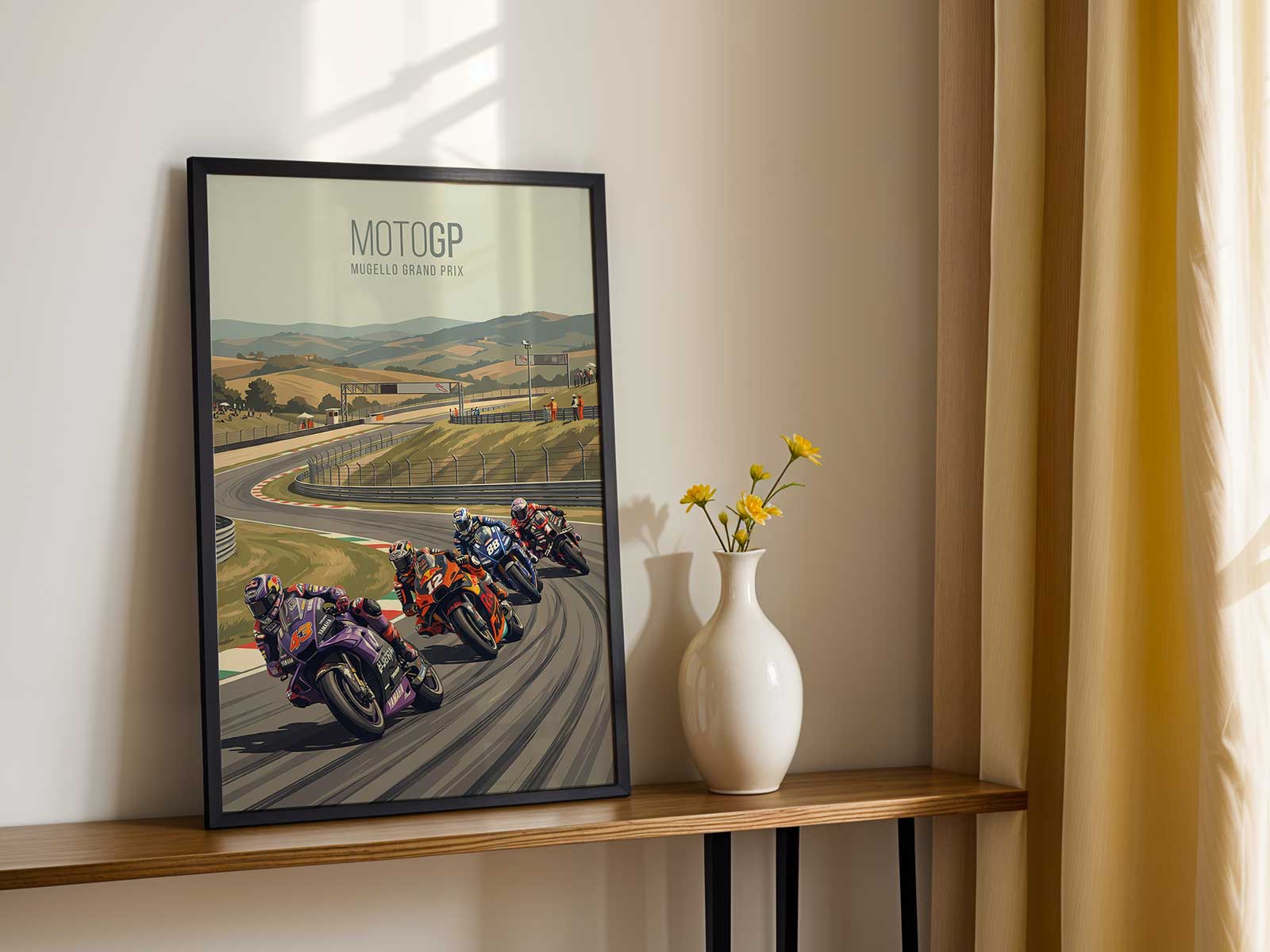
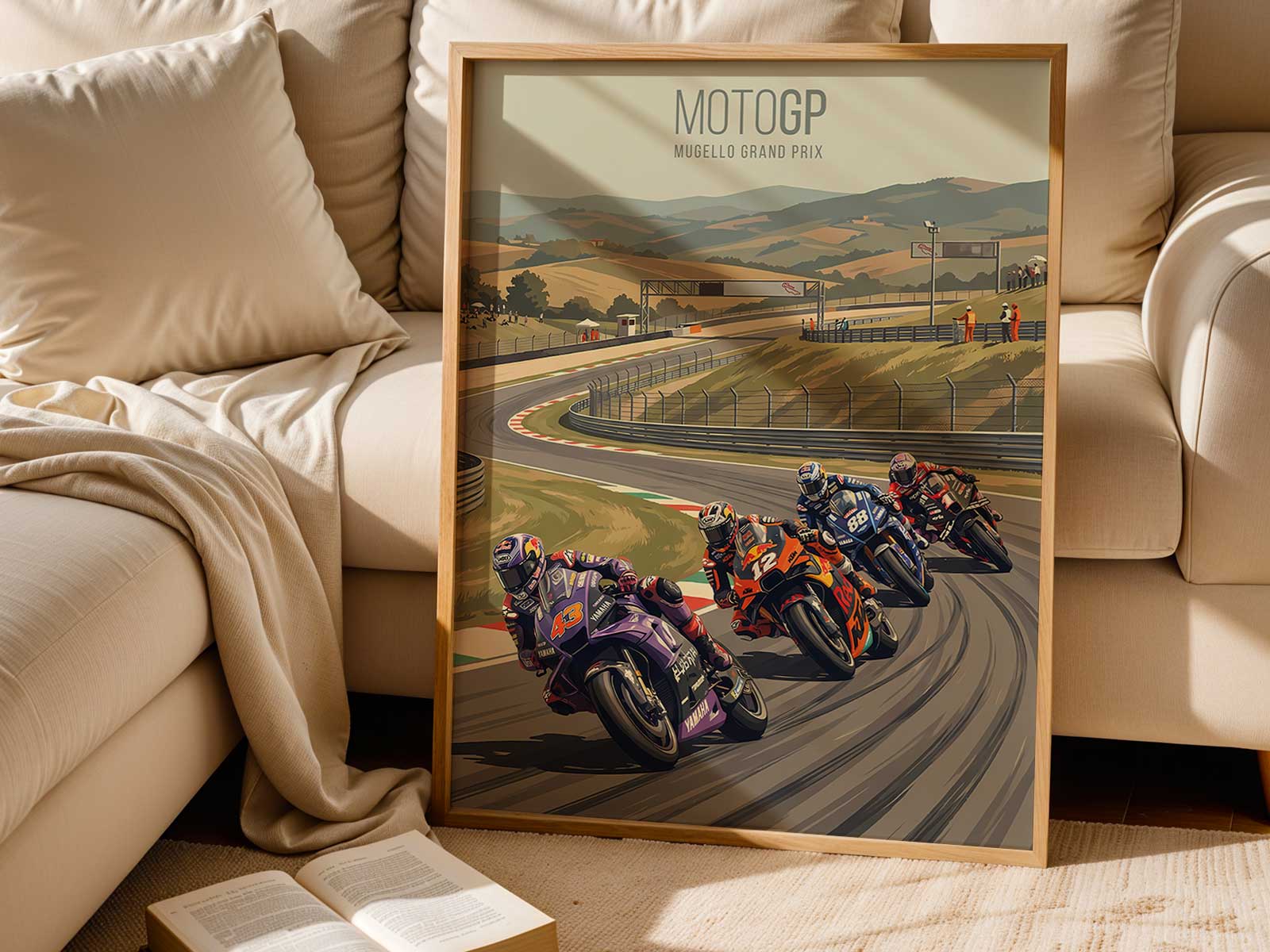
As a decorative object, a rider-led Mugello poster brings character and scale to interiors. In a minimalist office the poster introduces a single, potent motion that becomes the room’s focal rhythm. In a garage or games room it reinforces an environment of precision and kinetic energy without needing racing memorabilia. The poster’s palette — sun-washed asphalt, warm Tuscan light, printed tyre marks — works quietly with mid-century neutrals or raw concrete, giving the space an automotive authenticity rooted in place and moment.
Collector appeal comes from visual specificity. Pieces that show nuanced body language — the particular slope of a shoulder, a thumb poised over the clutch, a knee carved to a millimetre — feel studied and collectible because they reward repeated viewing. Each return to the image reveals another detail of technique, another hint of pressure, another measure of focus. That layered reading is why a single rider can define the mood of the artwork and why the poster becomes more than decoration: it is a study in physical performance suspended on the wall.
Viewed closely or across a room, a Mugello MotoGP poster about posture communicates what words struggle to: the athlete’s negotiation of traction and gravity, the choreography of body and machine, and the precise, almost surgical calm beneath an aggressive exterior. It’s a visual statement that elevates interiors with the compressed poetry of racing — speed distilled into posture and presence.