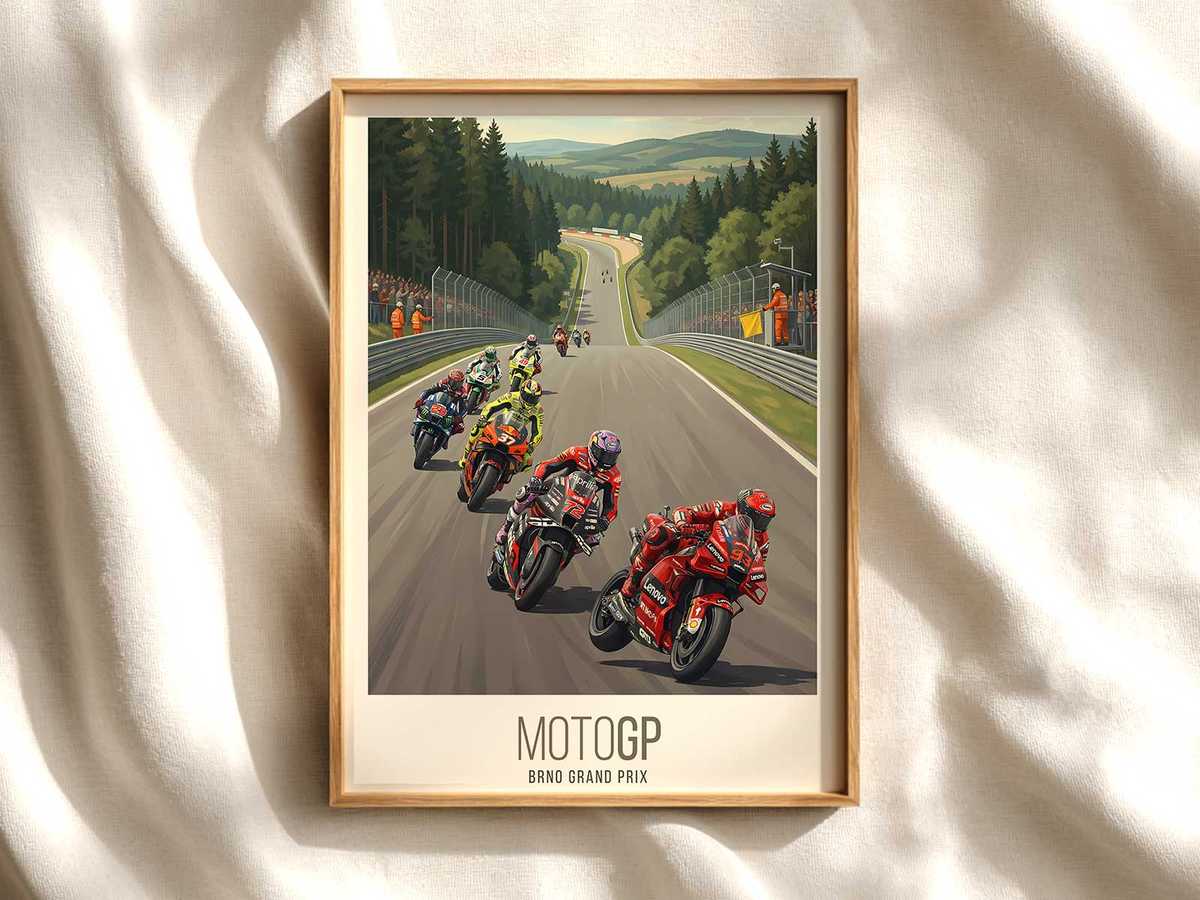
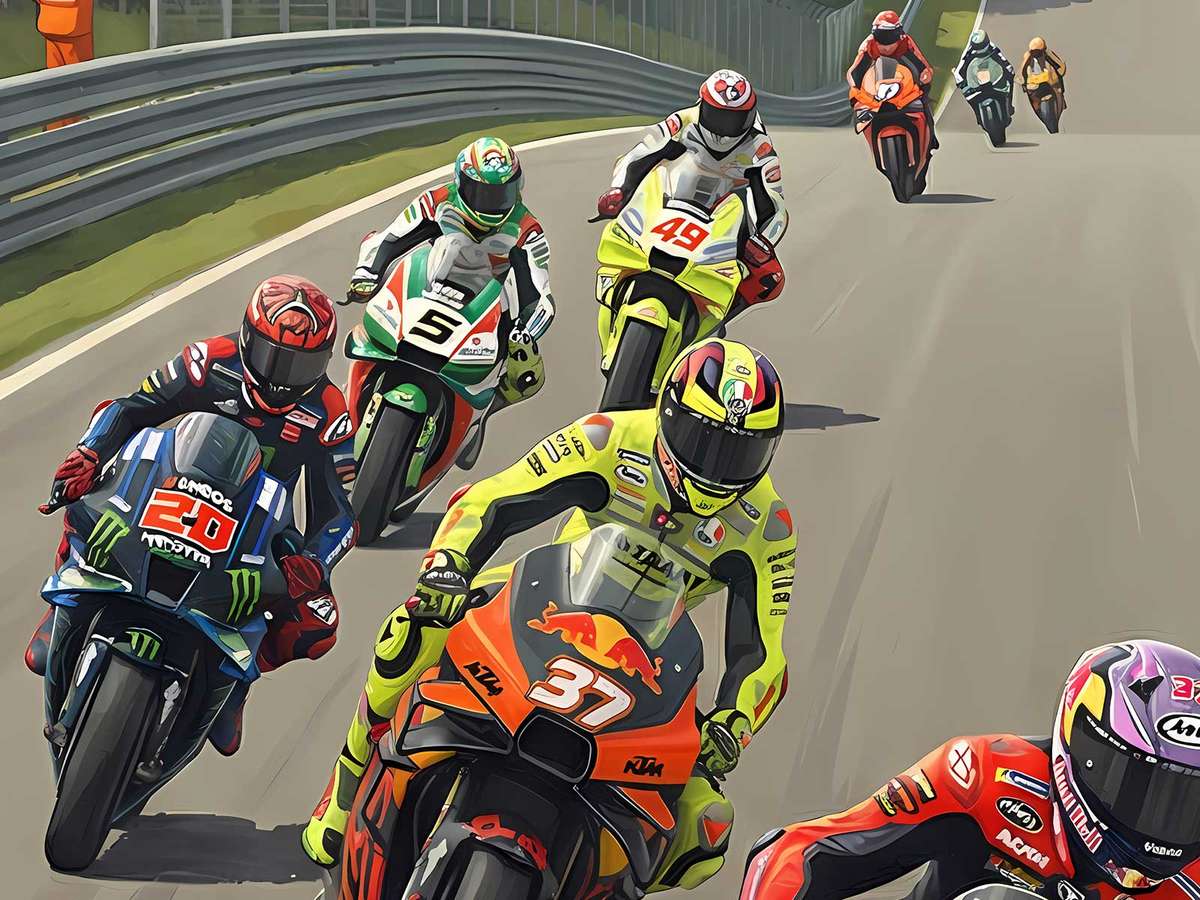
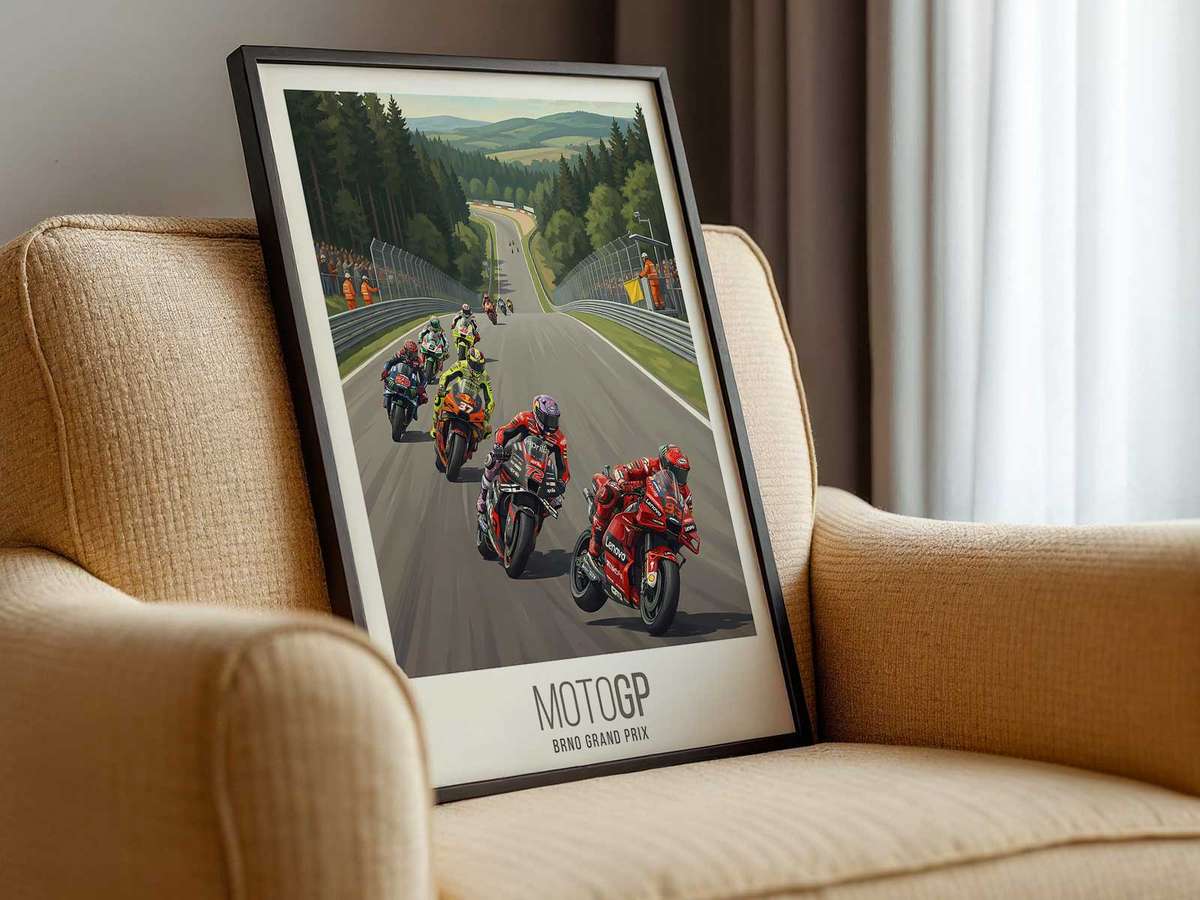
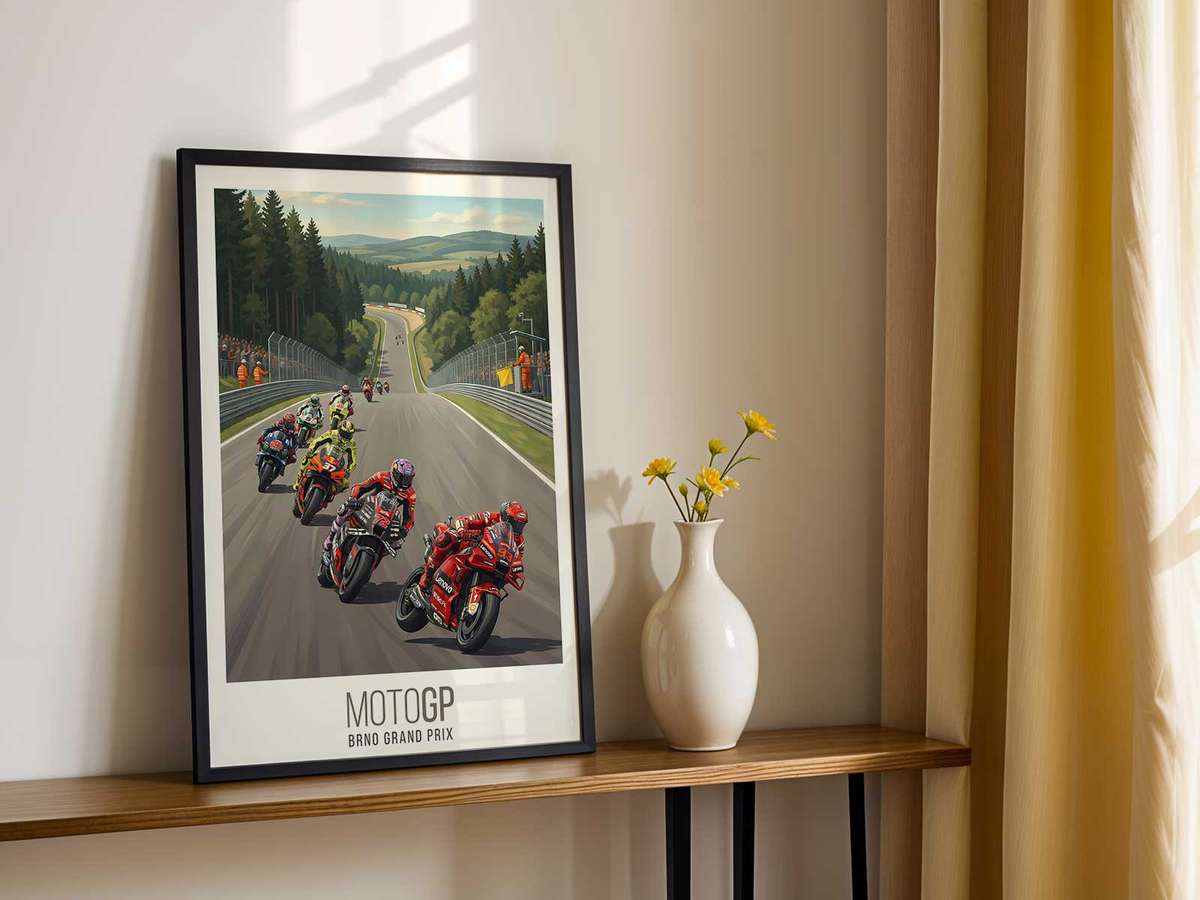
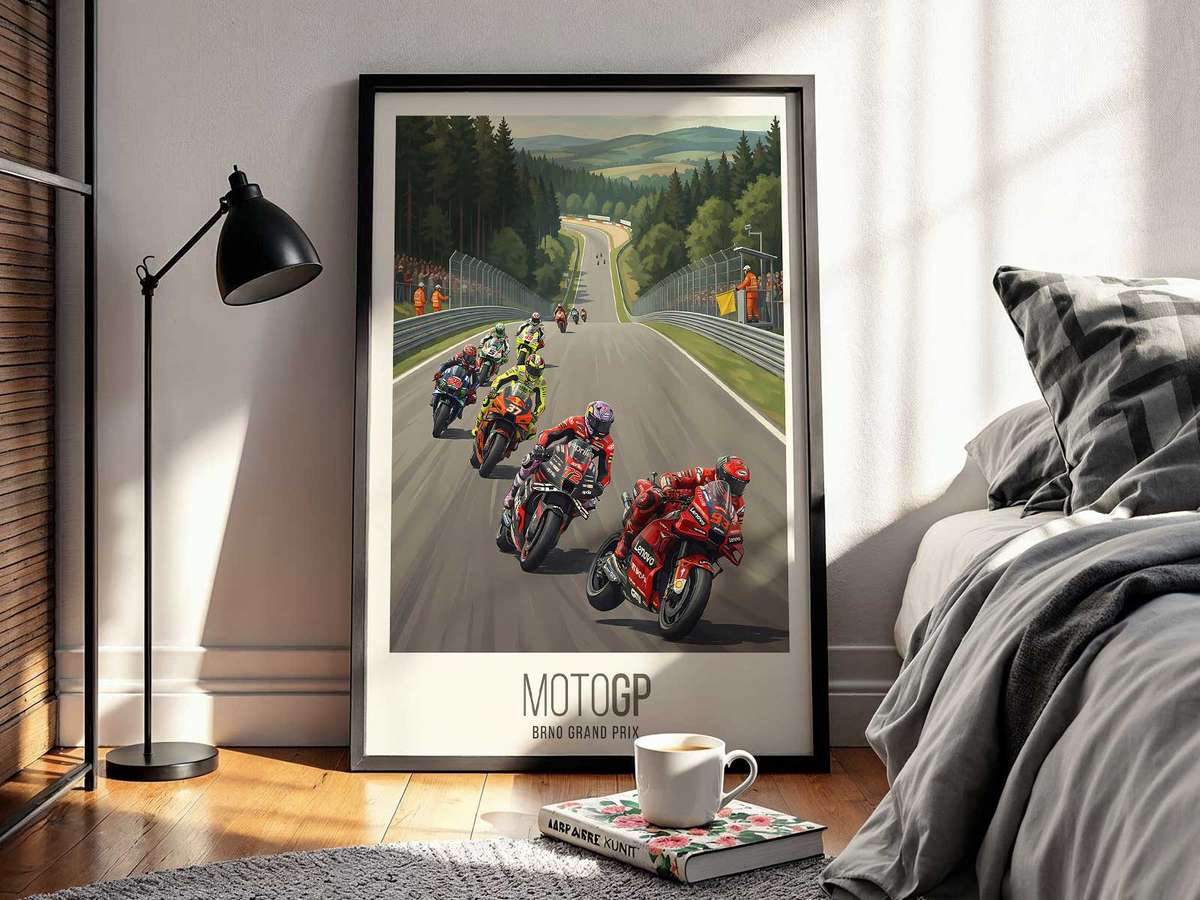
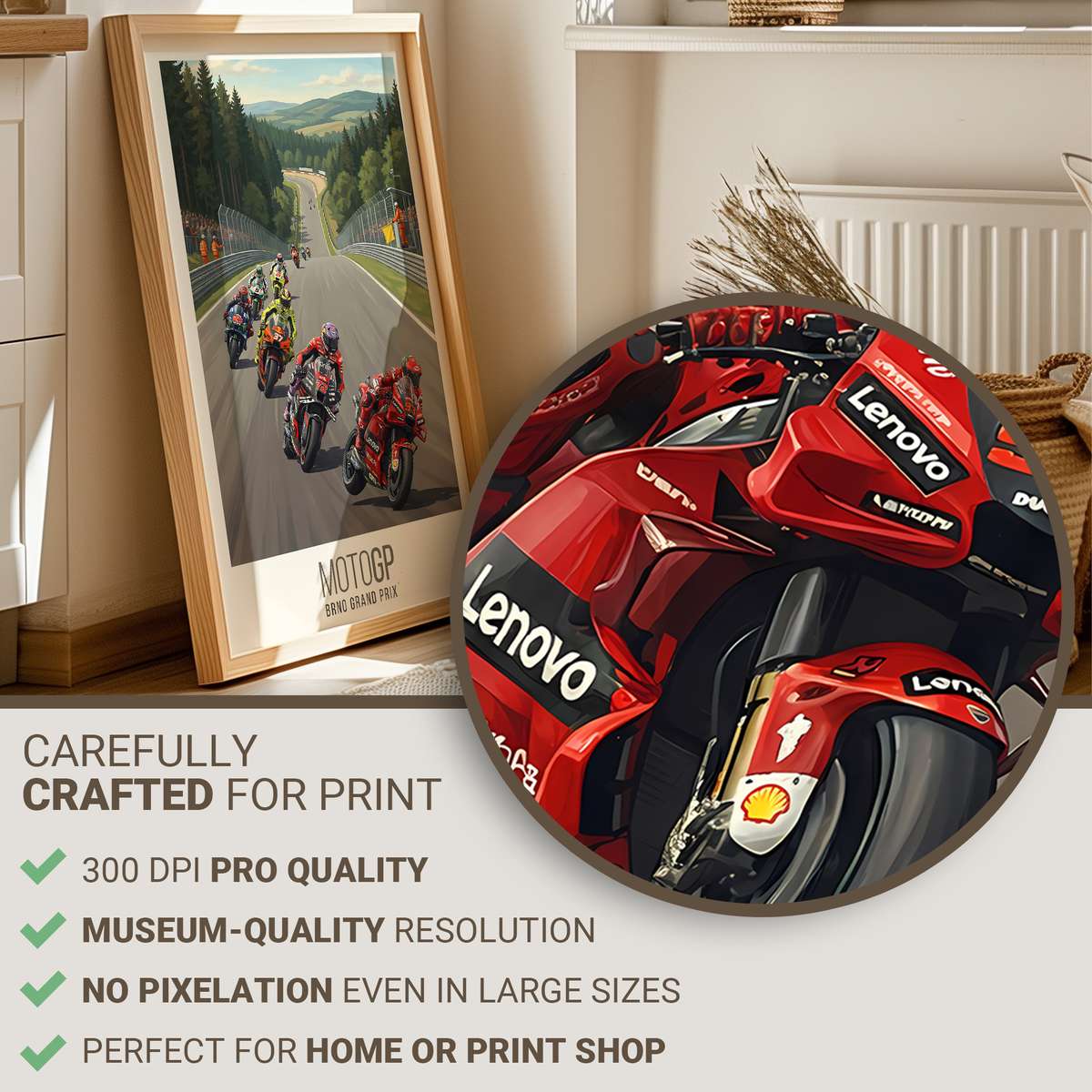
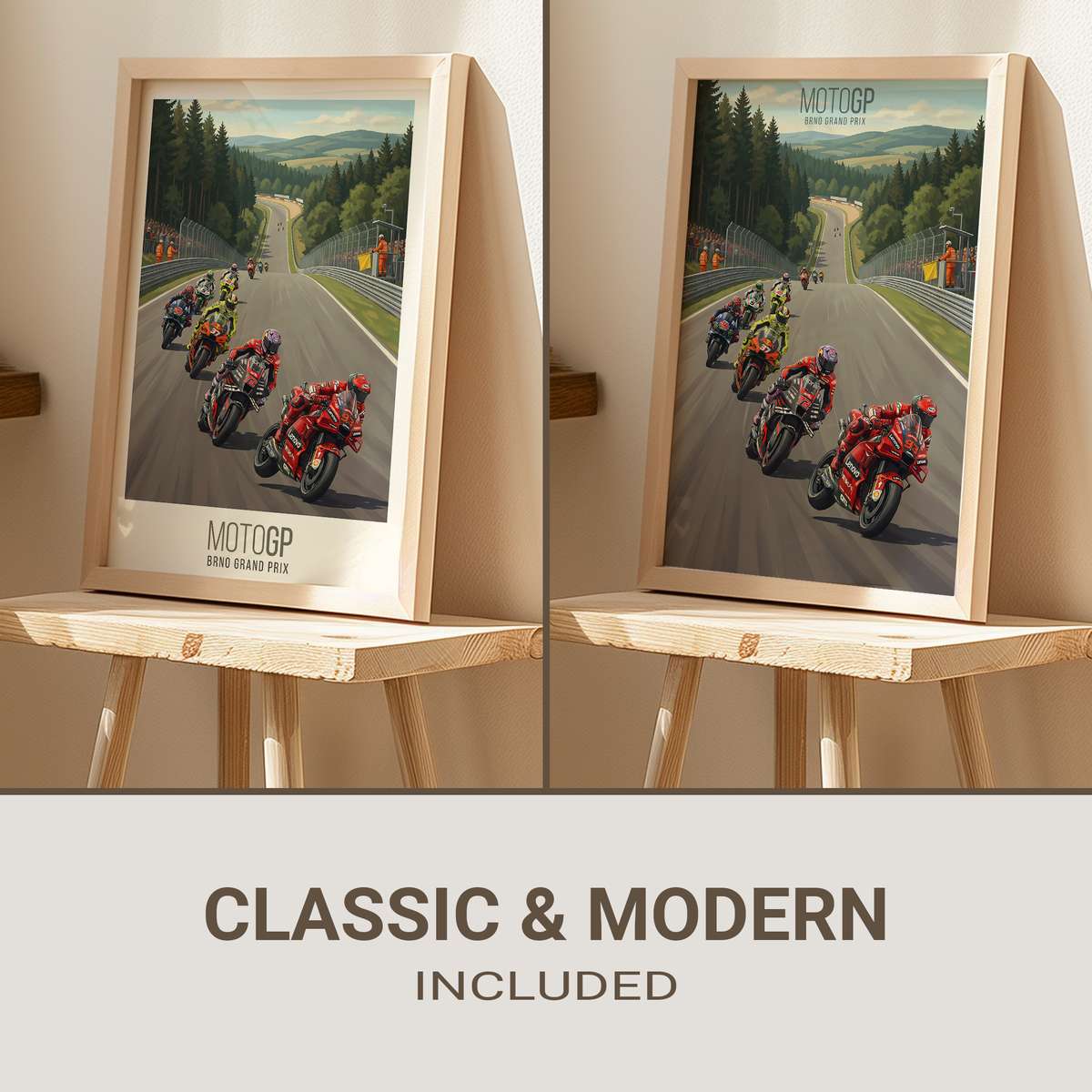
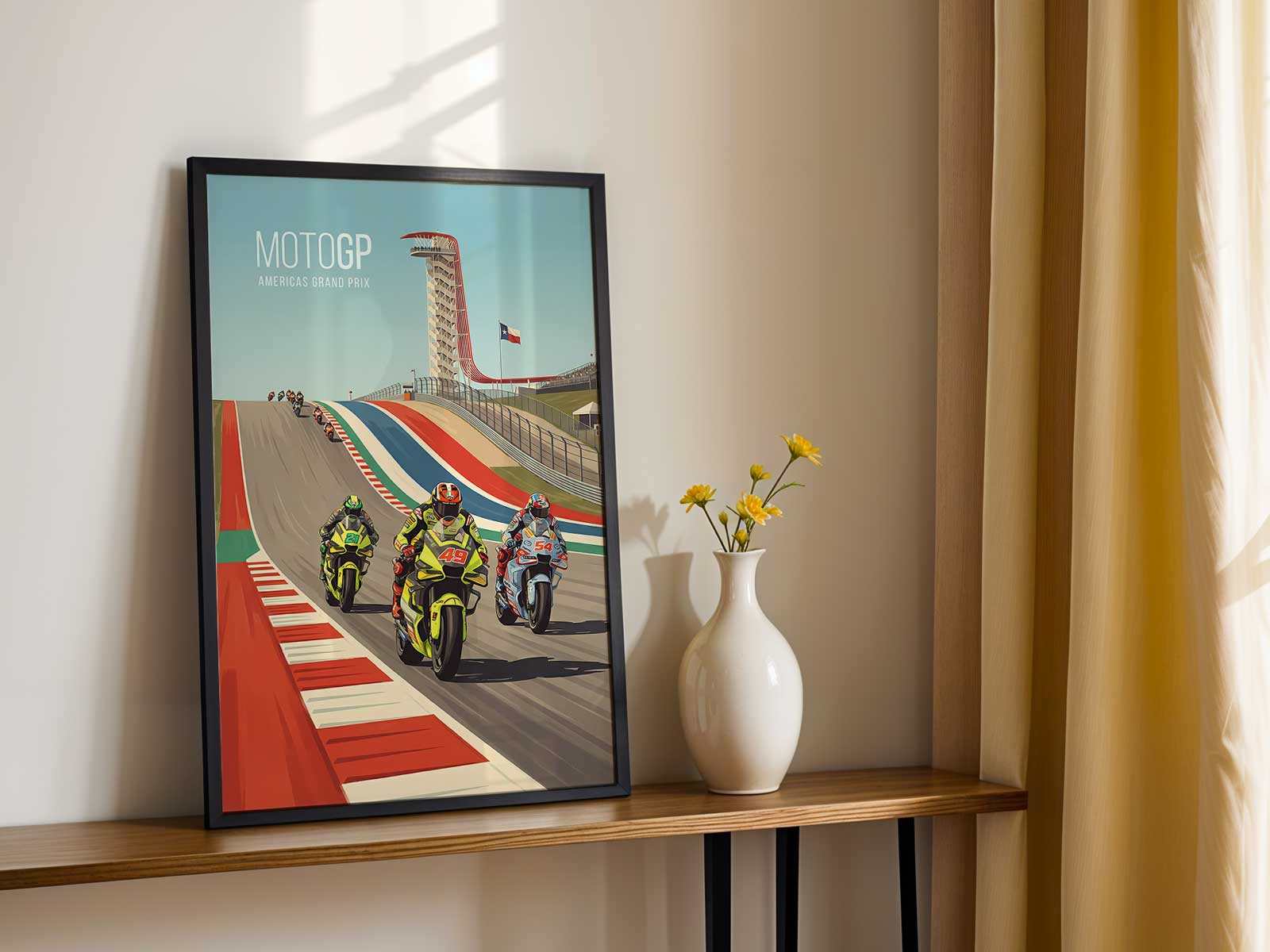
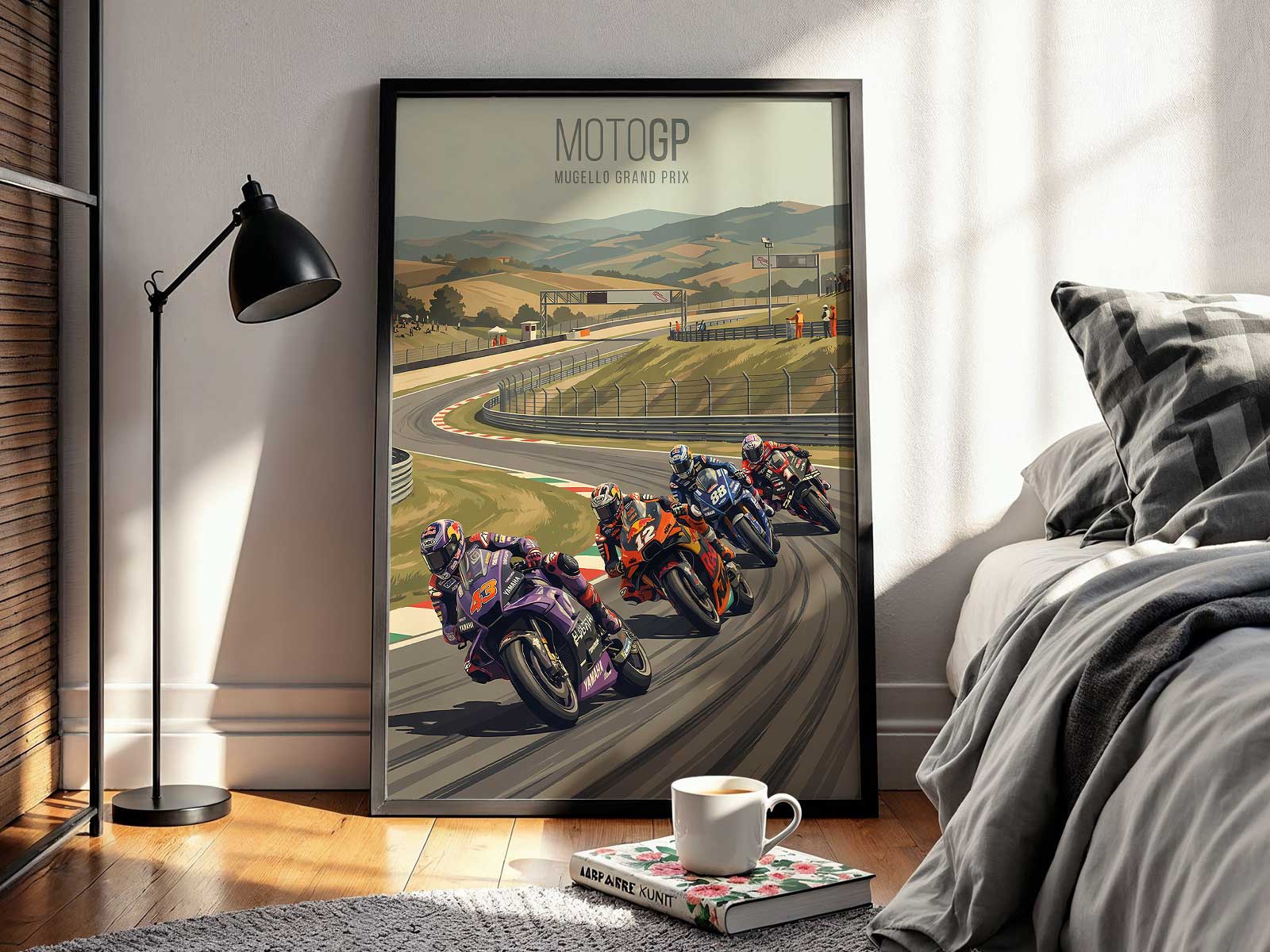
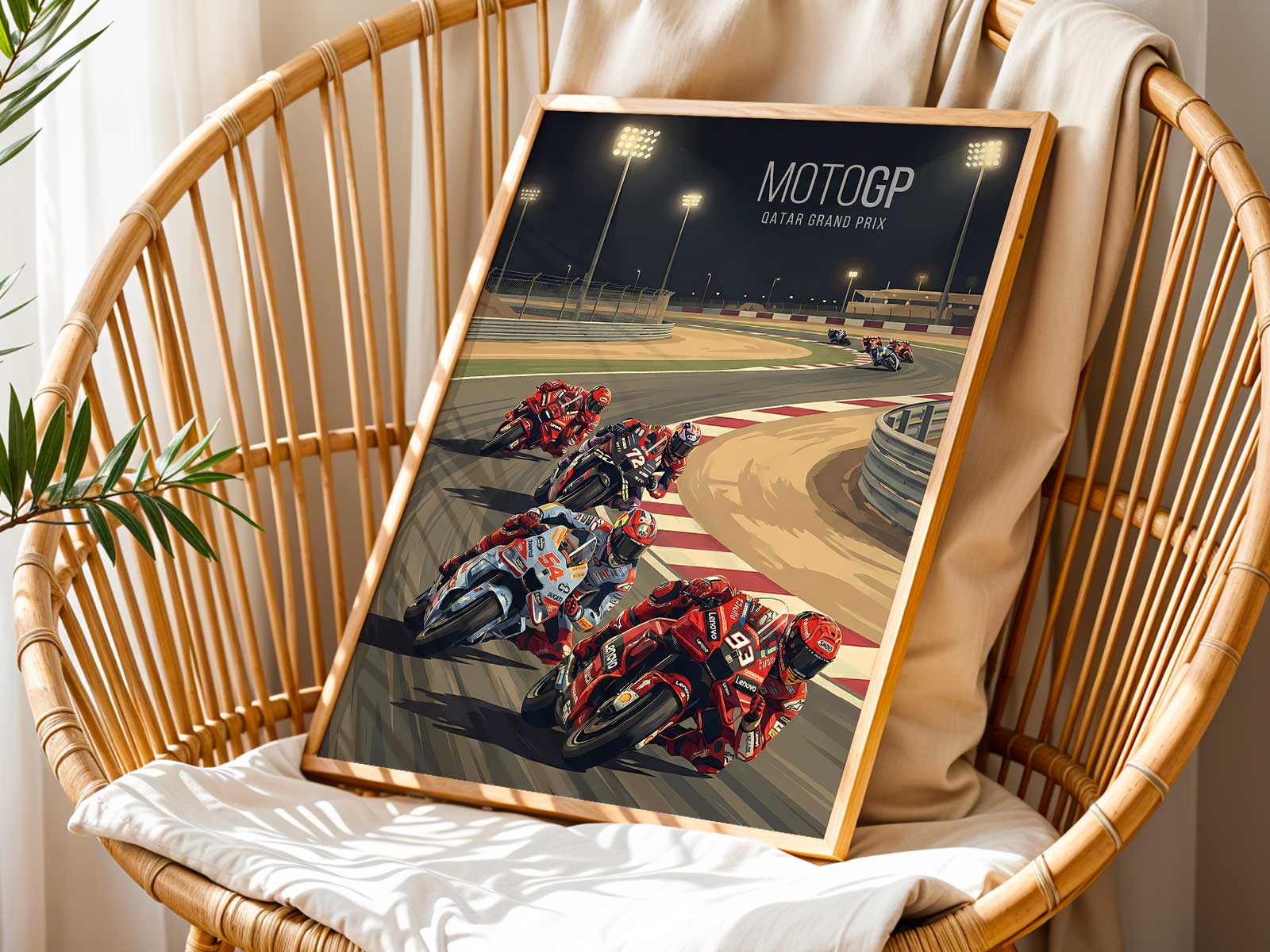
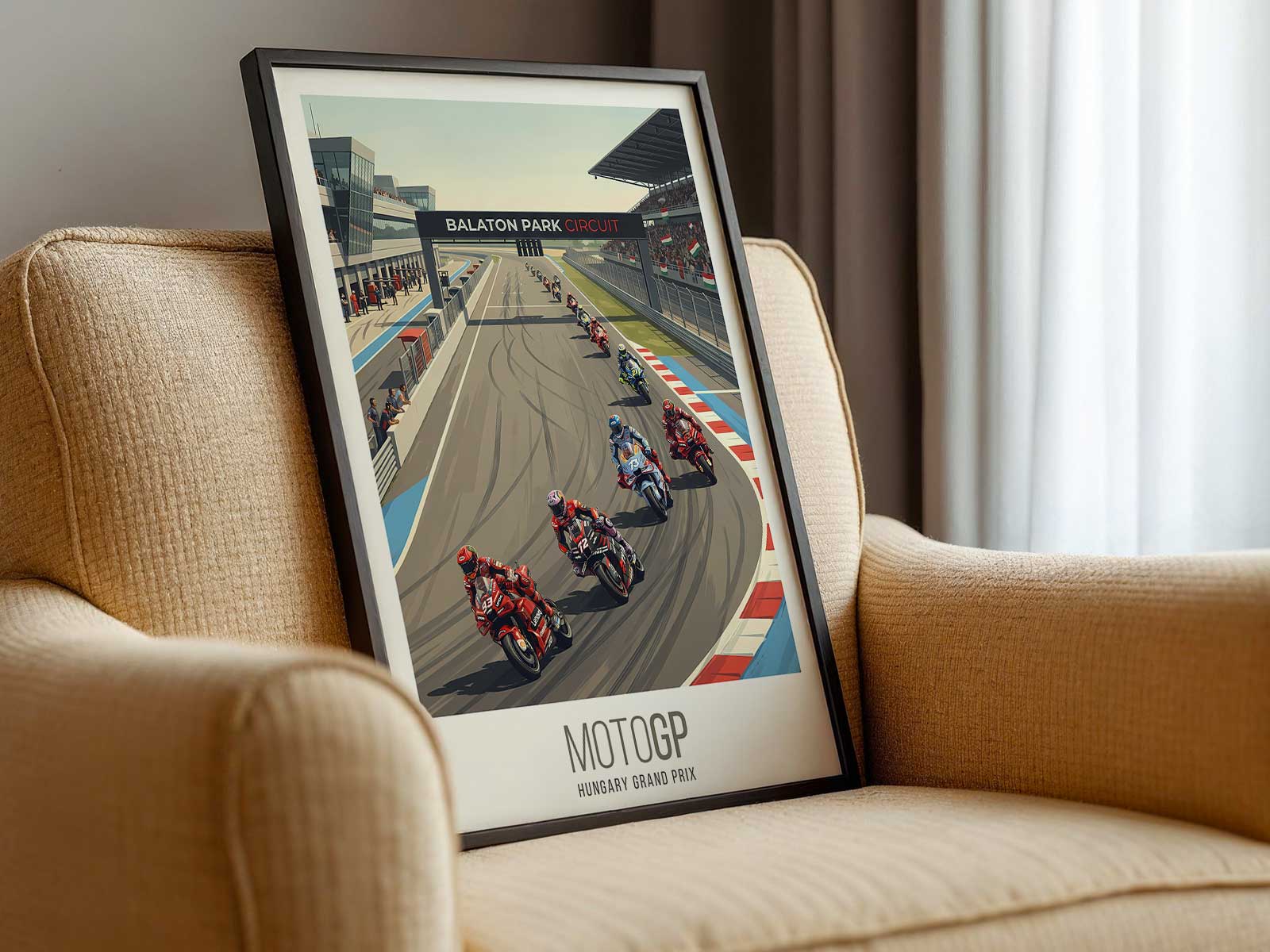
A single photograph of a Yamaha MotoGP machine, caught at the precise point between commitment and consequence, can read like a short story on your wall. This poster frames the kind of instant where a rider's weight, throttle, and line choice are all legible: the front fork compressed under heavy braking, knee grazing pavement, tyre shoulders bulging at extreme lean. Those physical cues are the visual vocabulary of decision—each element a clue that something risky, exacting and irrevocable has just been chosen.
What makes that still so compelling as wall art is timing. The image homes in on a microsecond where motion becomes metaphor: the front wheel tucked slightly inward in a braking duel, a thin arc of rubber marking the commitment to a late turn, bodywork blurred just enough to imply speed while preserving enough detail to read textures and sponsor typography. The viewer does not need to know the race outcome; the photograph supplies narrative pressure. You can feel the decision unfolding—the gamble of braking later, the risk of holding the line, the tiny relief of a throttle hand easing on the exit—and that tension is what fills a room with presence.
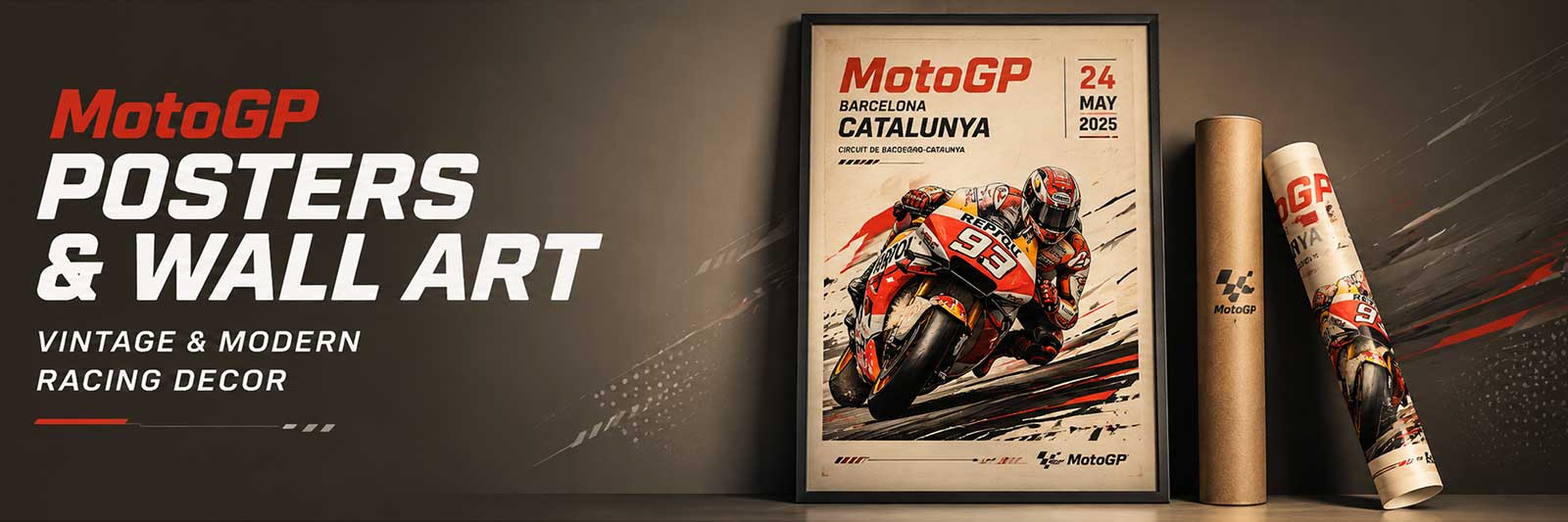
Visually, a Yamaha MotoGP poster like this works because of contrast and posture. The bike's silhouette against the circuit, the interplay of cool blues and metallic tones with hot rubber and track heat haze, creates focal drama. The rider's angle of attack, head position and arm extension communicate athletic intent; the machine's compressed stance and visible suspension movement reveal engineering under duress. Together they translate split-second physics into accessible, readable drama—an ideal quality for interior art that needs to arrest attention without overpowering a space.
[IMAGE_INSERT_ARTICLE_01]
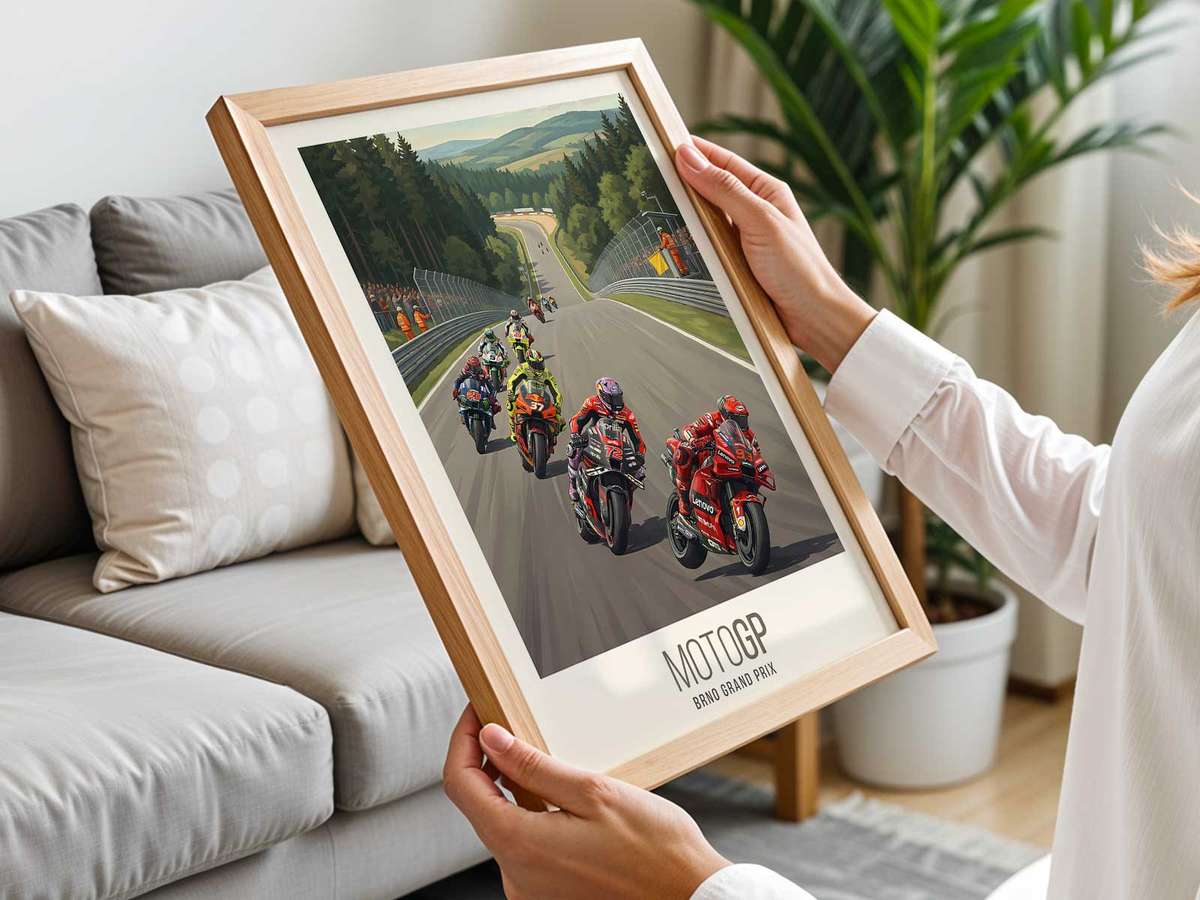
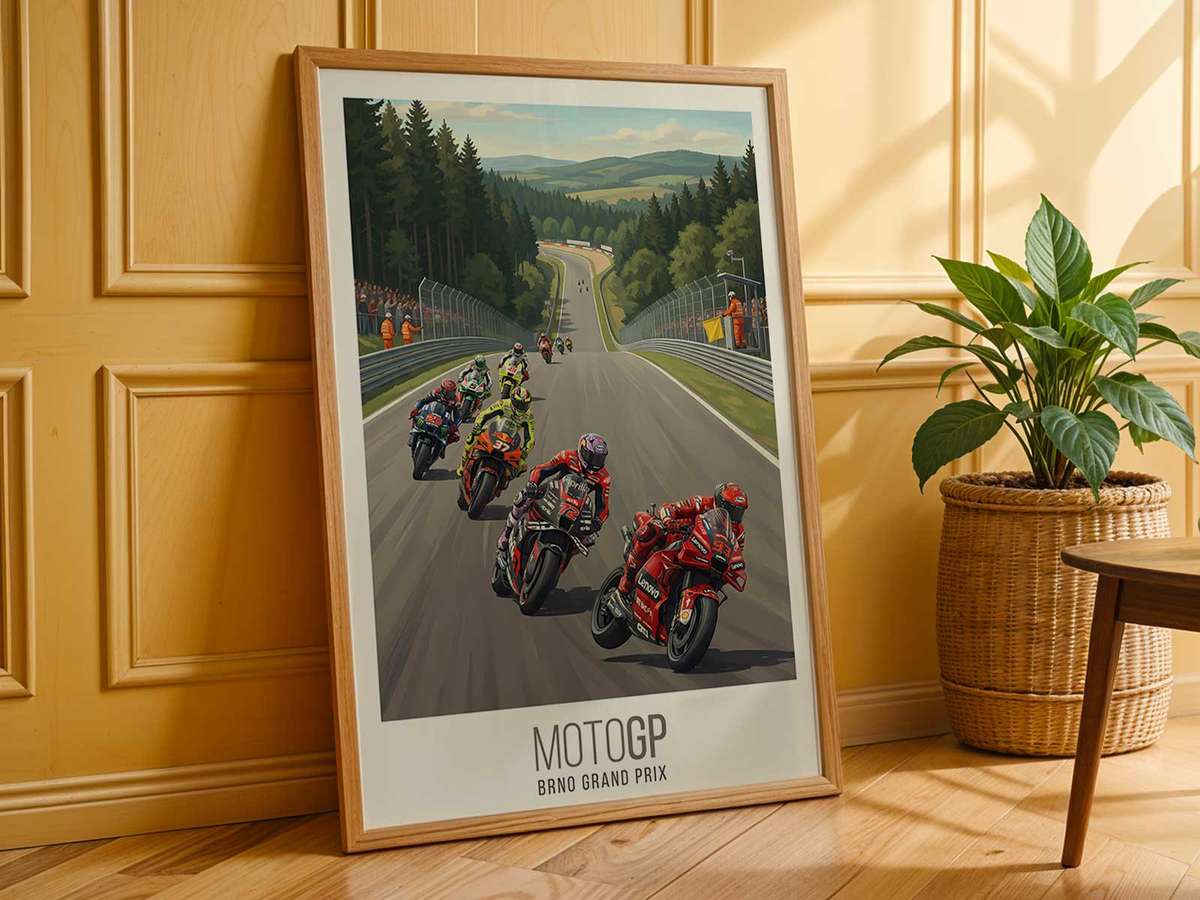
In practical decorating terms, this kind of race-moment poster anchors a room by offering both movement and narrative restraint. In an office or studio it becomes shorthand for focus and split-second decision-making; in a garage or game room it echoes the environment's kinetic energy without resorting to kitsch. The image's scale and directional lines guide sightlines across a wall and can harmonise with minimalist furniture or industrial accents—its intent readable at a glance, its detail rewarding on closer inspection.
More specifically, the strongest implied instant here is a braking duel turned into a visual thesis about control under pressure. You can read where the rider will commit, where traction will be asked for, and how millimetres of lean alter outcomes. That specificity is what separates generic motorsport imagery from a compelling poster: it demonstrates expertise in body language, machine behaviour and circuit geometry rather than simply showing a fast object. The result is art that feels authoritative and alive.
Choosing this poster is less about celebrating a result and more about owning a condensed piece of race drama—an image that asks the viewer to imagine the moments before and after, to supply the sound of exhaust and the smell of rubber. That imaginative fill is what makes the piece enduring on a wall: it invites repeat viewing and quiet projection, turning a single photographic instant into an ongoing interior narrative.
Printed with archival inks and composed for both close study and broad impact, this Yamaha MotoGP poster is an exercise in timing, pressure and visual restraint—an instant that keeps working in any room it inhabits.