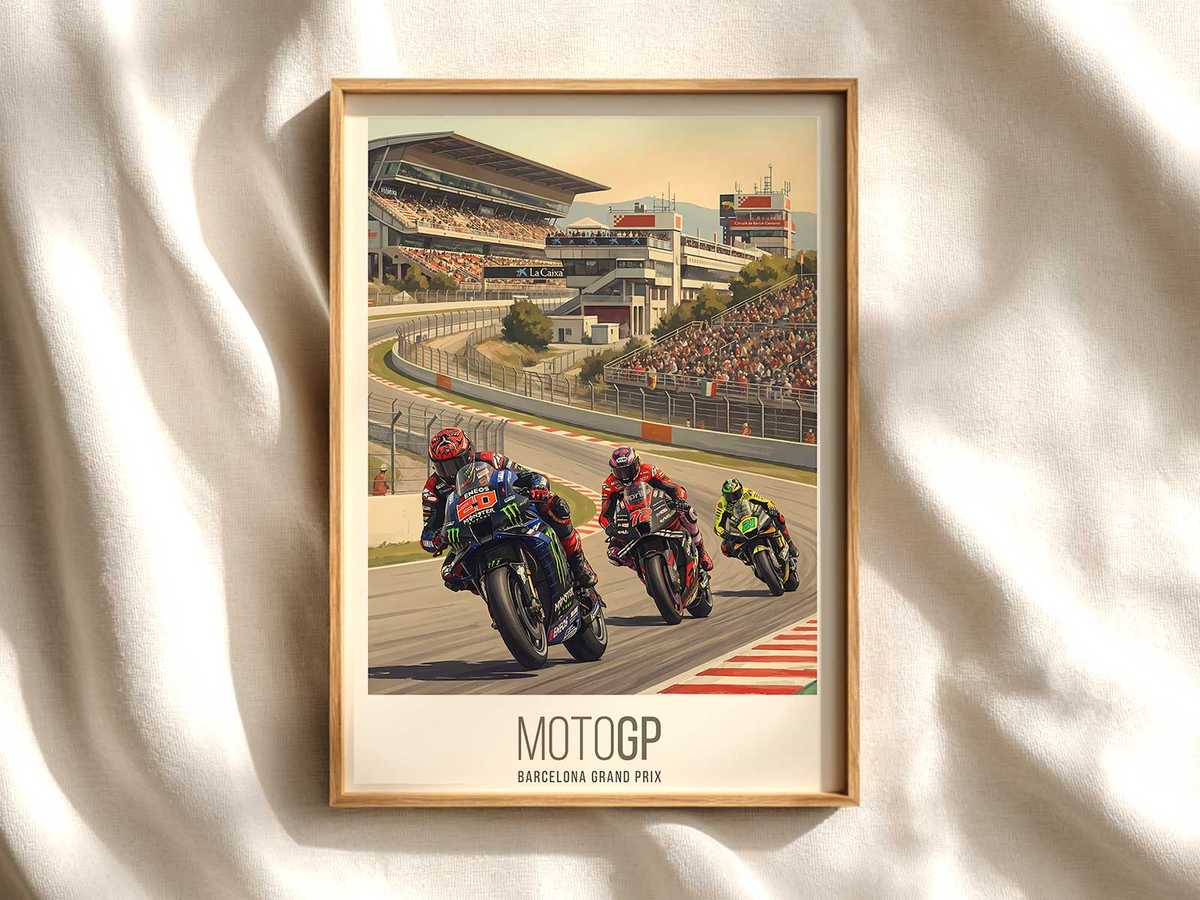
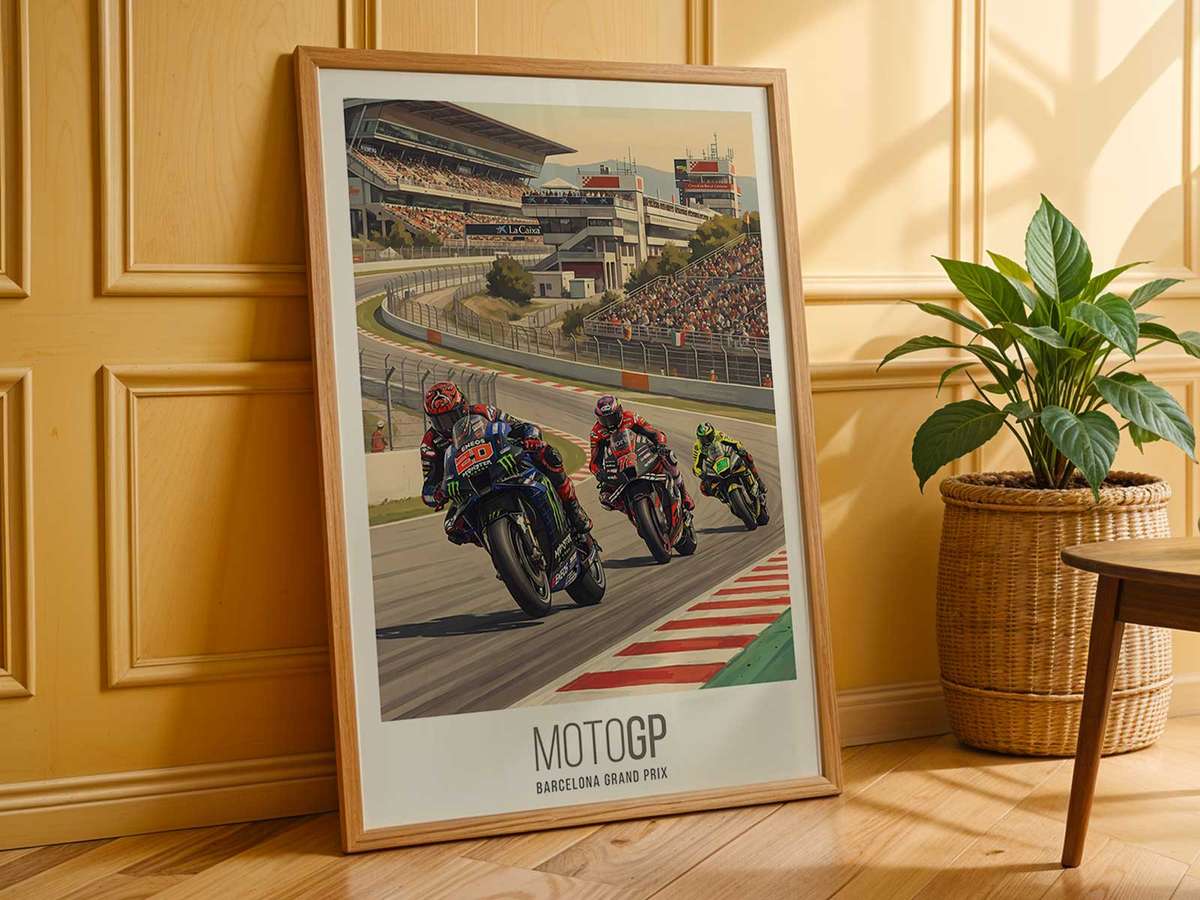
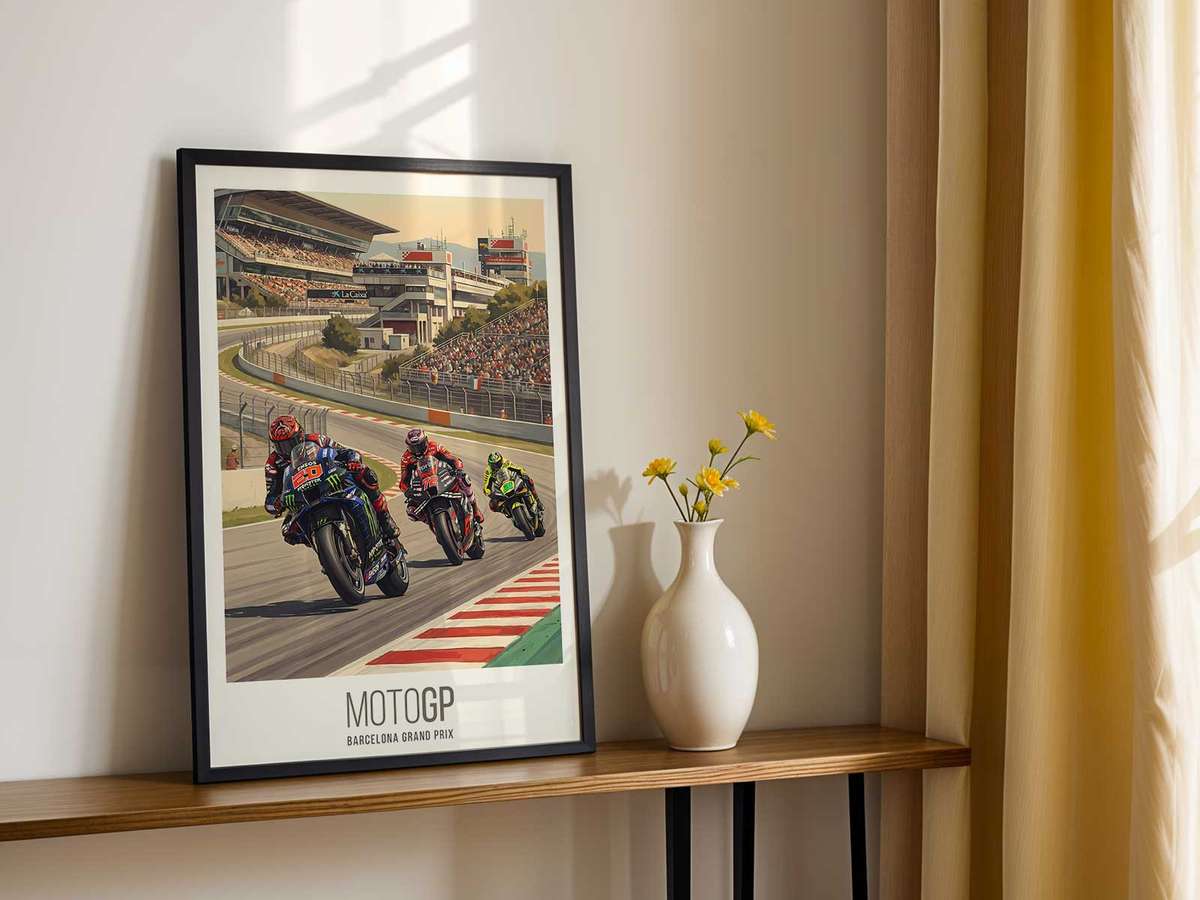
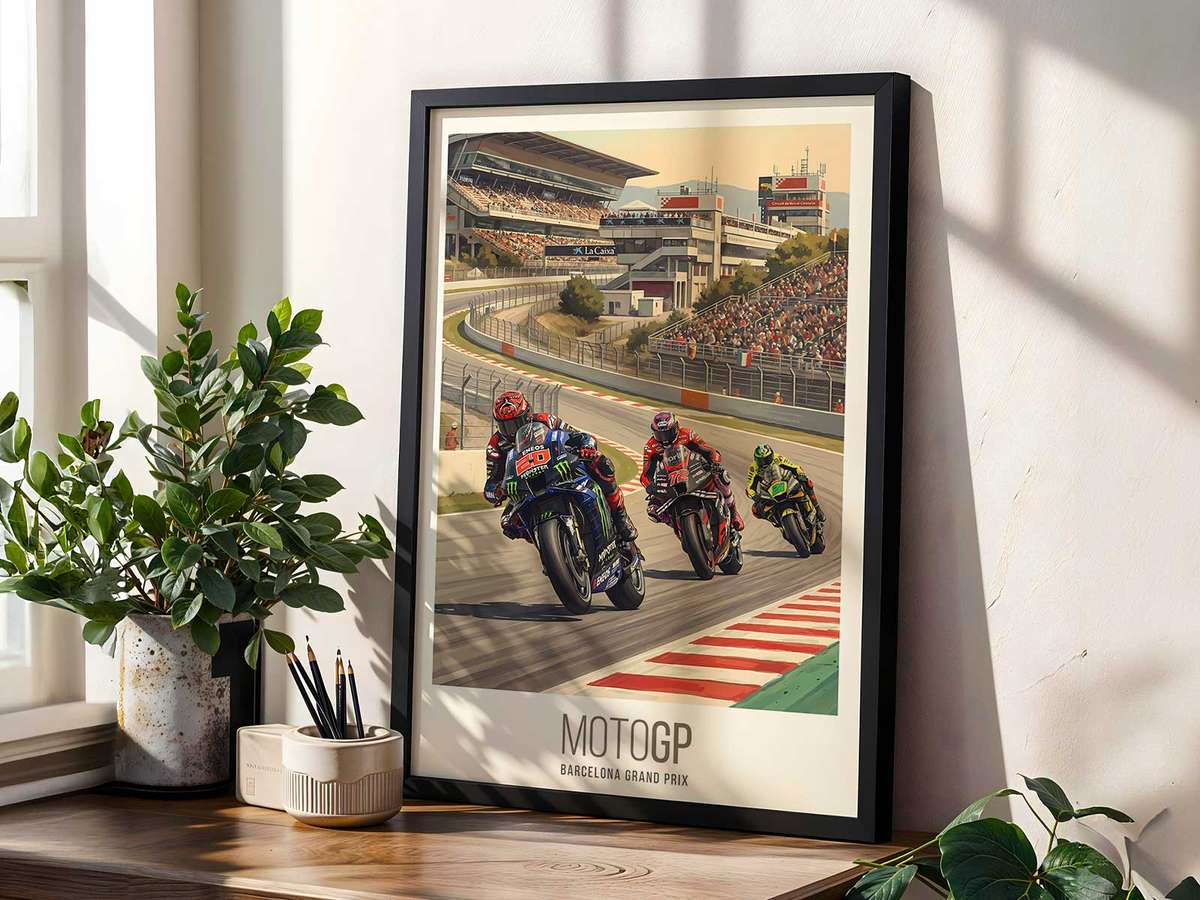
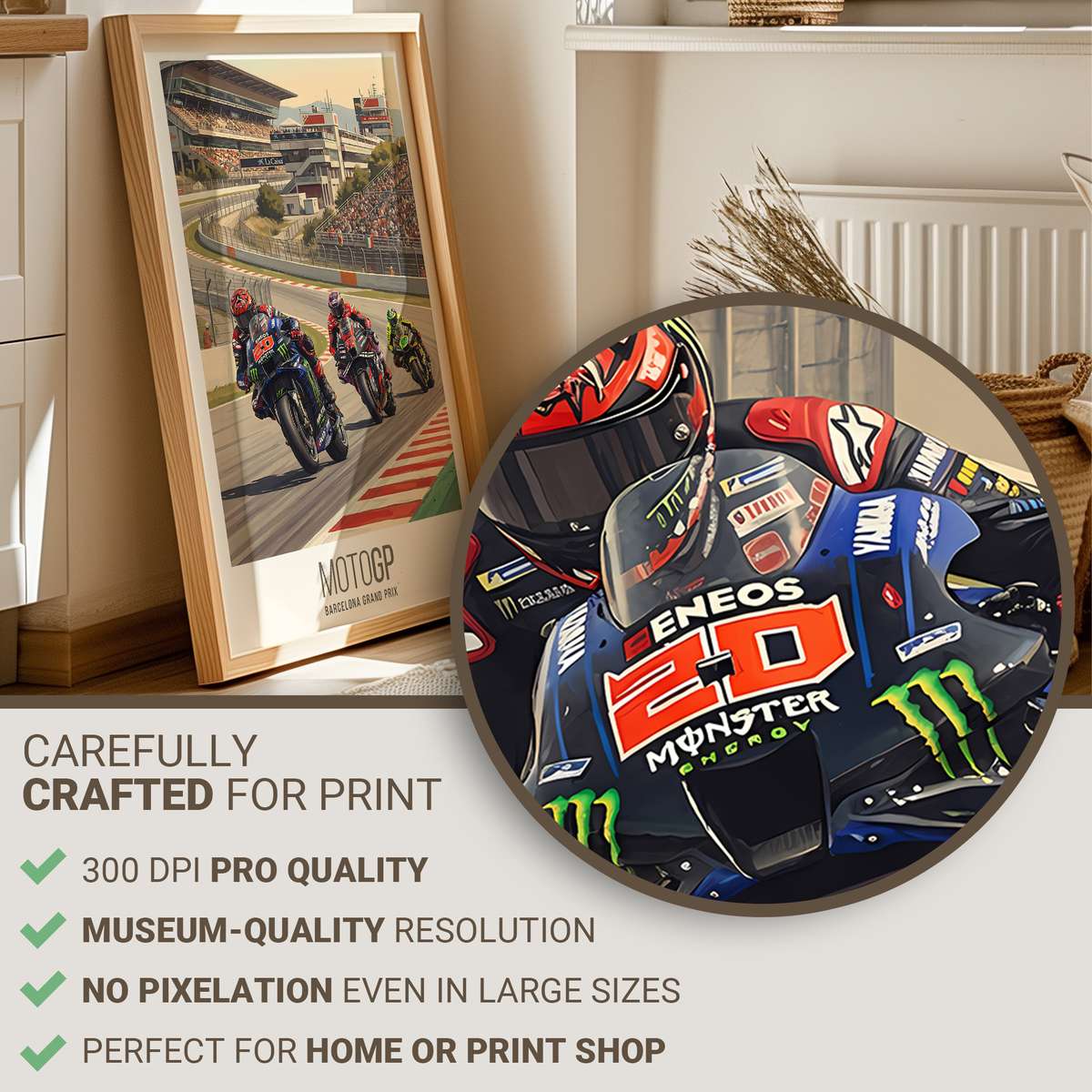
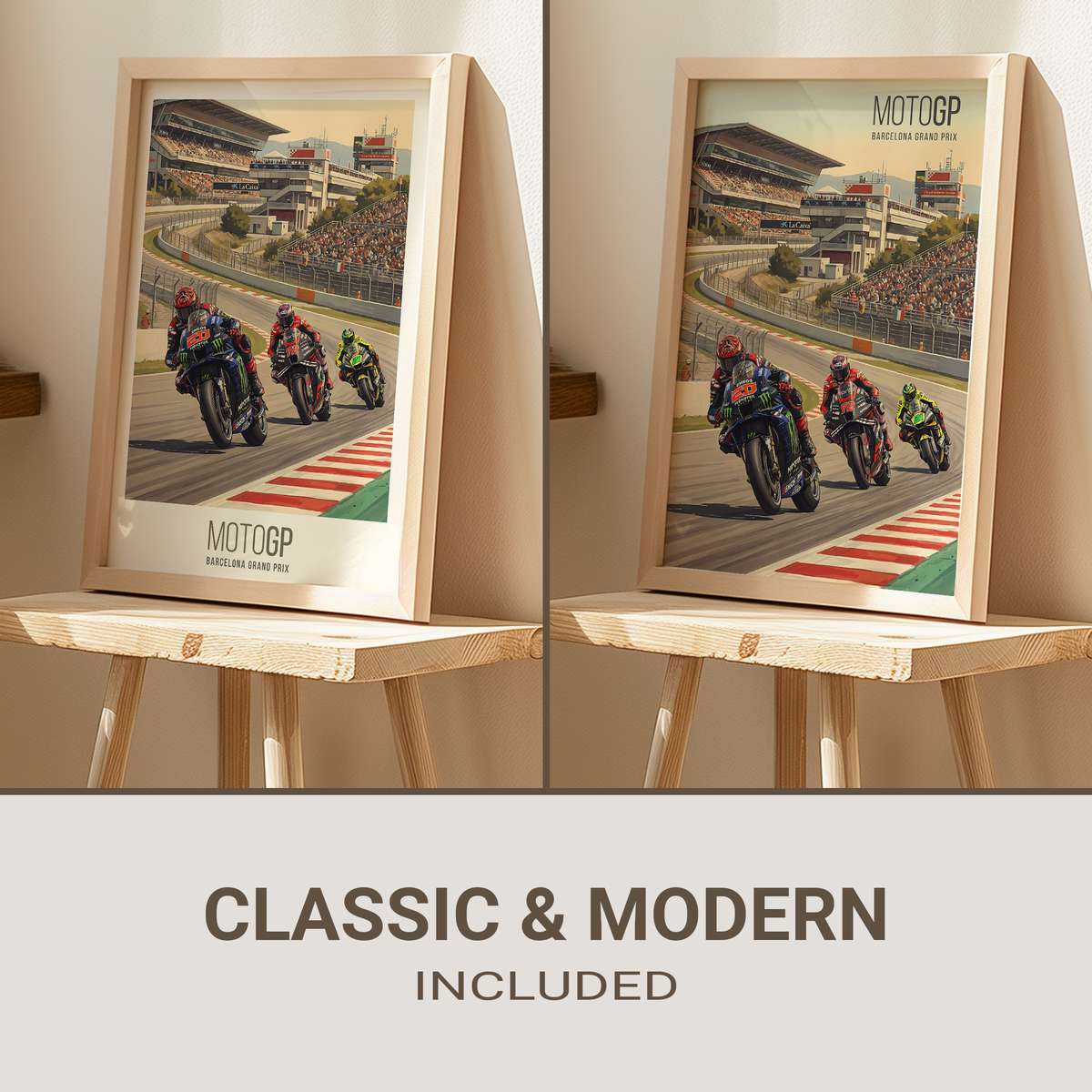
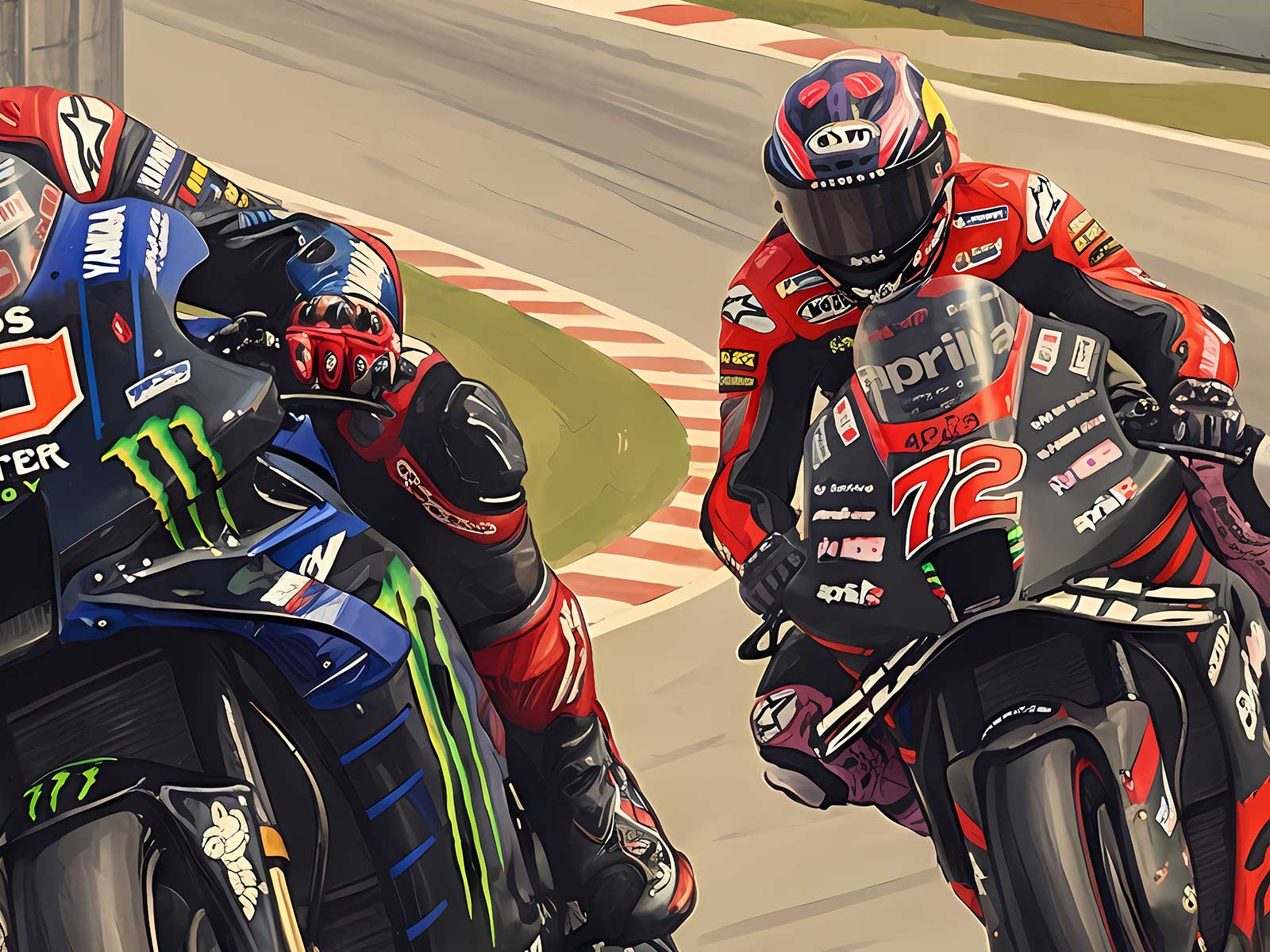
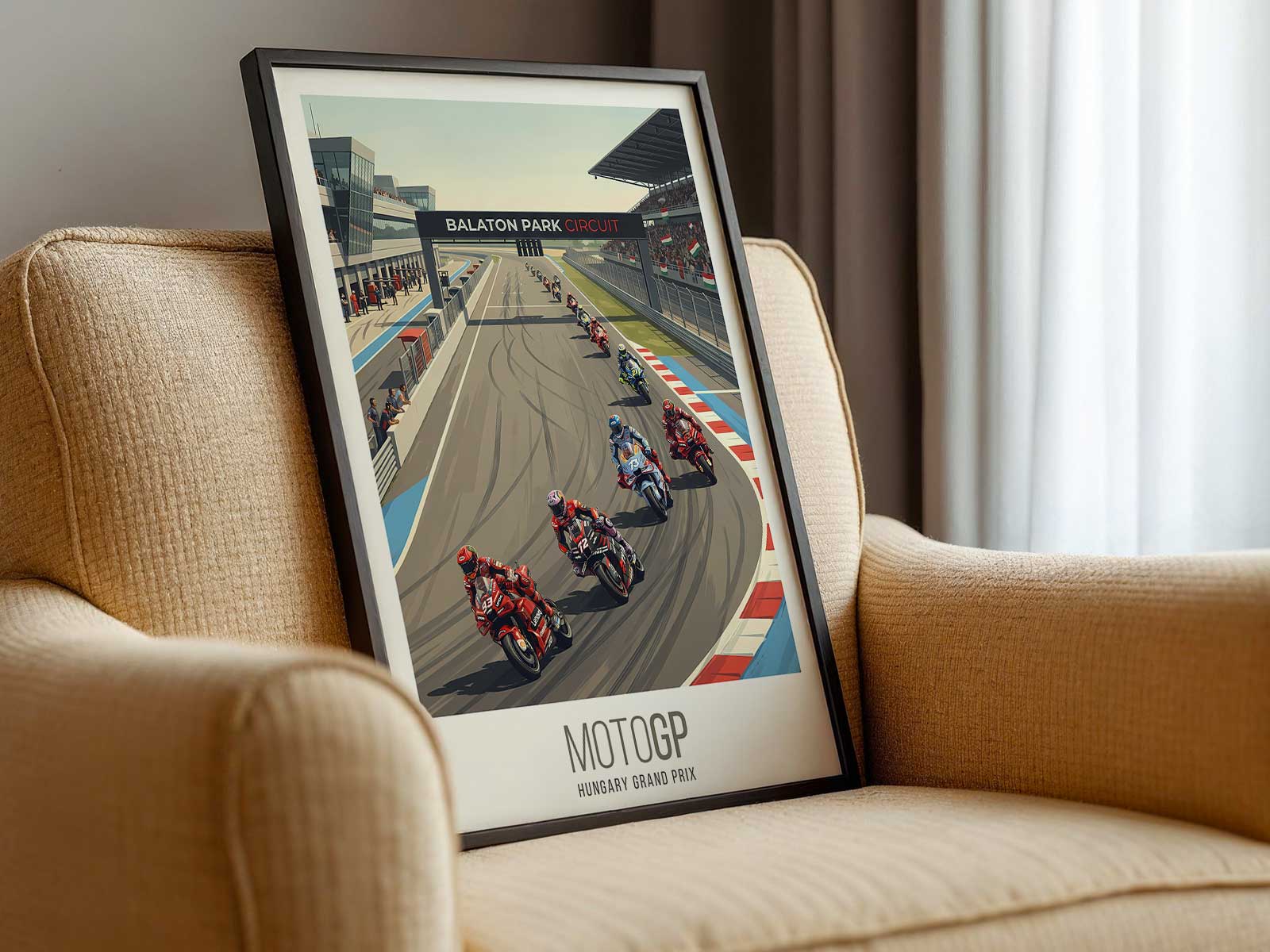
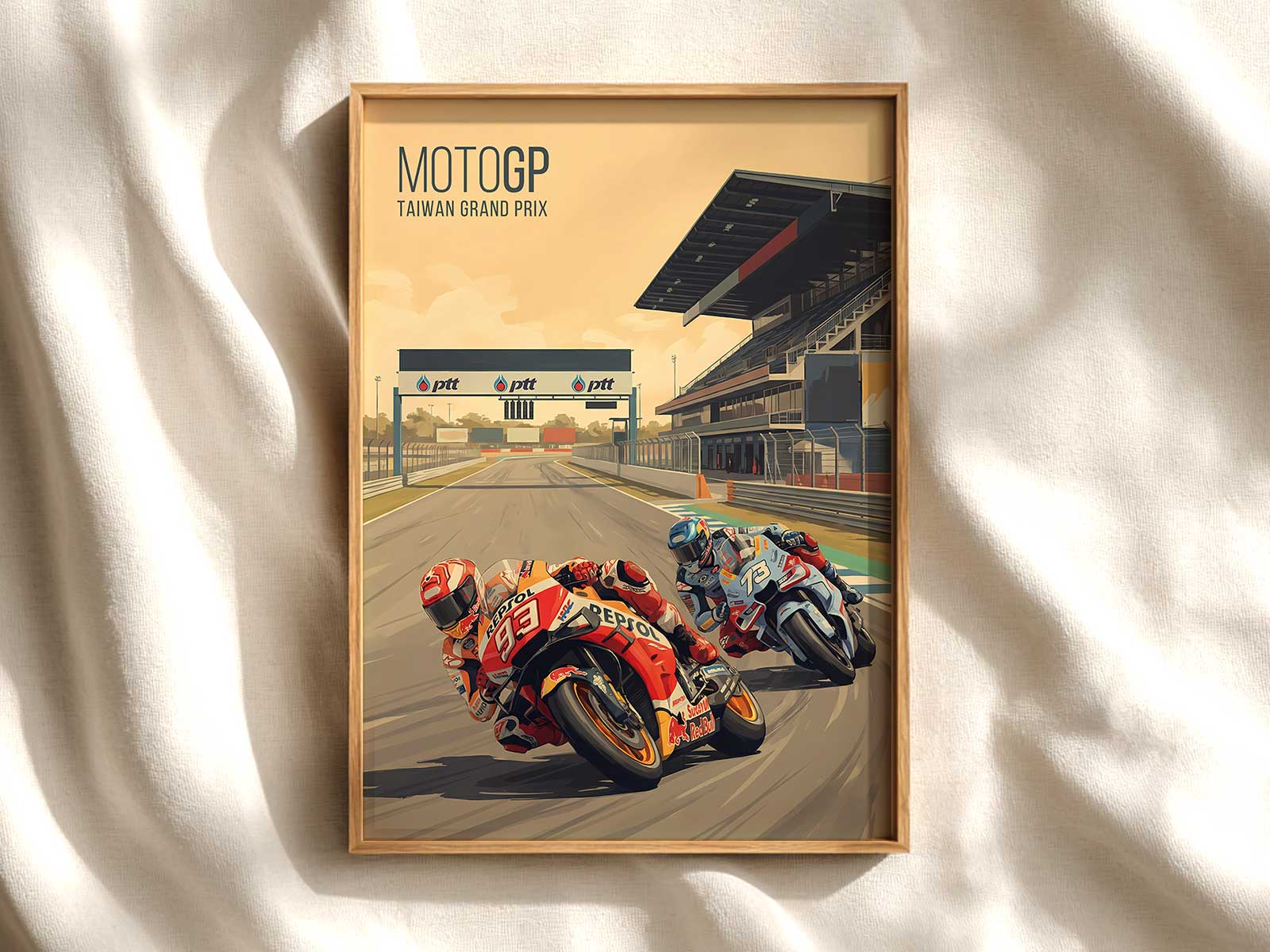
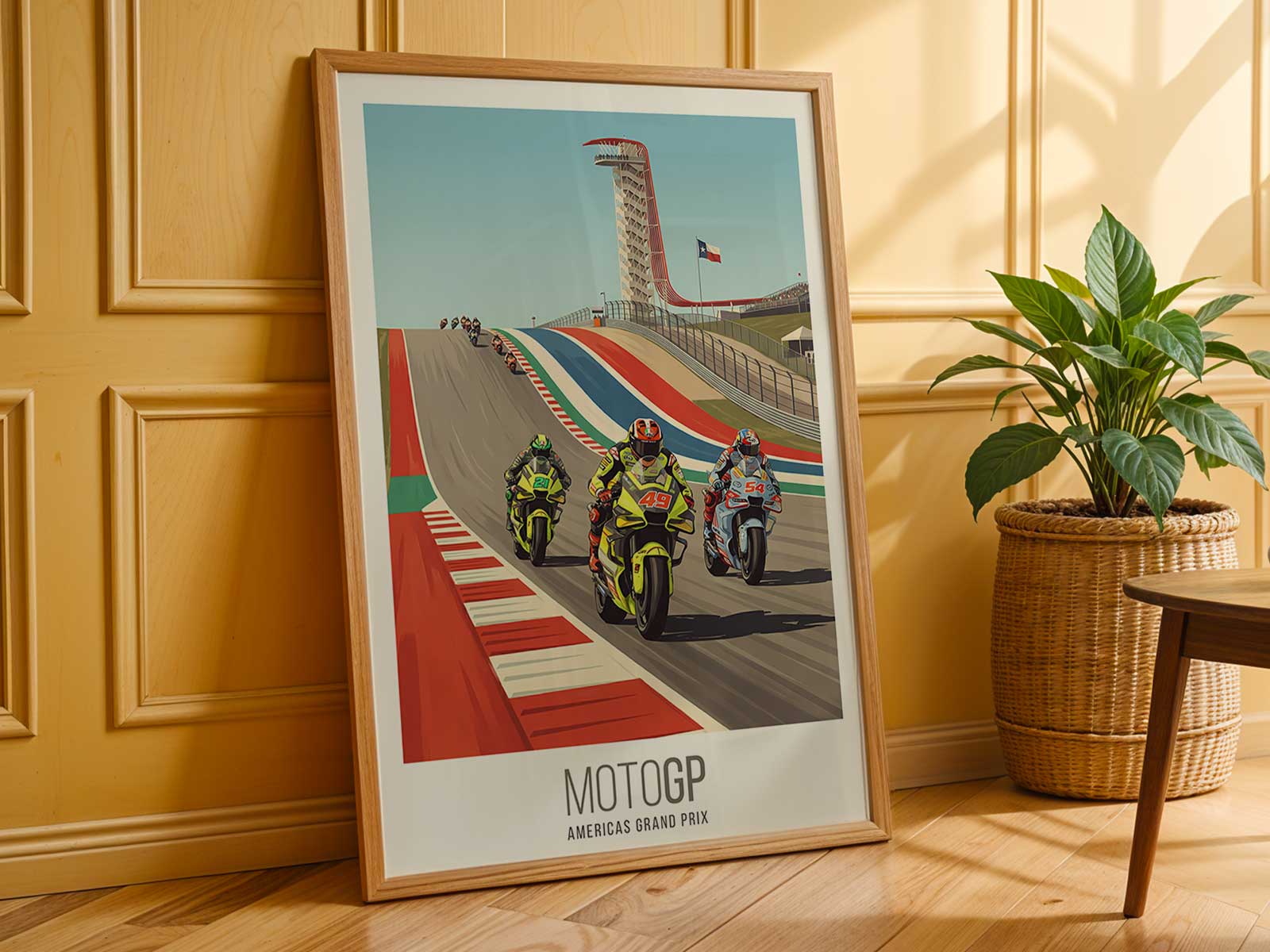
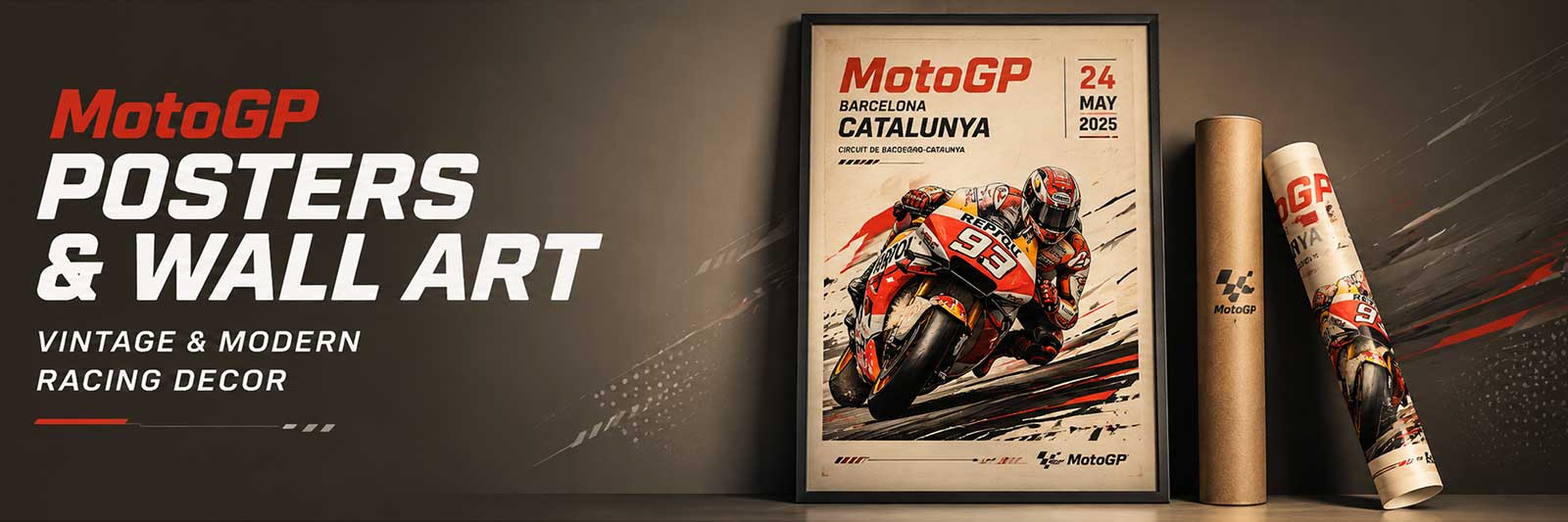
There is a distinct difference between an image that simply looks old and one that reads like a memory. This Fabio Quartararo poster uses a heritage-led visual language to do more than display a rider: it compresses the sensation of a Grand Prix moment into tones, texture and posture. The result is a piece of wall art that feels like rediscovered memorabilia rather than a stylized trend object.
The first thing that signals era and pedigree is the palette. Rather than neon contrasts or hyper-saturated brand color, the poster leans on restrained hues—muted racing blues, sun-faded whites and restrained blacks—paired with the soft warmth of printed-paper tones or subtle film grain. These visual choices suggest an atmospheric afternoon at the circuit: heat on the tarmac, rubber-slick sheen on the fairing, and the particular yellowing you expect from years of handled posters and paddock programs. That implied wear invites an emotional reading: this is an image with a past.
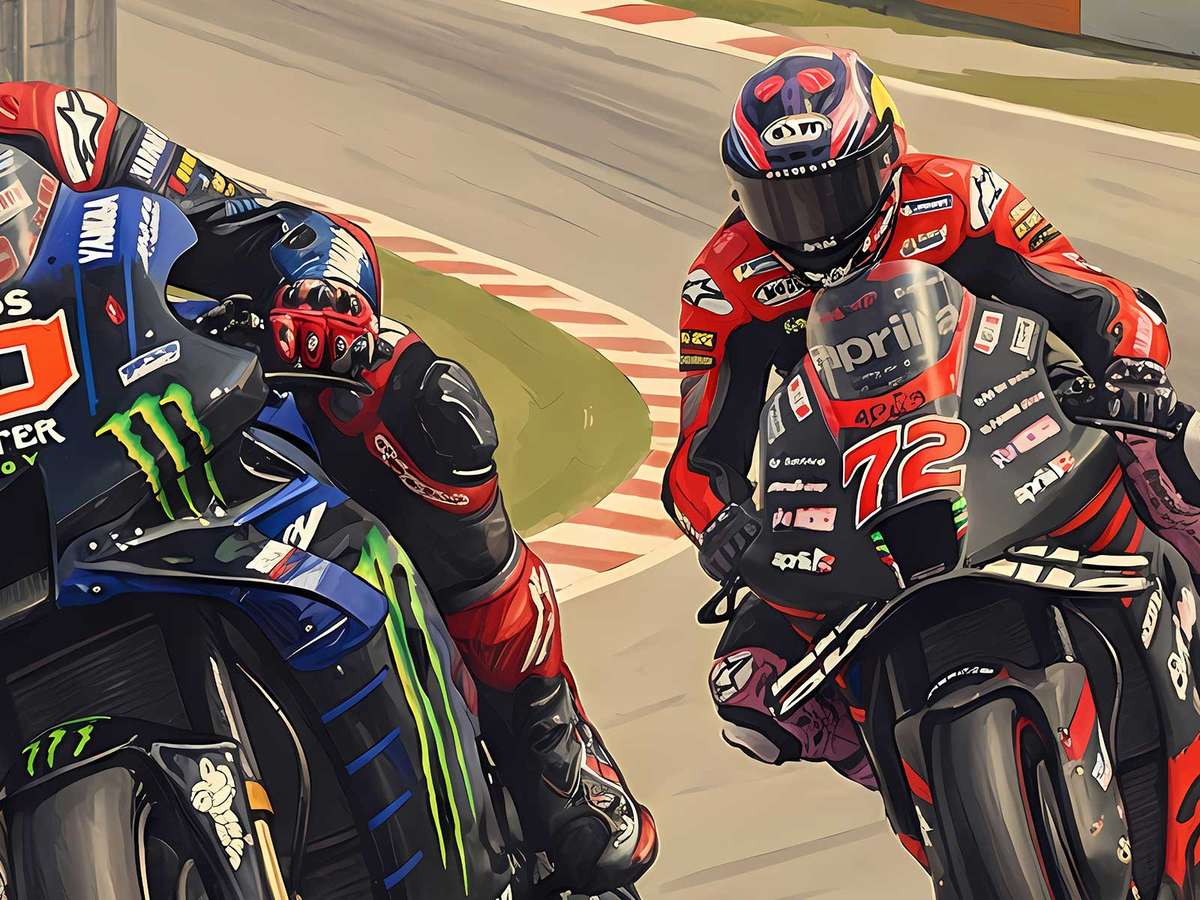
Compositionally, the poster privileges machine-rider tension over flashy motion blur. A low camera angle or a tightly cropped lean emphasizes the sculptural silhouette of the bike and the purposeful posture of Quartararo. The compression of speed into a still frame is achieved through visual cues—the angle of the front wheel, the tucked chin, the line of the elbow—so the viewer feels the stored energy rather than merely seeing it. This is what gives the piece presence on a wall: it reads as concentrated kinetic memory, not a frozen advertisement.
Typography and graphic restraint play a quiet role. Period-minded type—simple, geometric, slightly condensed—combined with sparse labeling or a modest race-detail strip, anchors the image in a time-aware design language. Where modern graphics often shout, this poster whispers. That restraint is essential to its collector appeal: it feels curated, as if chosen by someone who values lineage and subtlety over loud logos.
[IMAGE_INSERT_ARTICLE_01]
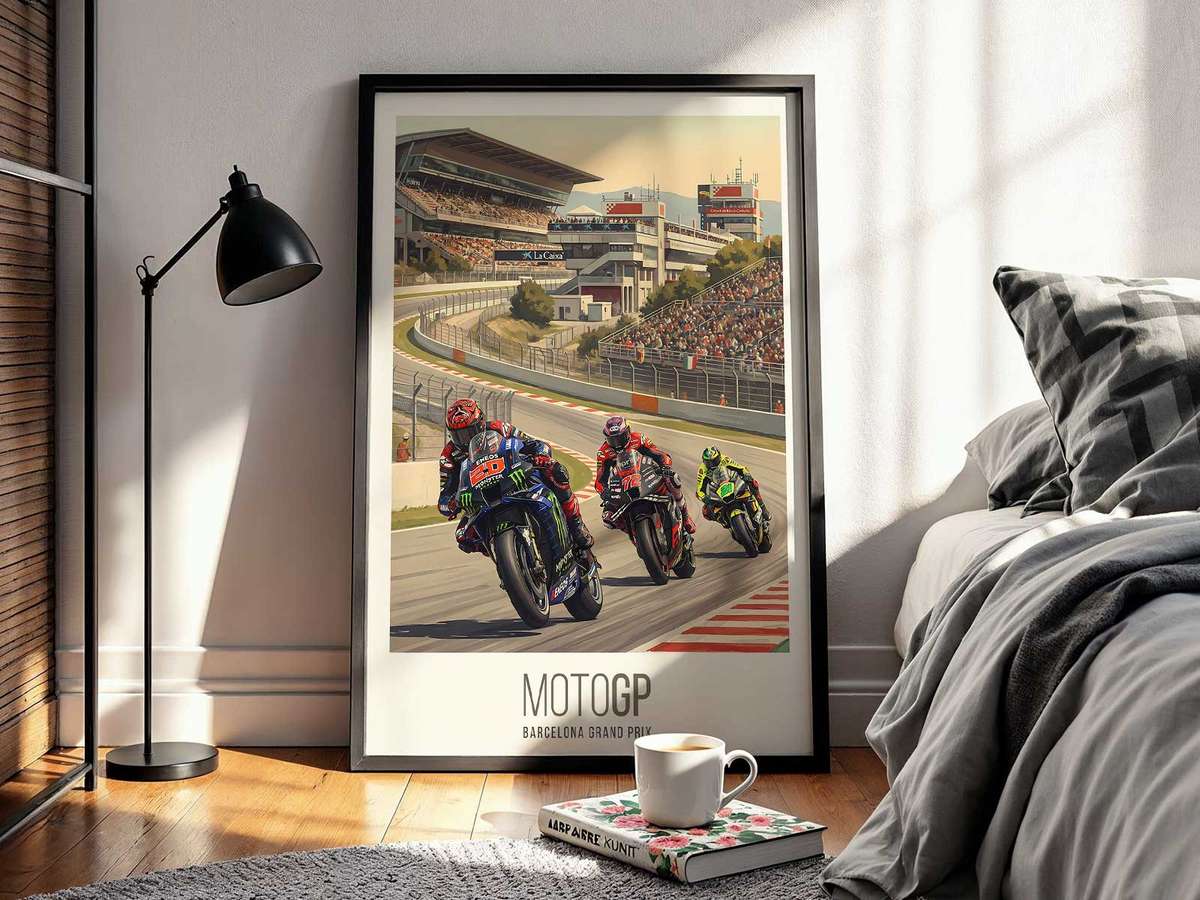
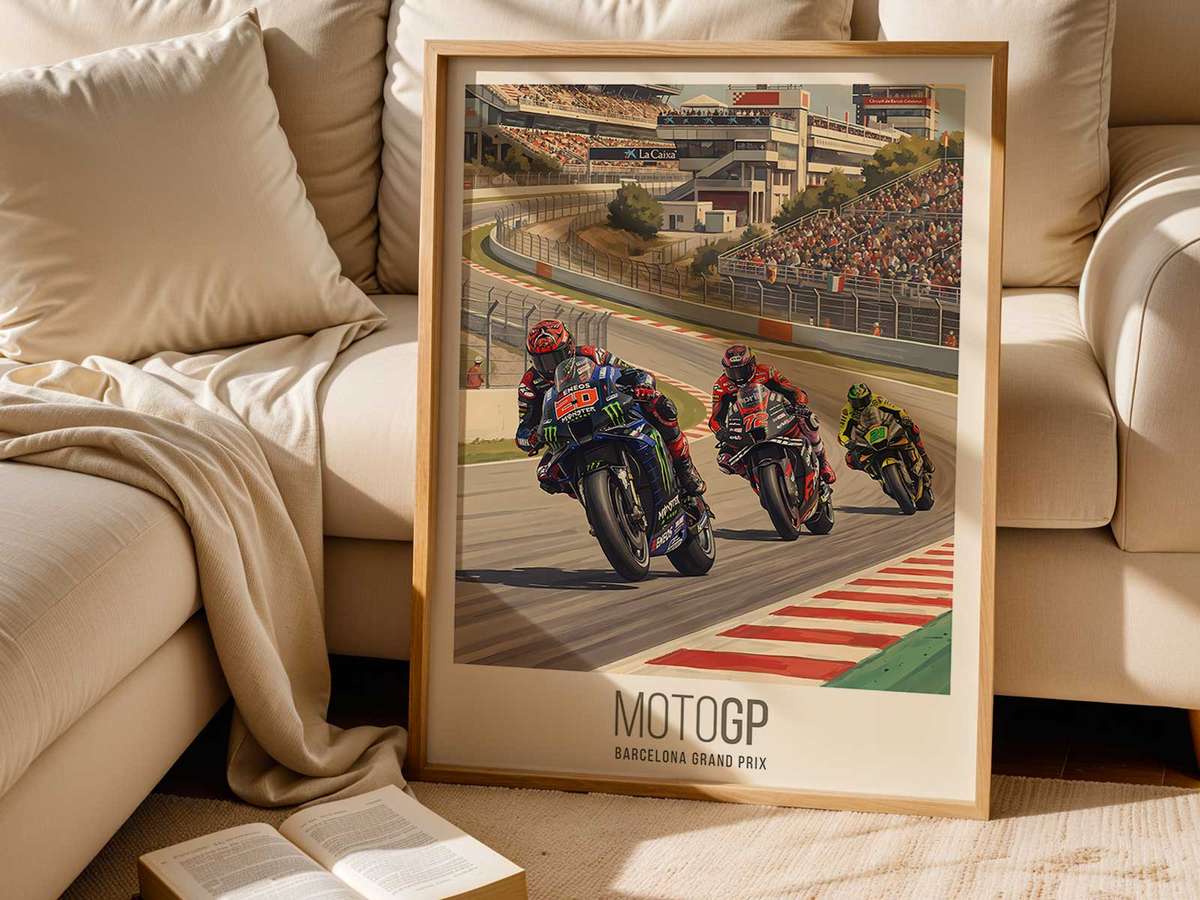
Texture is another storyteller. Whether suggested by simulated screen-print dots, a linen-paper impression, or a gentle vignette that mimics light falloff in older lenses, these tactile hints turn a digital print into something more intimate. In an interior, such textures catch the eye without dominating the room. Placed above a desk, in a study, or in a garage display, the poster reads like an artifact—an object that brings depth to a space rather than competing with it.
Why does heritage-led racing imagery feel more durable than surface-level retro design? Because it trades on authenticity of feeling rather than on nostalgic shorthand. The poster’s warmth, compositional focus on rider-machine interaction, and typographic modesty give it a narrative: a sense of races lived, circuits remembered, and craftsmanship respected. Even for a modern figure like Fabio Quartararo, framing the subject through this visual language connects present talent to Grand Prix continuity.
For interiors, that continuity matters. Heritage MotoGP art functions like a carefully chosen book or a classic technical drawing: it signals taste and a deeper interest in the story behind the image. In a minimalist study, the poster provides a focal point of motion and history; in a collector’s room, it complements helmets, program covers, and model bikes by adding a layered visual voice. It’s less about decoration and more about atmosphere—introducing the smell of burnt rubber and hot metal through color and composition.
Ultimately, this Fabio Quartararo poster succeeds because it trusts the viewer’s memory of racing culture. It lets the eye reconstruct the scene from cues—lean angle, helmet silhouette, sun-bleached palette—so the poster becomes an invitation to remember or to imagine. That subtlety is what makes heritage-led MotoGP imagery enduring on the wall: it offers narrative density, aesthetic restraint, and the quiet confidence of something designed to age well.