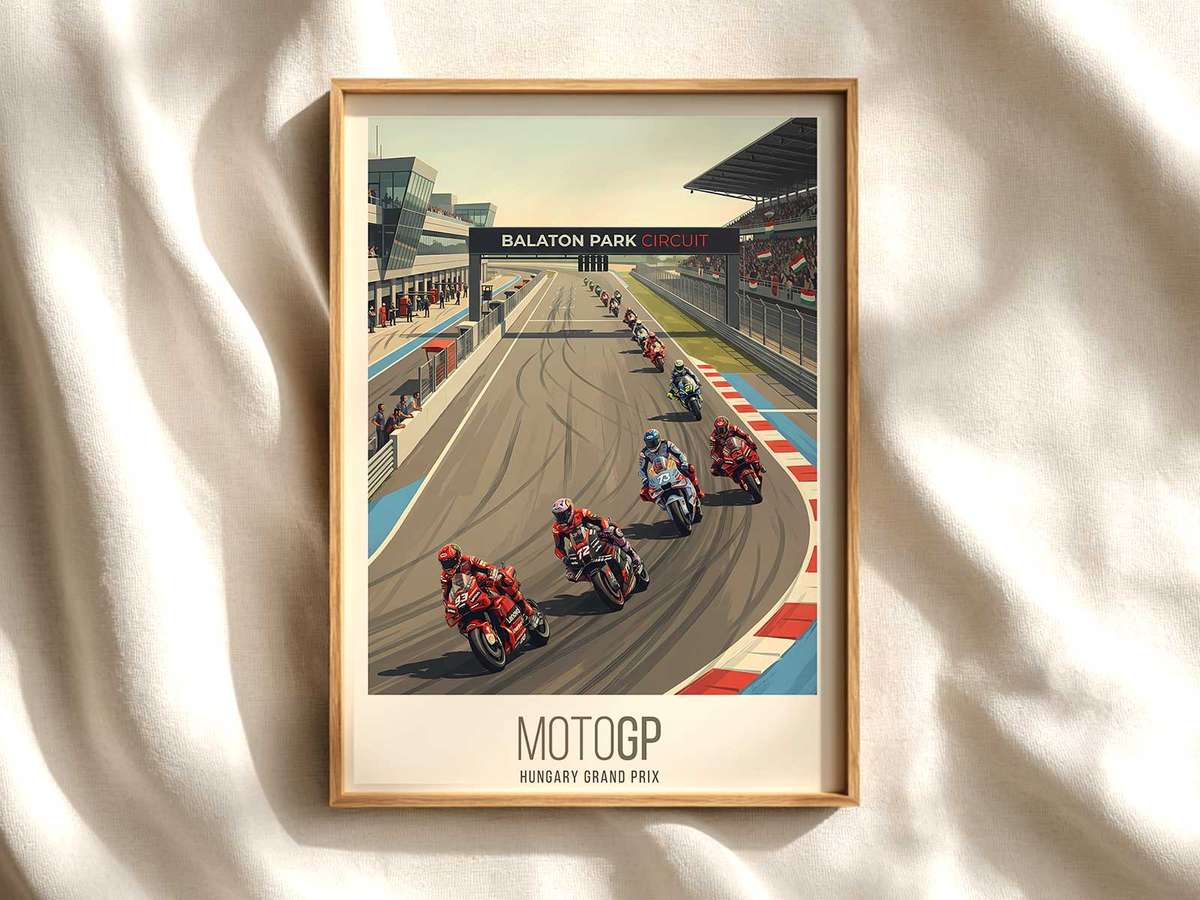
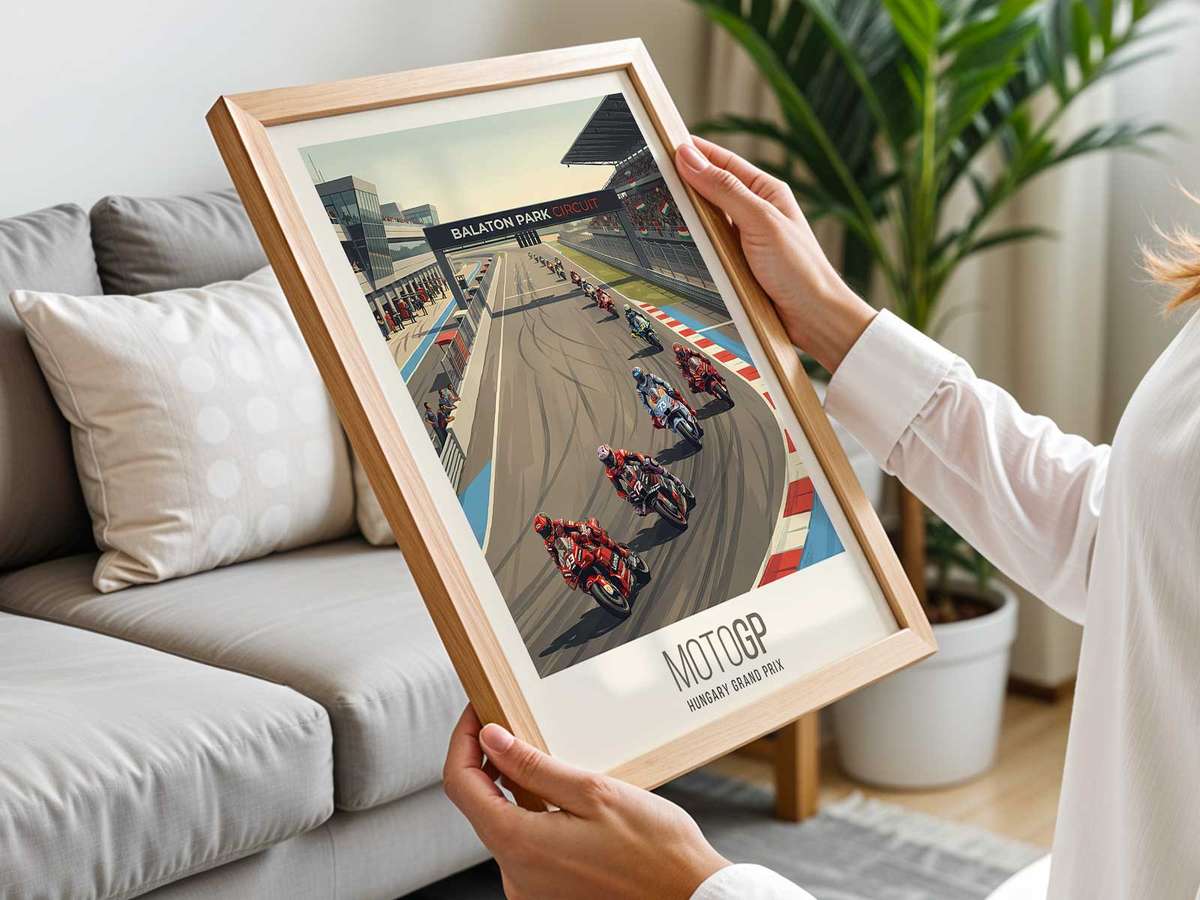
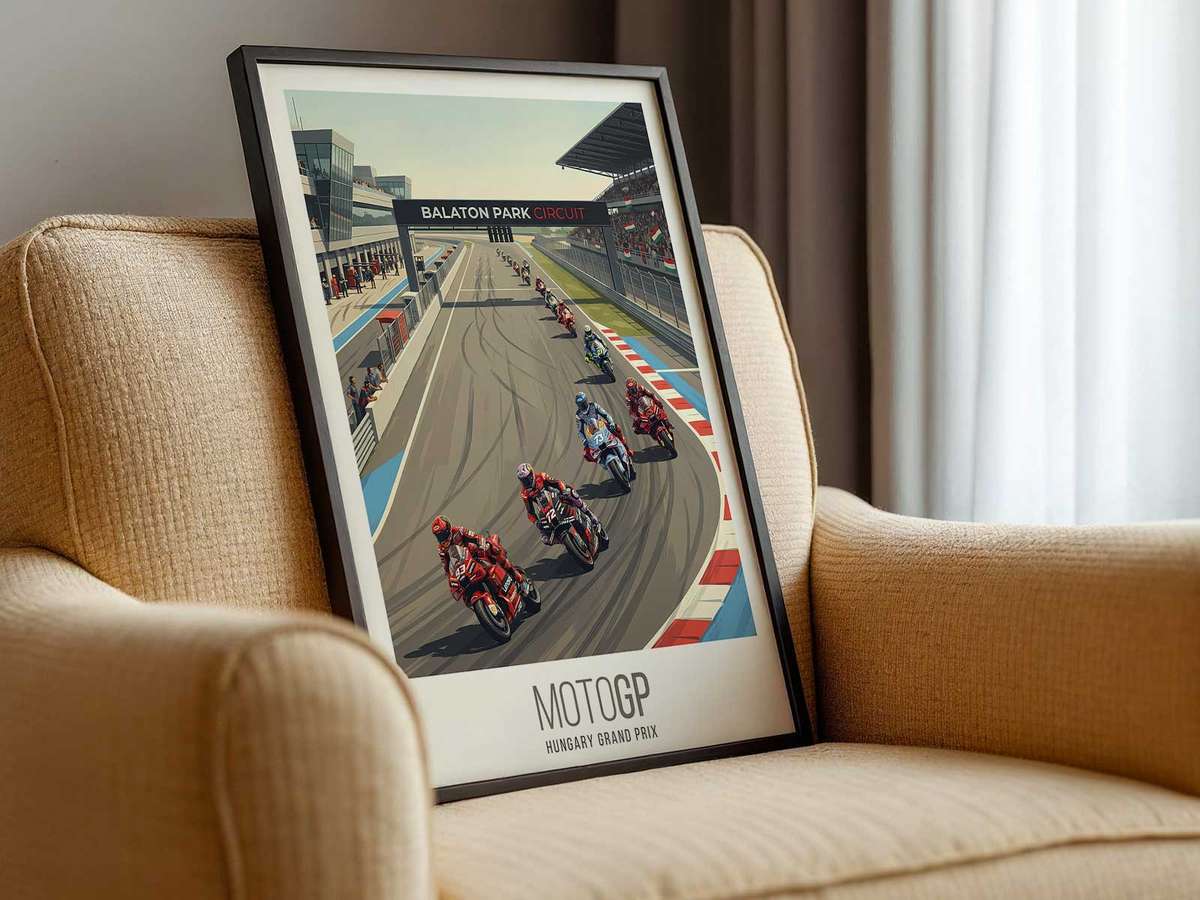
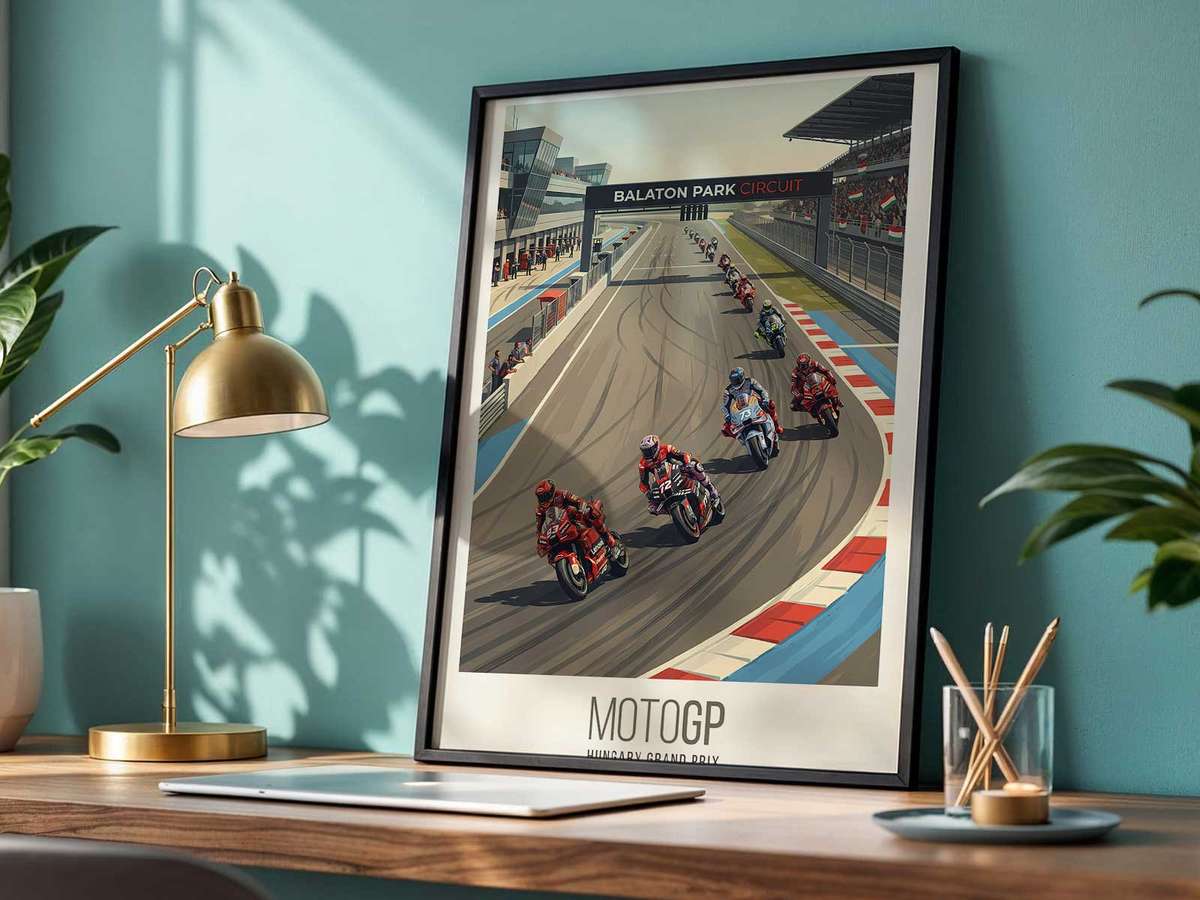
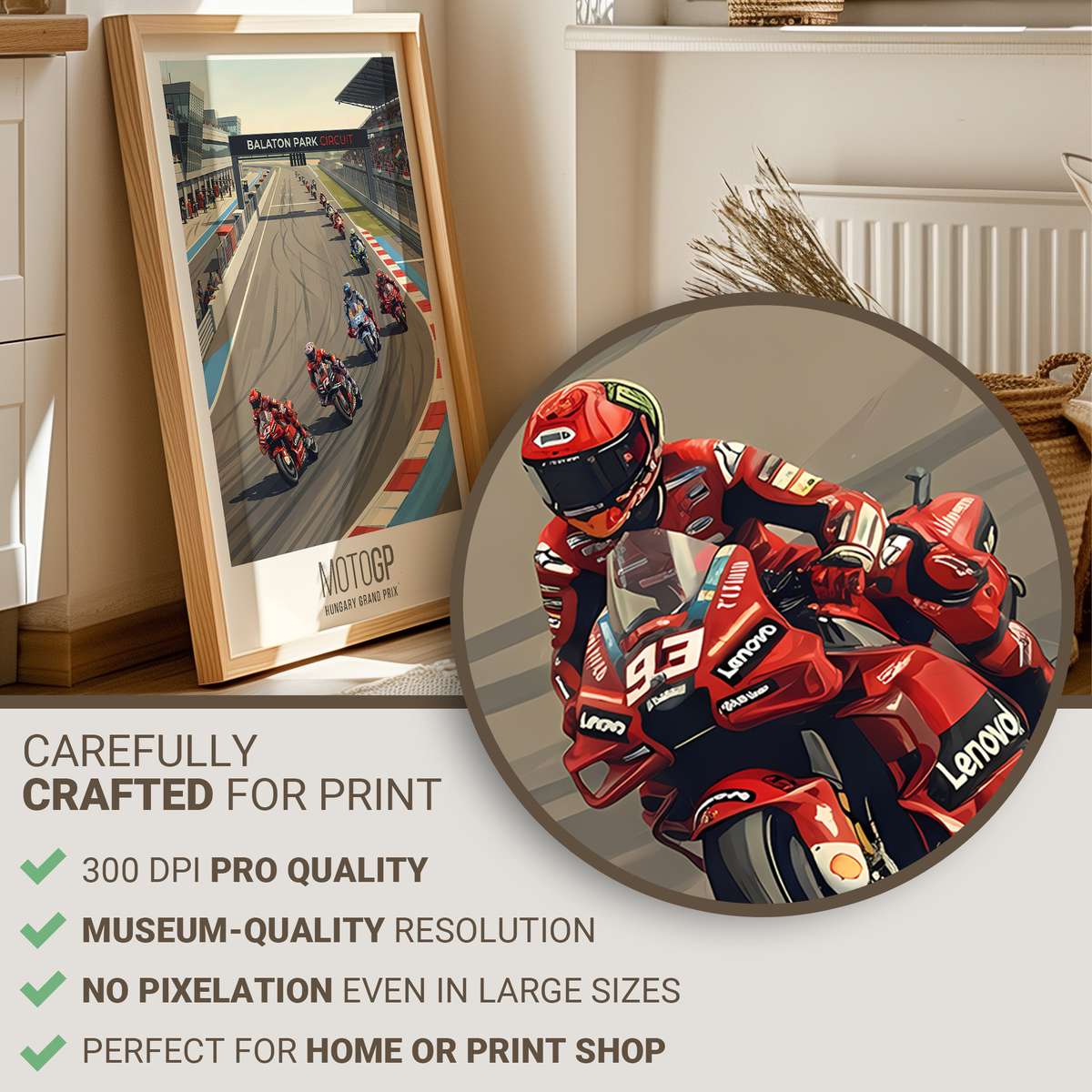
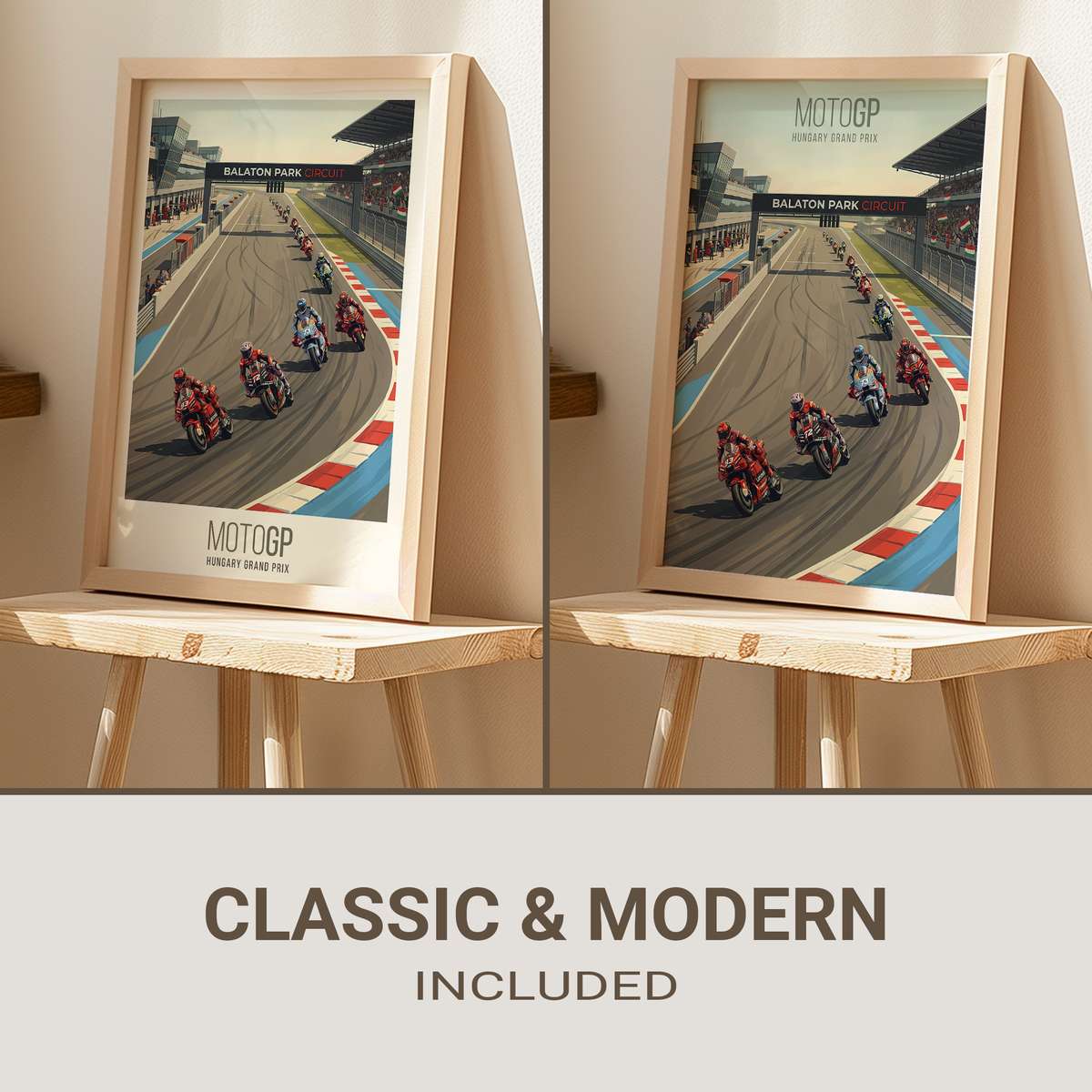
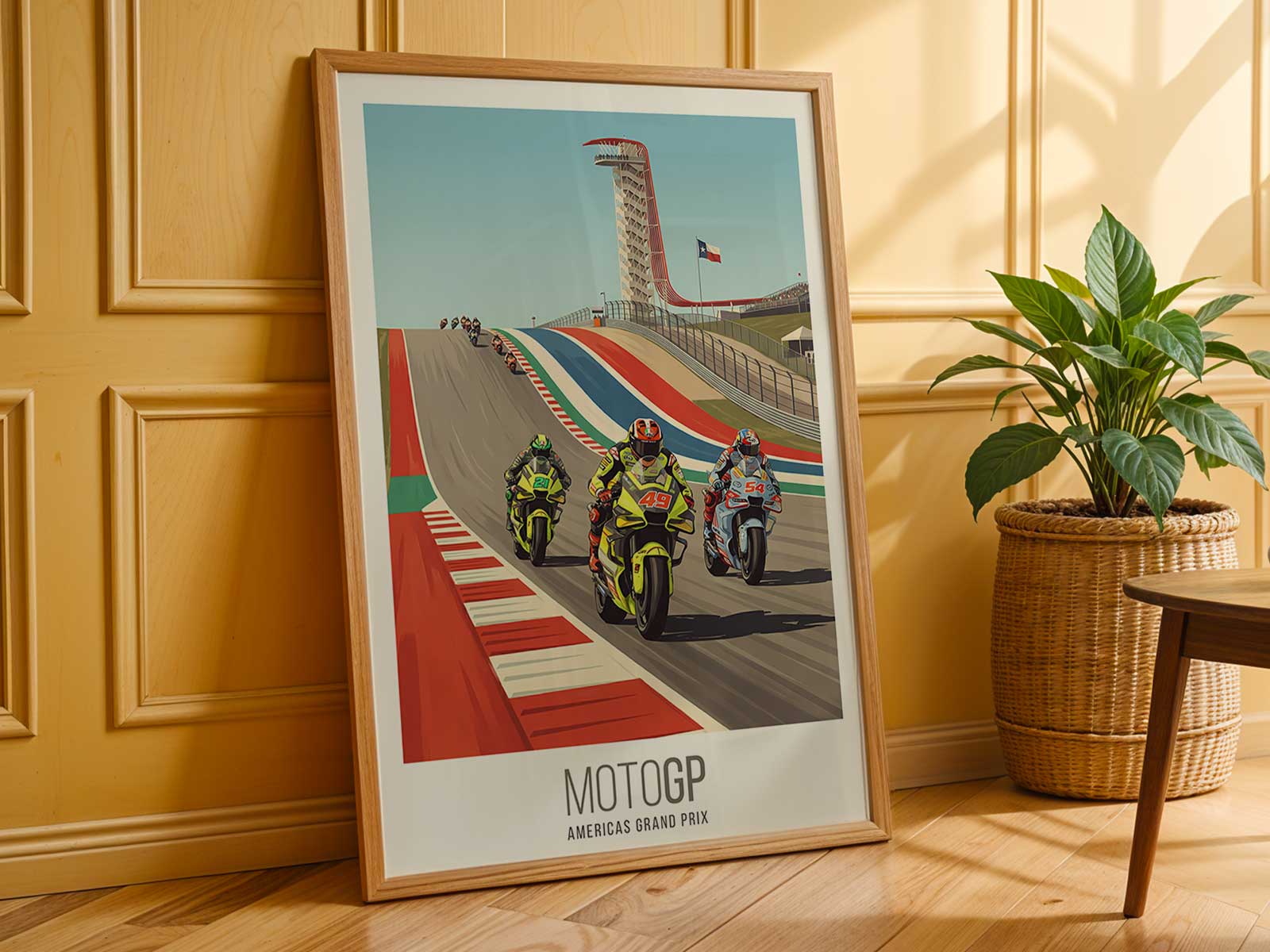
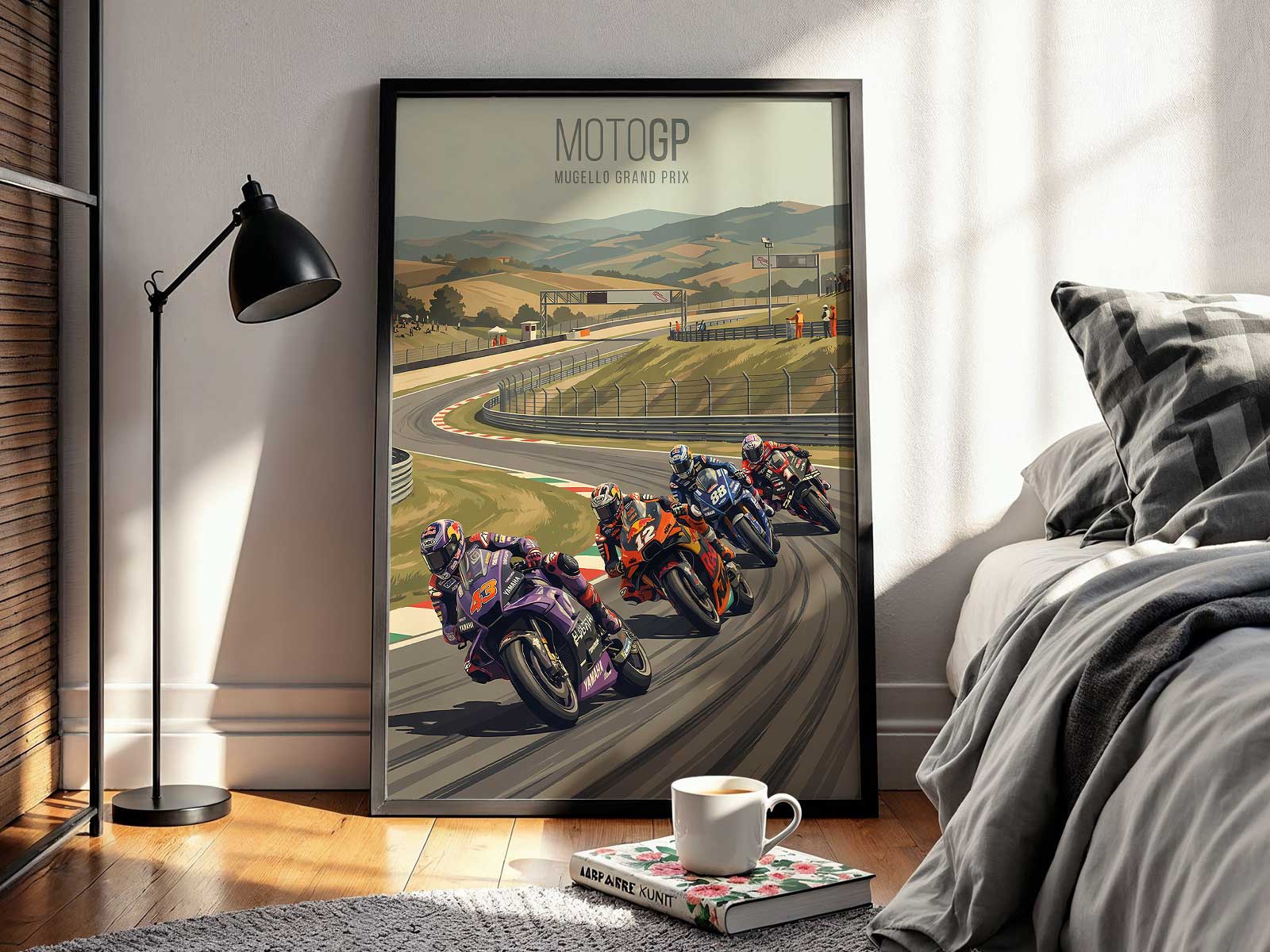
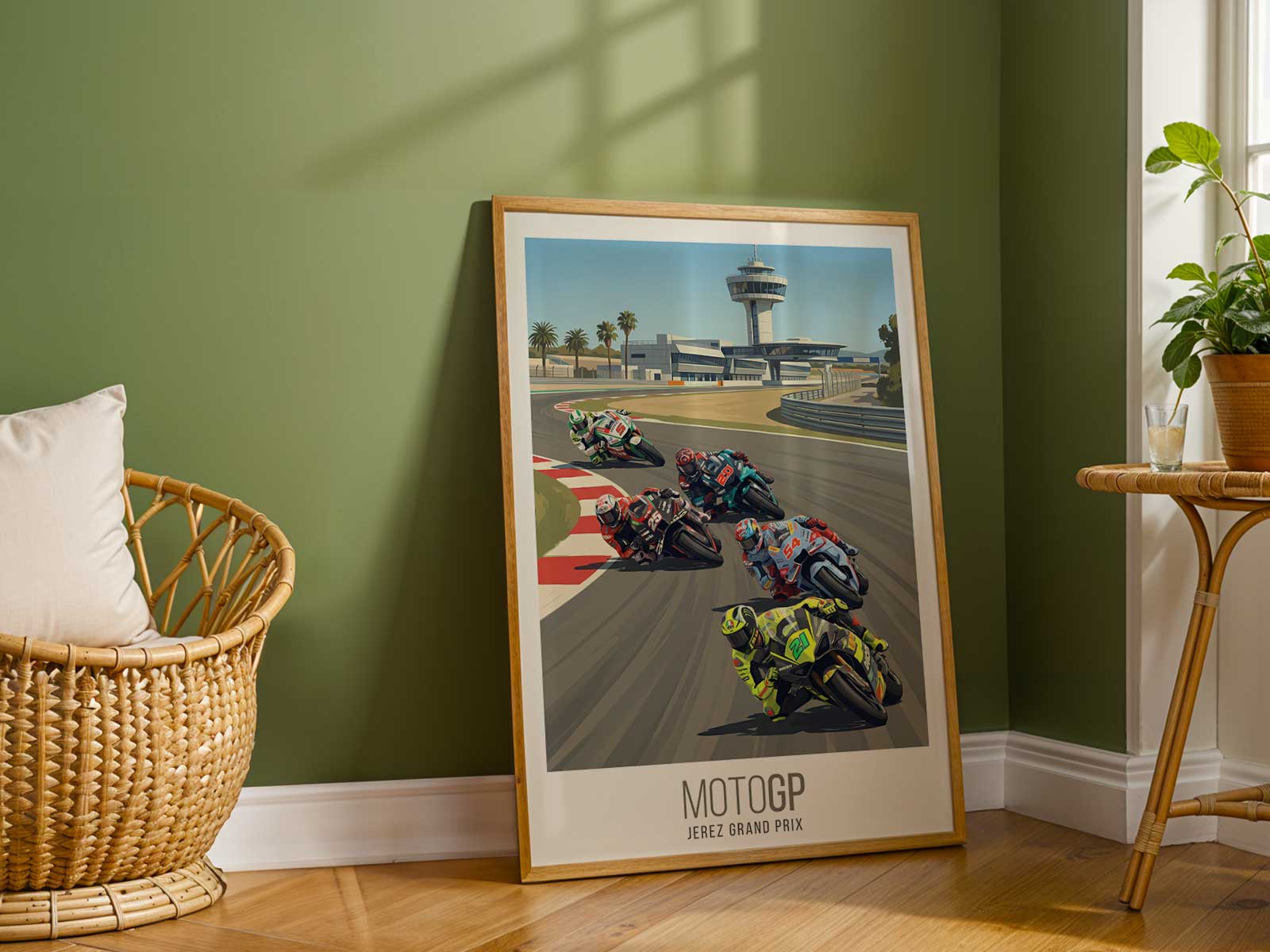
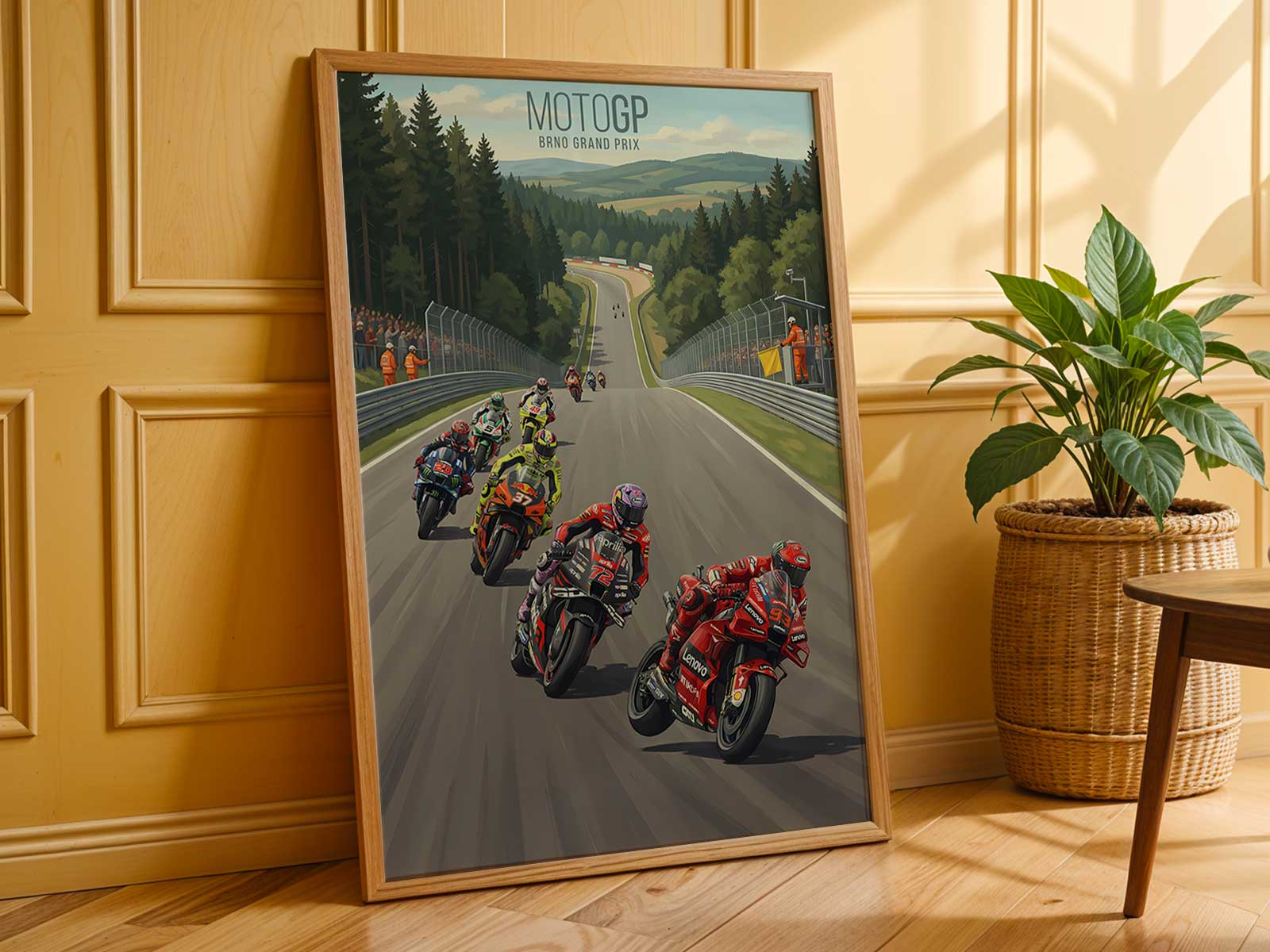
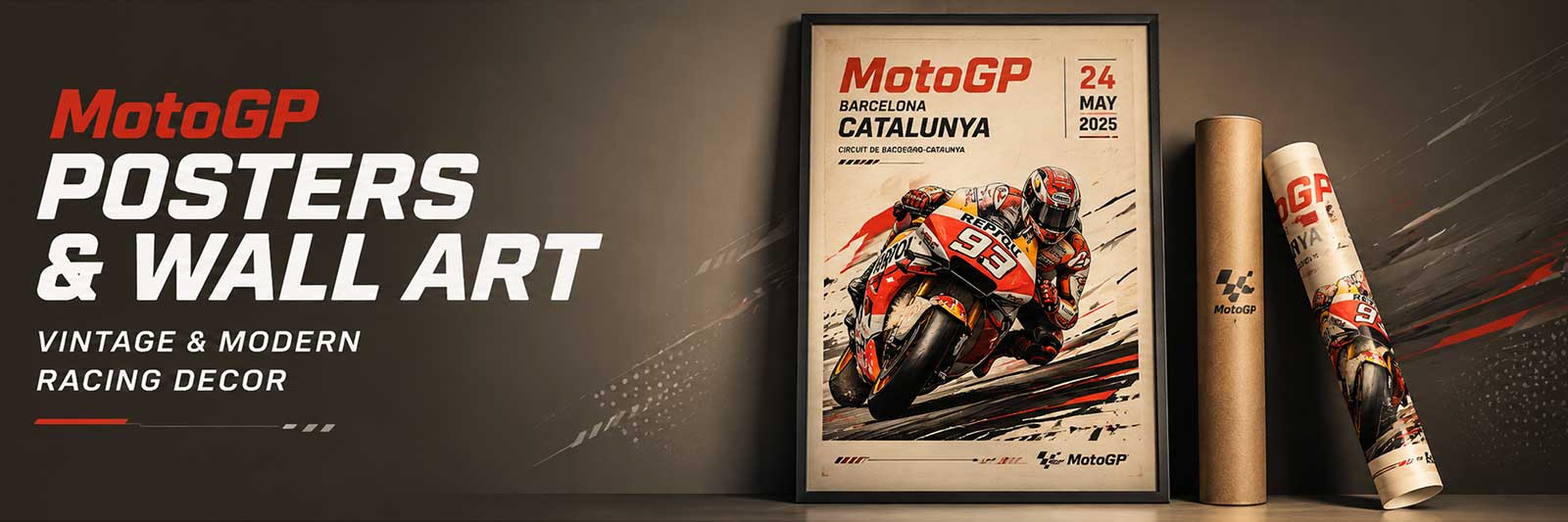
A Marco Bezzecchi poster works like a concentrated race memory: a single frame that compresses speed, rider intent and machine geometry into a visual force that can define a room. What makes MotoGP imagery so persuasive as wall art is not only the subject — a rider and his bike — but the way motion, lean and mechanical detail are rendered as pure composition. In this poster the lean angle becomes an architectural line, the rider's posture an expressive gesture, and the bike's silhouette an emblem of engineered tension. Together they convert an ordinary wall into a stage for speed.
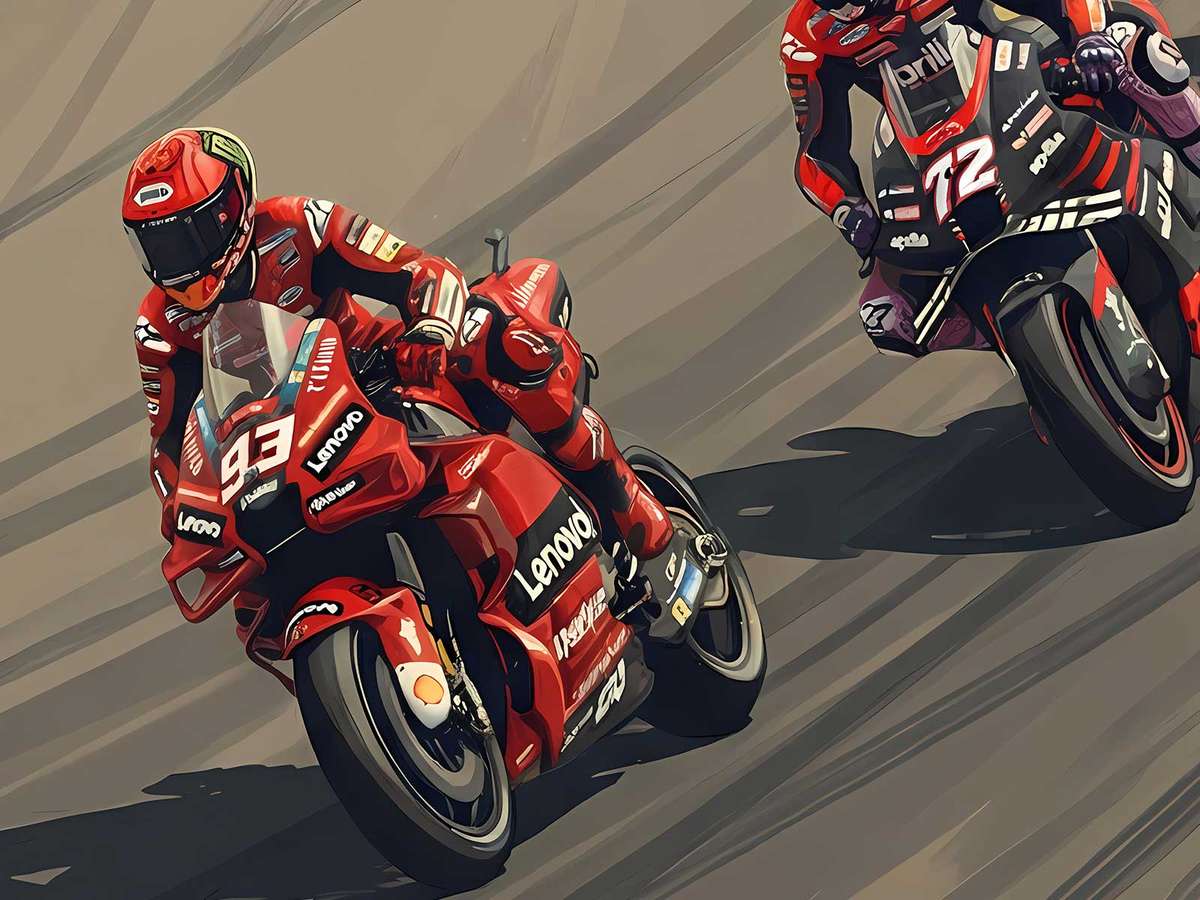
Look closely and the elements that usually belong to the track become interior-friendly design components. The sweeping curve of a tyre trace reads like a bold graphic; the compression of a braking moment is a study in contrast and shadow; and the textured blur of asphalt and heat haze gives depth without clutter. These are the visual cues that make a Marco Bezzecchi poster more than memorabilia: it is an artefact that translates kinetic drama into a quiet, museum-ready presence.
[IMAGE_INSERT_ARTICLE_01]
The poster's compositional choices are what create atmosphere. A low camera angle exaggerates the bike's mass and the rider's commitment; a cropped frame isolates the essential tension between rider and machine; color accents — the helmet, leathers, or sponsor livery — puncture a neutral palette with points of energy. For an interior, those accents act like curated color notes, allowing the artwork to anchor a scheme without overwhelming it. Place it above a sideboard, behind a desk, or in a workshop and the image will read as both statement and context: racing as mood rather than slogan.
On a practical level, MotoGP posters perform beautifully in rooms that benefit from a directional pulse. In studios and offices the implied motion draws the eye and suggests forward momentum; in a garage or game room the poster resonates with the mechanical objects already present, harmonizing with tools, trophies or model bikes. The collector's appeal is subtler here: ownership is about holding a framed moment of ritual — the cornering line, the torque-loaded rear tyre, the tucked knee — rather than a checklist of results. That narrative quality is what makes the poster suitable for design-minded interiors as much as for fan displays.
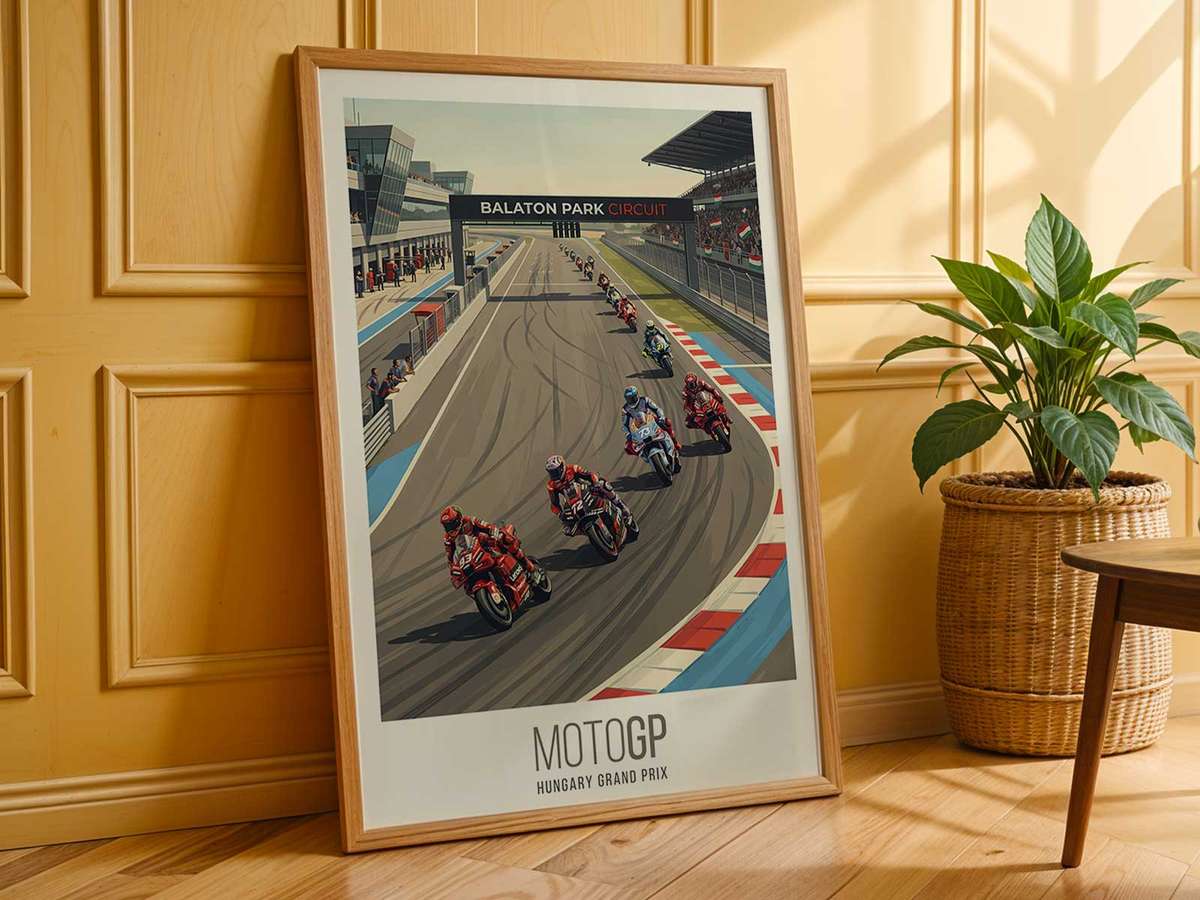
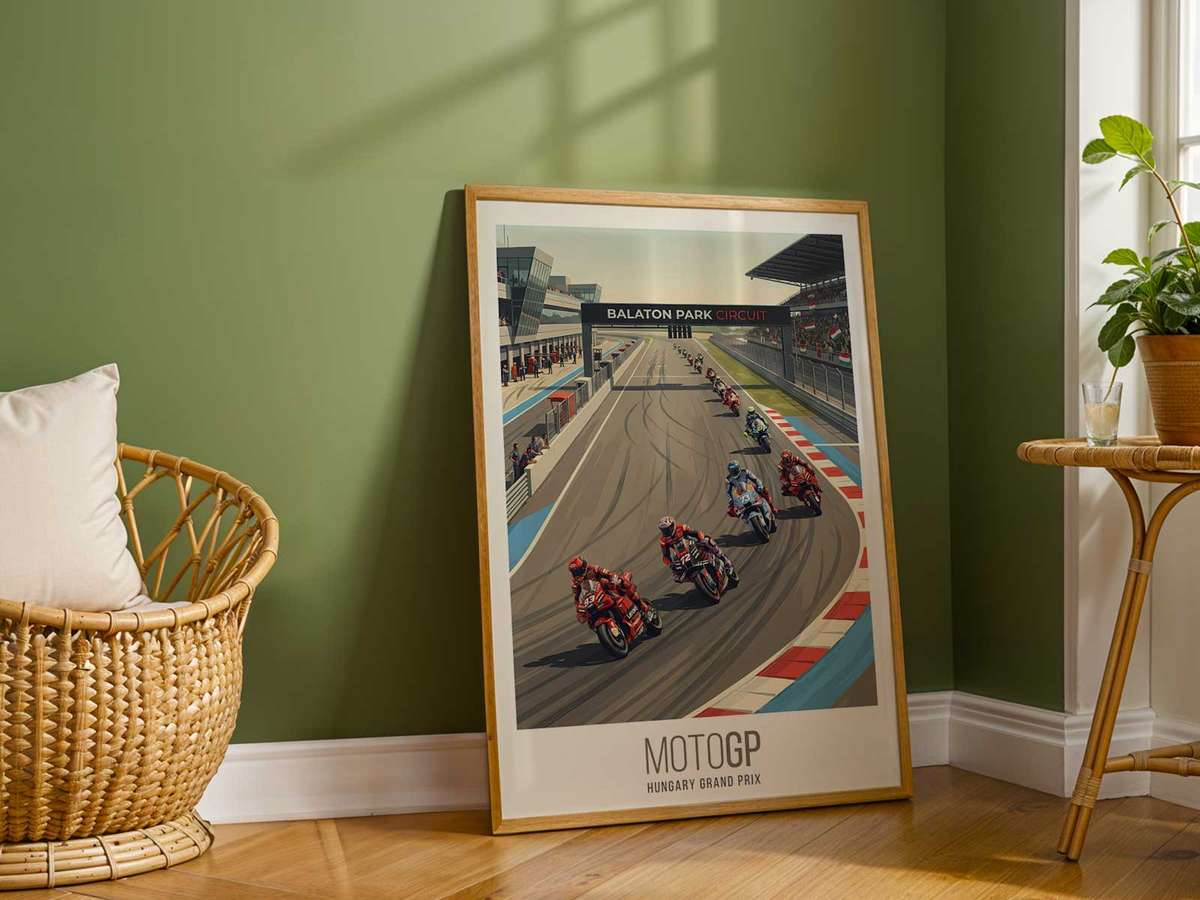
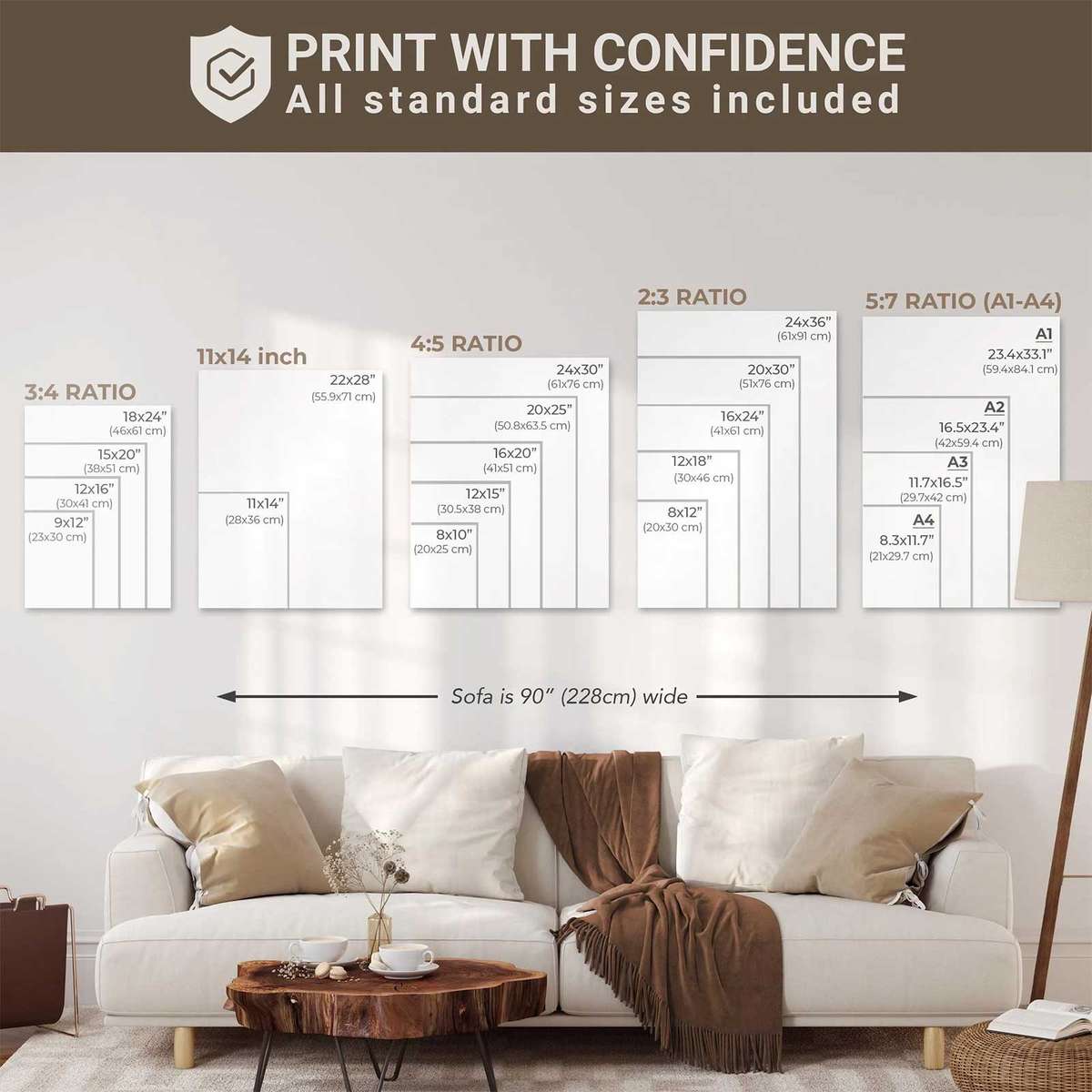
Visually, the poster lends itself to careful styling. Pair it with matte black frames to emphasize silhouette, or choose a slim aluminium frame to enhance the technical, engineered aspect of the subject. A white mount lets the composition breathe on a pale wall; a deep, saturated wall color absorbs light and amplifies the poster's contrasts. Because the image is about motion contained, it complements minimal settings where a single strong piece defines the room's tone, but it can also form part of a layered gallery wall where its directional energy balances quieter, static works.
Ultimately, a Marco Bezzecchi poster succeeds as wall art because it translates the intangible drivers of motorsport — focus, risk, precision — into visible form. It is not just a representation of a rider; it is an exercise in visual compression where lean and speed are legible, where machine detail becomes texture, and where the circuit's atmosphere is suggested rather than explained. For anyone looking to bring a clearer racing identity into a space, the poster offers a refined, atmospheric way to do it: a single image that dresses the room with the logic of motion.