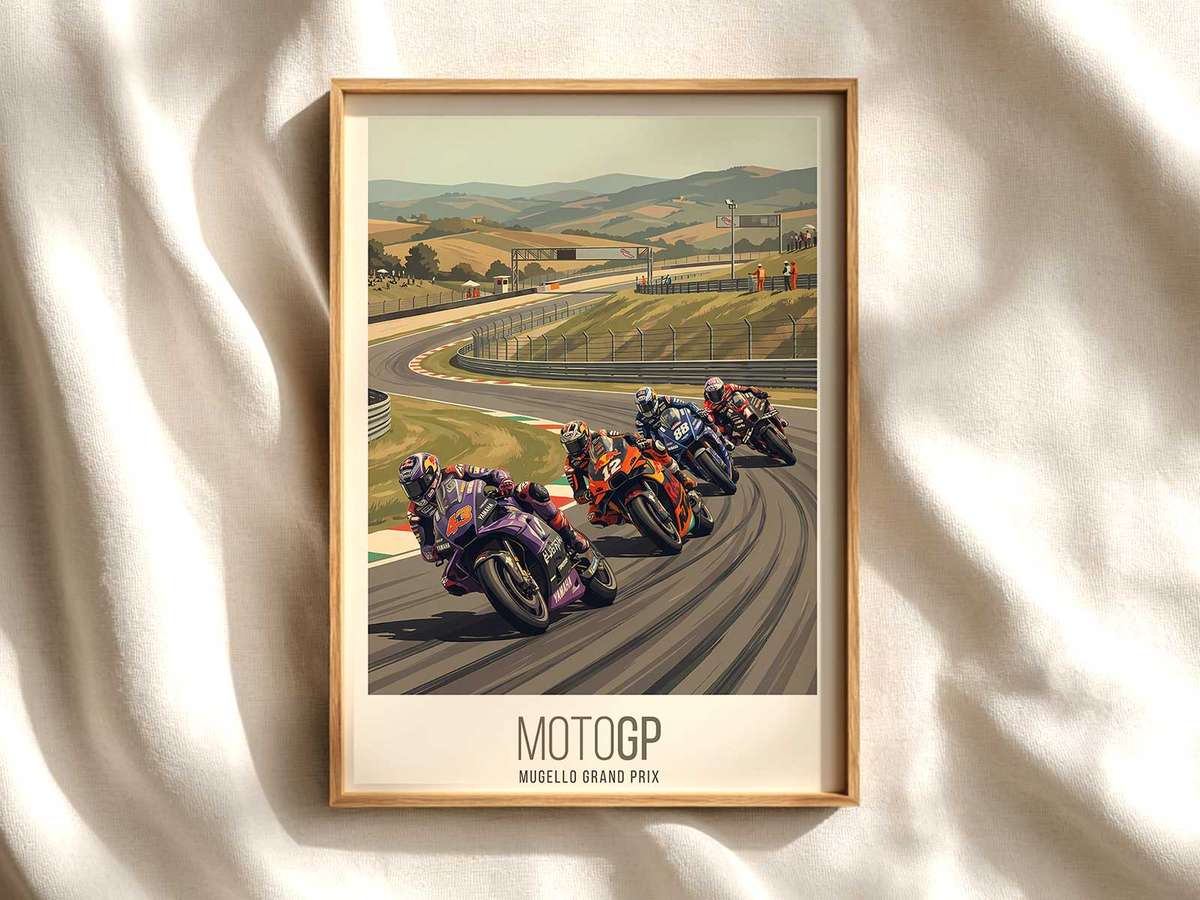
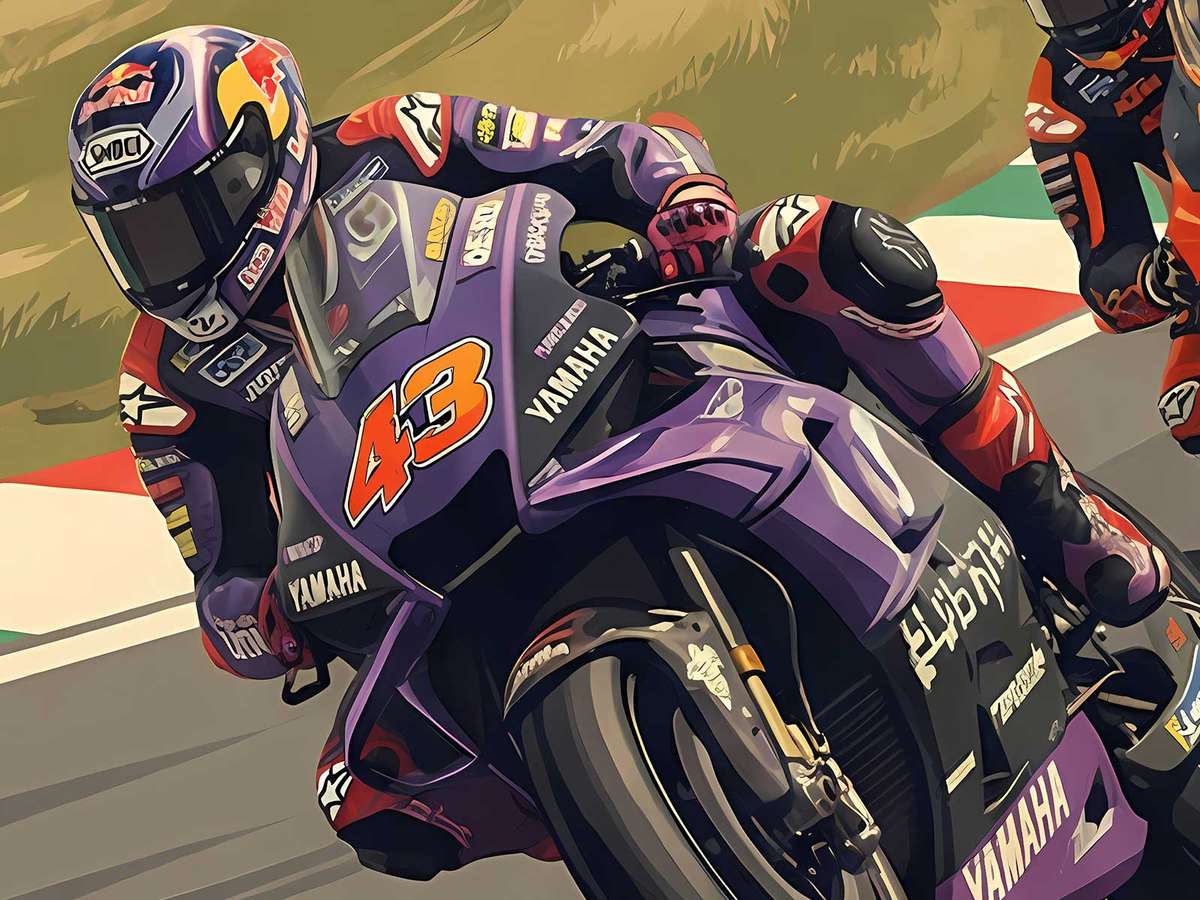
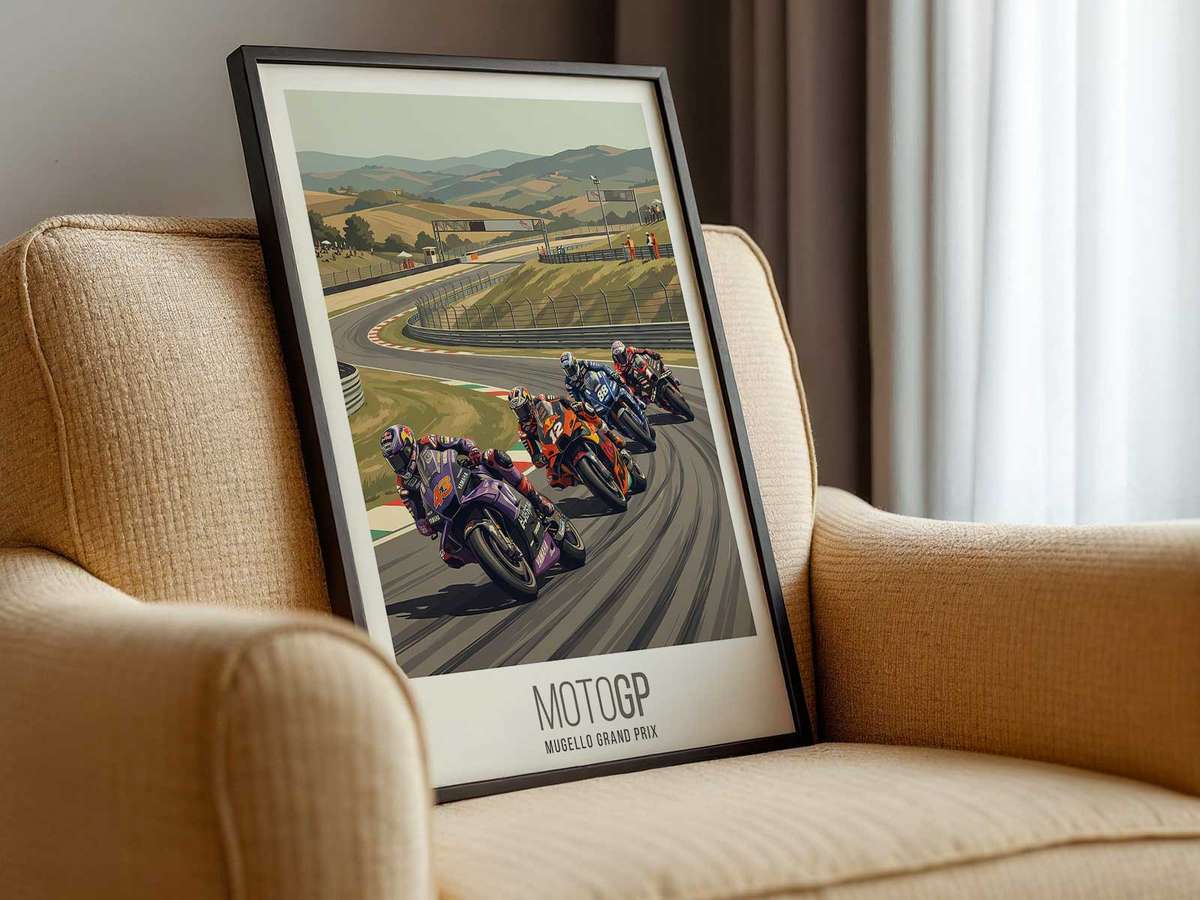
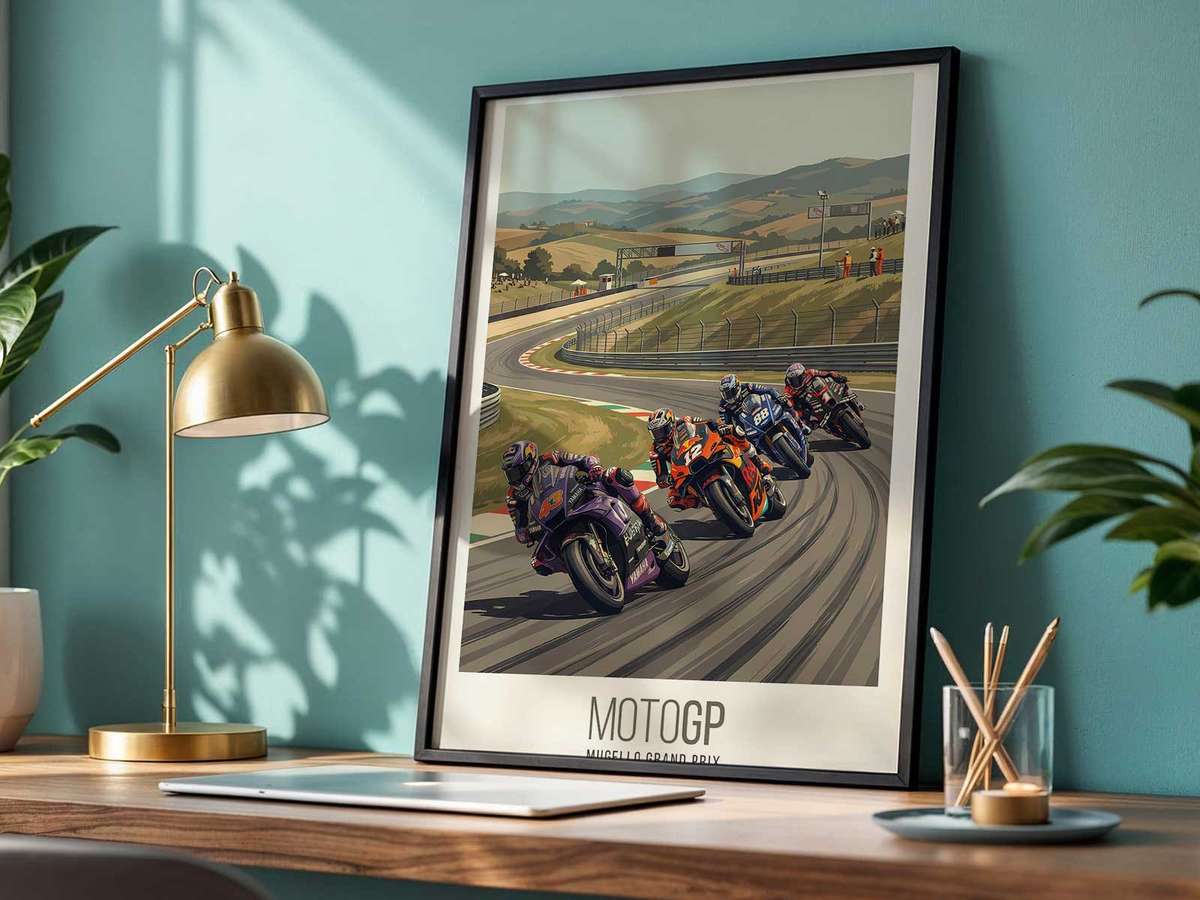
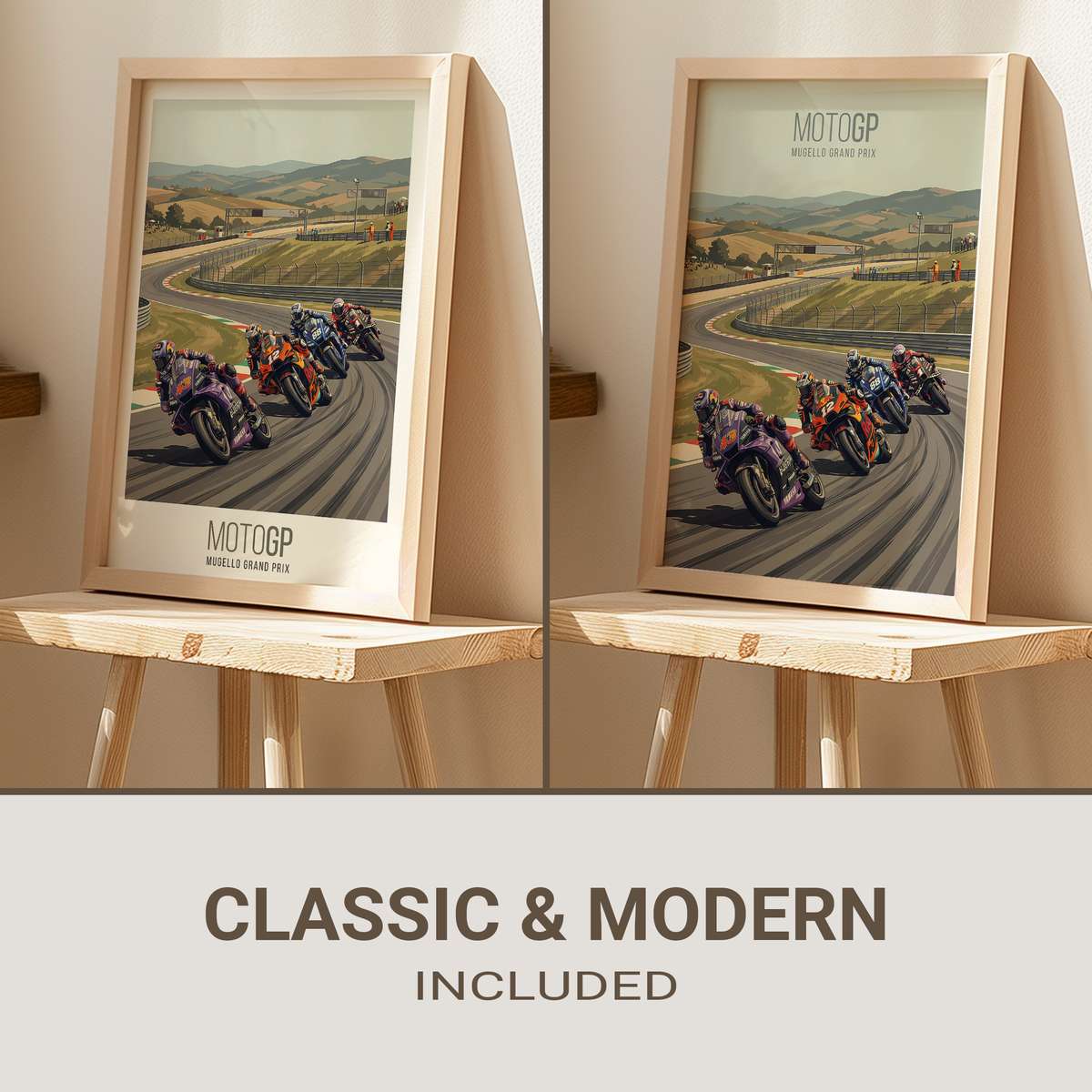
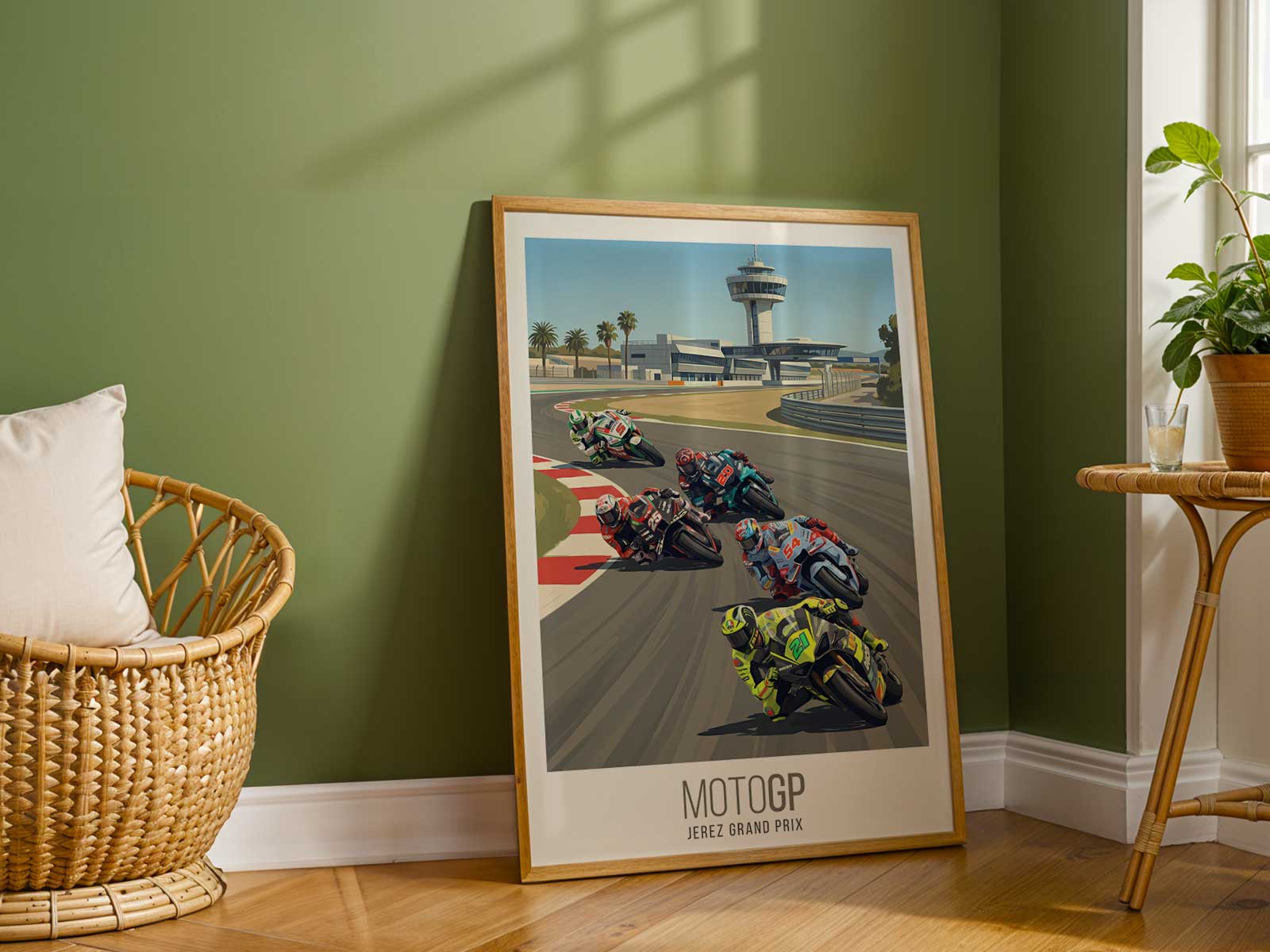
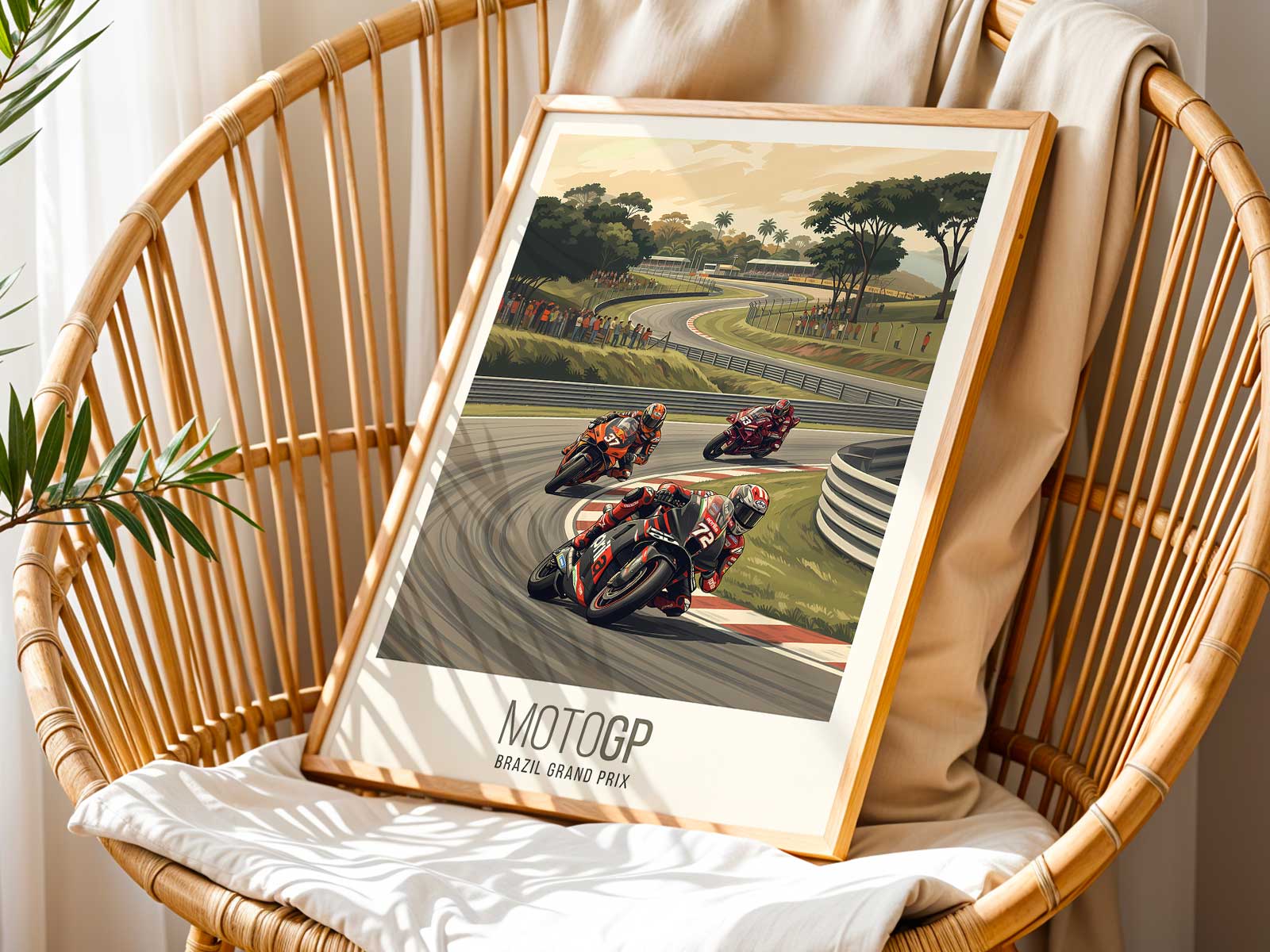
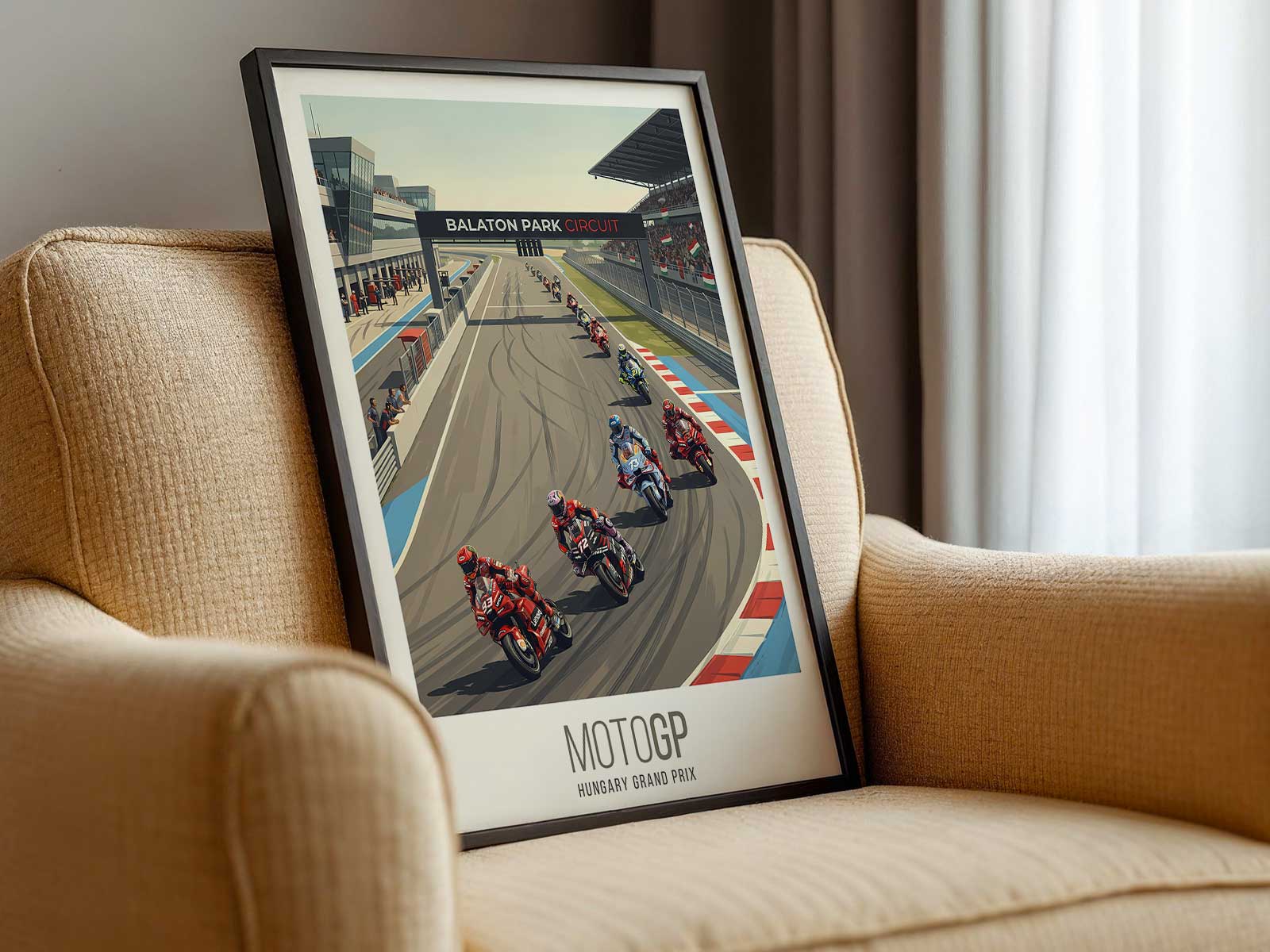
This poster frames Jack Miller’s MotoGP machine as a sculptural object — not merely a vehicle in motion but a study in engineered silhouette and purposeful stance. The composition reduces speed to form: the fairing’s curves become planes of shadow, the nose and front-end carve a visual axis, and the compressed wheel-to-body relationship reads like a single, tense volume. Seen at a glance, the bike asserts prototype identity through its compactness and by the way mass is concentrated around the chassis and swingarm, giving the image a concentrated, mechanical gravity.
What makes this artwork compelling for interiors is the way it treats braking posture and lean angle as graphic devices. The front fork’s rake and the tucked profile of the rider translate into diagonal tension across the page, while tyre contact and suspension compression read like visual punctuation. These elements make the motorcycle itself the protagonist: every component—nose cone, winglet hint, exhaust silhouette—contributes to a single, purposeful outline that works equally well on a gallery wall or above a workspace desk.
The poster’s visual logic is rooted in prototype cues rather than decorative glamor. Instead of crowd or circuit detail, the image centers on machine language: the way light catches on composite surfaces, the negative space created by the fairing cutaways, and the hard edge where aerodynamics meets chassis. That clarity lets the viewer appreciate the bike as an object of design and engineering, a racing prototype rendered with the calm conviction of a studio sculpture.
[IMAGE_INSERT_ARTICLE_01]
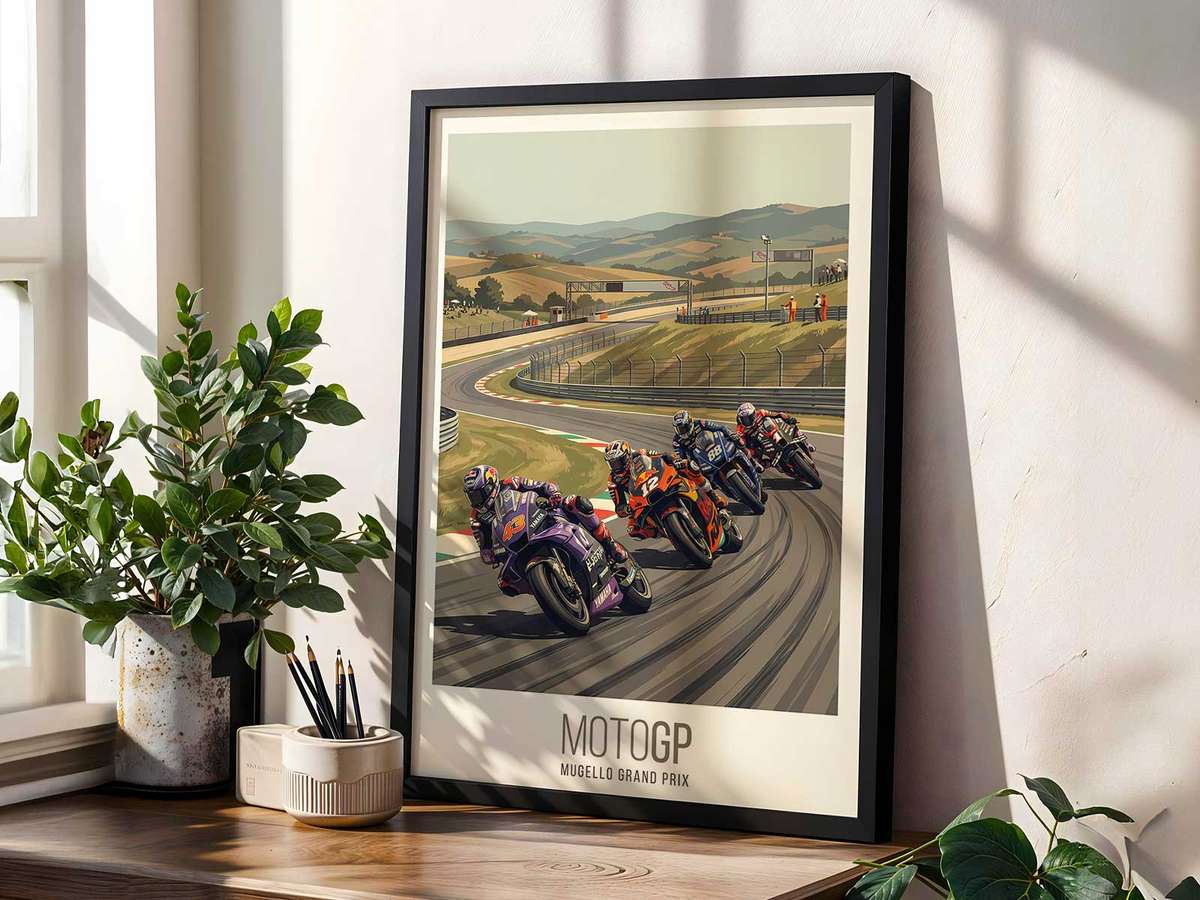
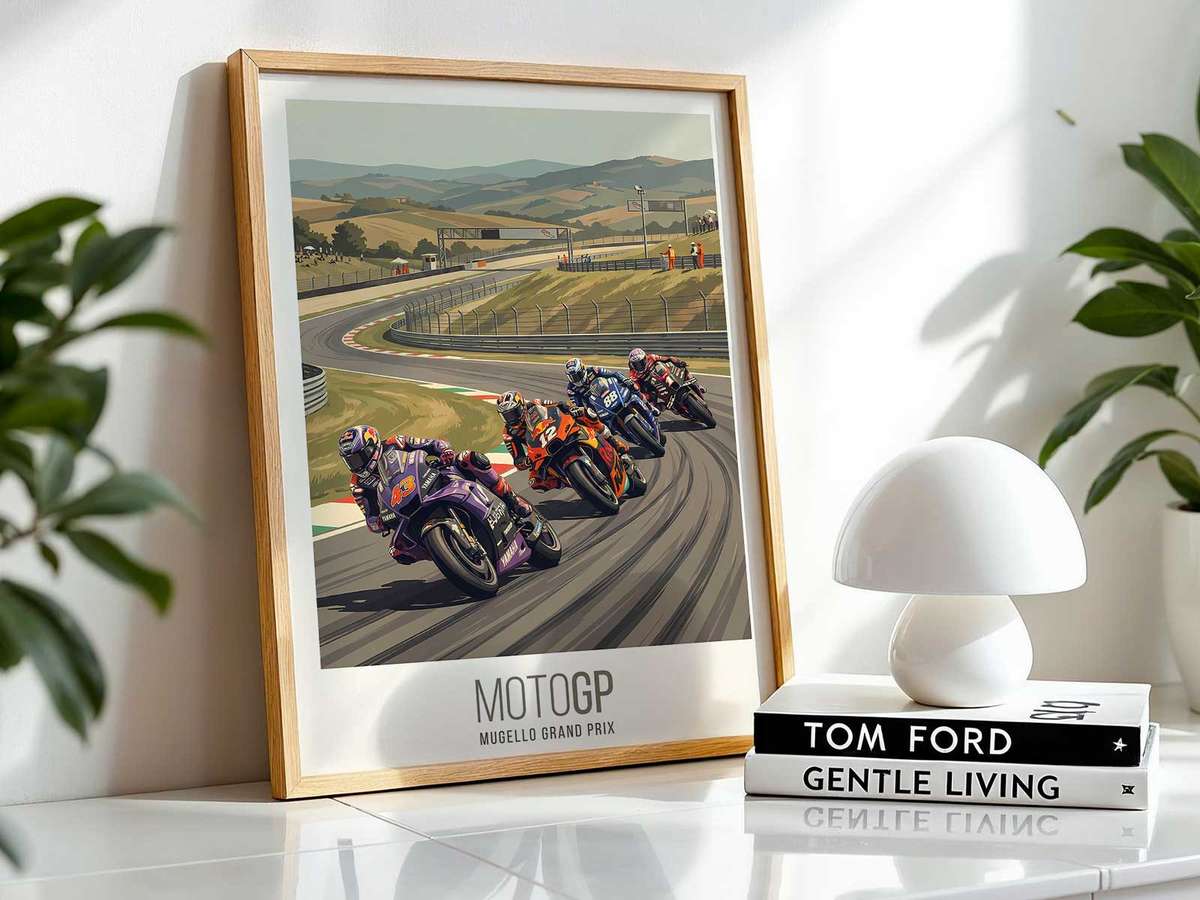
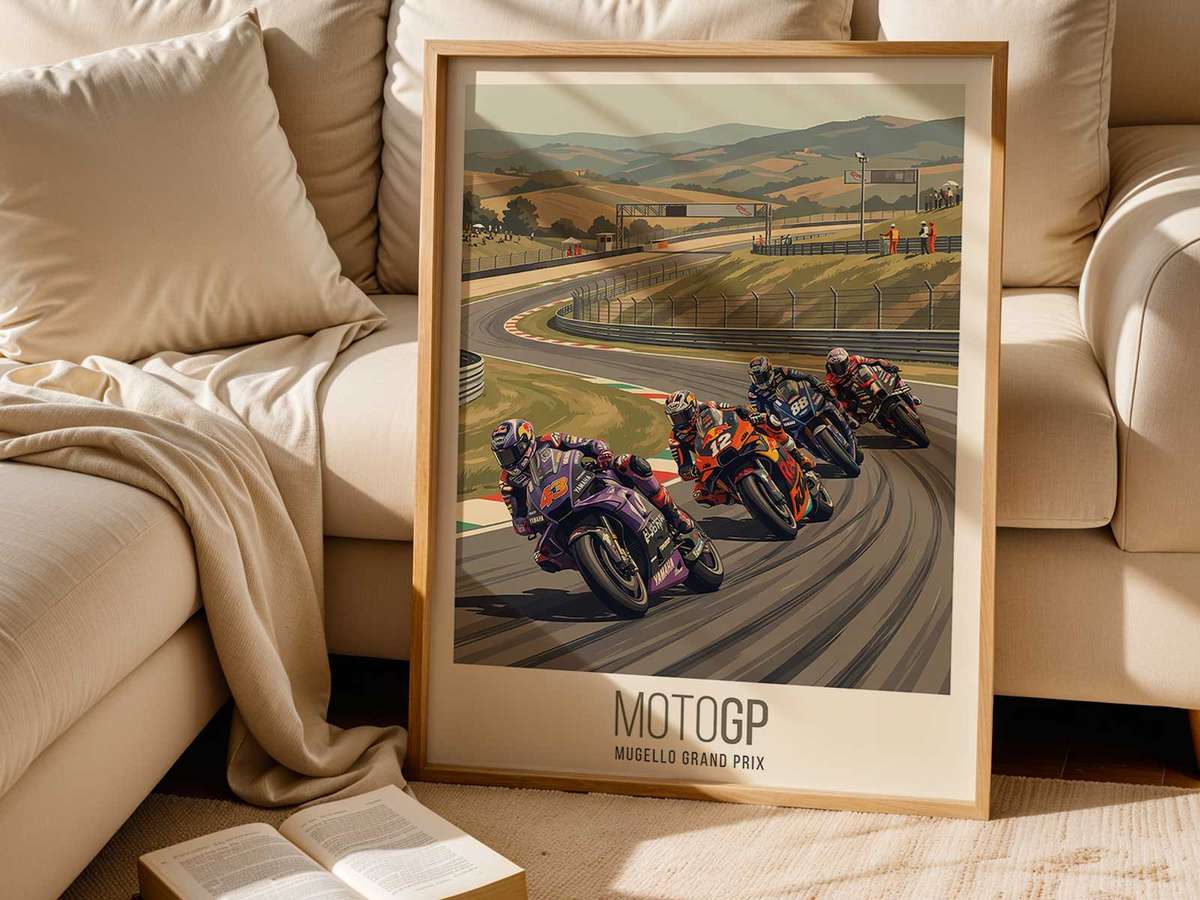
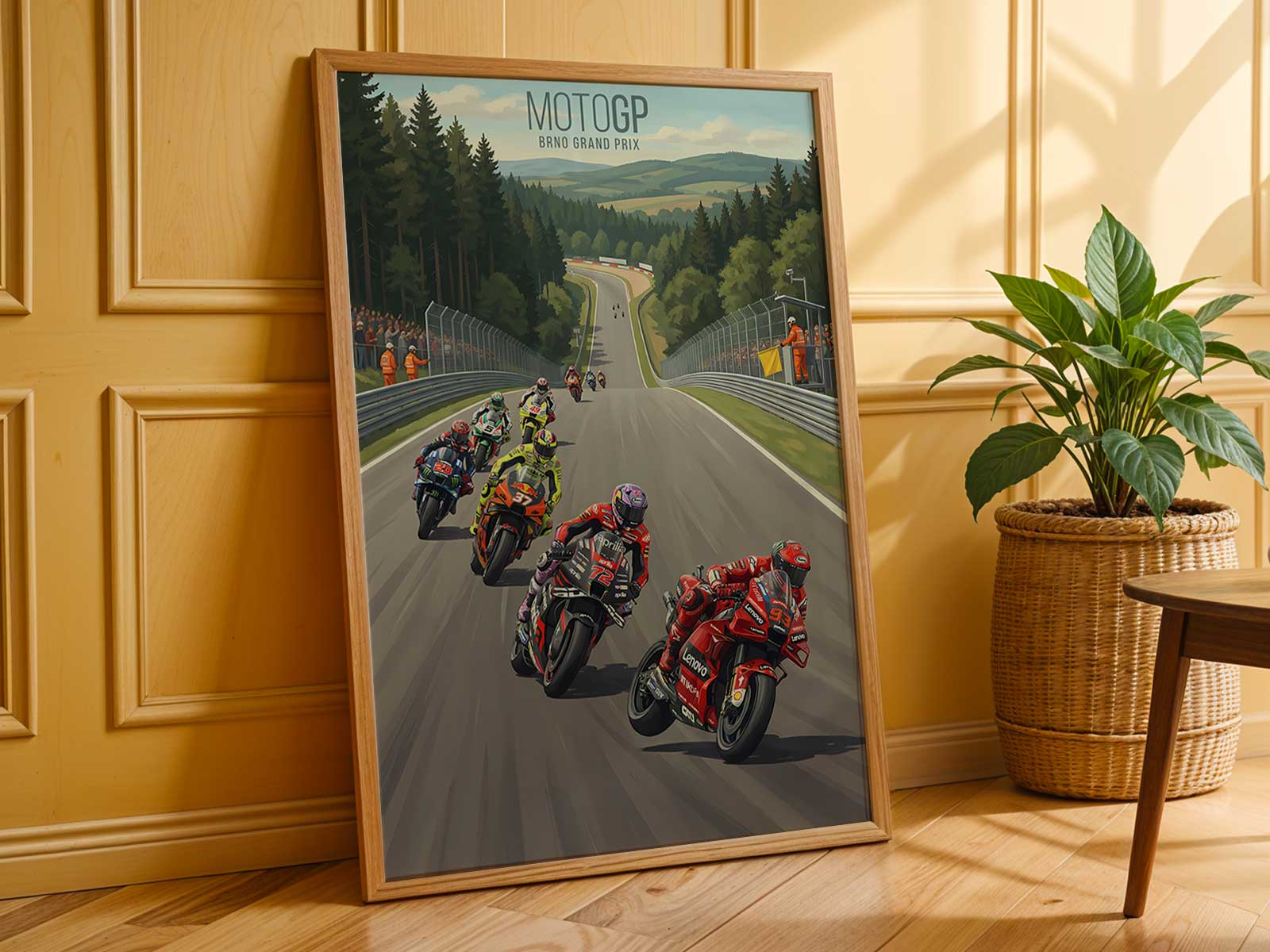
In interiors, the piece anchors a room through contrast and scale. A sharply defined silhouette against a muted background provides an architectural focal point that complements industrial, minimalist, and collector-driven schemes alike. In a home office it introduces engineered rigor; in a garage or studio it echoes the room’s tools and materials without feeling literal. Because the visual story centers on machine stance and posture rather than on branding or photography theatrics, the poster lends a measured, purposeful racing identity to a space without shouting for attention.
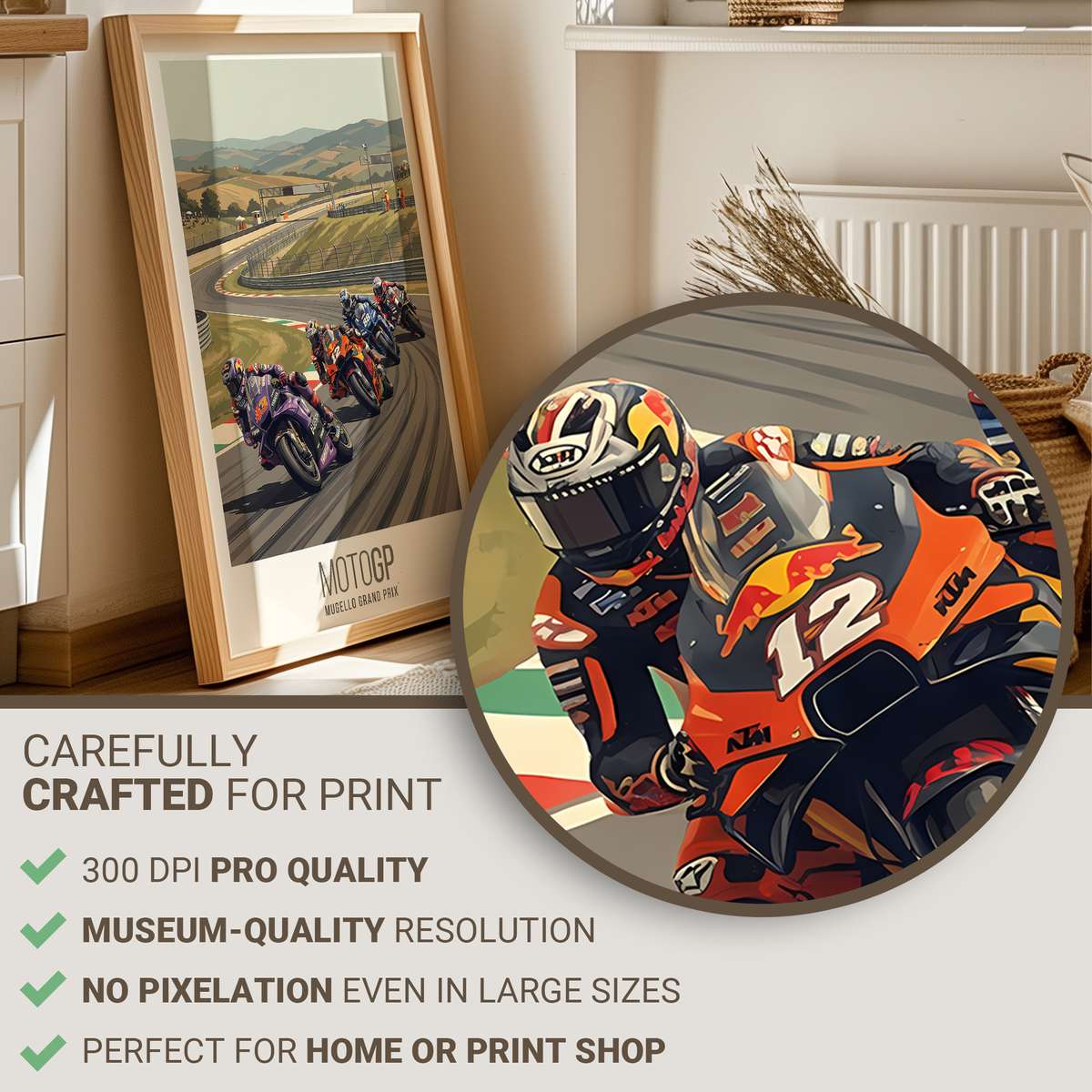
Collector appeal comes from the image’s capacity to freeze the essential drama of MotoGP: the tension between grip and motion, the compression of suspension, and the visual compression of speed into form. Such a poster functions as a memory device—evoking circuits and seasons without relying on names or results—so it rewards repeated viewing. Close inspection reveals detail: the sculpted junctions of carbon and metal, the subtle curvature of the tank, and the forward bias of the cockpit that suggests aggressive intent even when still.
Ultimately, this MotoGP poster reads like a study in purposeful design. It translates kinetic energy into compositional economy, letting silhouette, lean, and prototype presence do the talking. For anyone arranging a room around mechanical beauty or seeking a single object that communicates racing identity with refinement, the image offers a compact, powerful statement: the motorcycle becomes art, and the poster becomes the quiet centrepiece that defines the atmosphere of the space.