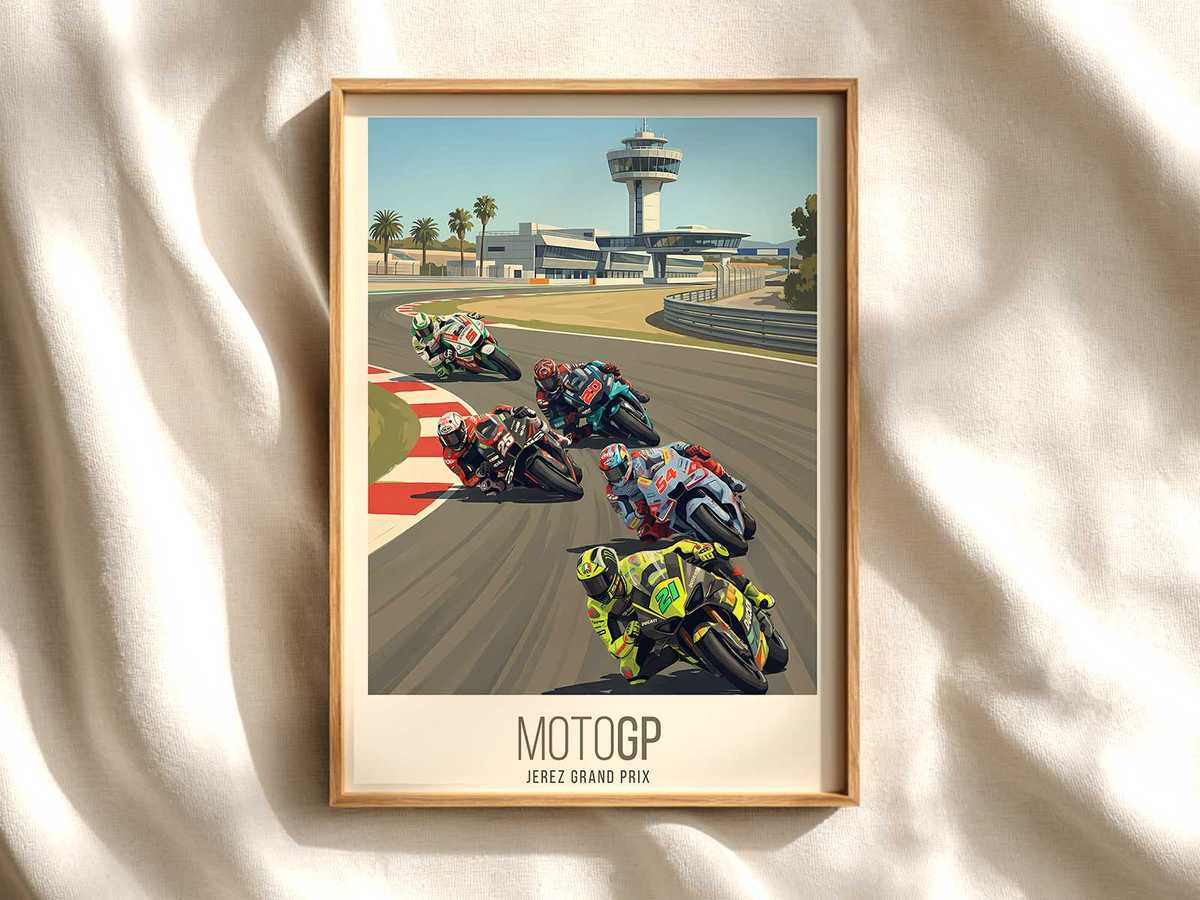
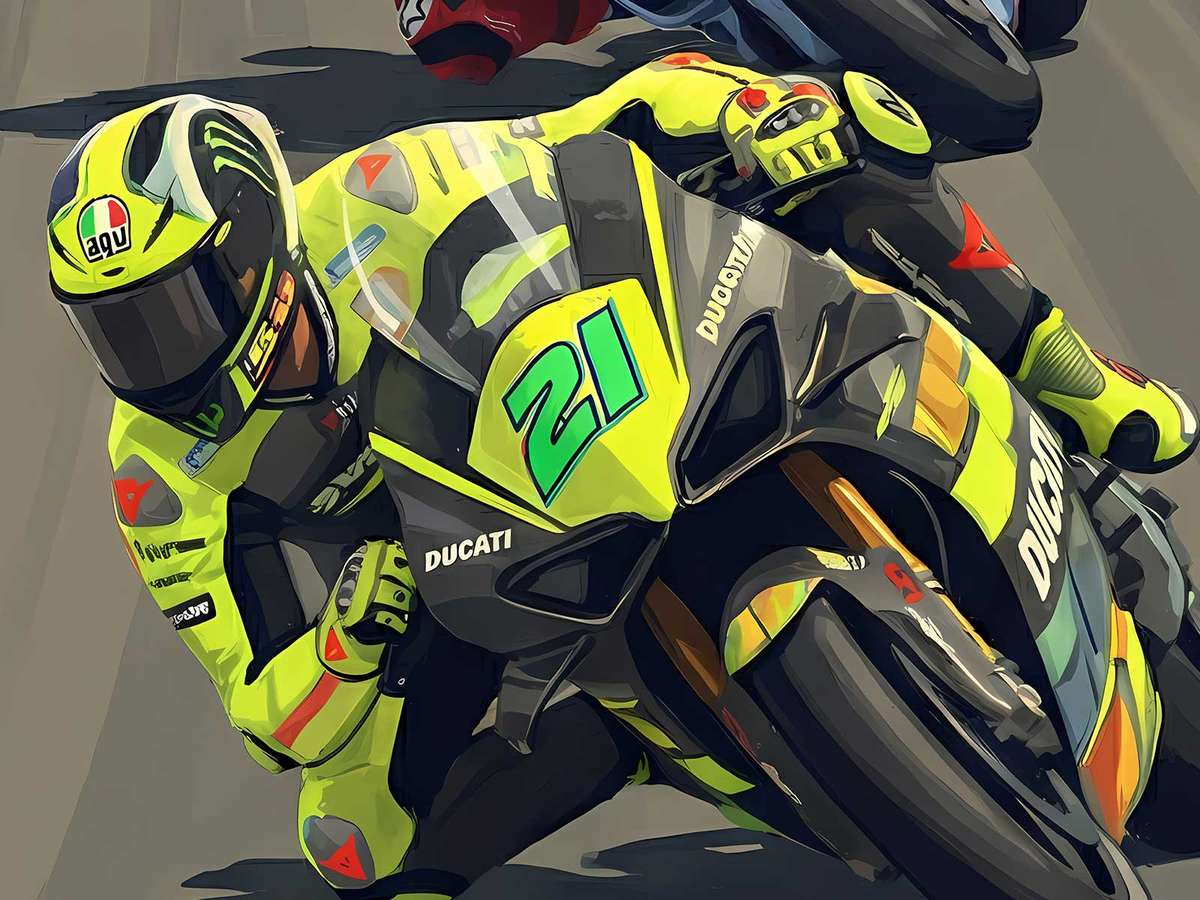
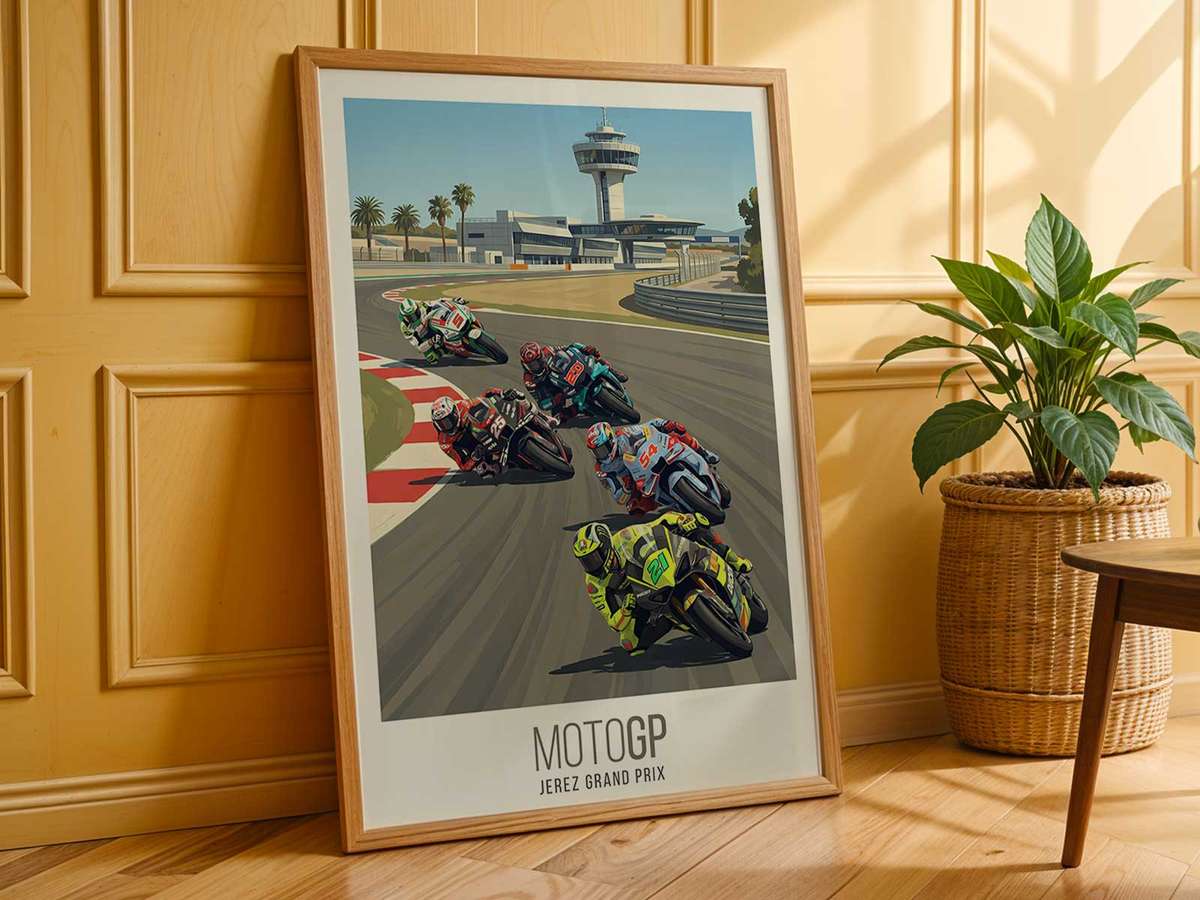
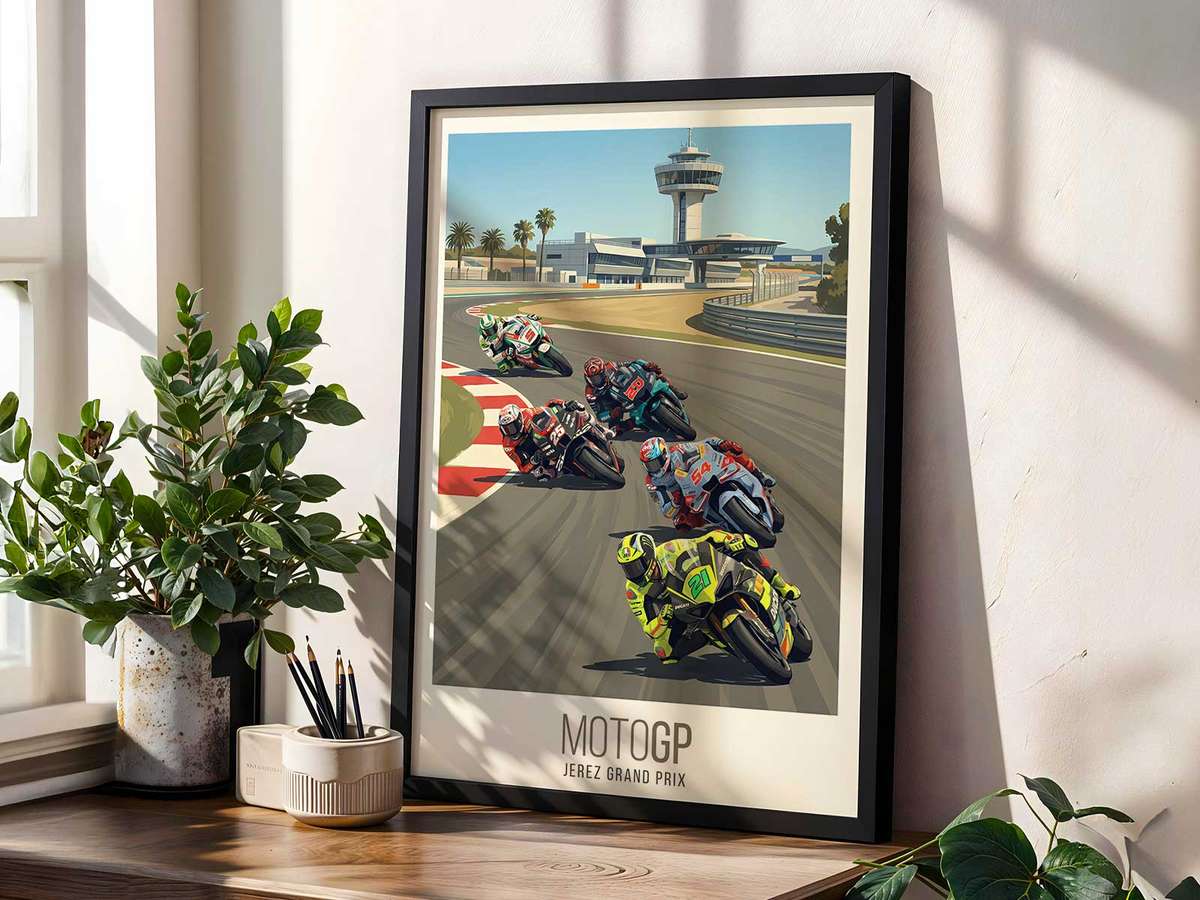
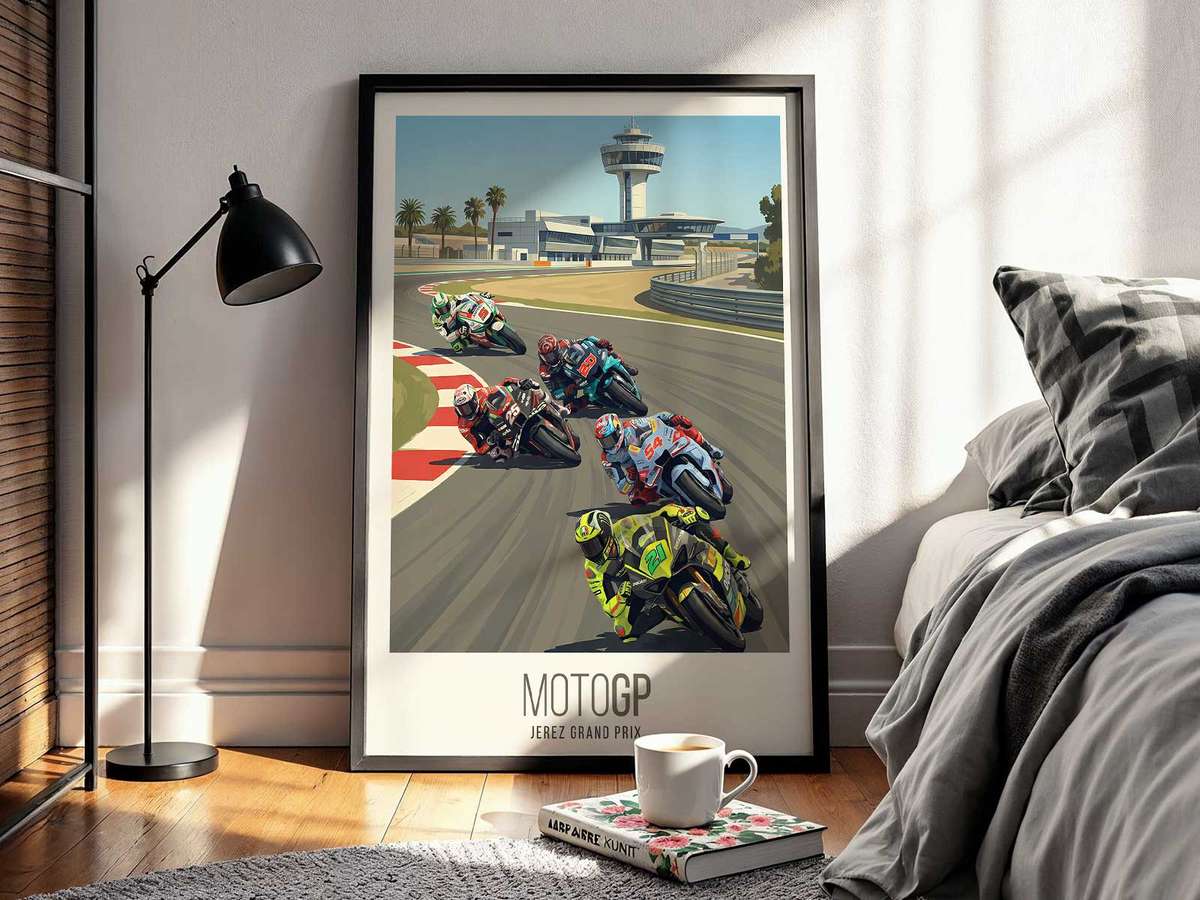
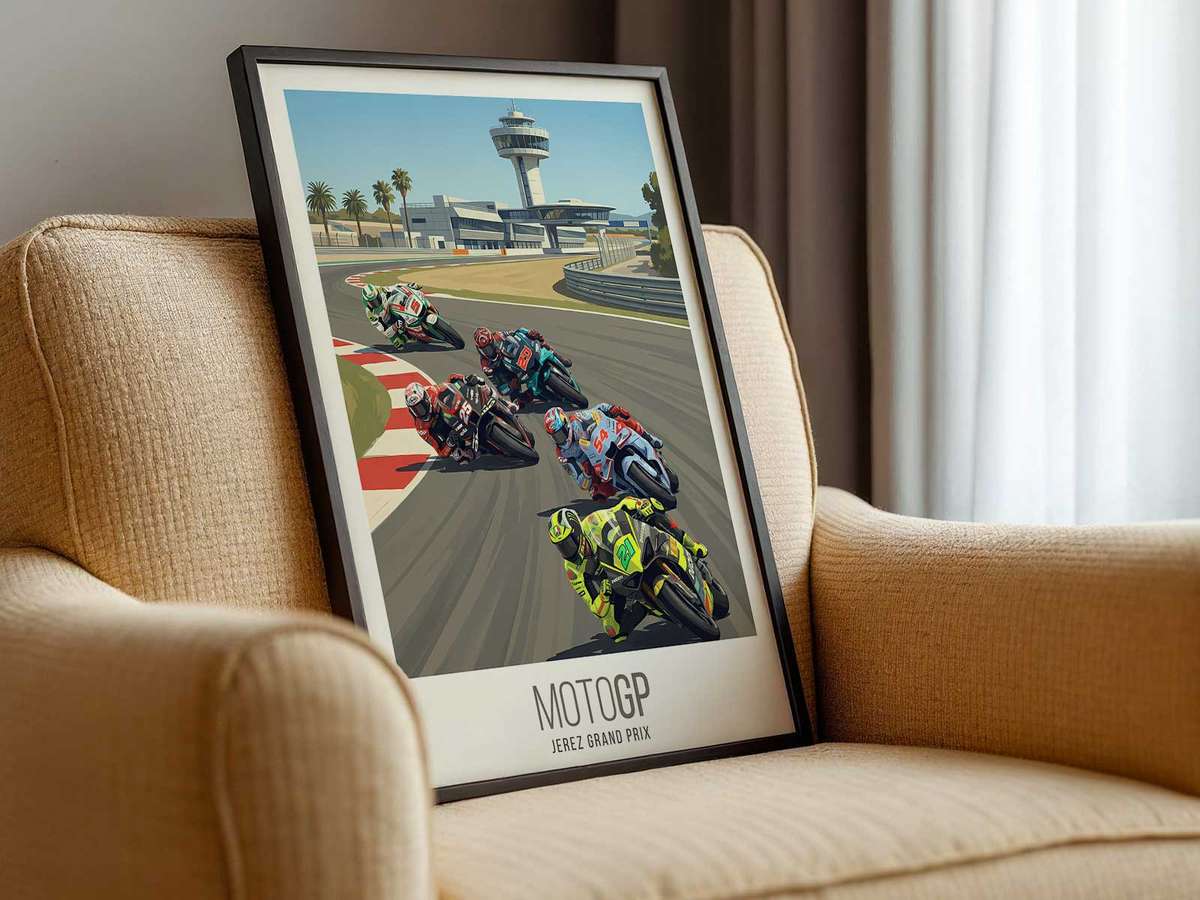
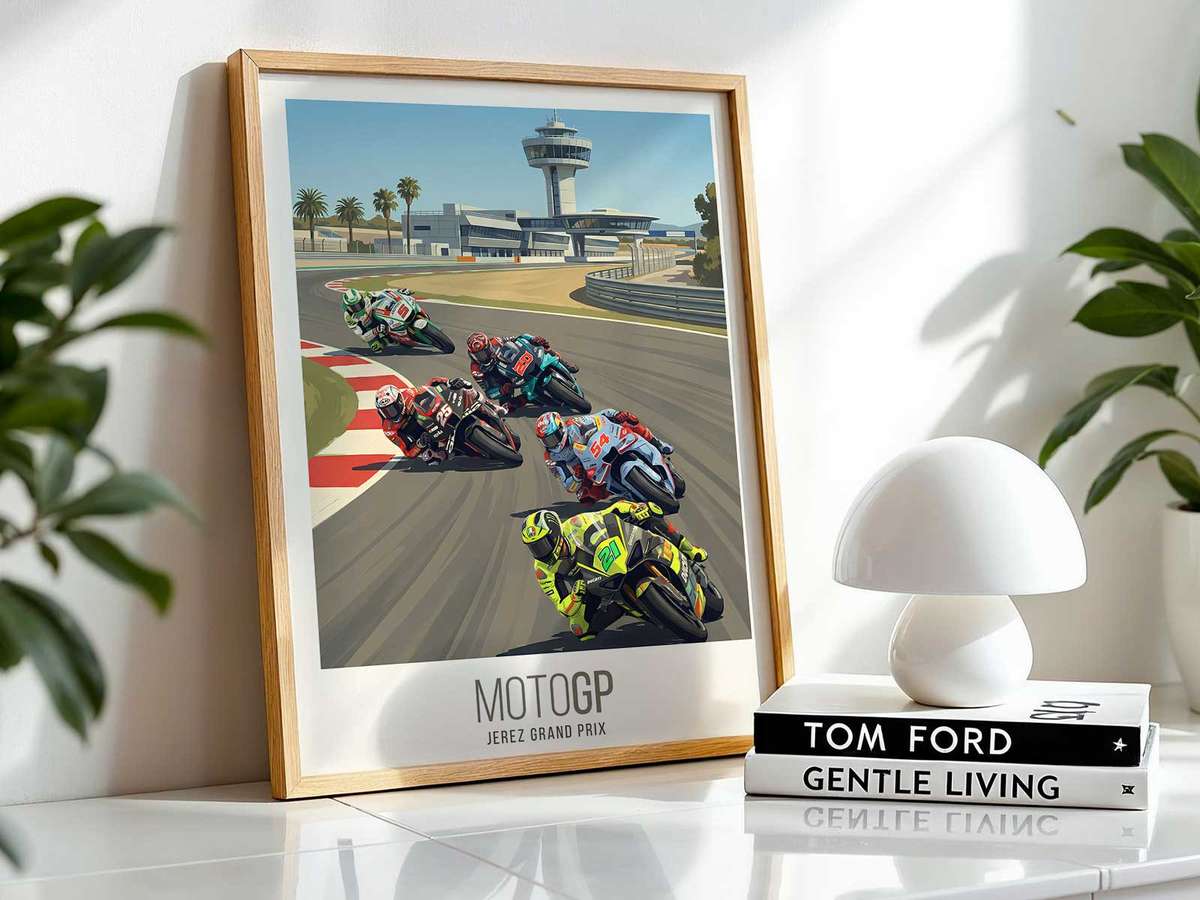
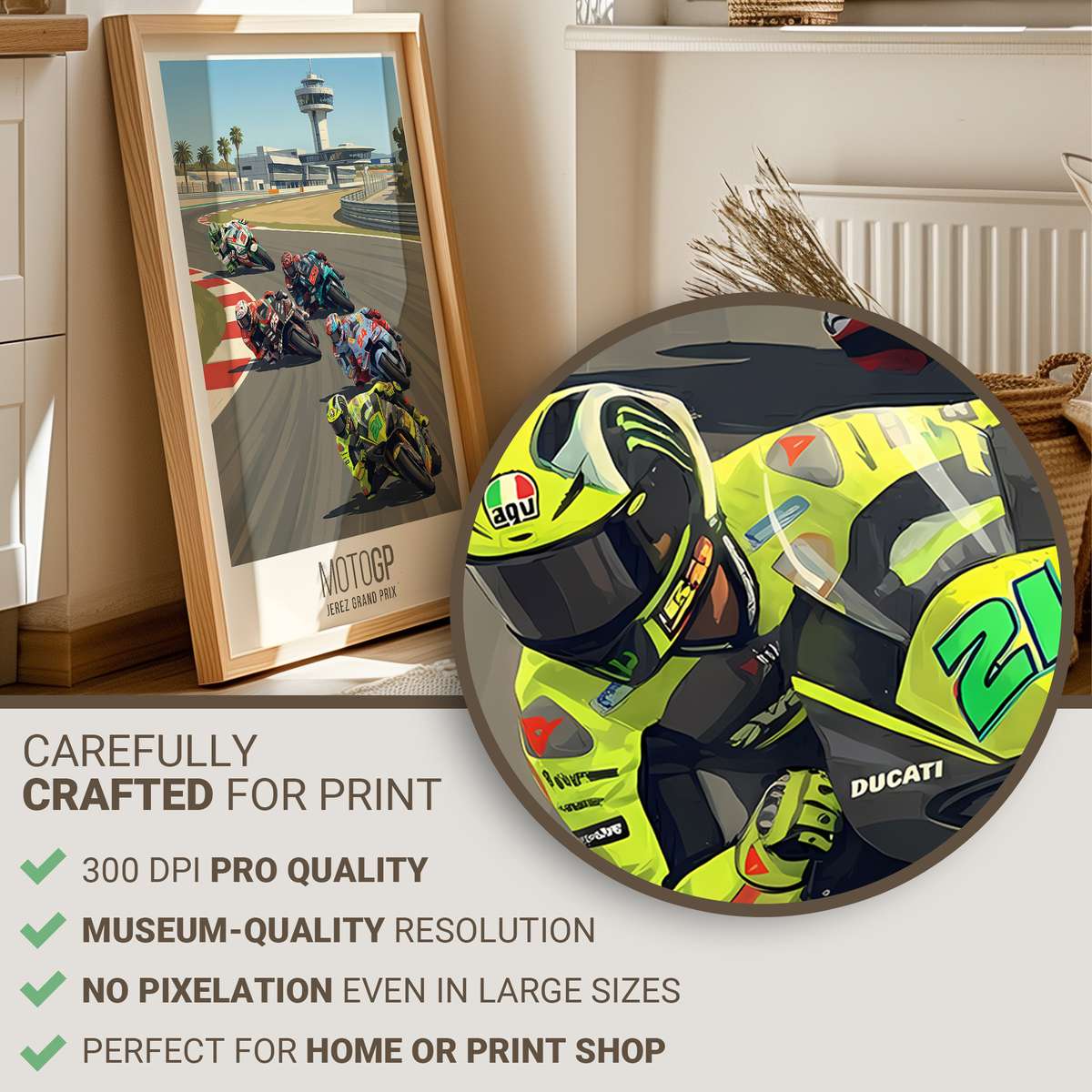
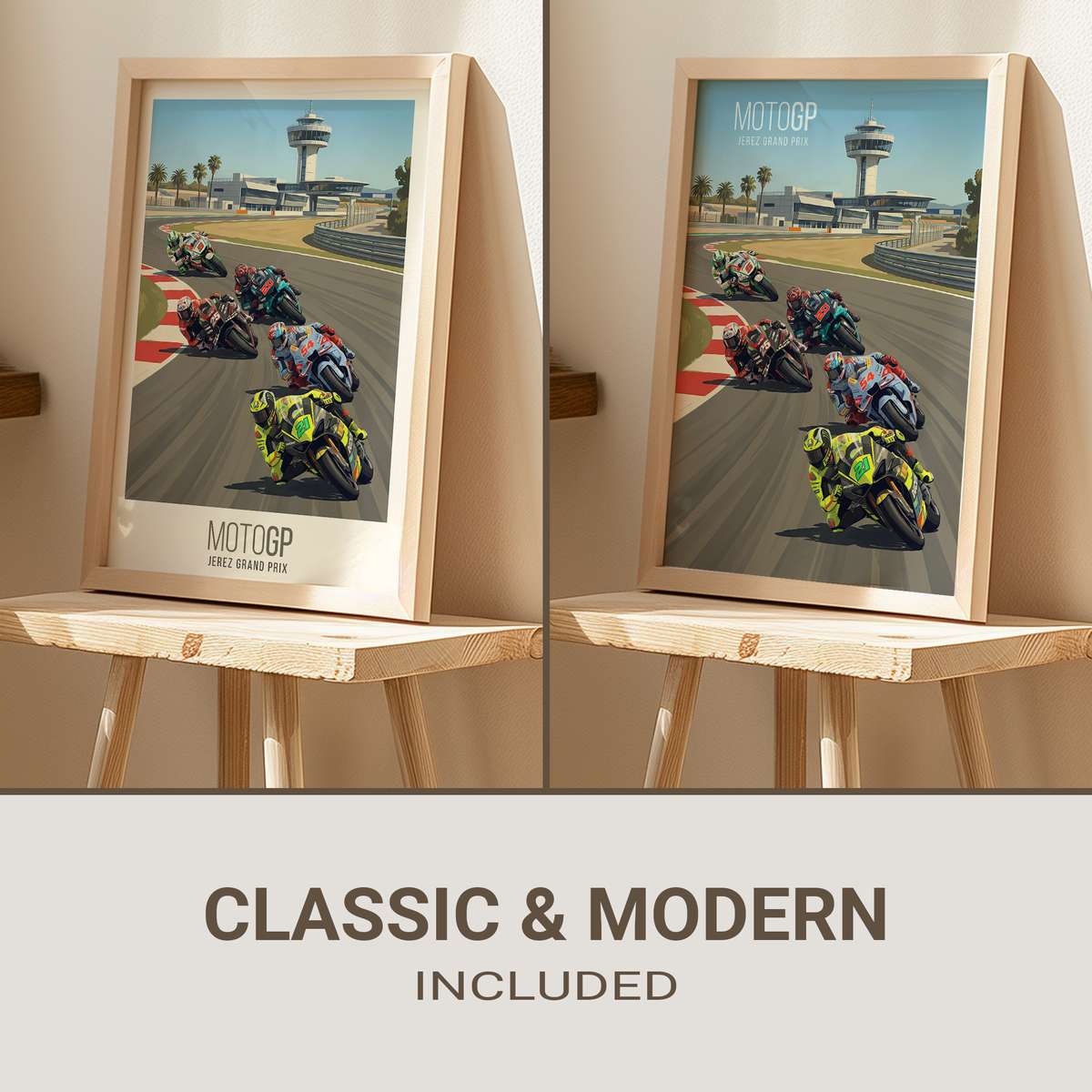
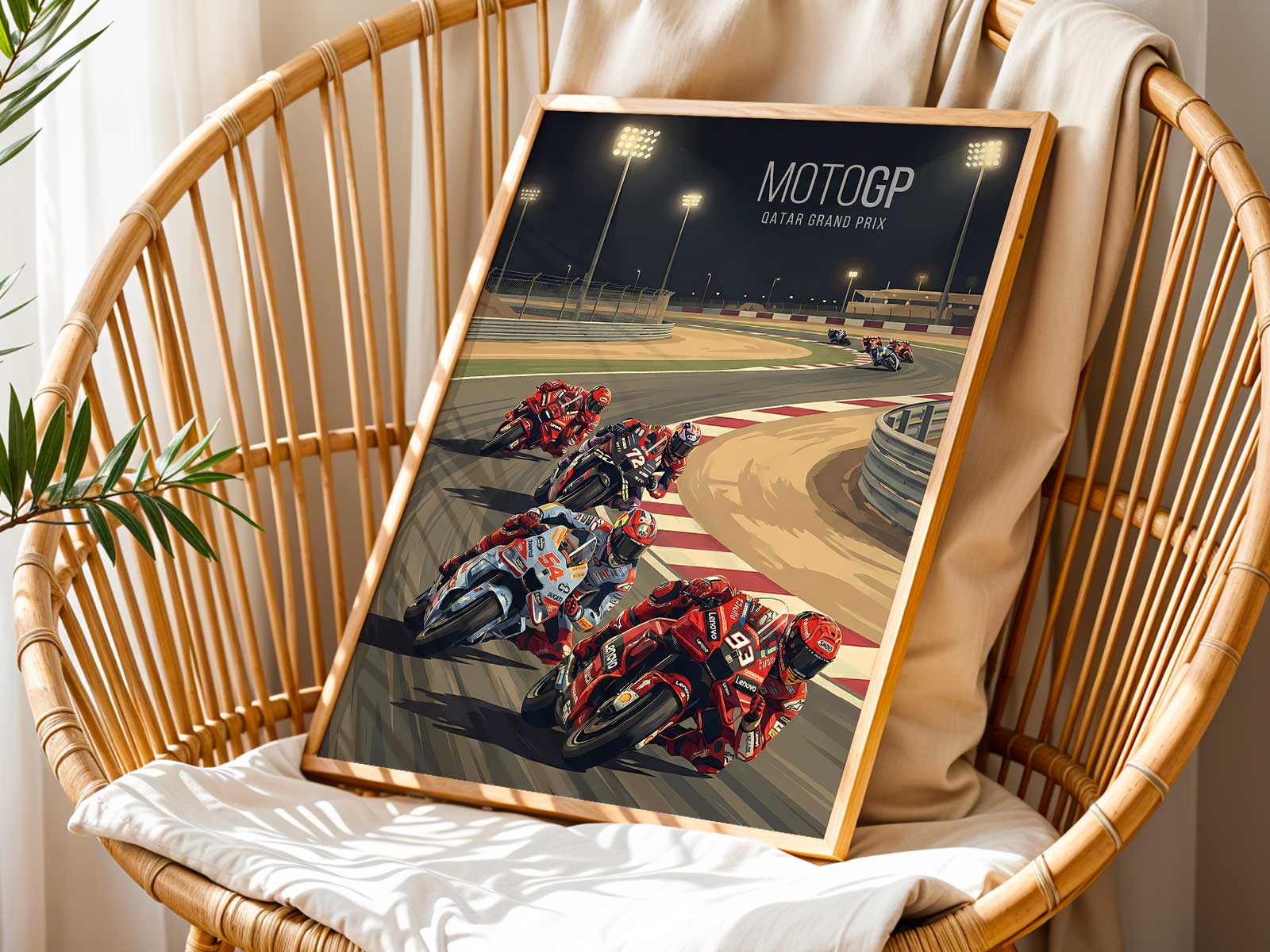
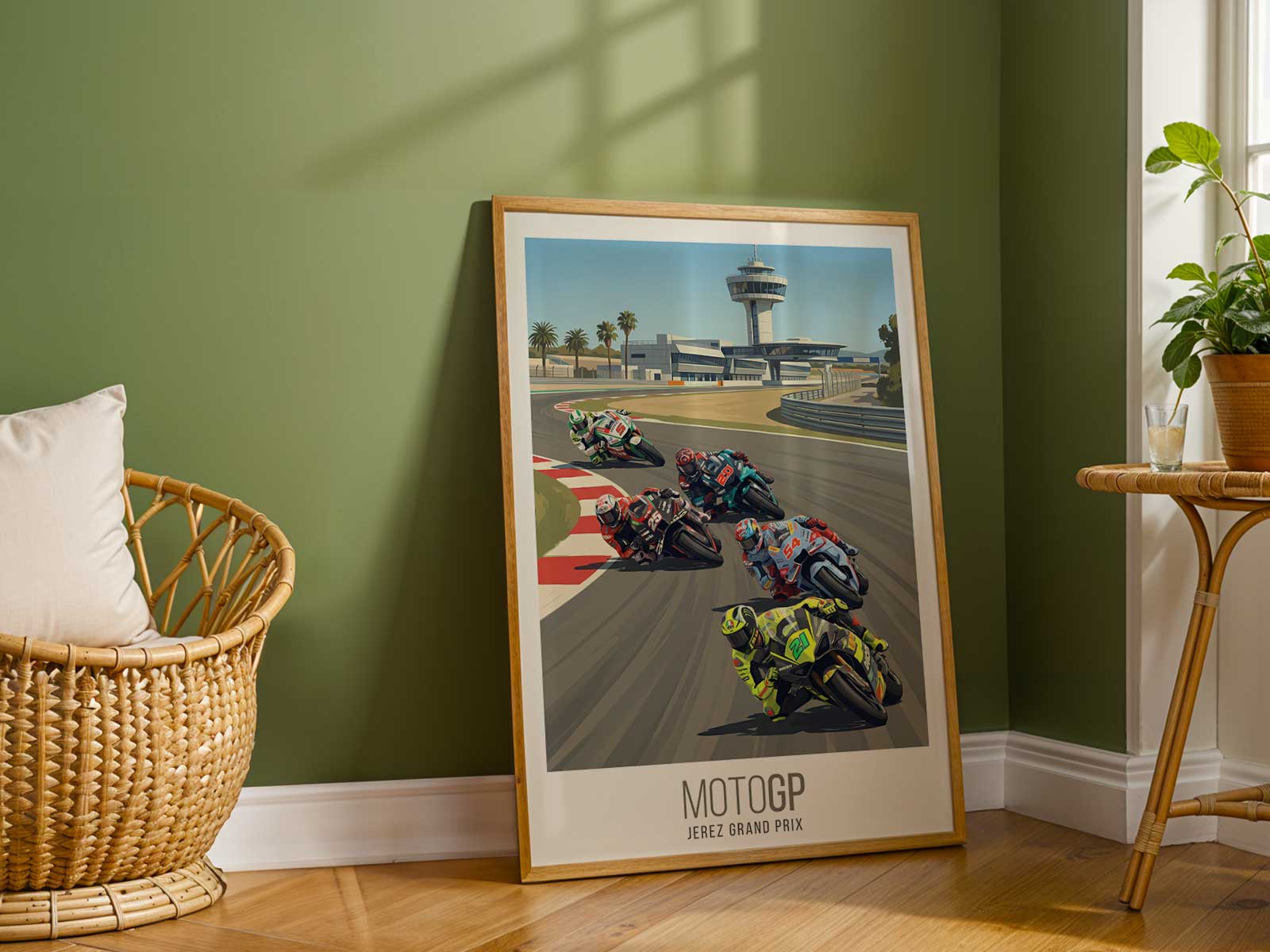
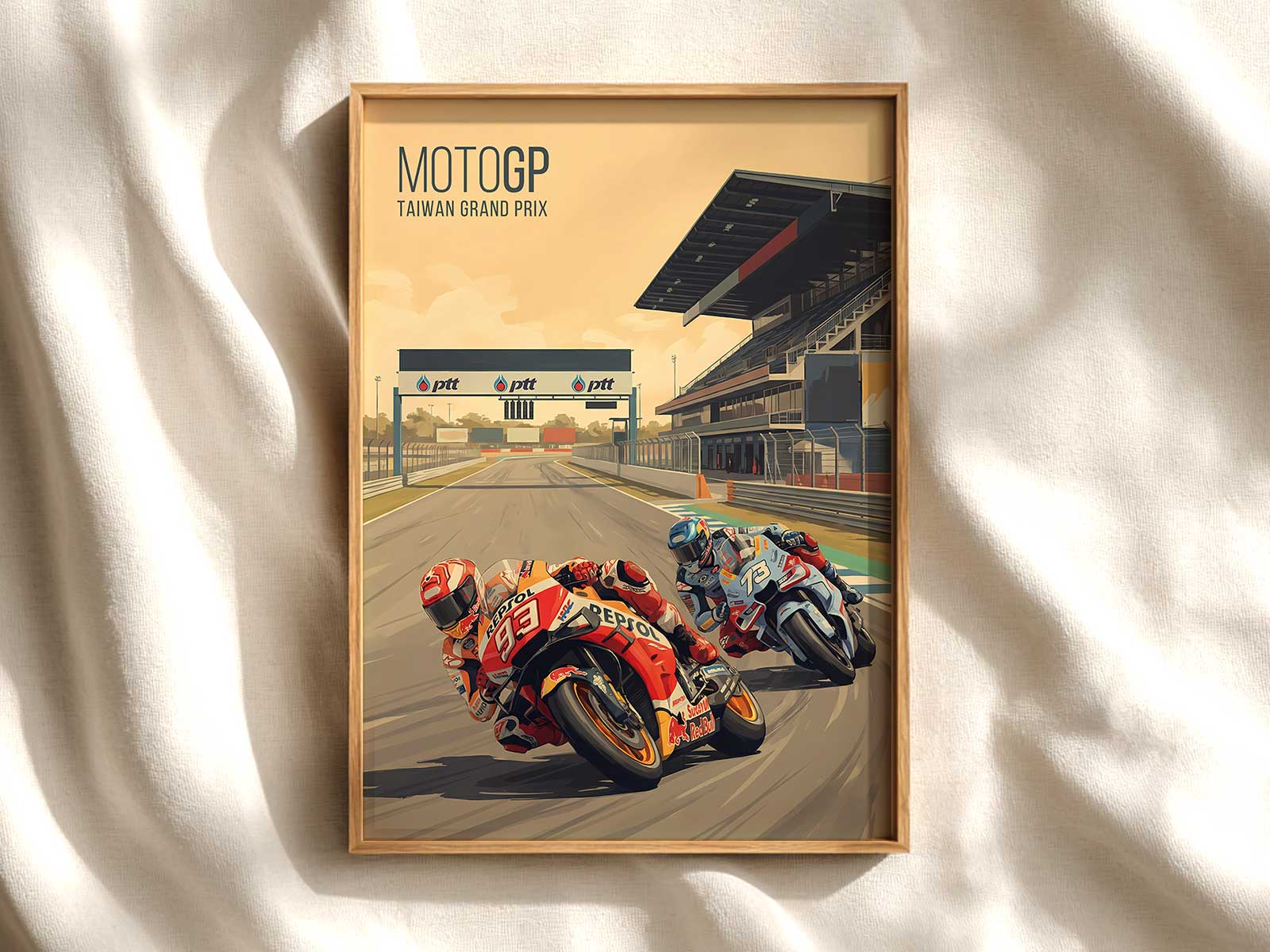
Great MotoGP bike posters do more than freeze a rider mid-lean: they bottle a place. A strong poster translates the circuit’s topography, the sky’s light and the compressed energy of a braking motorcycle into a visual memory that feels lived-in. When landscape, elevation and weather join the composition, the image stops being an illustration of speed and becomes an atmospheric window — a piece of wall art that can define a studio, garage or lounge with a specific racing identity.
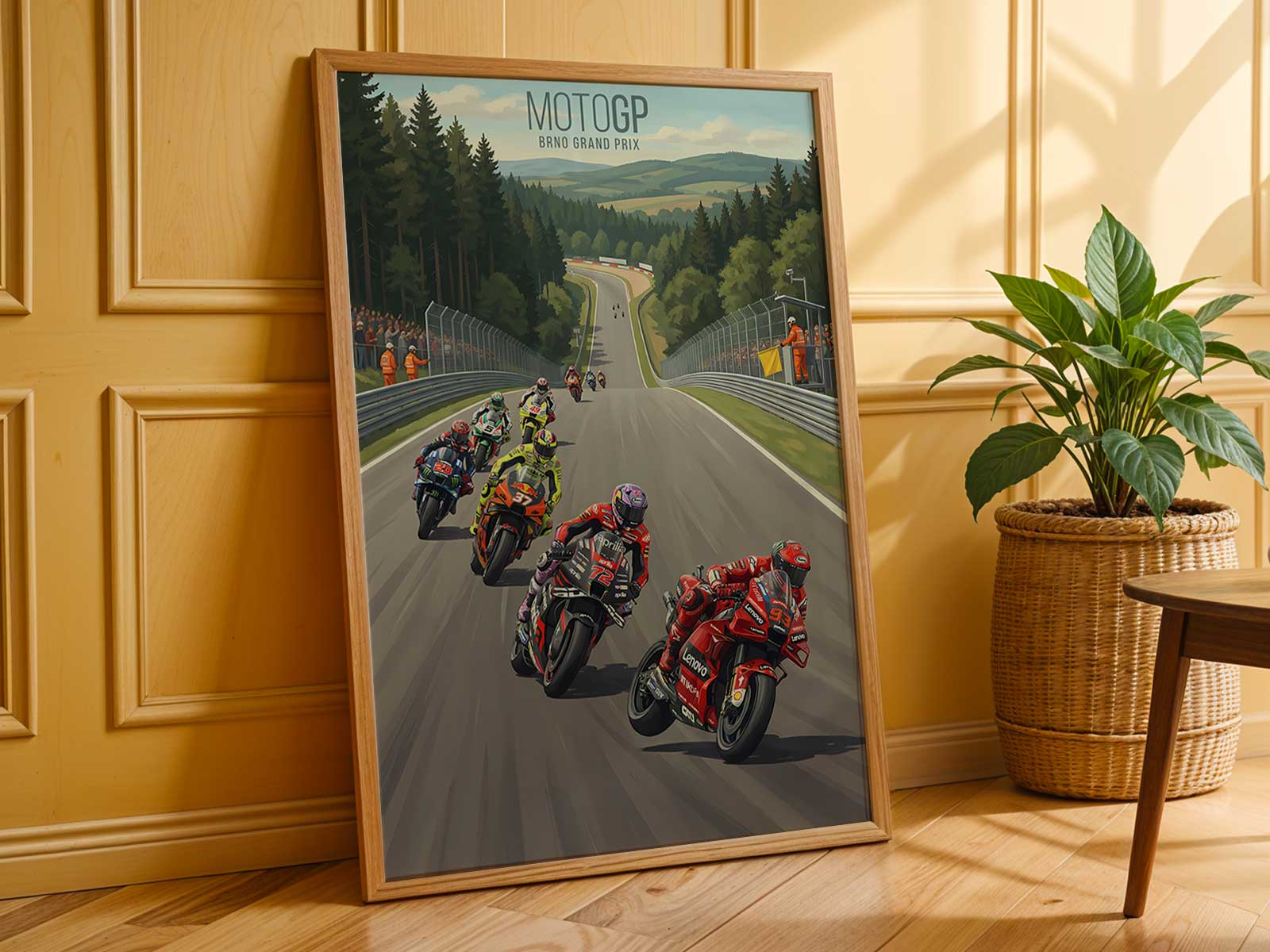
Look closely and you can read the circuit as a character. Is the track open to a wide horizon, the low sun slicing the tarmac and throwing long, sharp shadows? That horizon gives the poster cinematic scale; the bike becomes a small, concentrated point of human intention against a broad geography. Alternatively, an enclosed valley or tree-lined approach creates intimacy and tension: the dark verticals of the environment frame the machine and make every lean feel claustrophobic, immediate and consequential.
Light matters. Midday glare renders heat shimmer and textured asphalt grain; late golden-hour light softens contrast and turns the rider’s silhouette into a sculptural object. Overcast skies mute color but intensify form, making body position, suspension travel and tyre contact patch the visual focal points. These subtle differences are why two posters of the same corner can read as entirely different atmospheres — raw daylight suggests speed and exposure, while a dusk palette suggests memory and endurance.
A circuit’s elevation and surface rhythm are equally legible in a still. Cresting a rise compresses motion into a single, suspended instant where front and rear wheels momentarily share the same visual plane. Long, flowing sweepers convey grace and continuity; a technical, bumpy approach implies mechanical strain and human focus. Photographic choices that highlight rumble strips, painted apexes or the sheen of a well-worn line turn the track itself into part of the subject, giving the poster archaeological depth for fans who recognise these cues.
[IMAGE_INSERT_ARTICLE_01]
Crowds and grandstands add social texture. A distant, muffled grandstand silhouette suggests cultural weight — that this place hosts ritual. Sparse, visible spectators create a human scale and a sense of shared focus; packed terraces read as fervour and collective memory. Even when people are not the focal point, their presence in the composition signals that the location is an event ground, not just empty asphalt, which gives the image narrative resonance beyond the machine.
Why does place-led MotoGP imagery work so well as wall décor? Because it anchors emotion to geography. Where a generic motorcycle poster celebrates speed, a circuit-led piece conjures weathered asphalt, roadside grass, the smell of fuel and the particular slope of a hill. In interiors this translates into atmosphere: a poster with a wide horizon can make a small room feel airy and expansive; a moody, enclosed track scene adds depth and a cinematic intensity to a garage or study. These are practical decorative effects delivered through genuine visual specificity, not empty slogans.
Collectors and decorators respond to that specificity. A poster that reads as a remembered place — one that could evoke a weekend in a paddock, a damp morning practice session or a sunlit podium approach — becomes a lasting focal point. It invites re-reading: the more you live with it, the more details reward your attention, and the more the piece accrues its own memories inside your space.
When choosing a MotoGP bike poster, consider which aspect of place you want to bring into the room: the horizon and light for openness, the tight, wooded approaches for intimacy, or crowd-lined straights for communal energy. The strongest images will do more than represent a race; they will translate a circuit’s atmosphere into a mood you can hang on your wall and return to again and again.