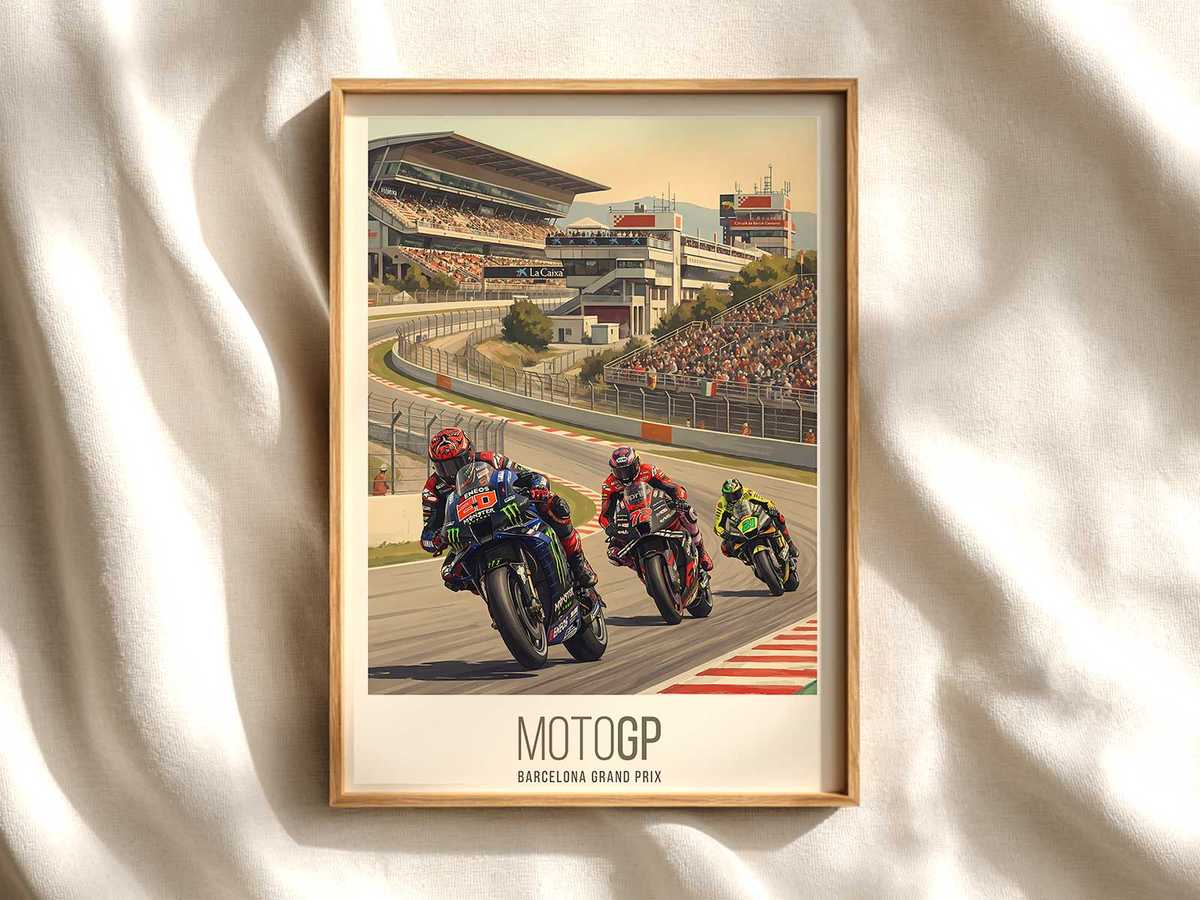
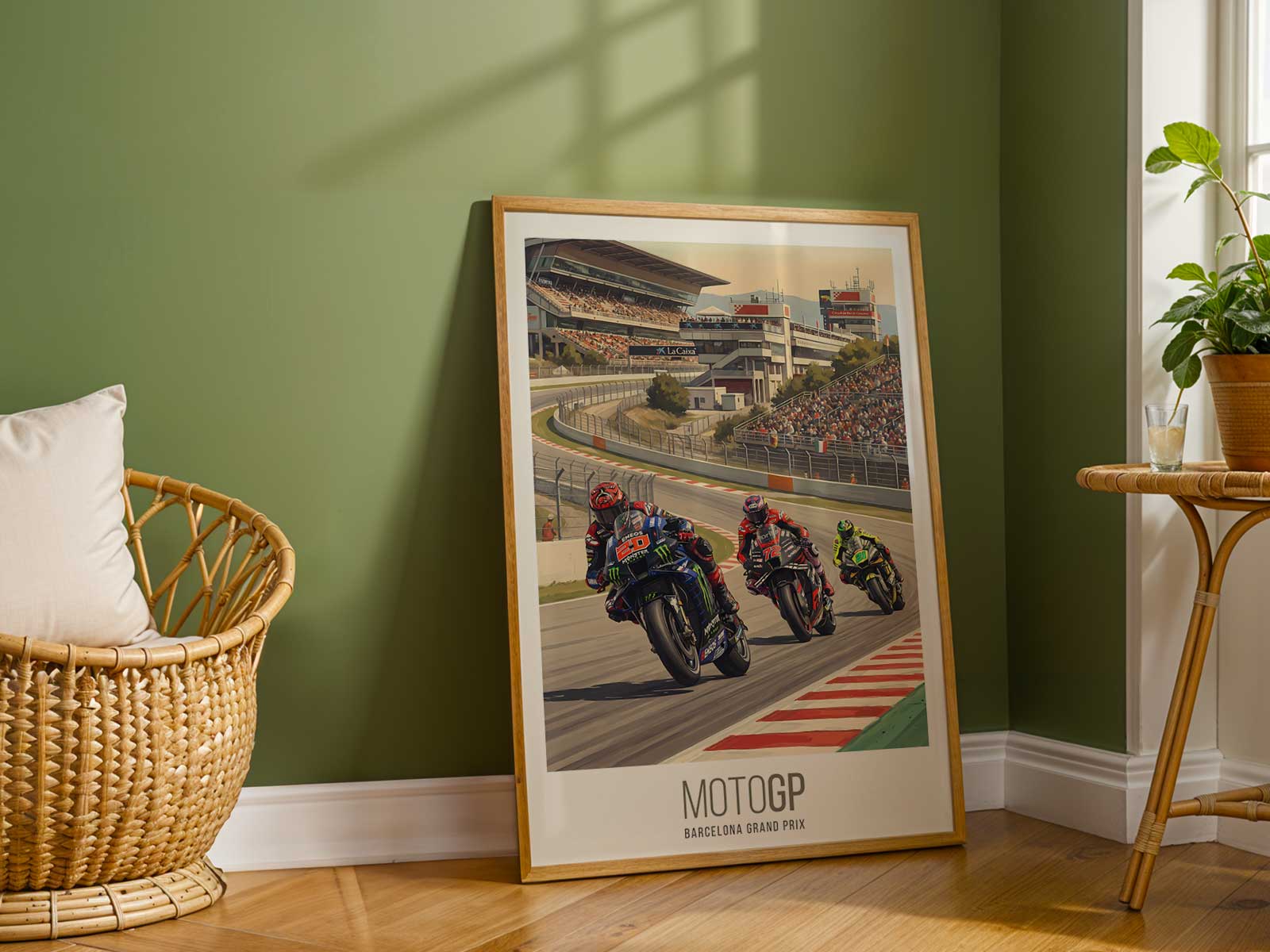
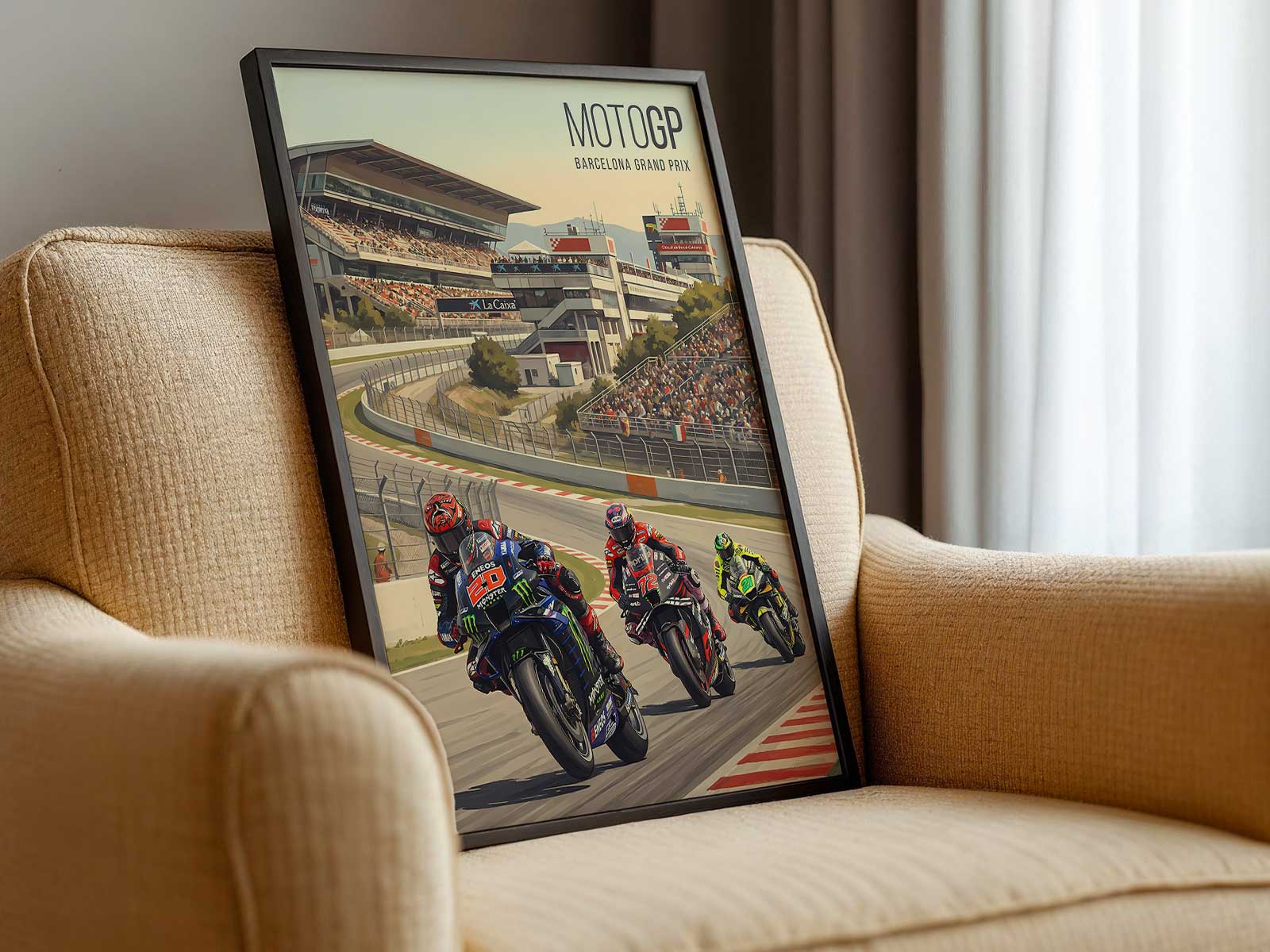
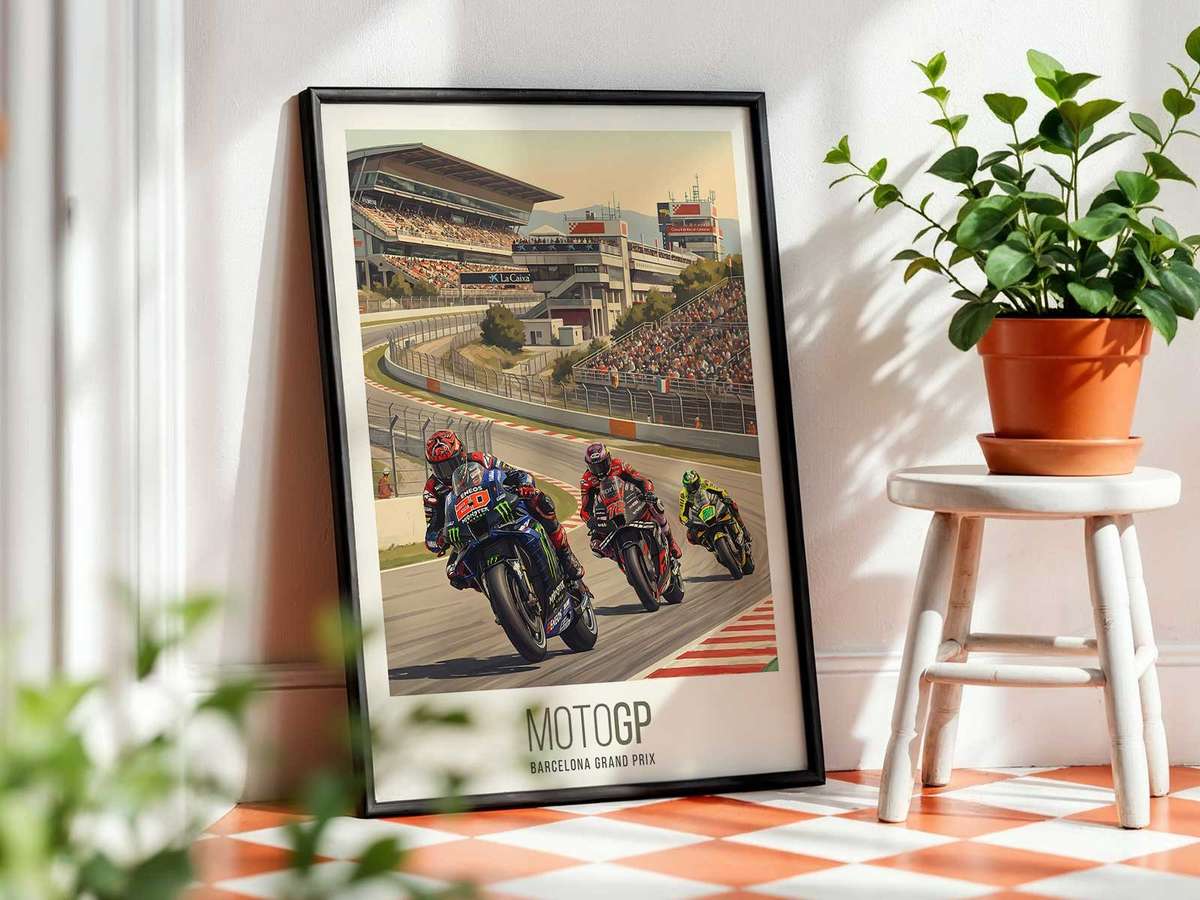
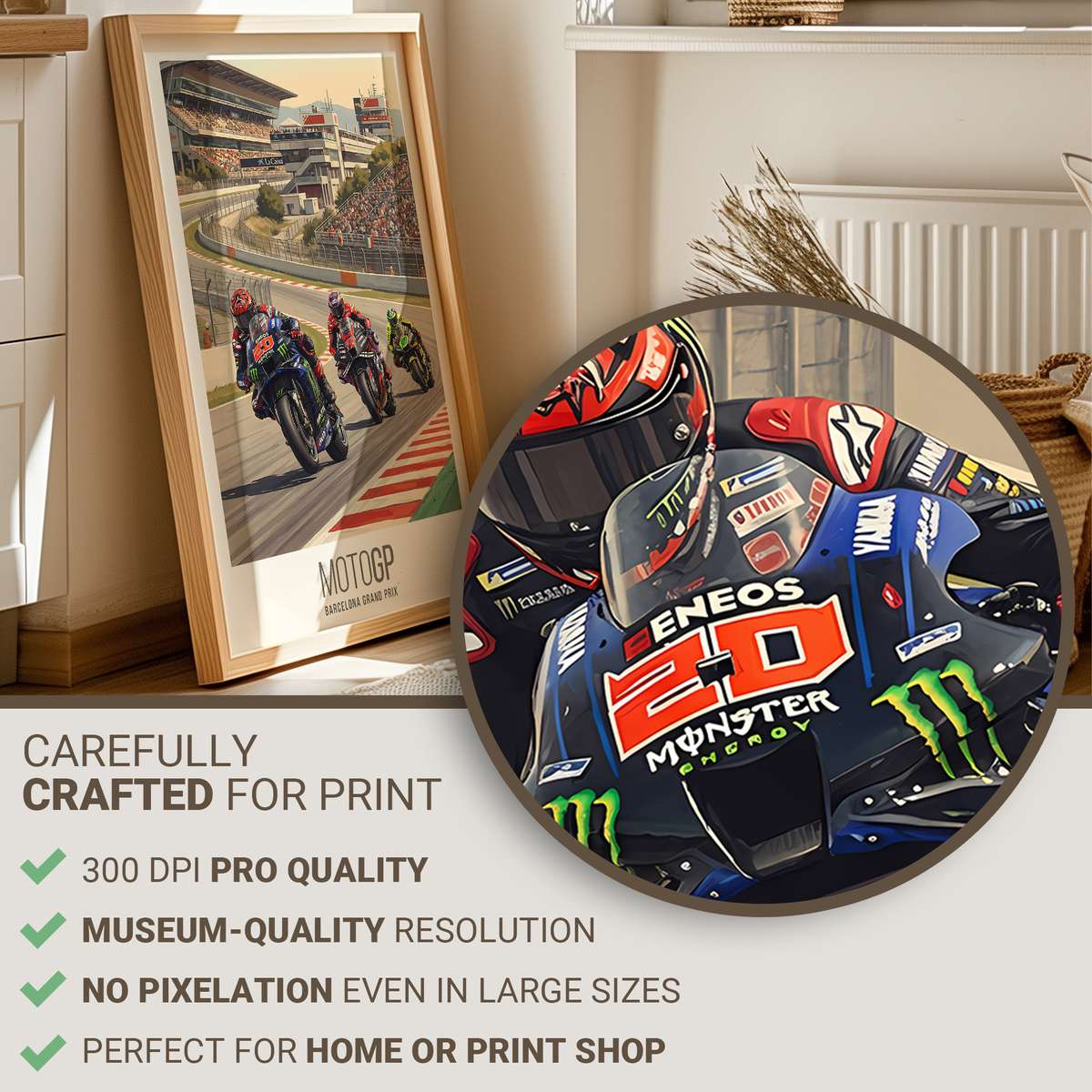
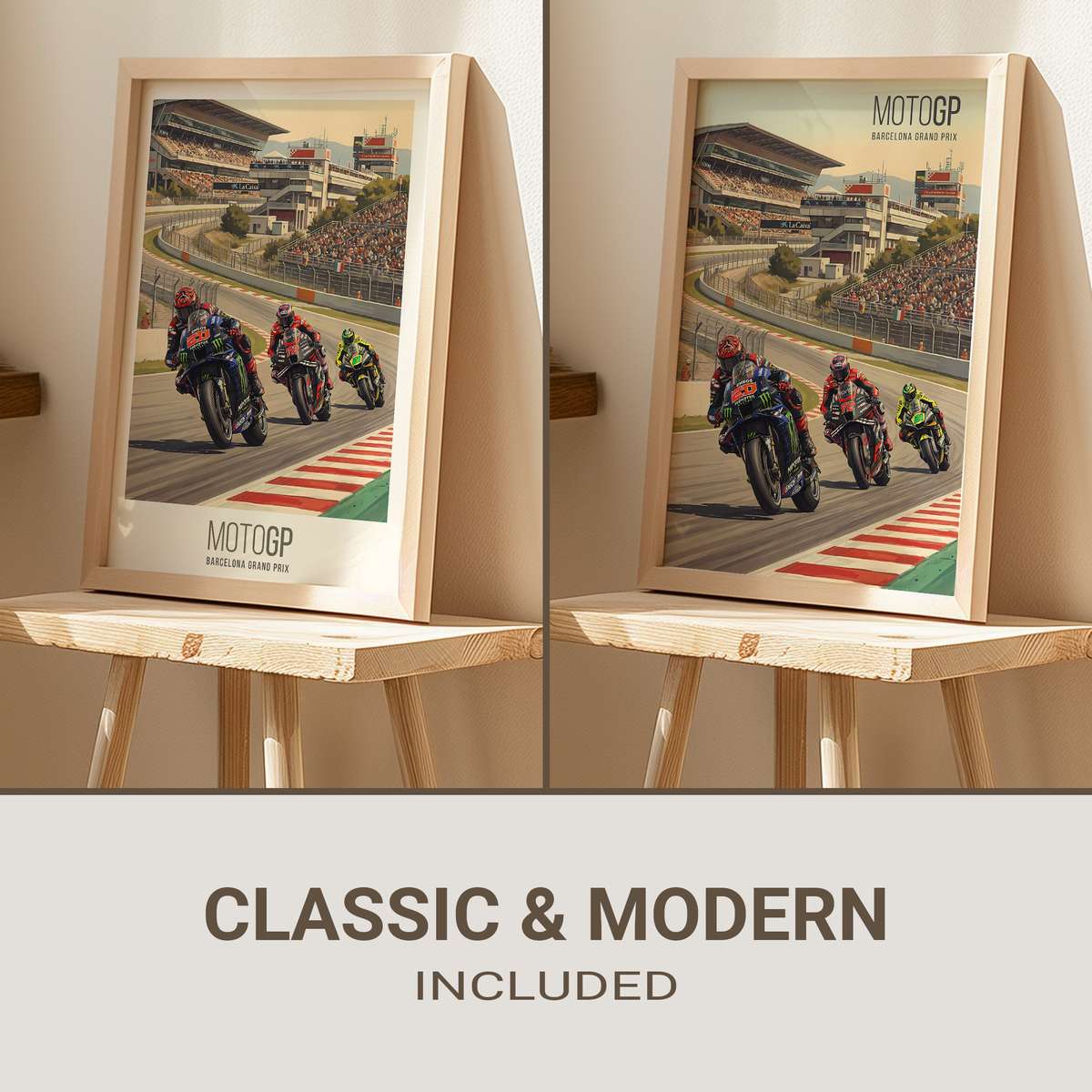
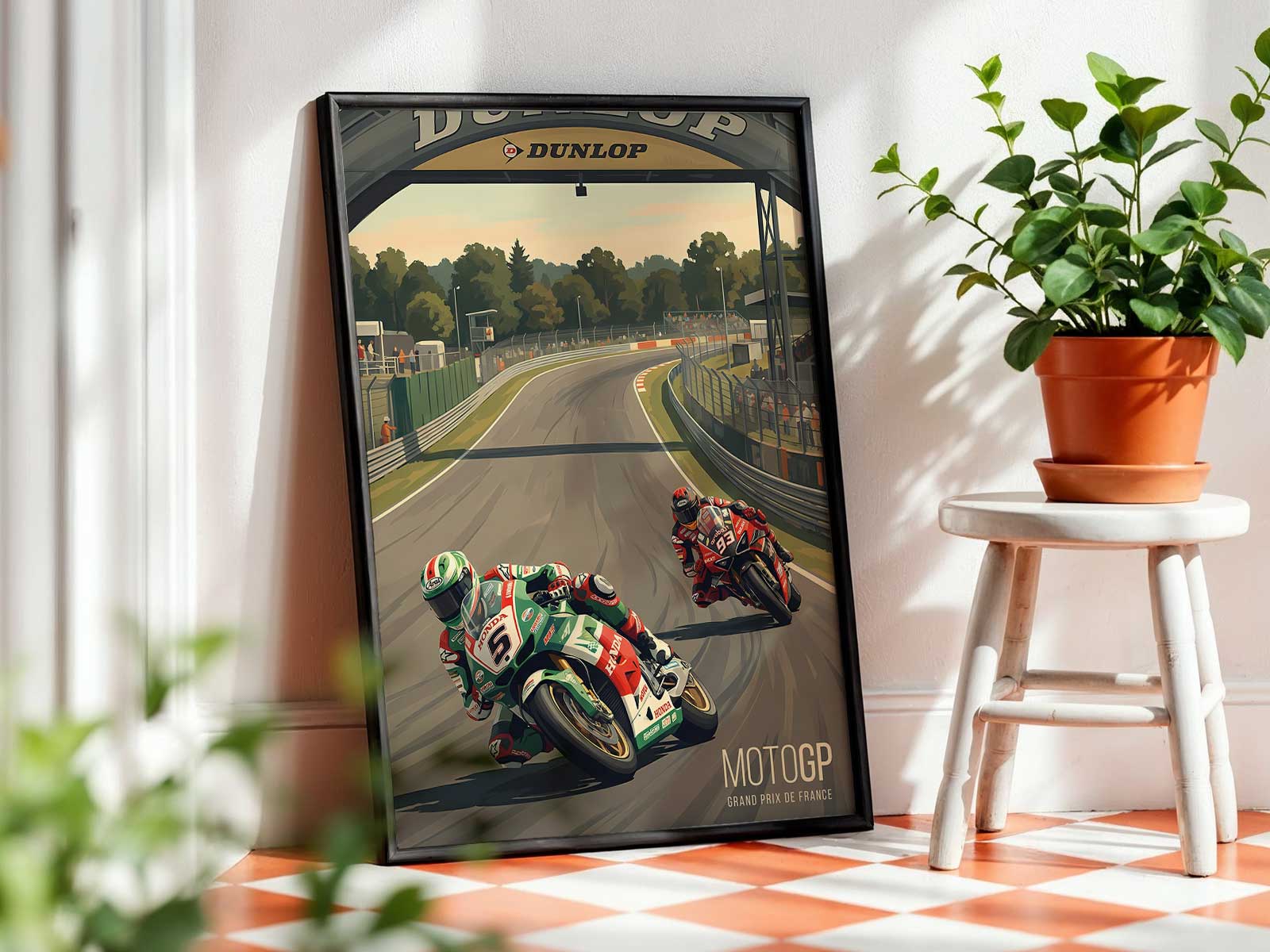
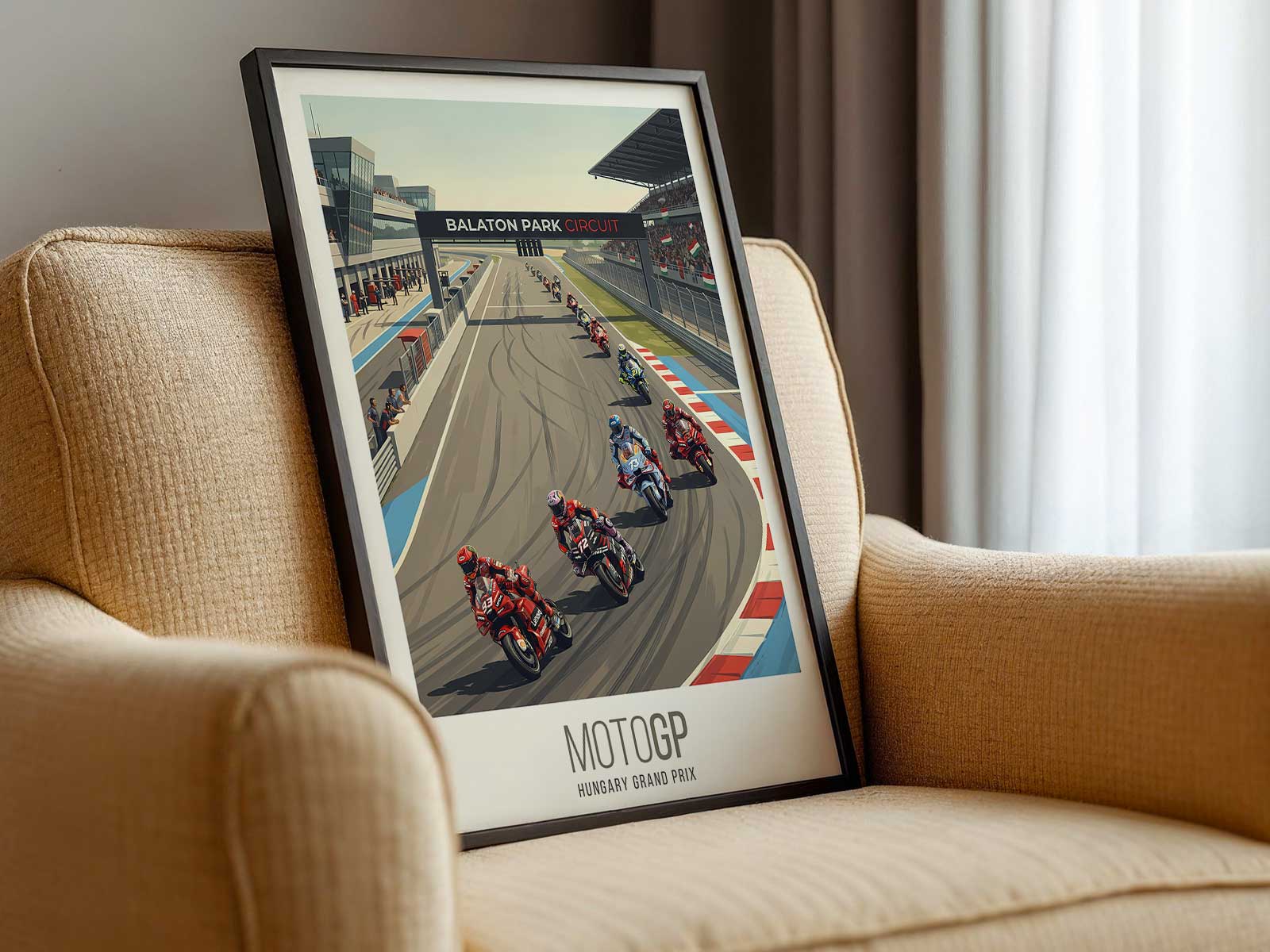
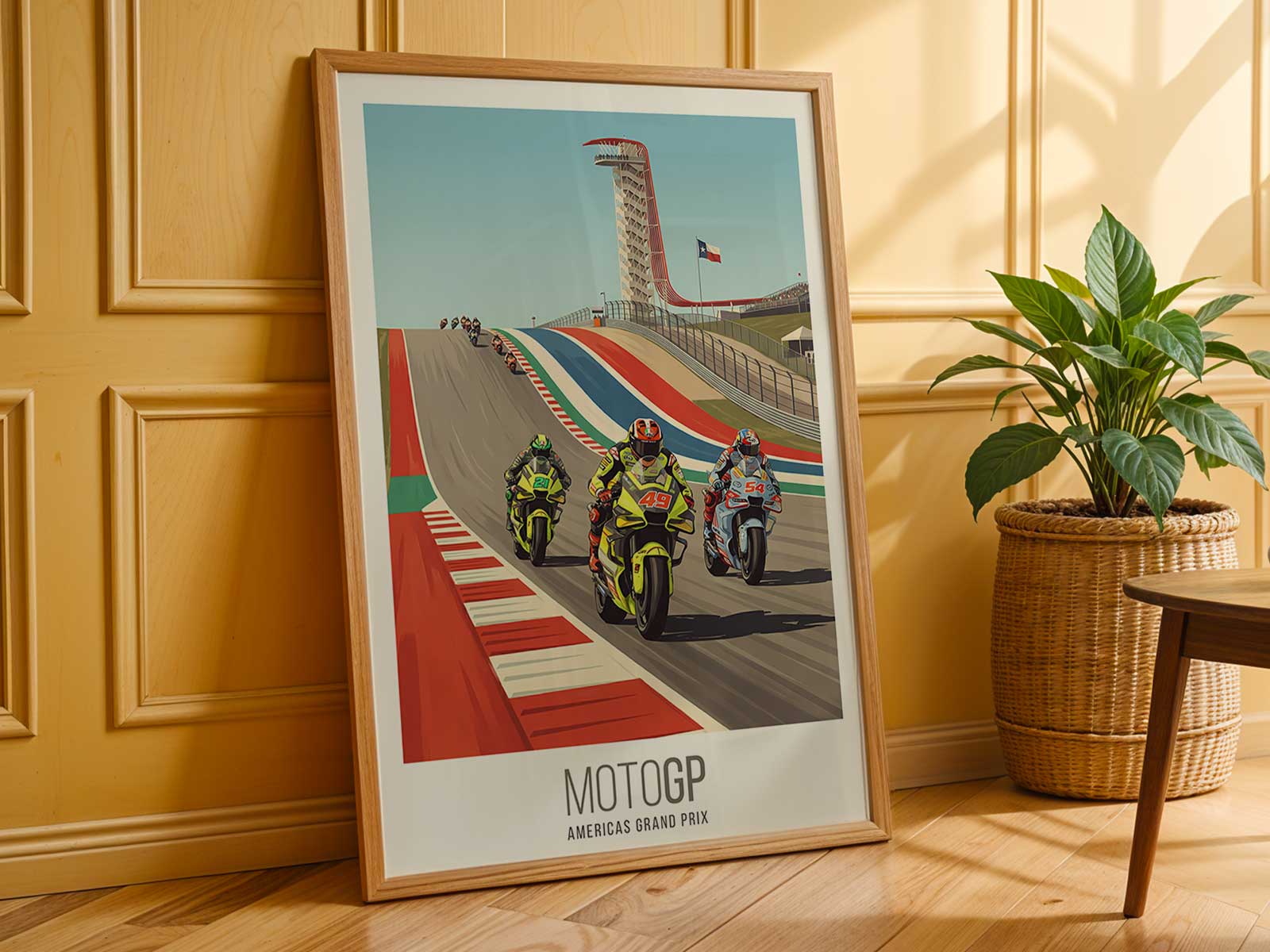
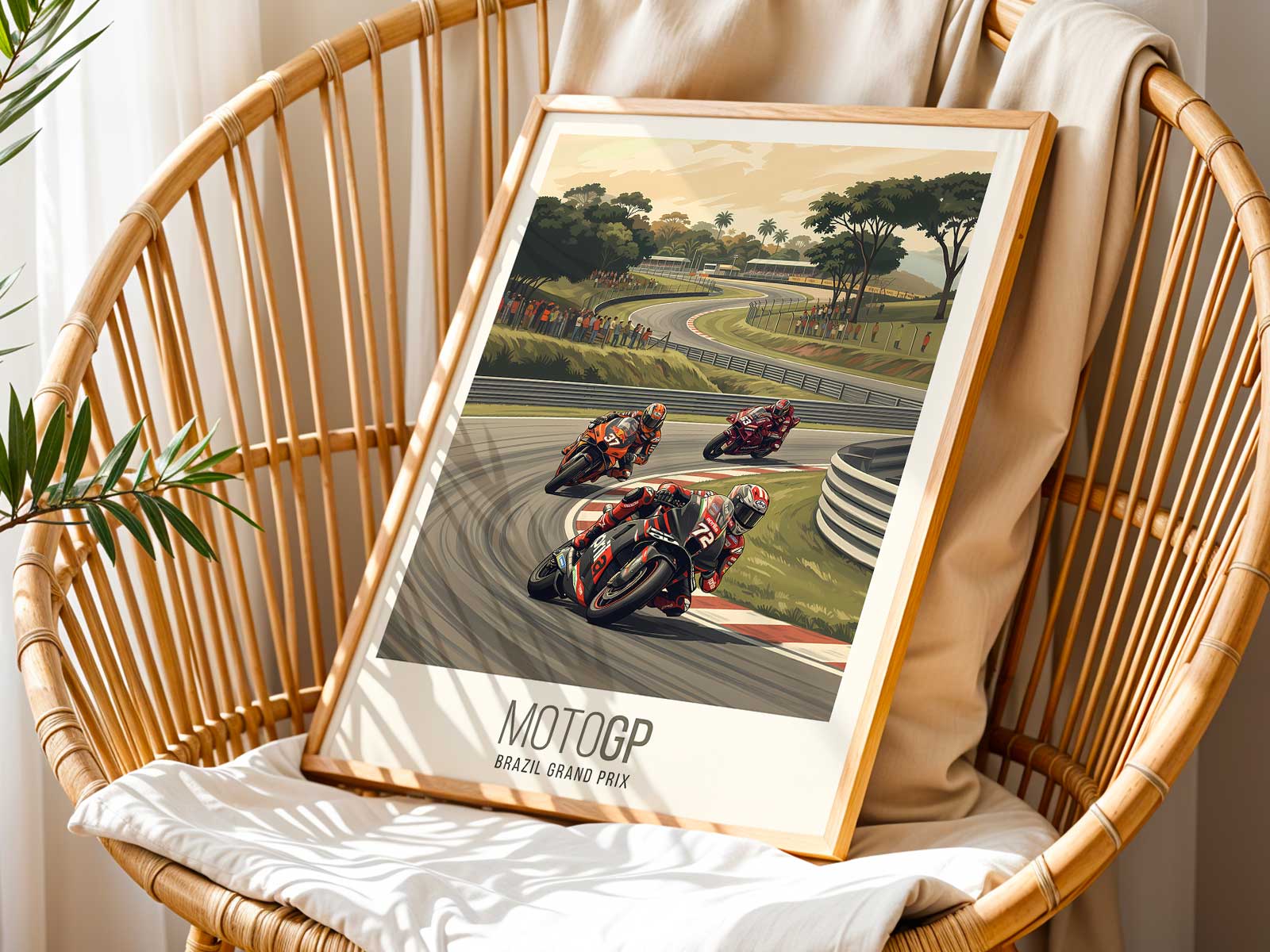
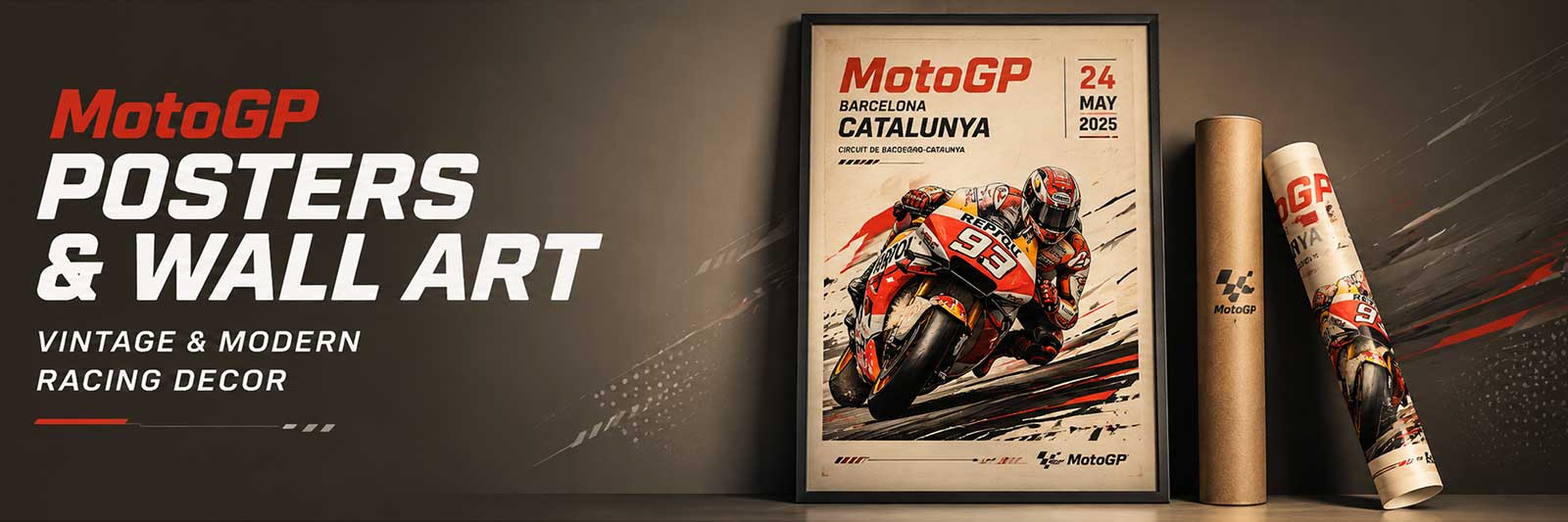
A compelling MotoGP racing bike poster does more than show a fast machine — it captures a human silhouette negotiating extreme forces. In this poster the rider’s body becomes the primary graphic element: shoulder line, tucked head, arm tension and hip position all translate the physical effort of braking, leaning and accelerating into a single frozen gesture. That gesture is the narrative engine of the image, telling the viewer about intensity and control without a single caption.
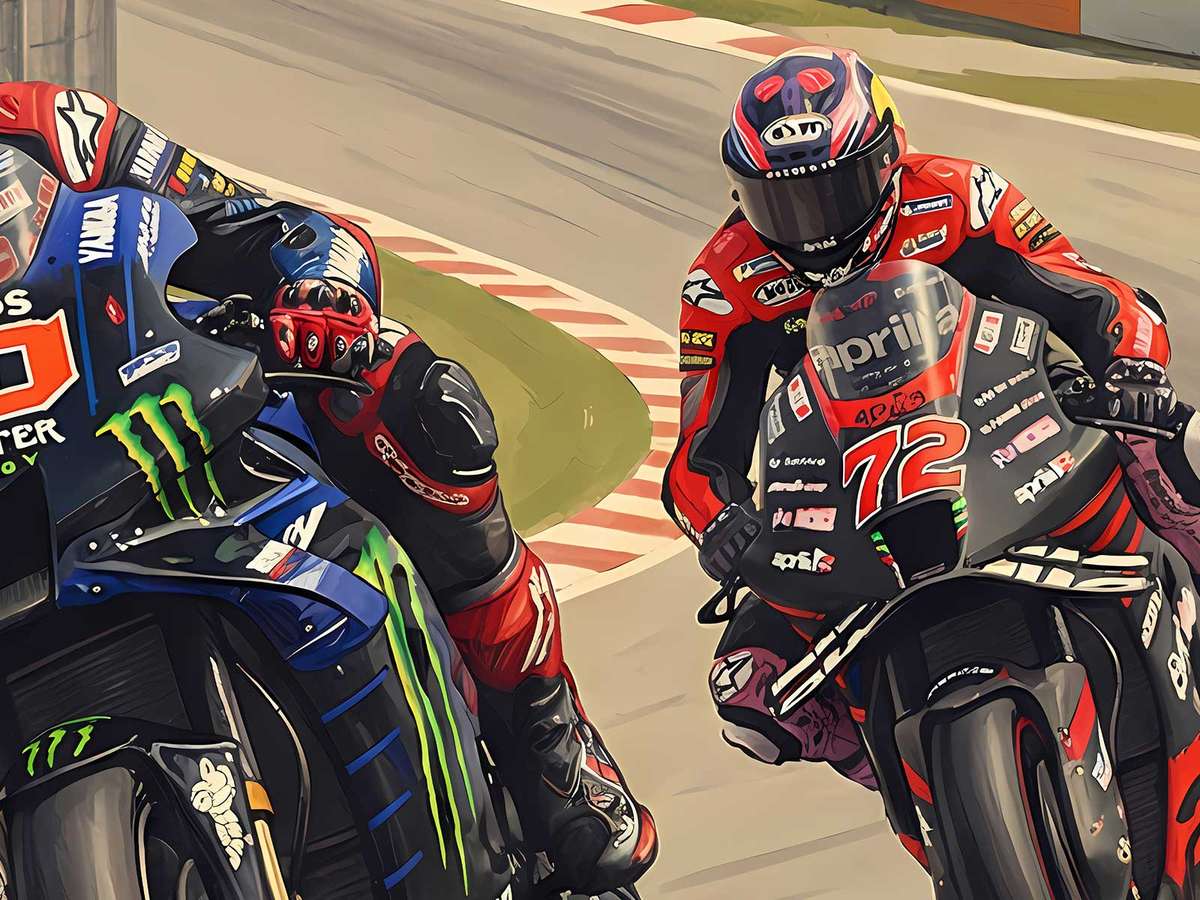
Look first at the arc of the shoulders and the placement of the head. A low, forward head tells of aerodynamic focus and commitment to the apex; a slightly raised chin hints at situational awareness and calm control. Shoulder compression against the tank and the subtle asymmetry of the arms show where force is being transmitted — the inside arm relaxed, the outside arm braced — a visual shorthand for the rider negotiating lean and grip. These small details are what make the figure read as an active, breathing presence rather than a static decoration.
Hip placement and knee position are equally decisive in how the poster reads. A pronounced hang-off, knee out and toe pointing toward the track surface compresses speed into a human counterweight, converting centrifugal force into a clear, directional posture. Conversely, a rider who remains compact on the machine communicates frictionless flow and surgical precision. Both approaches tell different stories: one of aggression and bold edge control, the other of economy and timing. A well-crafted wall print will let these subtleties remain legible even from across a room.
[IMAGE_INSERT_ARTICLE_01]
Braking tension and the hands on the bars supply the poster with its visible heartbeat. Fingers curved around levers, wrists set, and the angle of the forearms suggest whether the rider is chiselling entry speed or preparing explosive drive out of a corner. This is where the artwork records effort. Light on the bars reads as effortless mastery; white-knuckled grip reads as maximal commitment. Either way, the viewer perceives the physical transaction between rider and machine — an exchange that separates a memorable sports poster from mere motorsport illustration.
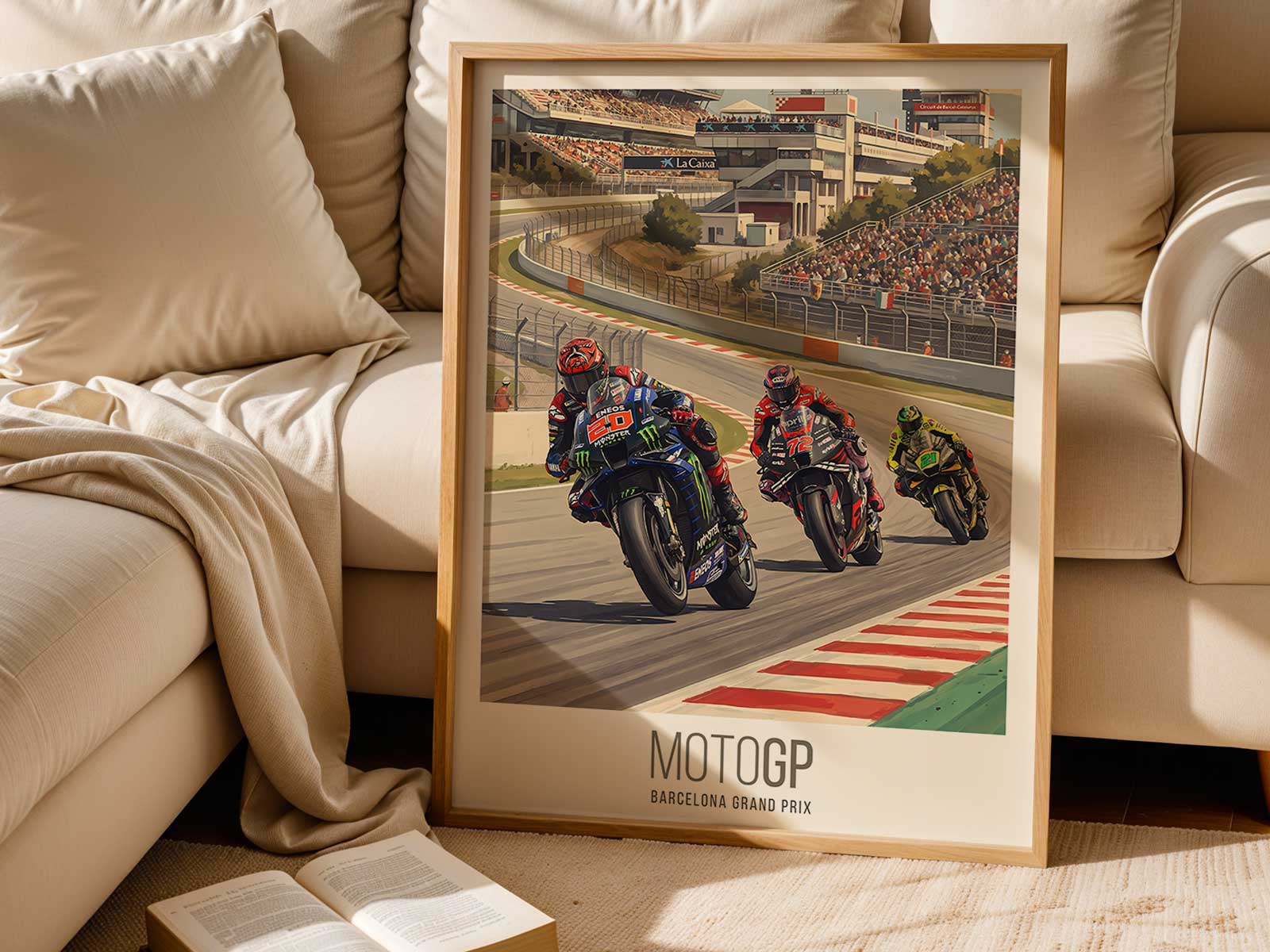
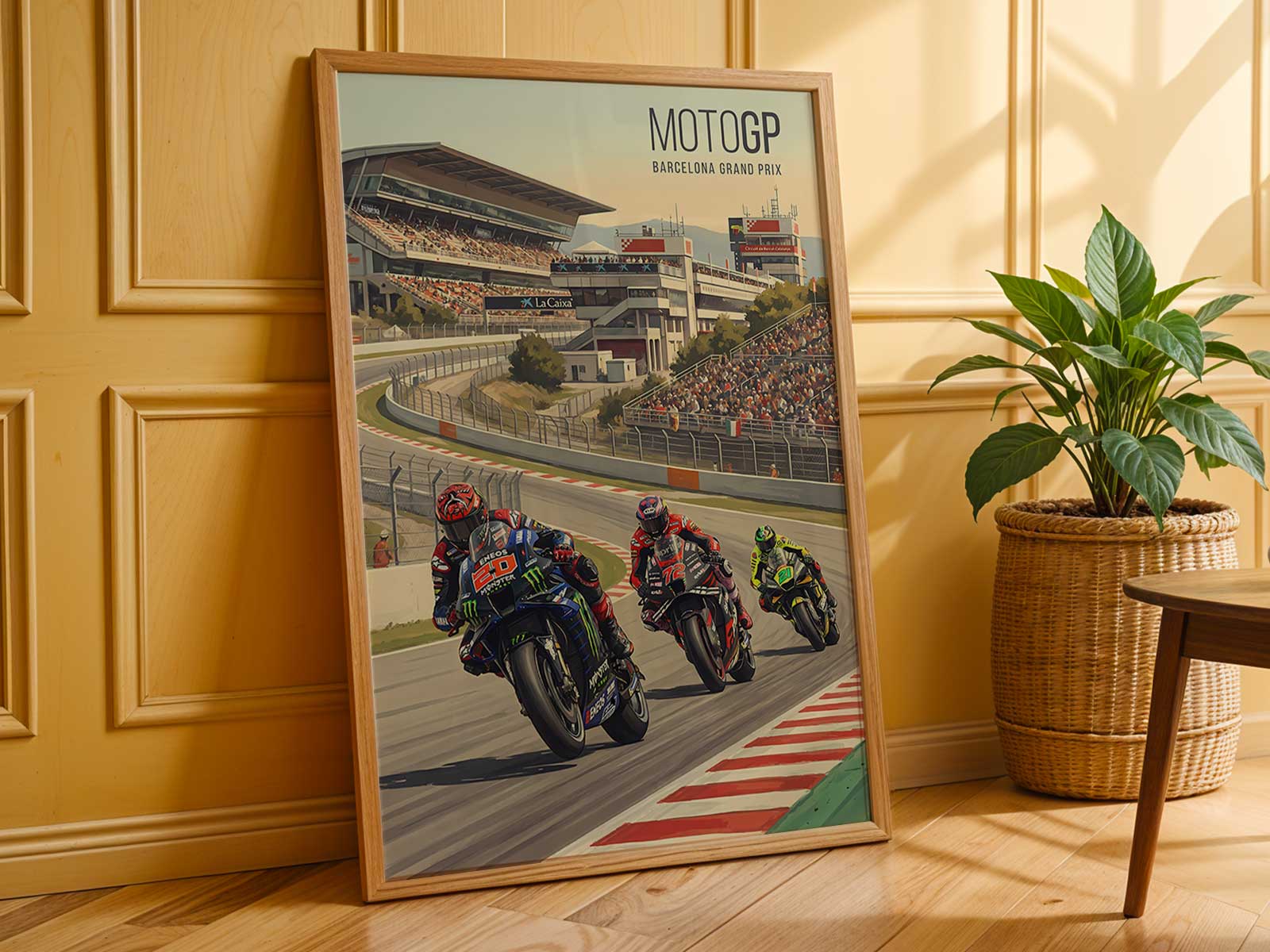
Beyond biomechanical markers, the rider’s posture defines the atmosphere of the room. A poster dominated by aggressive hang-off and a wide, low silhouette brings kinetic tension and a sense of immediacy, ideal for a garage or game room that thrives on raw speed. A more contained, composed rider silhouette lends refinement and focus, working quietly in an office or studio where concentration and discipline are part of the décor. The poster does not just decorate; it sets a tone that visitors feel before they read a label.
Composition and scale amplify the rider’s authority in the frame. Placing the figure slightly off-center, with a bike silhouette cutting diagonally through negative space, creates visual momentum that the eye follows across the wall. Background cues — a suggestion of blurred tarmac, the hint of curbing, or a washed crowd — provide context but remain subordinate: the body is the subject, the machine its instrument. This economy of storytelling is what makes rider-led MotoGP images display-worthy and memorable.
Finally, consider the emotional projection the rider enables. Without naming names or invoking season narratives, the posture invites viewers to imagine the weight of a braking zone, the immediate calculation of line and grip, the tiny corrections that separate success from loss. That imagined motion turns a static print into an active memory trigger: the room feels sharper, the corner feels closer, the idea of speed is condensed into a human silhouette. It’s why a single rider — rendered with clarity and composure — can define the character of a wall and anchor a motorsport-focused interior with authority and style.
Author: