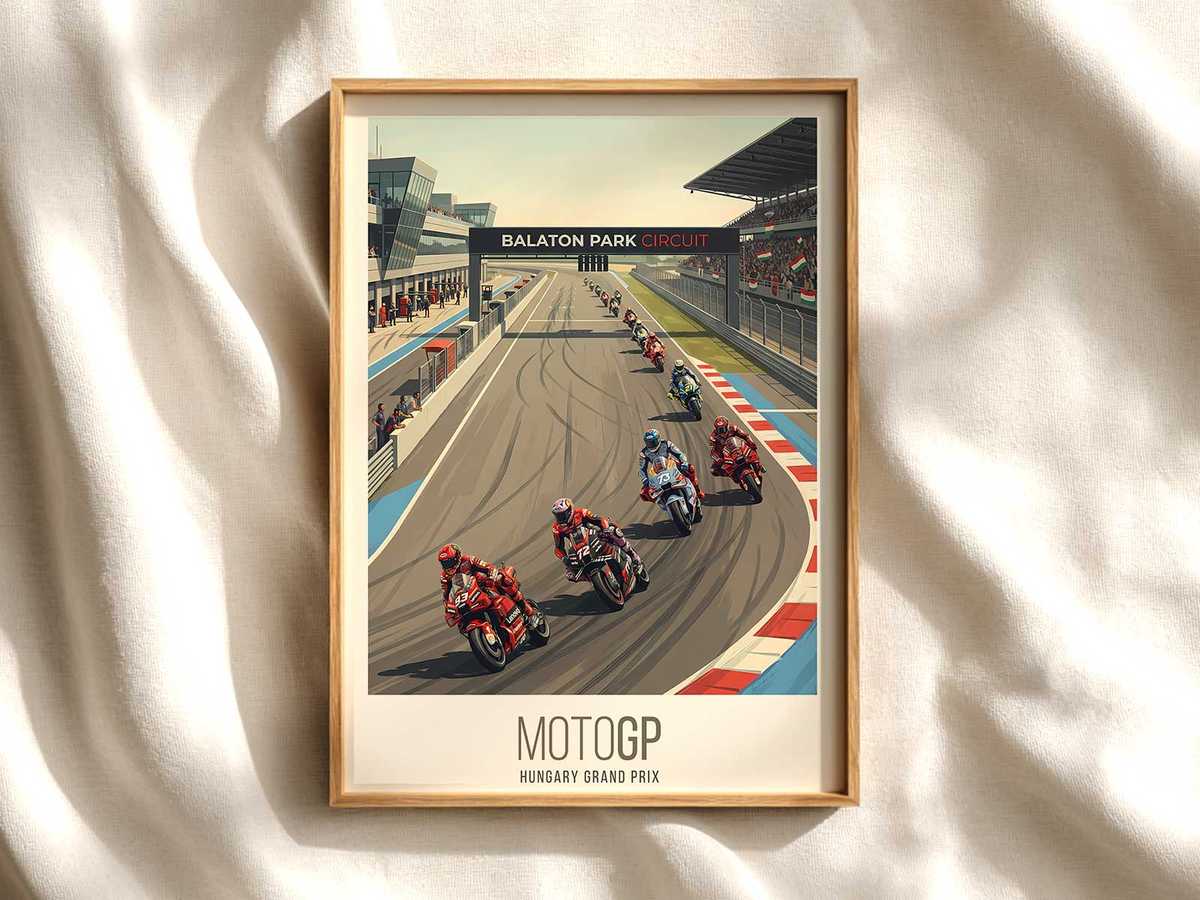
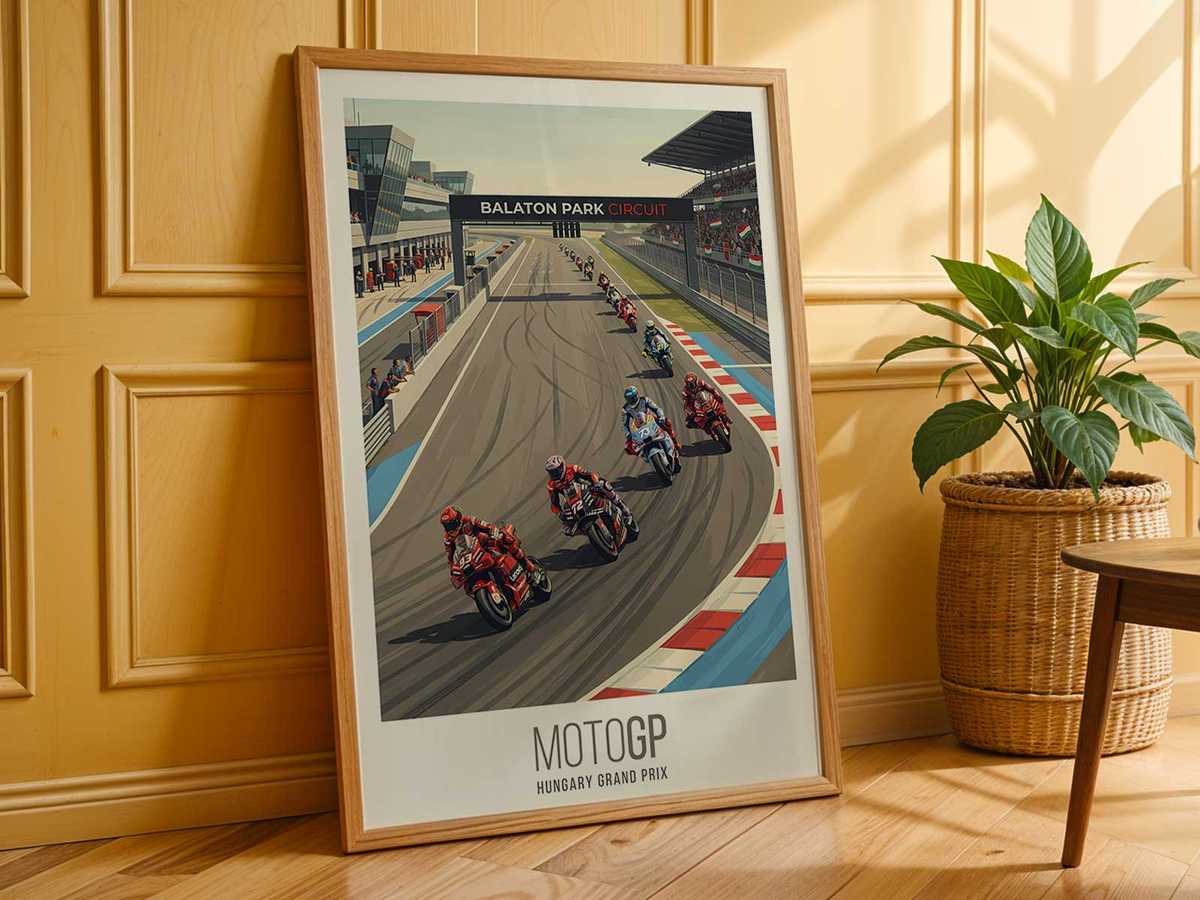
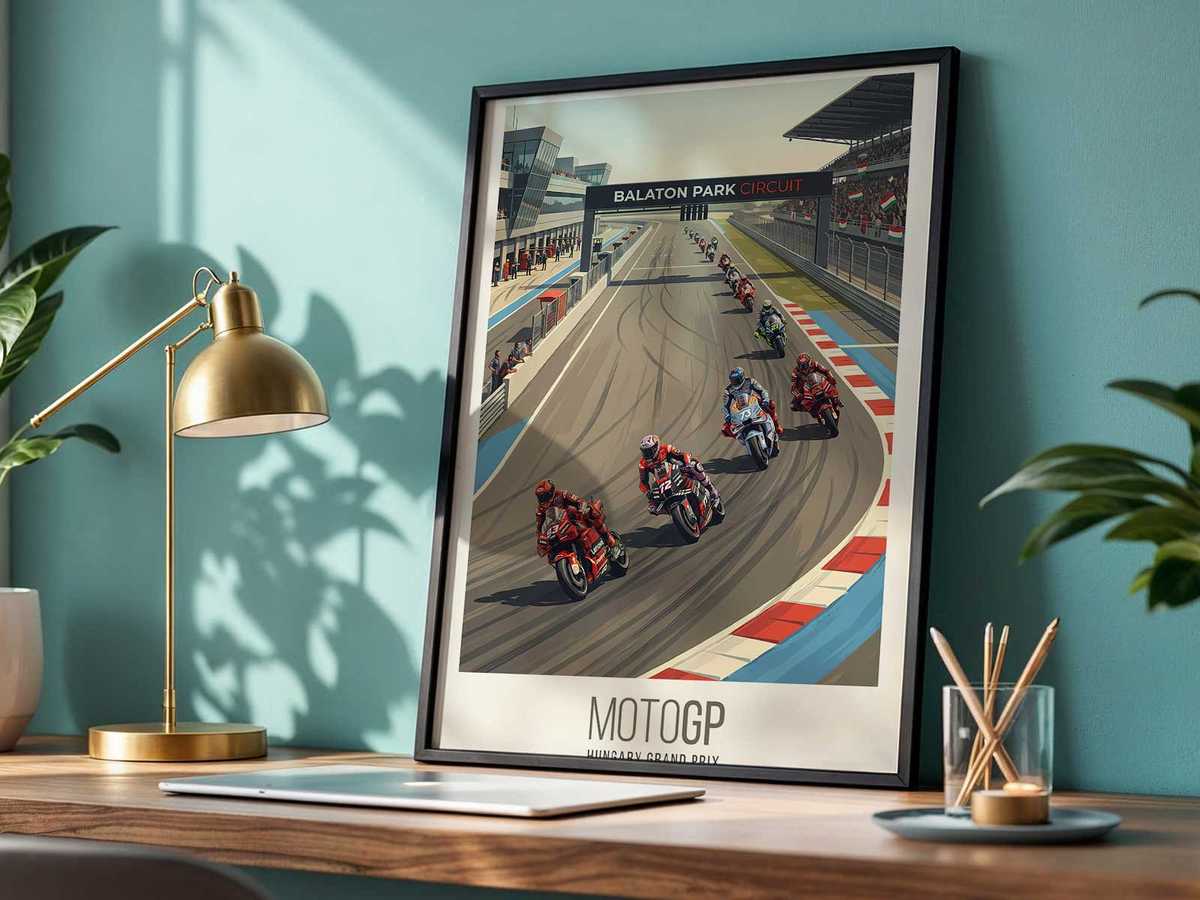
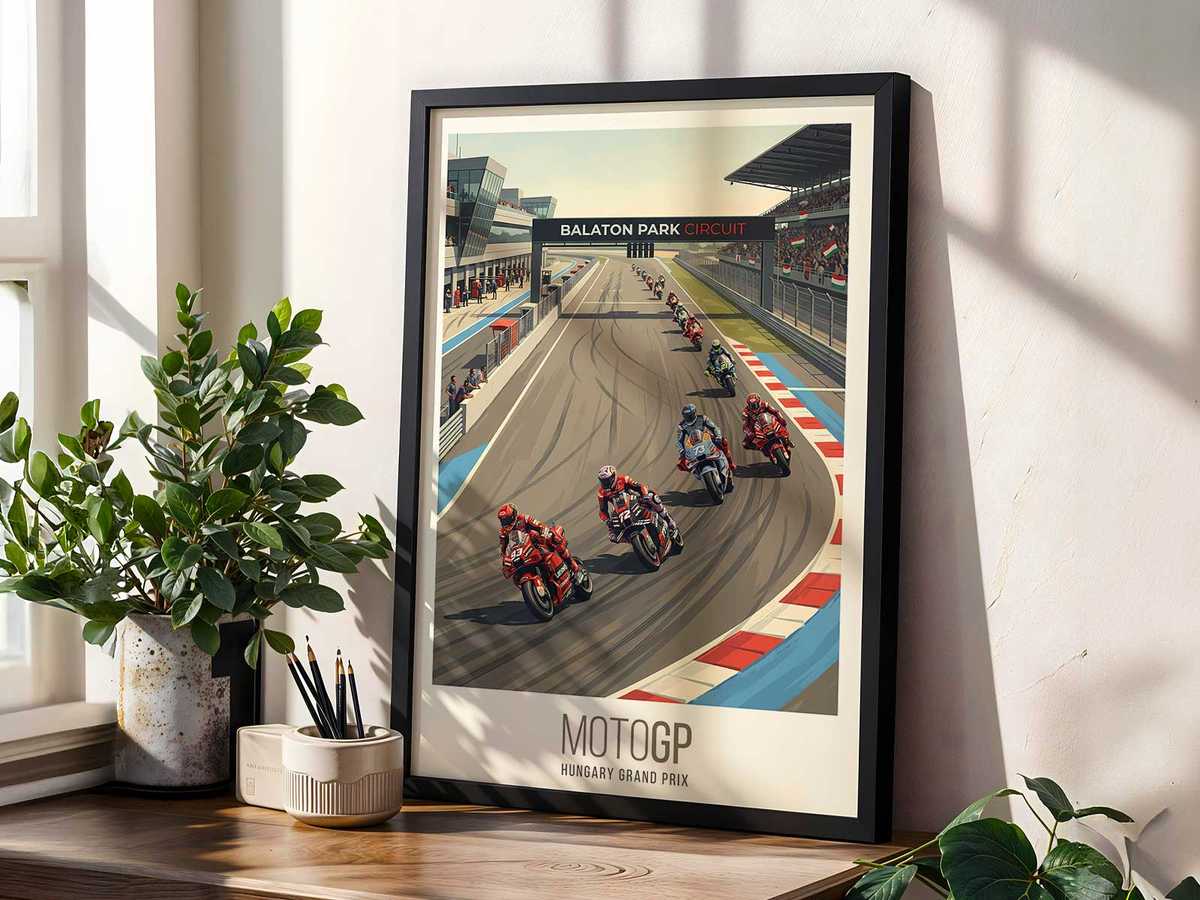
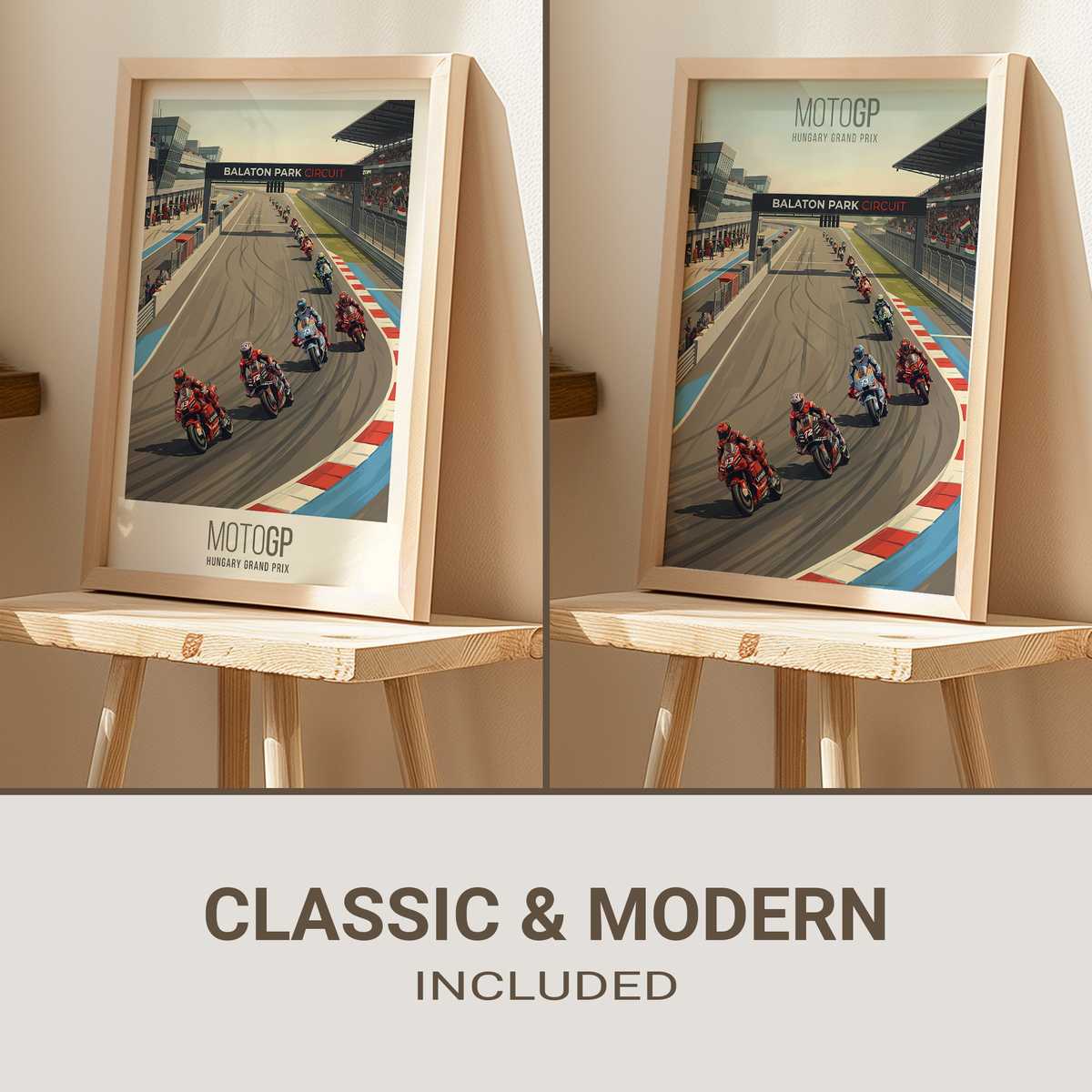
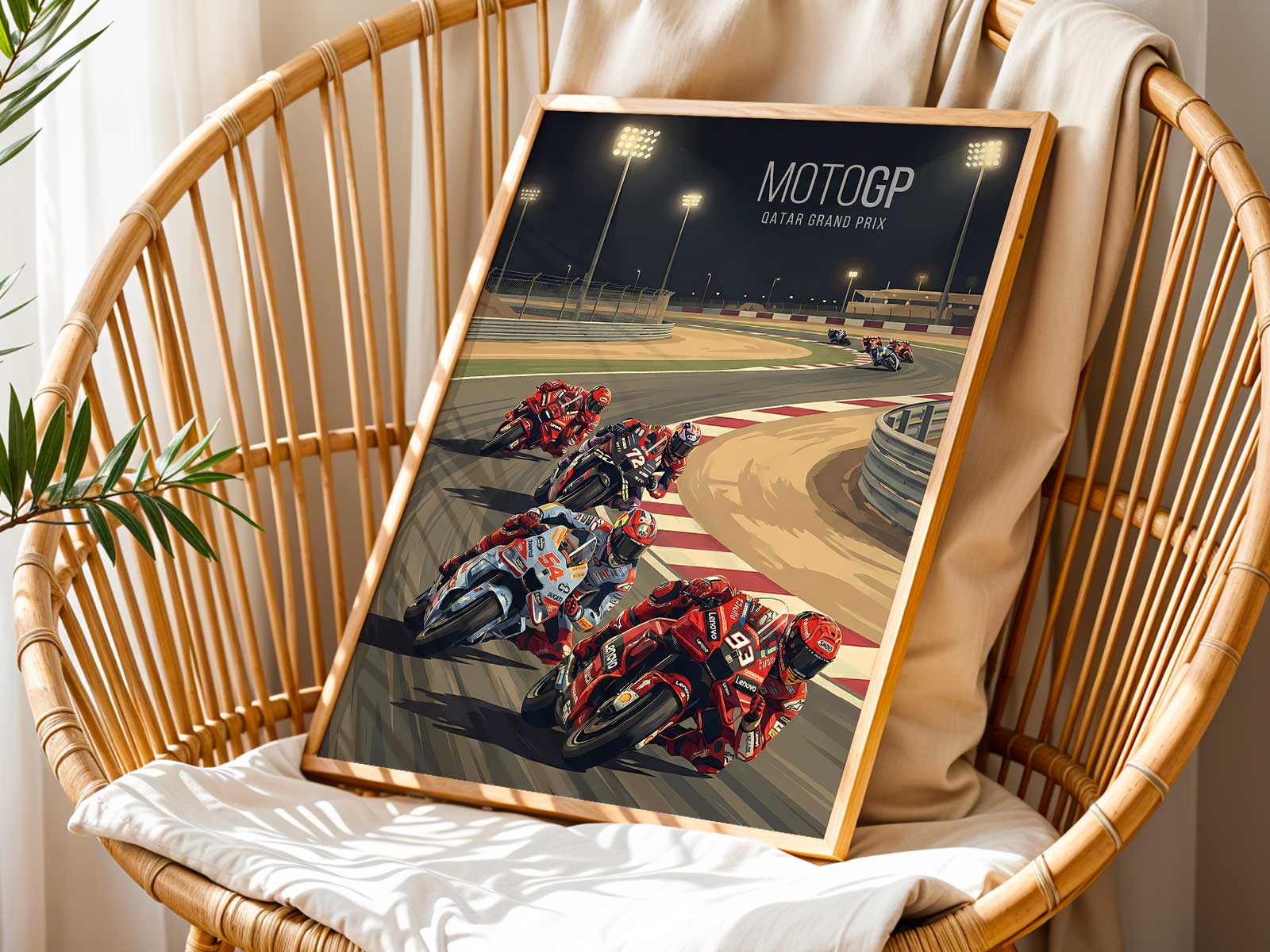
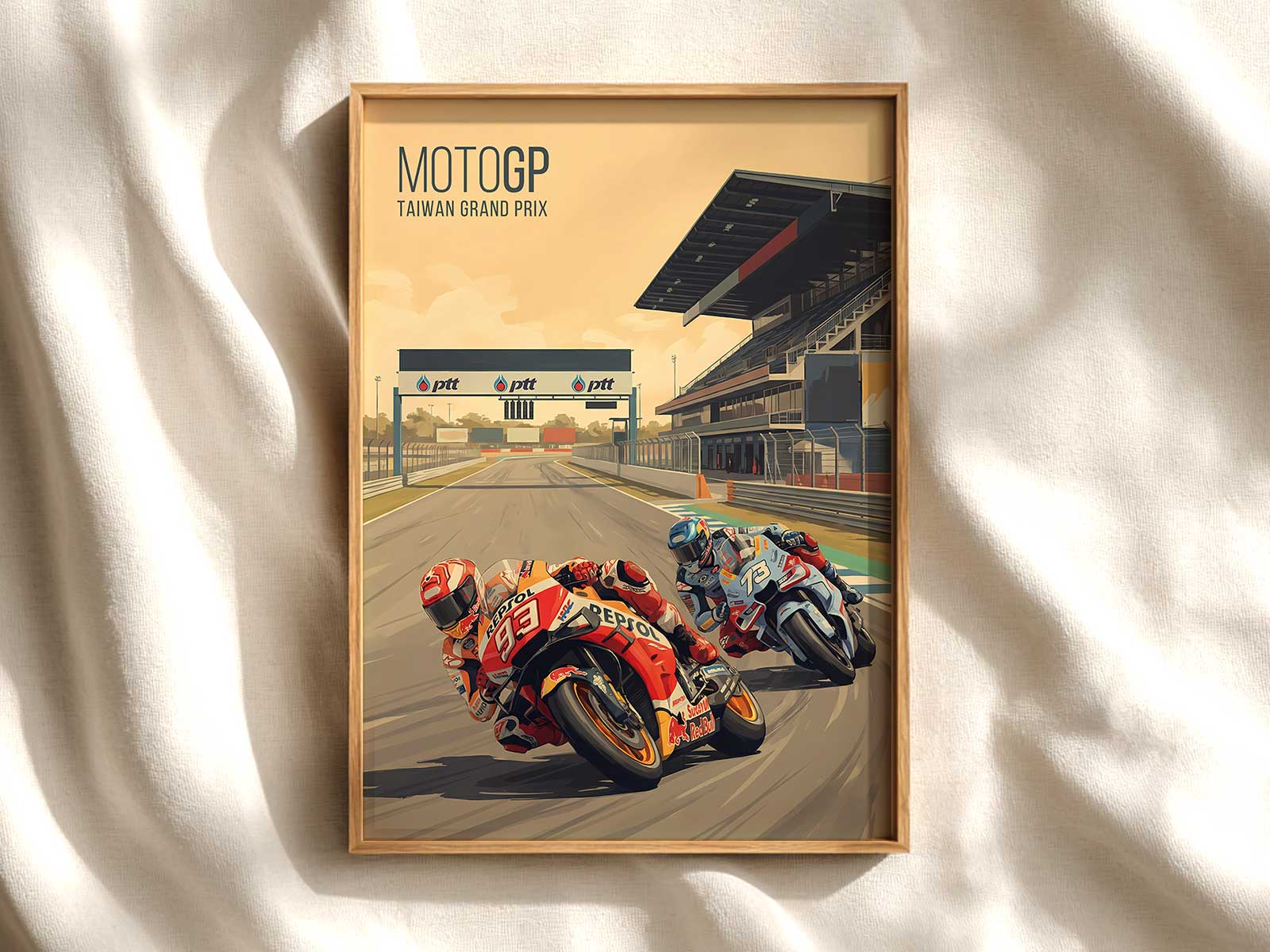
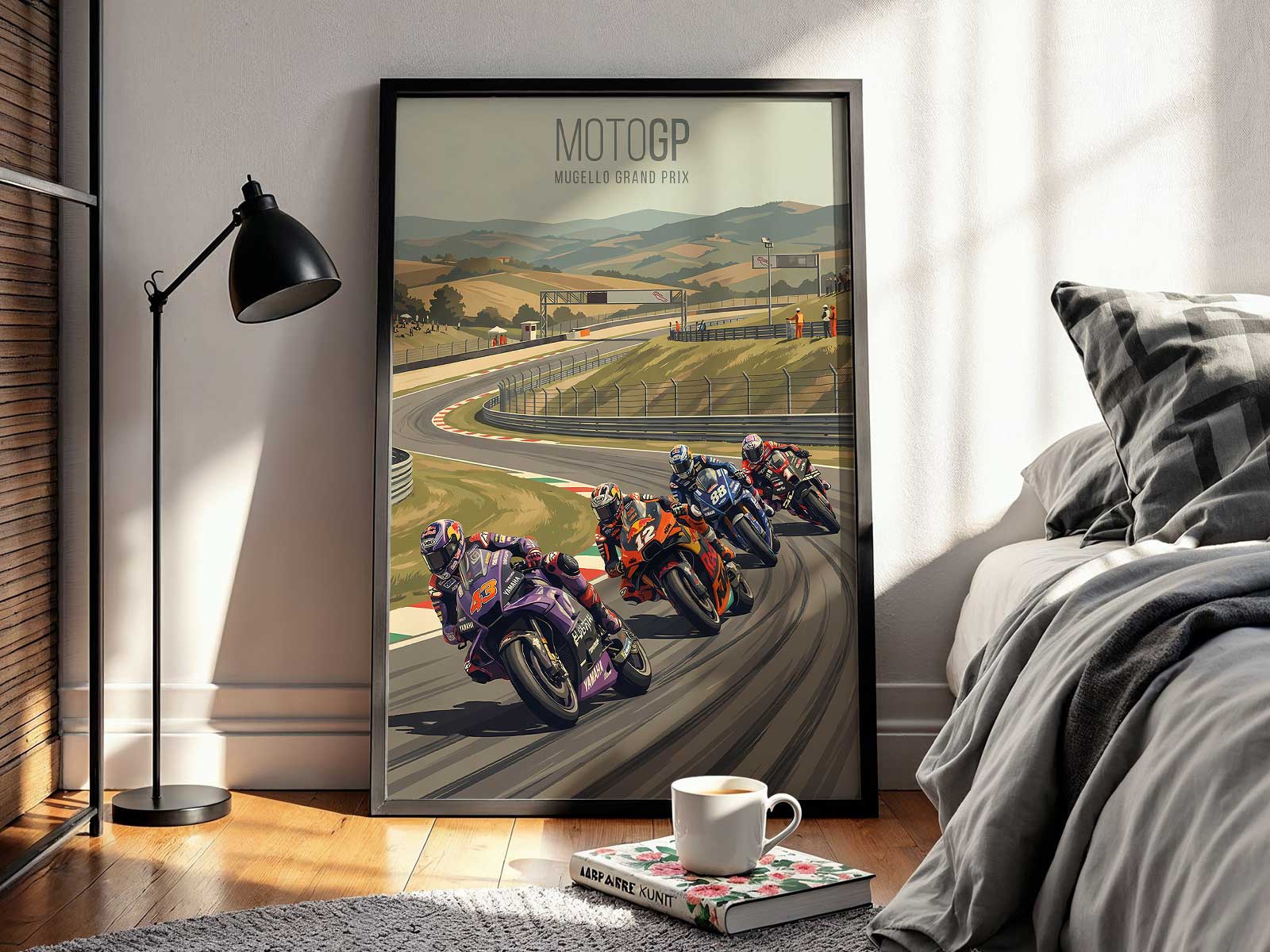
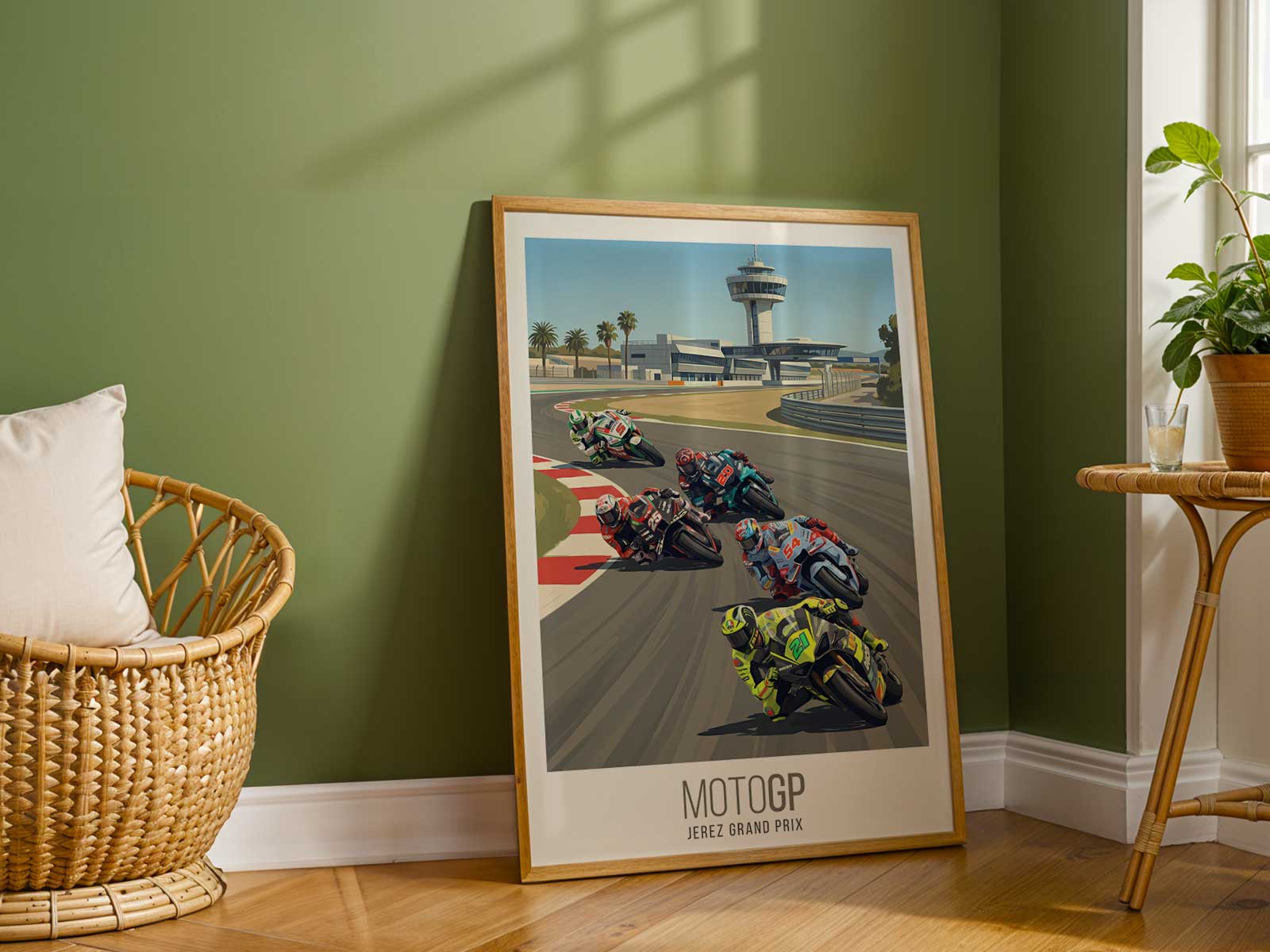
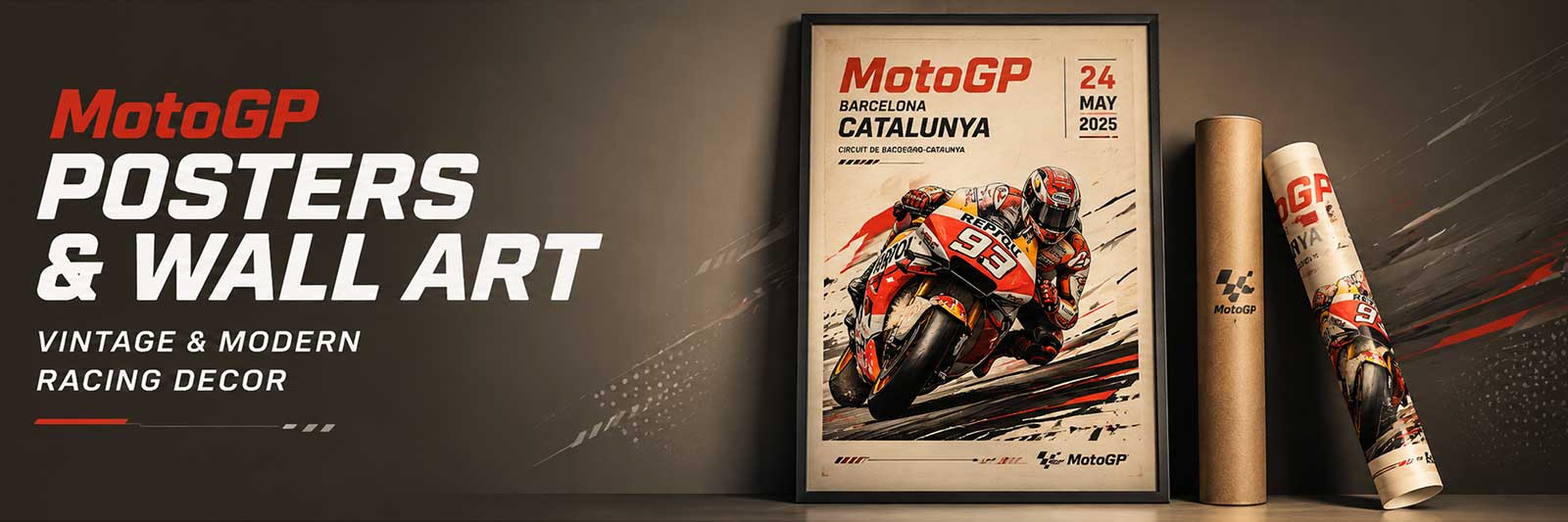
This poster of Marc Marquez captures a single, decisive fragment of Grand Prix racing and translates it into a private narrative for the wall. Rather than a celebration of speed in general, the image arrests one precise mechanical conversation: rider weight, throttle expectation, tyre bite and the angle where commitment meets uncertainty. That sliver of time—the moment before the bike either tightens its line or scrapes for grip—is what gives the composition its electric charge.
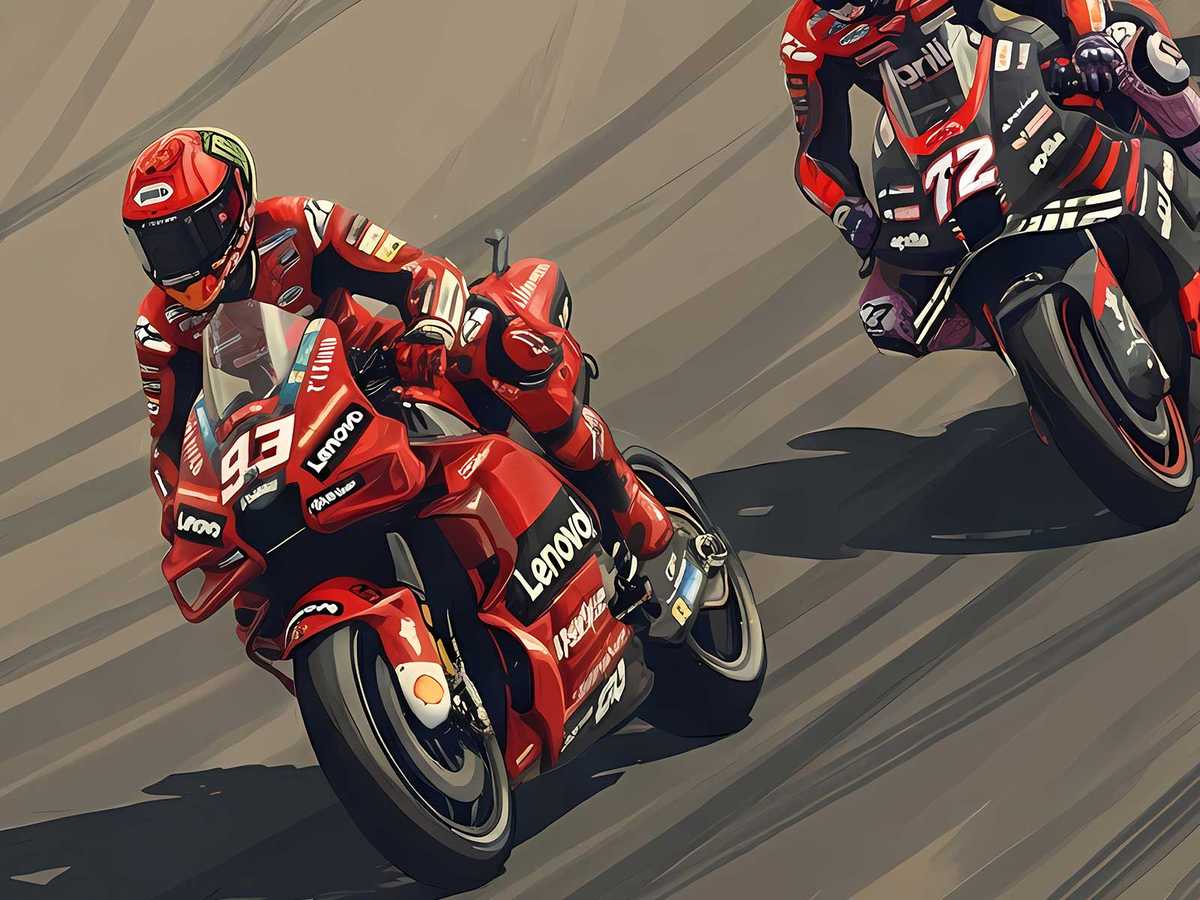
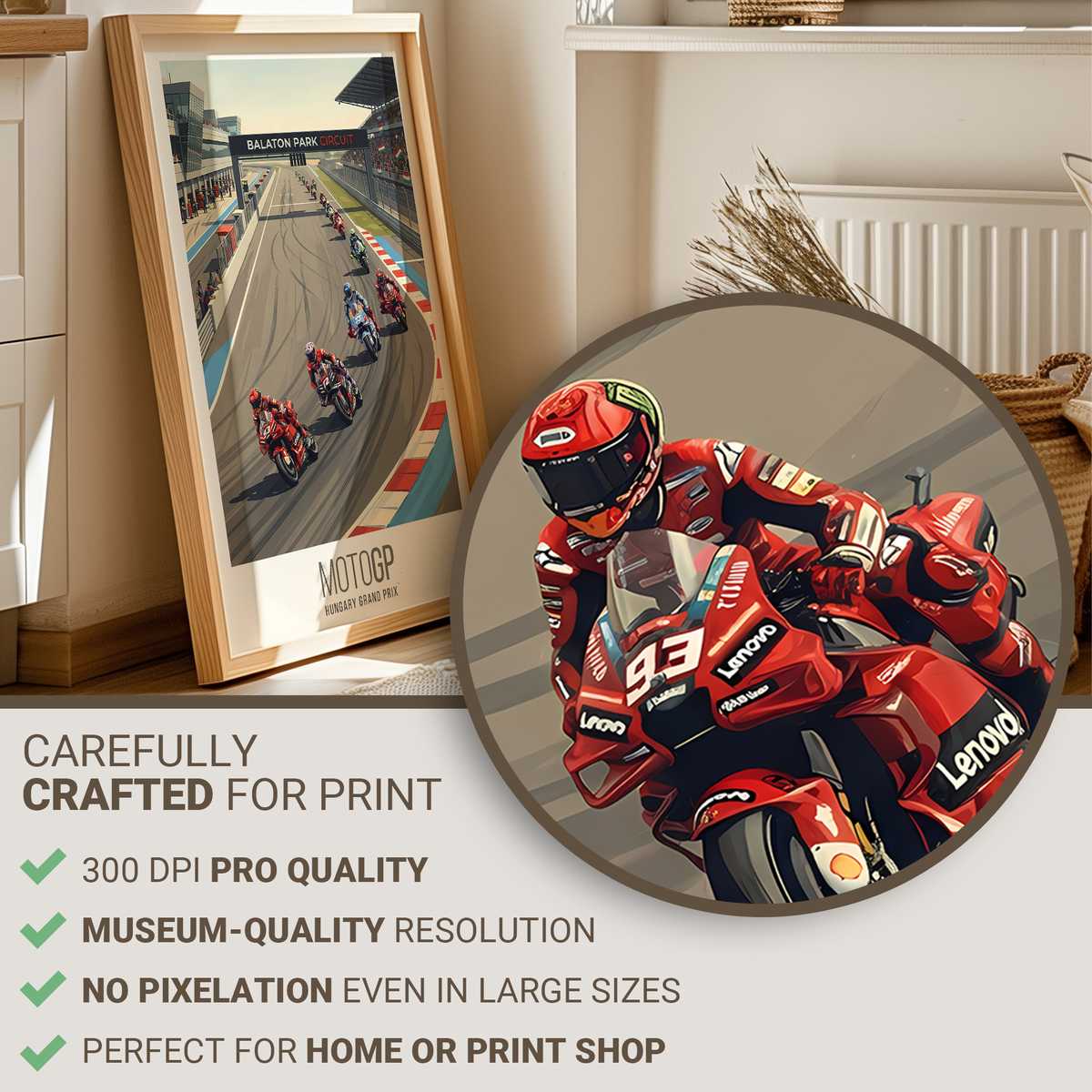
Visually, the scene reads like a sentence of movement. Marquez's body geometry—inside elbow tucked, knee extended, hips angled to counter centrifugal force—declares a braking duel or a maximal lean-angle peak. The motorcycle is not just an object but a tensioned spring: suspension compressed, front tyre flattened into the tarmac, wheel spin or rear squat hinted at in blurred rim tones and heat haze. These cues tell viewers how much control is being asked of machine and rider at once. The suggestion of proximity to an opponent or to the circuit limits adds narrative pressure without needing context: you feel the moment's risk.
Why does this one-second freeze become a strong piece of wall art? Because it compresses process into symbol. The human decision—when to close the throttle, how much to trail-brake, whether to stand the bike up—condenses into readable posture. The technical: tyre contact patch, chassis angle, and suspension travel become sculptural shapes that work across a room whether the viewer knows racing minutiae or simply recognises tension in motion. The image supplies a story starter every time someone looks: pursuit, gamble, small victory or near-miss are all implied by posture and plane.
[IMAGE_INSERT_ARTICLE_01]
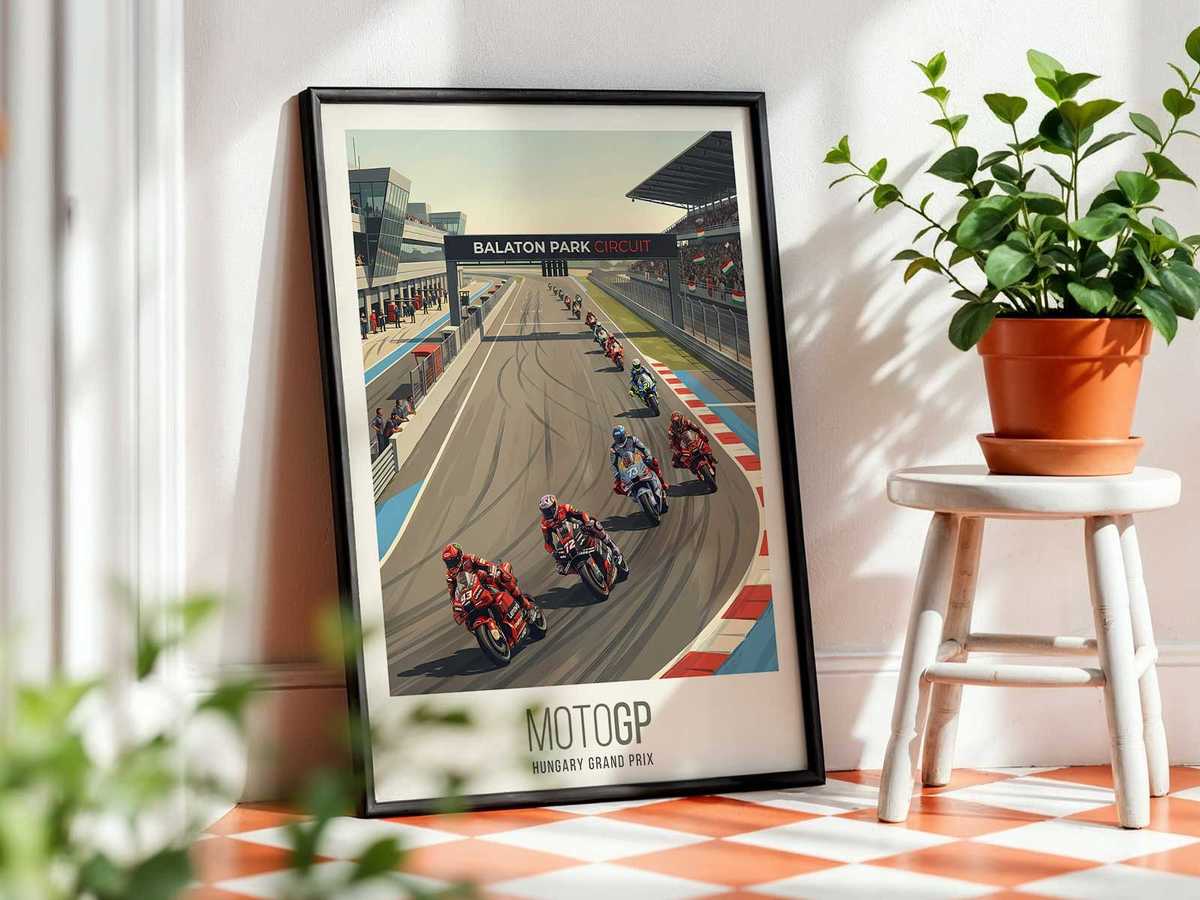
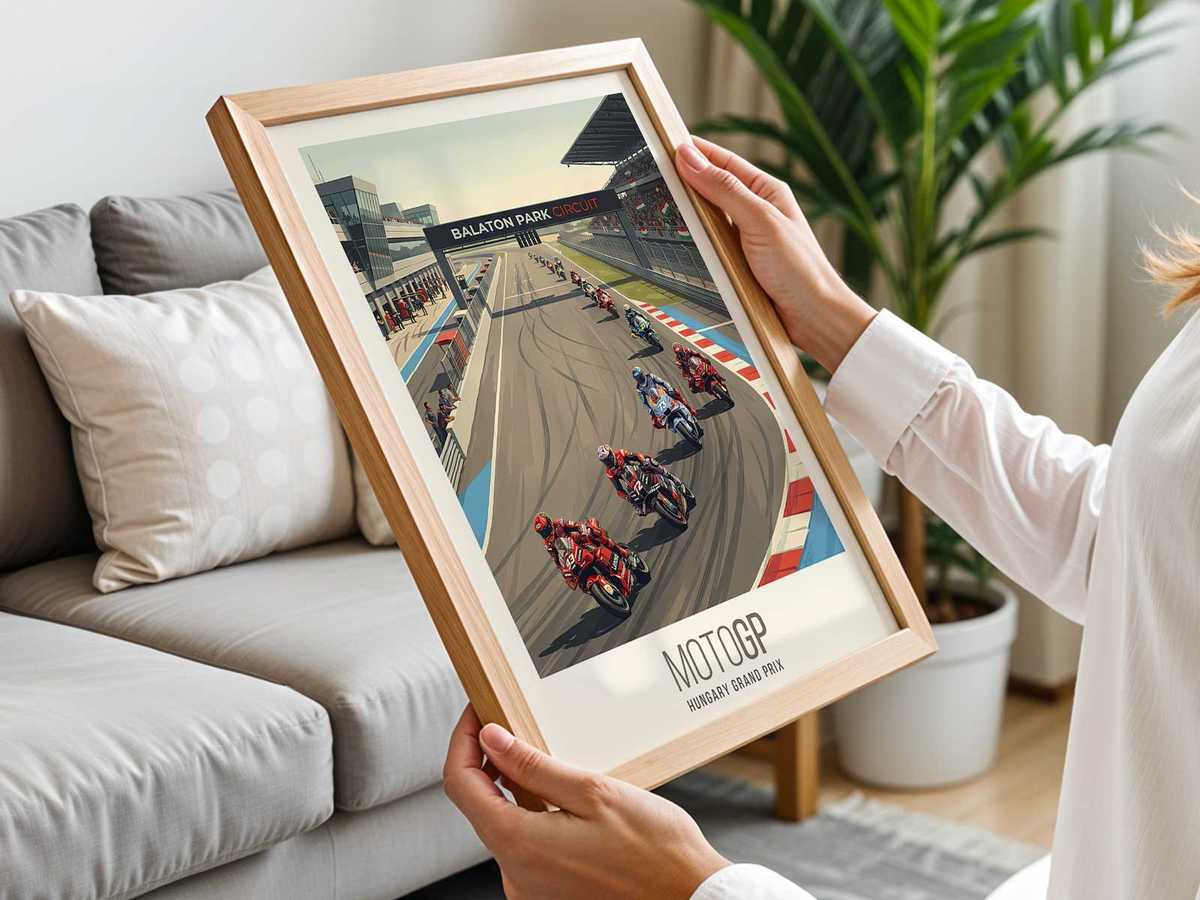
In an interior, that narrative function changes atmosphere. Place the poster above a low credenza in a studio and the image anchors focus, lending an edge of disciplined motion to creative space. Hung in a garage or game room, it amplifies technical appreciation—the poster's contrast between machine silhouette and circuit surface invites lingering inspection. The tones and compositional rhythm act like architectural paint: a low horizon line stretches a wall, a cropped close-up tightens a corner, a diagonal lean energises an open-plan living area without dominating it.
Consider how the visual specifics work to create desire that isn't simply commercial. The raw geometry of lean angle and the visible compression of the front forks transforms transient skill into a permanent study of balance under pressure. Heat shimmer, tyre scuff detail, and the rider's helmet orientation supply tactile cues—almost audible—so the image reads multisensorially even from a distance. Collectors and design-minded owners will recognise that a single racing instant can function like a portrait: it reveals character, intent and a habitual relationship with risk.
Finally, the poster invites projection. Viewers map their own memories—race weekends, particular circuits, or the sensation of following a pass—onto the still. That shared projection is why a race-moment print remains conversational: it suggests a beginning, a decision and the momentary consequence, leaving the outcome to the imagination. For interiors seeking a focused, story-rich statement, a Marc Marquez race-instant poster distils the theatre of MotoGP into a quiet but persistent presence on the wall.