How riders must adapt to the Honda RC213V: braking, front-end trust and a…
The Honda RC213V is not a generic MotoGP prototype; it was built as a purpose‑designed, high‑performance machine that asks very specific things of its rider. That demand shows up in abrupt power delivery, a stiff chassis and a front end that can feel sharp under heavy braking — all traits that force riders to change technique, confidence management and setup priorities to extract consistent performance.
Quick answer
The RC213V’s race‑derived character — sharp engine response, high chassis rigidity and sensitivity to tyres and electronics — requires riders to alter braking approach, front‑end trust and corner technique to get consistent lap times.
What the pairing suggests at first glance
Honda presents the RC213V as a factory prototype shaped by development riders and test feedback; its road‑legal sibling, the RC213V‑S, carries the same aggressive character into a more public form. Observers and riders have repeatedly described the race bike as specialised and demanding: it rewards precise inputs but resists sloppy or broadly applied techniques that work on more forgiving machines.
The rider’s natural language: what needs to change
Every rider arrives with habitual technical habits — preferred braking points, body position at corner entry, and a throttle hand tuned to a bike’s torque curve. With the RC213V those habitual moves often need recalibration. Riders must adapt braking to manage a front end that can be abrupt under deceleration, modulate throttle to match a sharp power delivery, and accept a chassis that transmits forces more directly than softer designs.
What this article explains
- Which concrete techniques change when riding the RC213V.
- How braking and front‑end trust interact with chassis rigidity and tyre sensitivity.
- Why electronics, aero and setup choices become central to usable performance.
What the bike actually asks: engine, chassis and sensitivity
Honda’s own materials and subsequent road and press tests show the RC213V was conceived as a high‑performance, specialised prototype. That background translates into three clear demands: a potent and sometimes abrupt engine character, a relatively rigid chassis layout, and a bike whose behaviour is sensitive to tyre and electronic changes. Riders must therefore be precise with throttle transitions, accept a tighter chassis response at the limit, and work with engineers to find a narrow usable setup window.
Braking, entry and front‑end trust
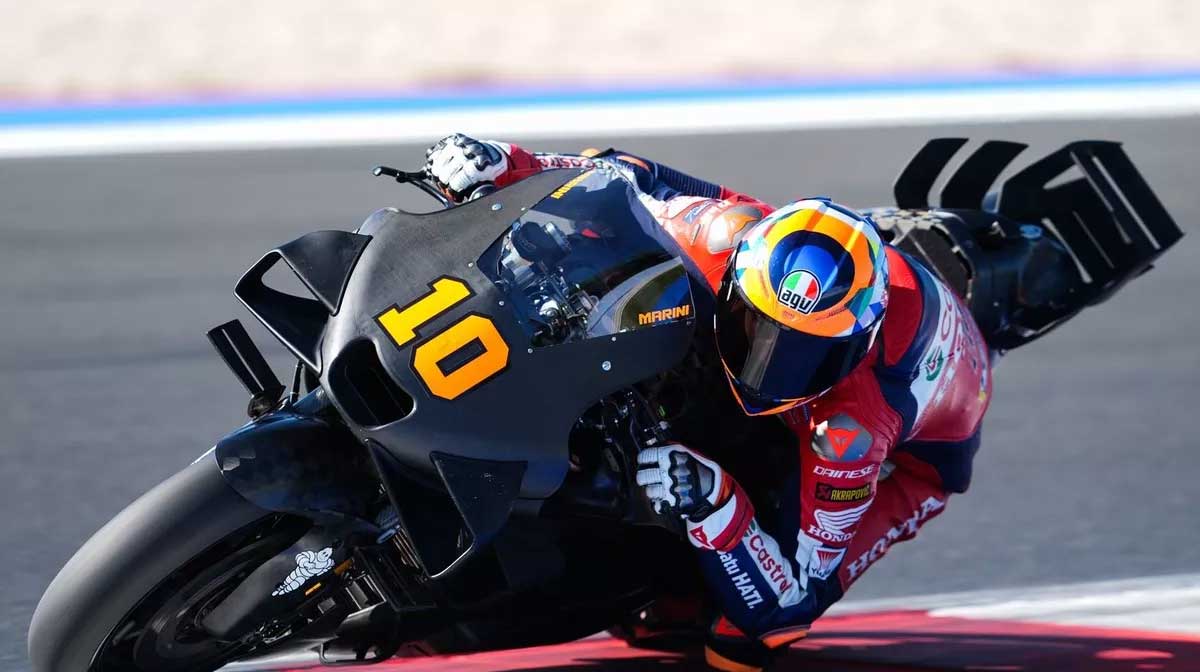
One of the most visible adaptation areas is braking. Multiple riders and testers have described the RC213V as sharp or brutal under heavy braking and corner entry. Practically, that means riders need to manage brake application with finer modulation to avoid unsettling the chassis or overwhelming the front tyre. The front‑end demand forces changes in posture and line selection so the rider can build confidence into the entry without overloading a front tyre that the bike itself can be sensitive to.
Turning, pick‑up and exit drive
The RC213V’s rigid chassis and aggressive delivery alter mid‑corner and exit dynamics. Riders must coax rotation without fighting the frame and then modulate throttle to match a strong acceleration impulse. Because the bike transfers race‑derived behaviour to its road variant, testers have noted the same need for precise pick‑up on the throttle. This is not about softer riding; it is about timing and incremental throttle resolution to preserve traction and use the electronics effectively.
Electronics, aero and the invisible control layer
Regulation changes such as the introduction of spec electronics and tyre changes have historically shifted how the RC213V behaves and how riders adapt. The RC213V relies on an effective electronics layer to manage its aggressive engine and chassis responses; when tyre or electronic regimes change, riders must revise their inputs and trust the revised control logic. That makes collaboration between rider and engineers essential: electronics maps and brake control strategies are part of the adaptation, not a separate luxury.
Setup window and team environment
Because the RC213V’s character comes from factory development, it tends to present a narrower setup window than some competitors. Test riders and journalists have observed that small adjustments to suspension, geometry or electronics can shift whether the bike feels usable. In practice, adaptation is a two‑way street: riders alter technique while the team hunts for the specific setup that lets those techniques work consistently across a race weekend.
Where the pairing still resists
Even with careful adaptation, observers have noted persistent areas of friction: abrupt engine response at times, sensitivity to tyre behaviour, and a front‑end that can punish aggressive entries. These are not failures so much as intrinsic characteristics of a machine designed to be pushed hard; they limit how broadly the bike’s handling can be altered without losing performance.
Results, confidence and the adaptation timeline
Riders and journalists have reported that wider regulation and tyre changes forced collective adaptations across the grid and specifically affected how the RC213V needed to be ridden. The observable pattern is clear: when control systems or tyres change, riders often need time to find new braking points, refine throttle modulation and rebuild front‑end trust. That timeline is a practical reality — incremental work over tests and race weekends, guided by development riders’ experience, is how usable confidence is restored.
Closing interpretation
The RC213V is a concentrated statement of Honda’s factory engineering: powerful, precise and demanding. It does not simply accept a rider’s default techniques; it requires them to be honed — braking modulation, refined front‑end inputs, and minute throttle control — while the team narrows the setup window and electronics to suit. The result is a bike that rewards technical discipline and close rider‑engineer collaboration: adaptation is technical, iterative and often decisive.
Author: Cynthia D.