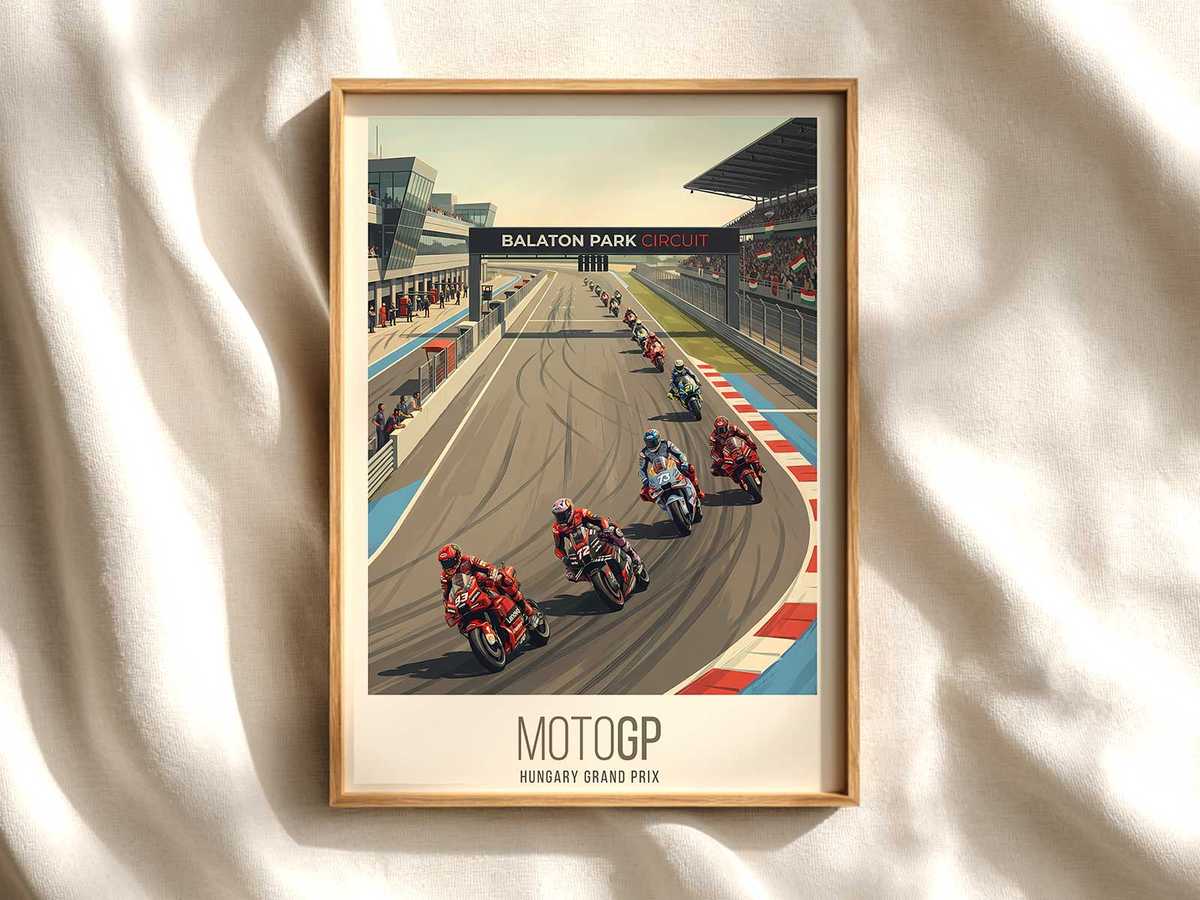
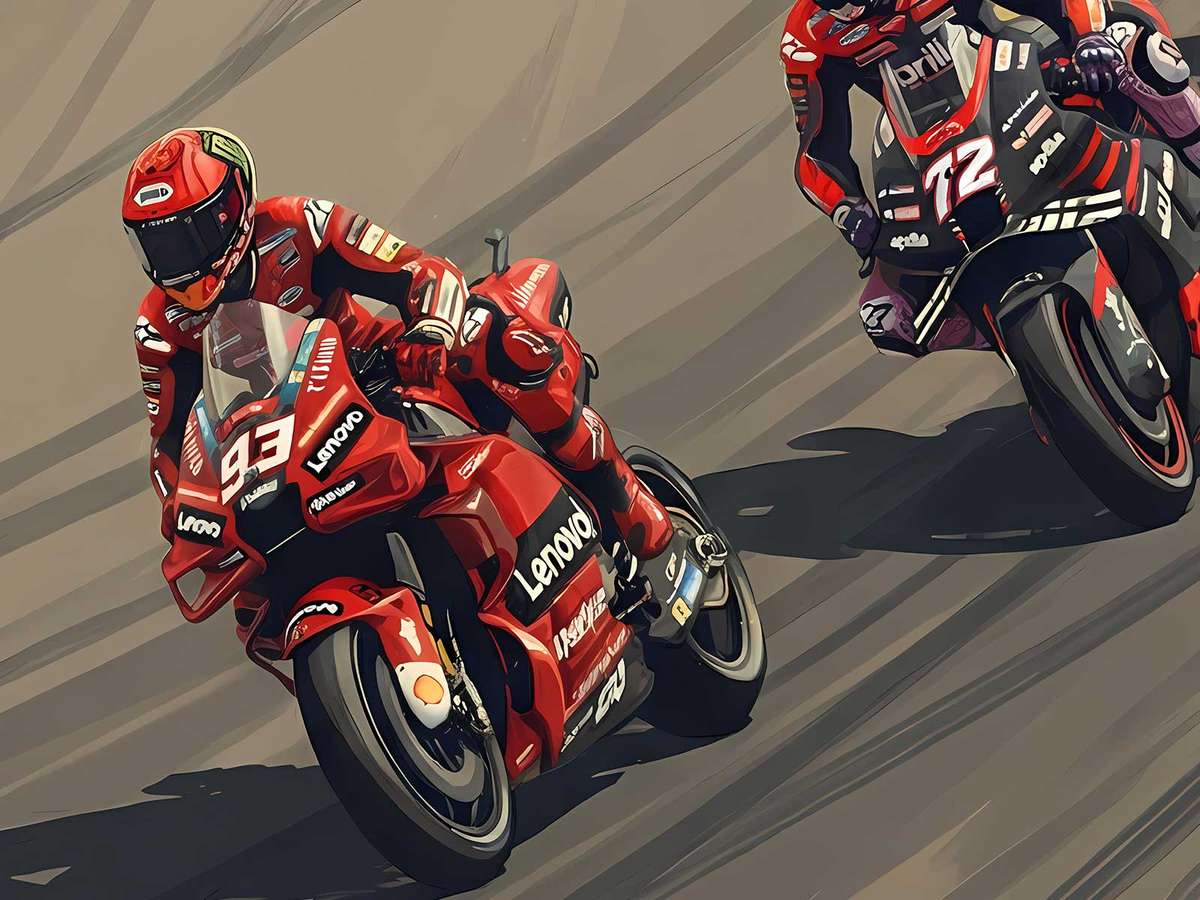
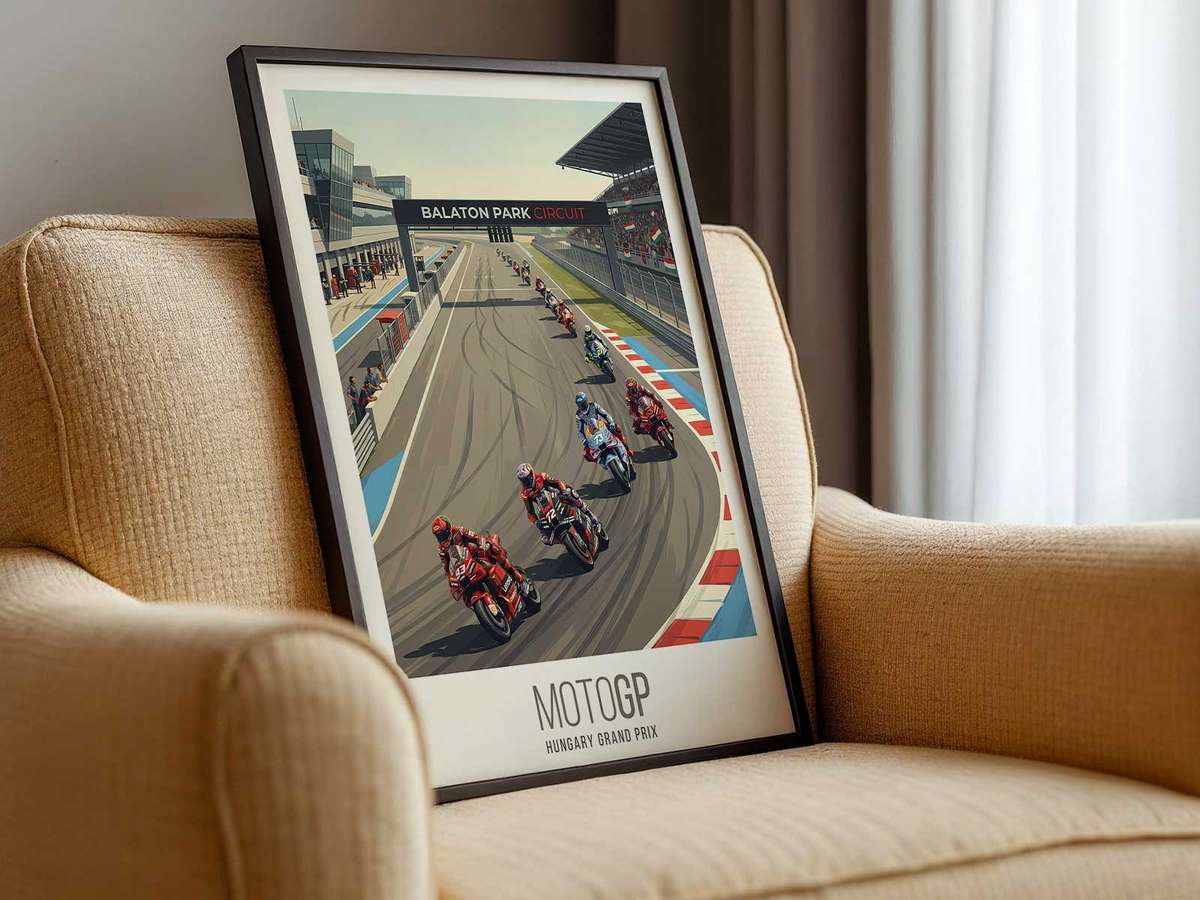
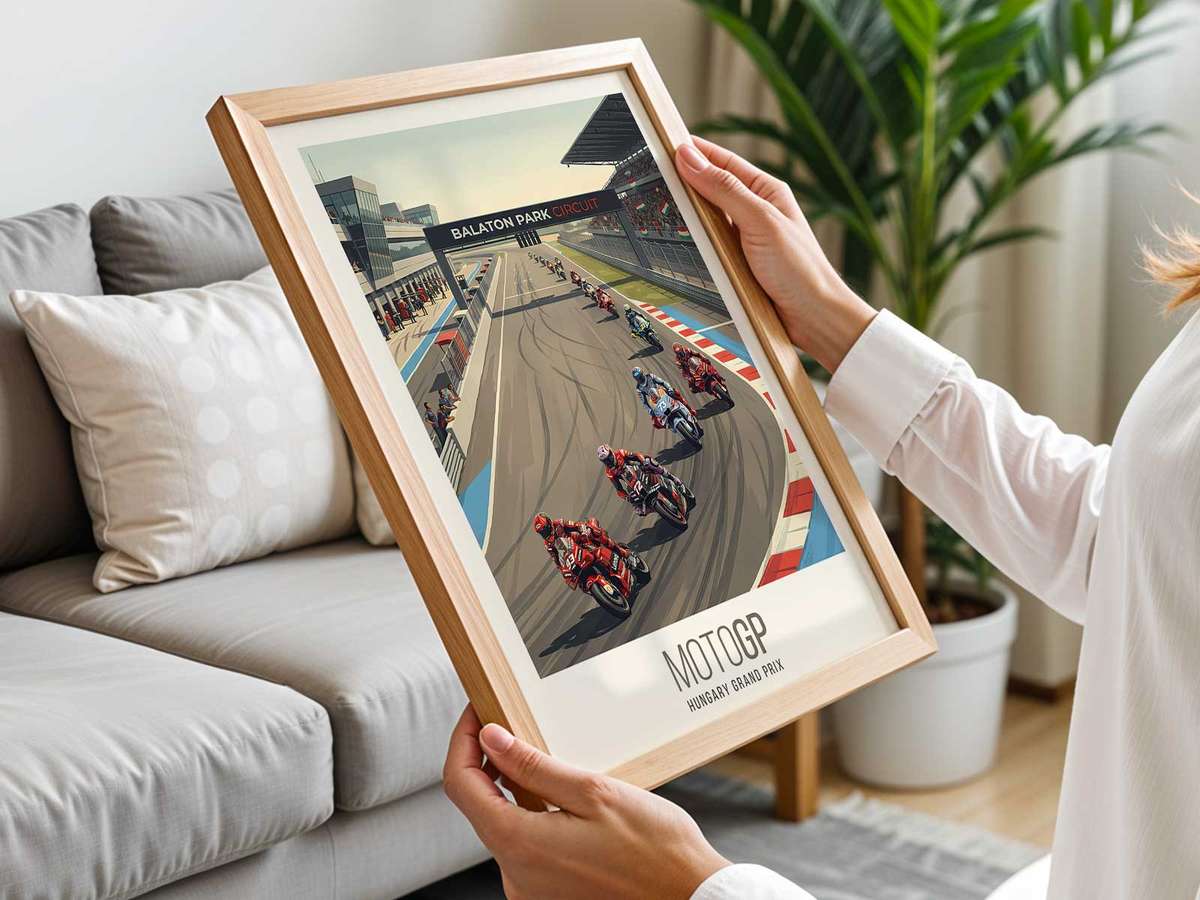
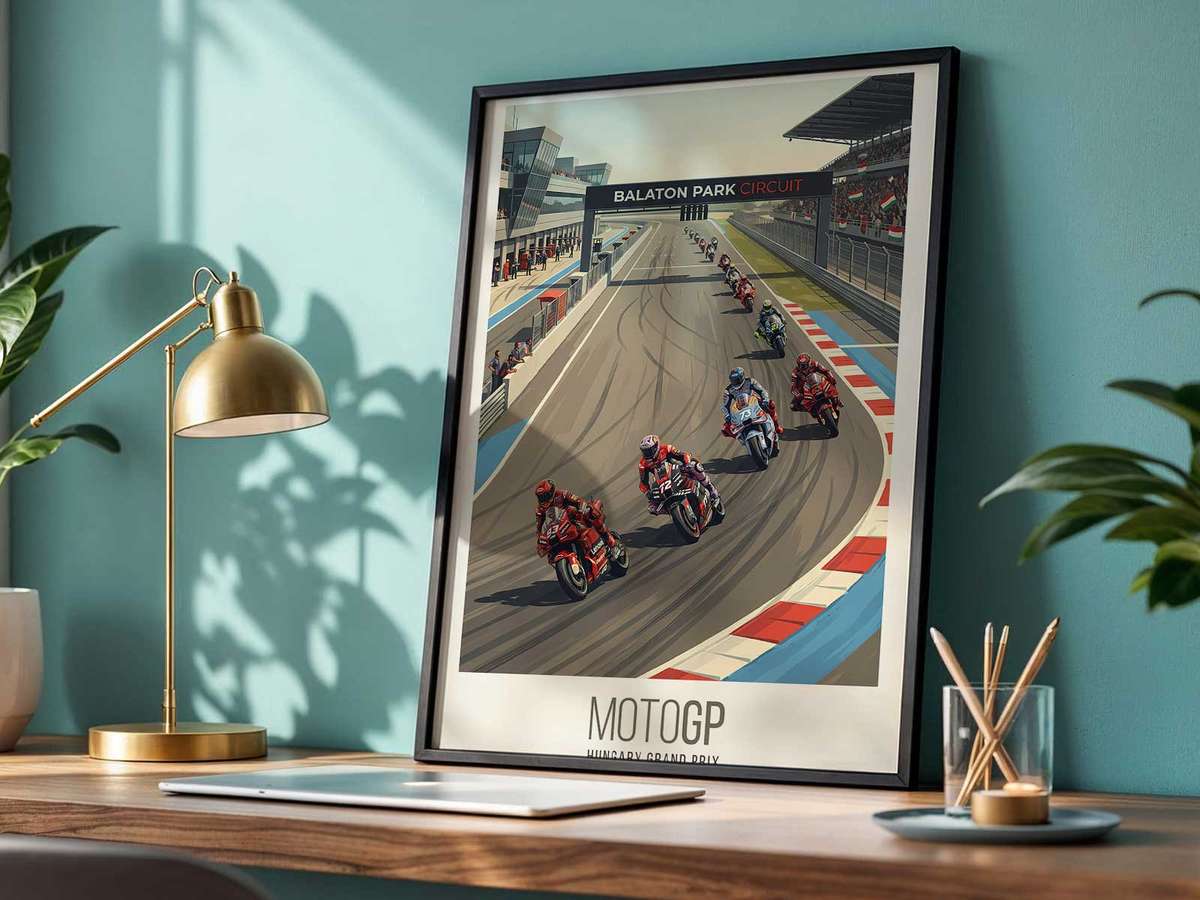
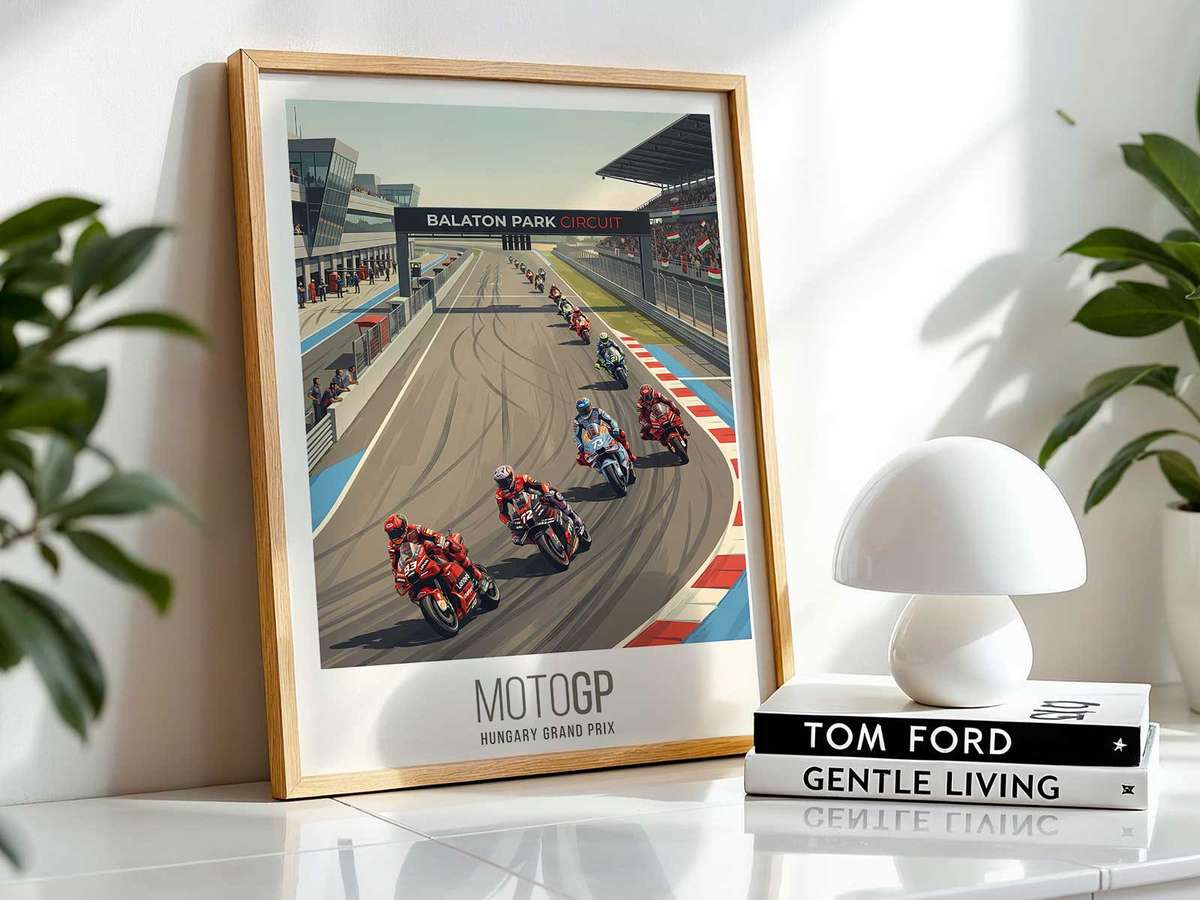
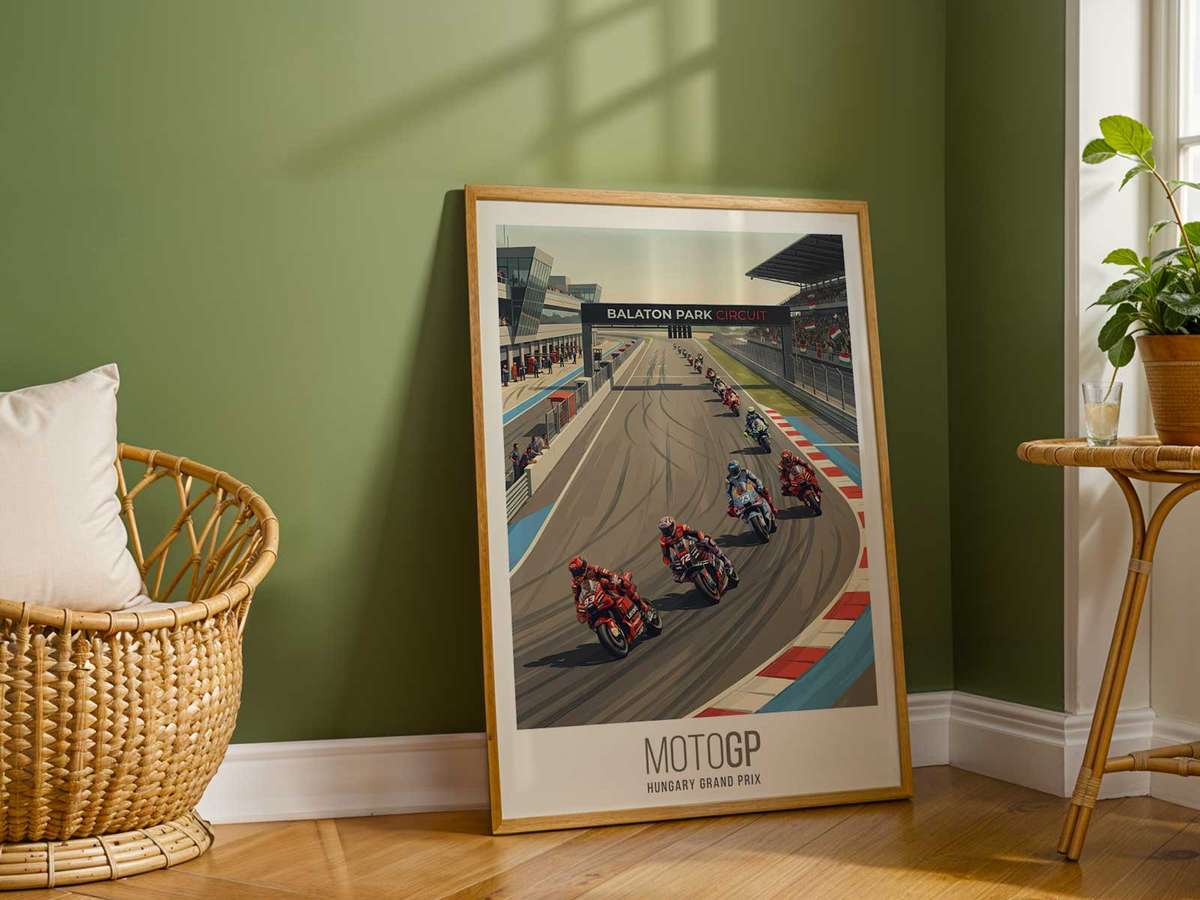
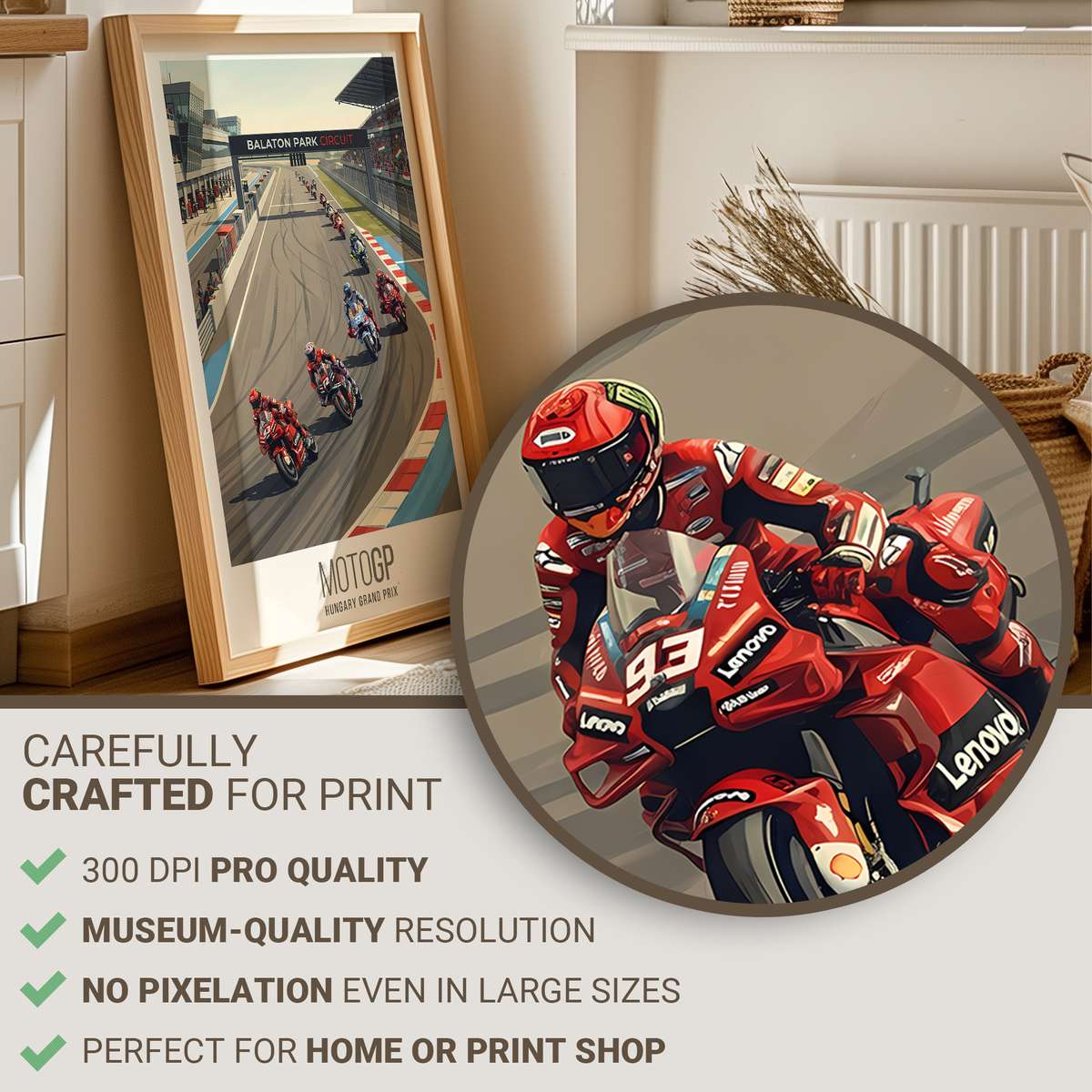
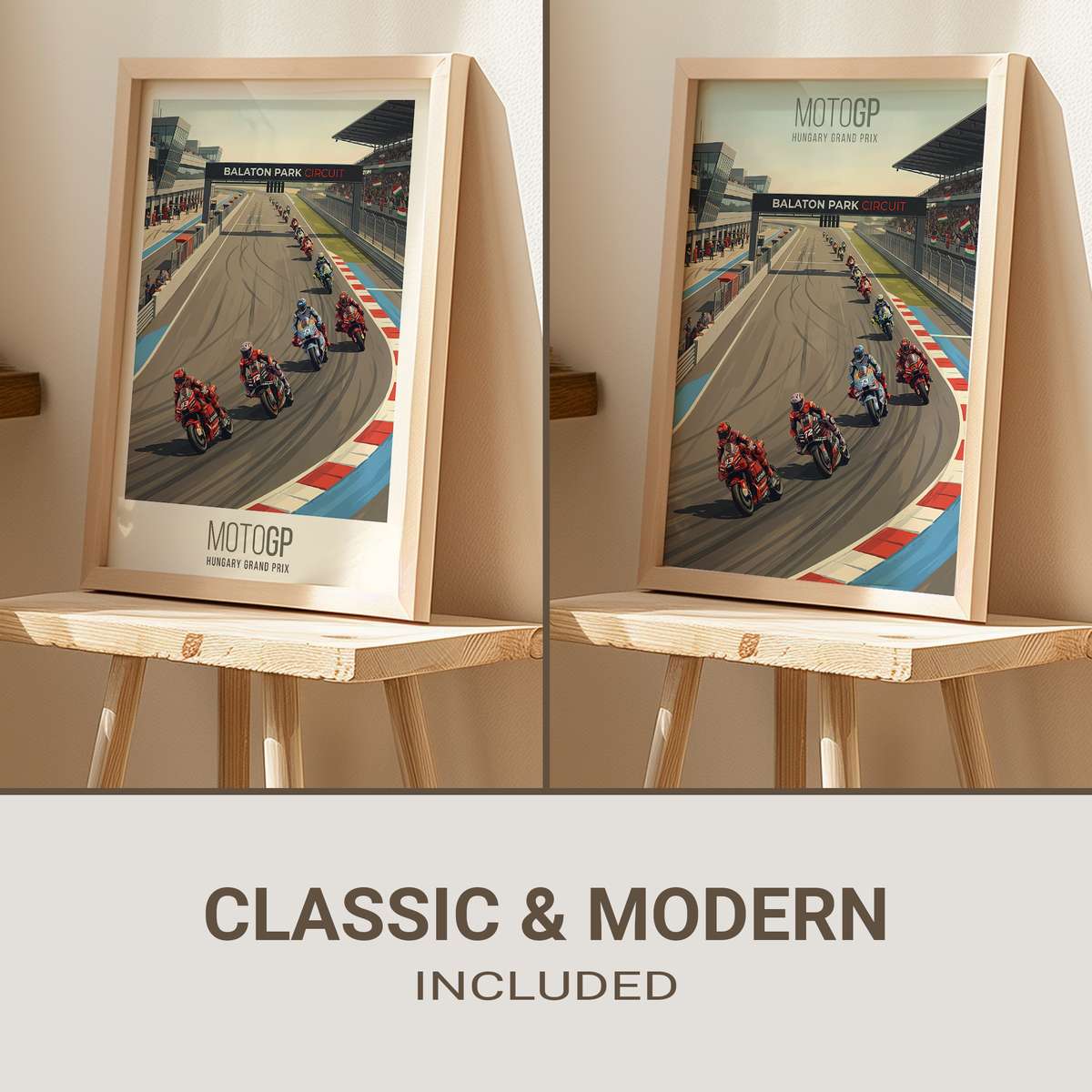
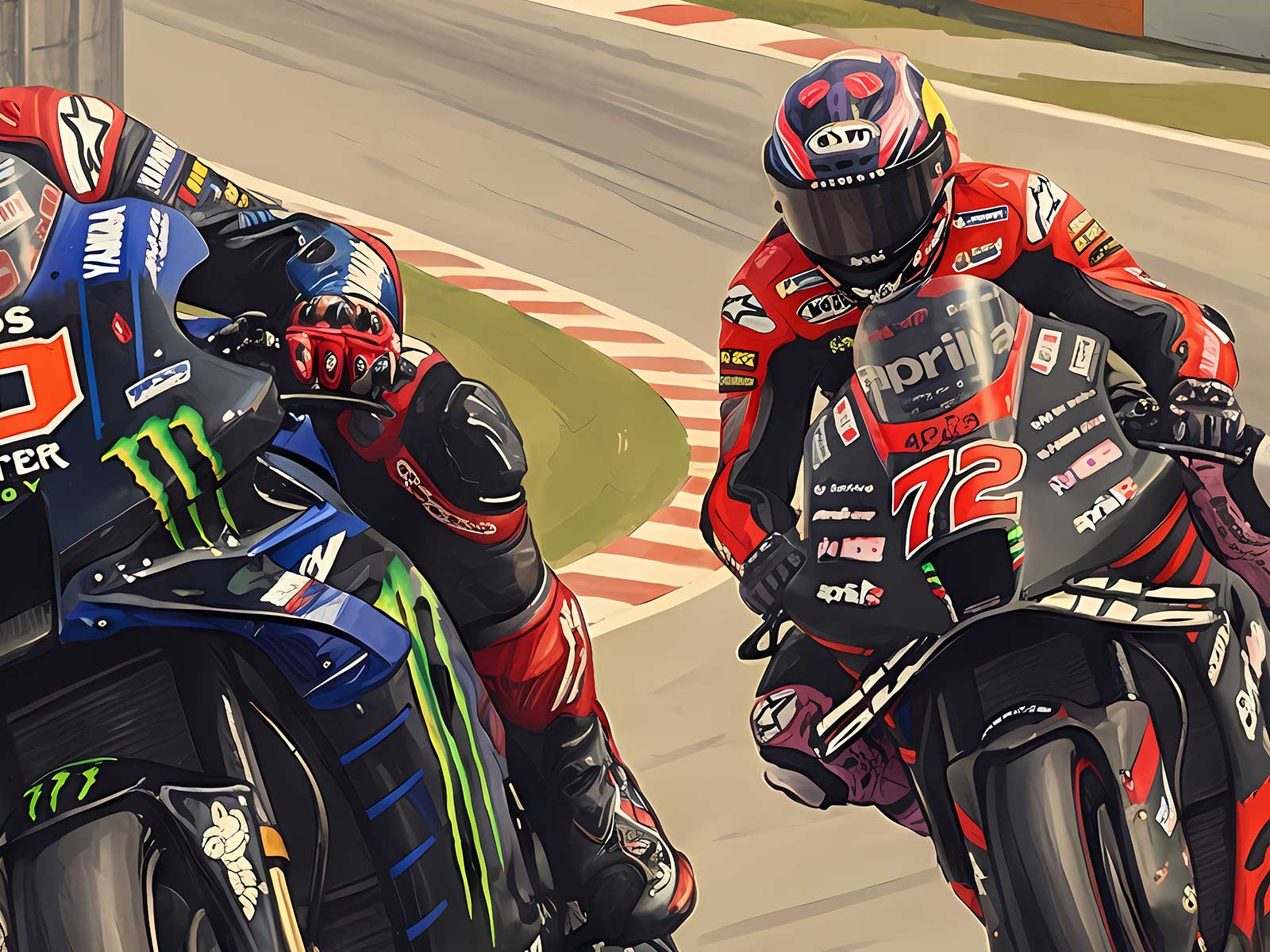
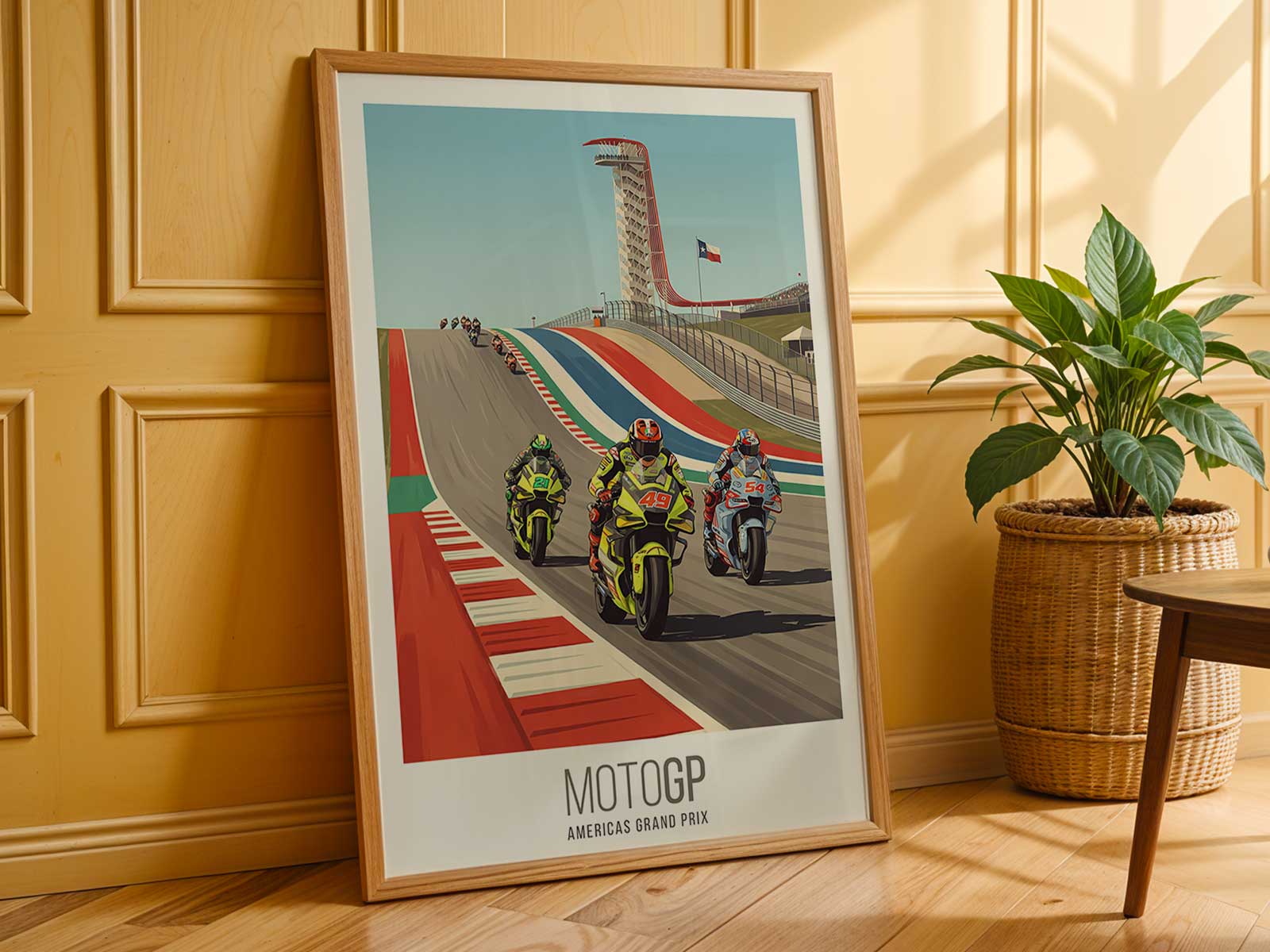
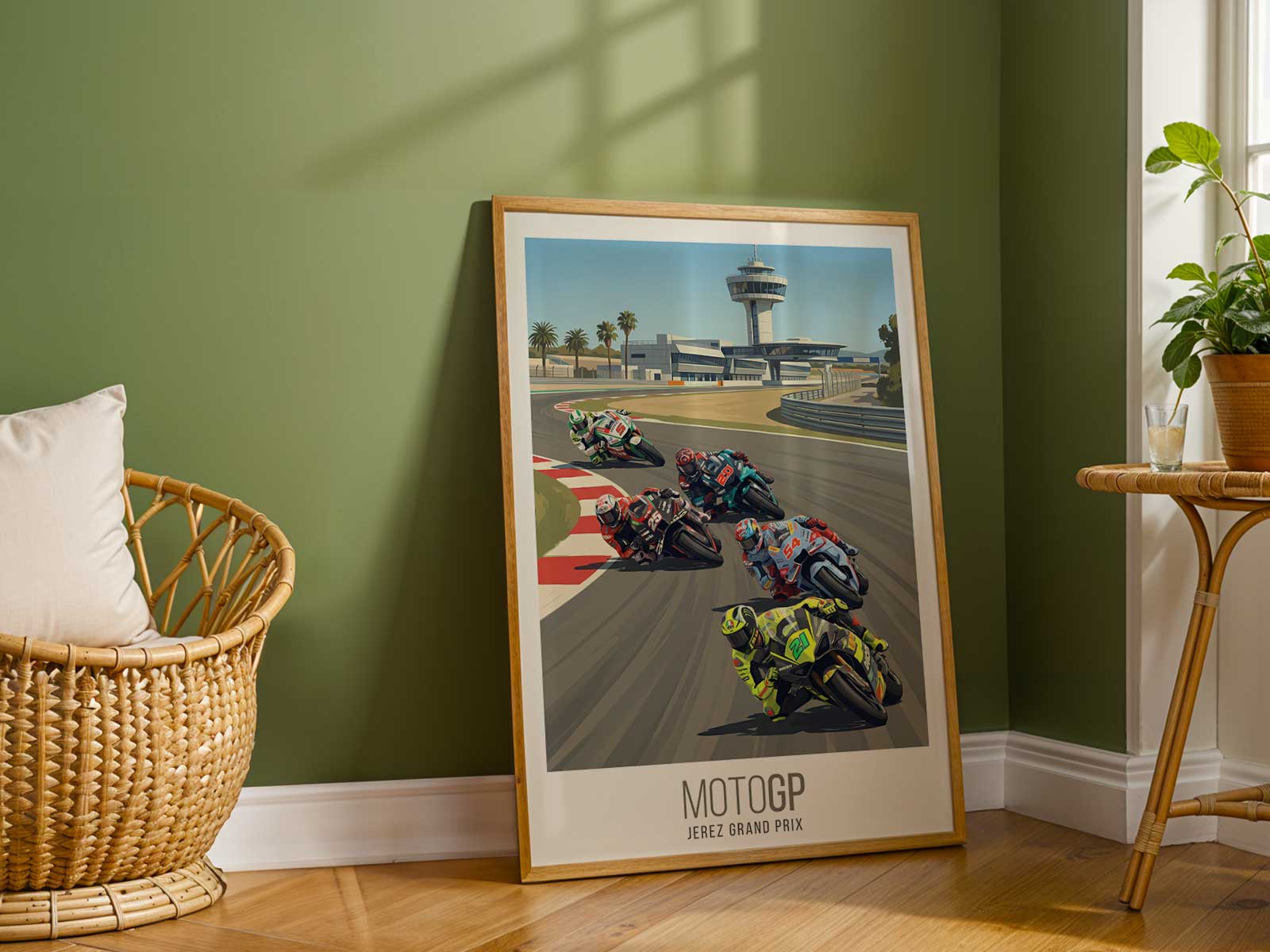
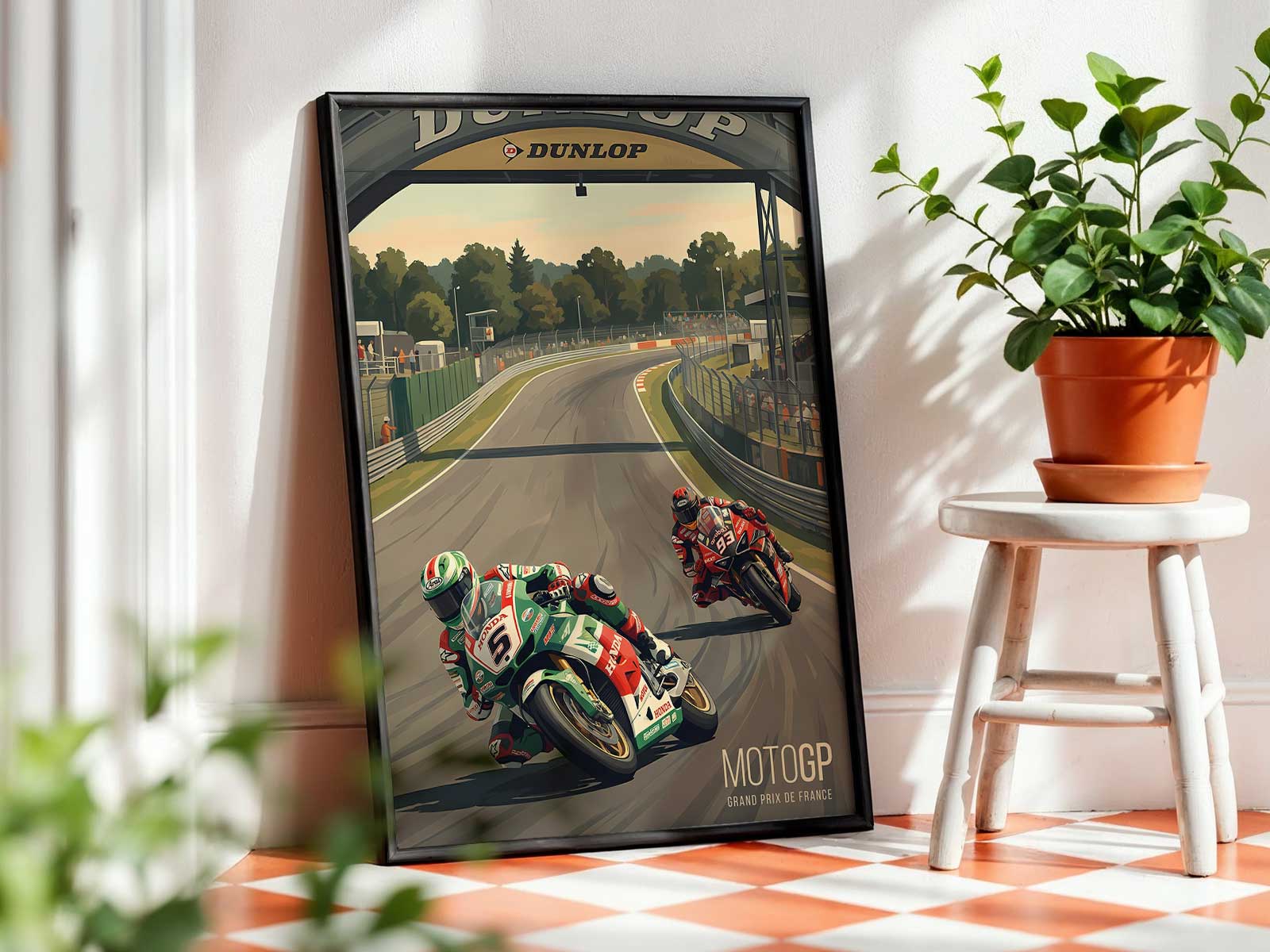
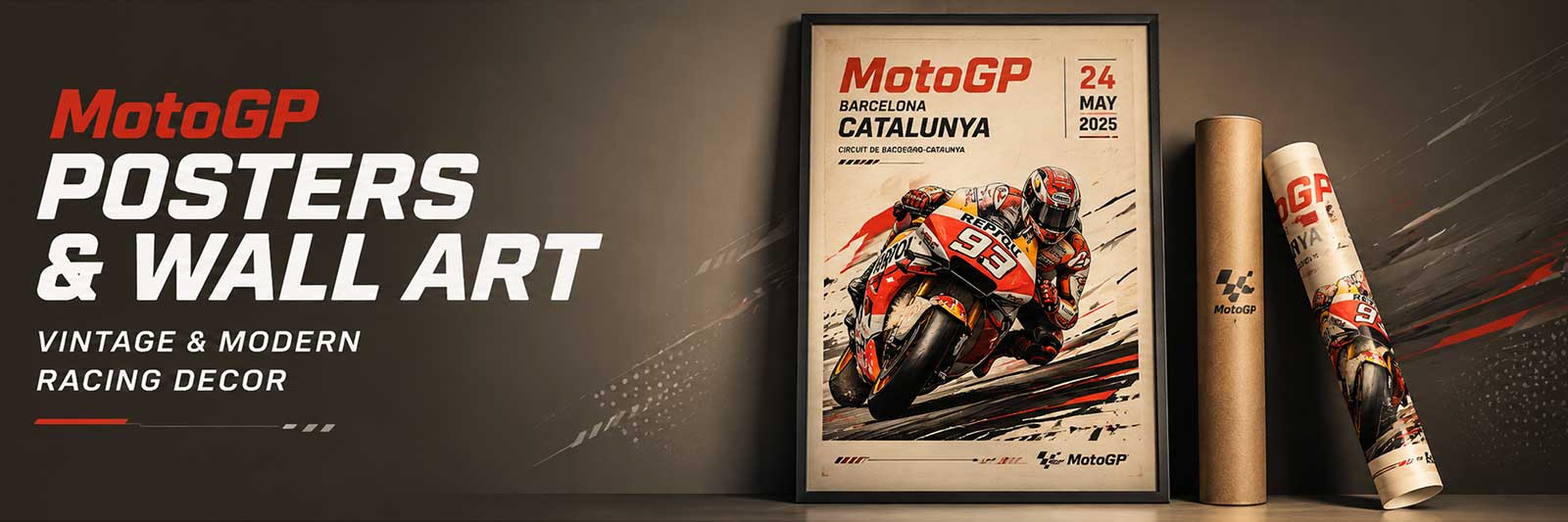
What turns a photograph of a MotoGP machine into compelling wall art is less about speed and more about the way the bike occupies space: a compact, aerodynamic sculpture with a defined front-end gaze and a taut, purposeful silhouette. This poster focuses on the motorcycle itself as the visual protagonist. By isolating the fairing’s lines, the compression of suspension under braking, and the distinctive wedge of the tail section, the image translates high-performance engineering into a clean, powerful graphic for interiors.
The visual language of prototype motorcycles is specific. Narrow but muscular mass distribution, an aggressive tucked nose, and the subtle overflow of aero winglets and vents create an identity that reads instantly as MotoGP. In a still frame the machine’s stance — whether loaded on the front wheel in a braking posture or frozen mid-lean with wheel-to-body tension — becomes a study in intent. Those details tell a story without words: purpose-built geometry, minimal surplus, and a silhouette that balances finesse with menace.
[IMAGE_INSERT_ARTICLE_01]
Look at how the front end dominates presence: low, focused headlights or race-spec screens, a compact fork cluster, and the way the fairing channels air into tight, technical volumes. Even stripped of livery or rider branding, these elements cue the viewer’s recognition. The poster treats the bike almost like industrial sculpture—each panel junction, inlet, and exhaust taper contributes to an architectural composition that holds the eye and anchors a room.
Such machine-led imagery changes a space by introducing concentrated visual energy. In an office, the poster’s strong horizontal sweep and forward attitude lend momentum and clarity; in a studio or garage it acts as a design fulcrum, pairing with metal, concrete, or warm wood to amplify a motorsport atmosphere. The piece doesn’t demand constant attention; rather, it rewards repeated looking—revealing new tensions in the frame as one studies mass distribution, the implied lean angle, or the compressed stance under braking.
Collector appeal here is psychological as much as aesthetic. Enthusiasts recognise the prototype cues—the compact seat-to-tank junction, the silhouette of a single-sided swingarm or the hint of winglet geometry—and project memory and lineage onto the image. That projection is part of why bike-led MotoGP posters suit interiors aimed at refinement rather than mere fandom: they function as visual shorthand for performance culture, engineering elegance, and disciplined design.
Why the bike works as the visual center
At the heart of the composition is contrast: the machine’s clean, engineered lines set against a softer background or a neutral studio tone. This creates an immediate focal point where silhouette, texture, and angle define hierarchy. The bike’s posture—whether low in braking compression or poised at a mid-corner lean—communicates narrative and motion without movement. The closer you look, the more the machine reads like a functional sculpture: every lug, seam, and curve has purpose. That purpose is what makes the poster feel authentic and display-worthy.
Choosing this kind of MotoGP wall art is a design decision that privileges mechanical character over emotive spectacle. It’s about adding a single, decisive element to a room that clarifies taste and attention to detail. For interiors that favour quiet confidence—studios, executive suites, or curated living spaces—the sculptural presence of the bike becomes an architectural accent, giving the space a sharper edge without shouting.
In short, a motorcycle-focused MotoGP poster succeeds because it celebrates prototype identity: silhouette first, performance implied second. The result is a piece of wall art that reads as both technical study and visual poetry, an image that rewards close inspection and quietly lifts the atmosphere of any motorsport-conscious interior.