What Defines the MotoGP Honda: RC213V Architecture and Mechanical Choices
The current Honda MotoGP prototype is rooted in the RC213V family: a 1000cc, liquid‑cooled V4 Grand Prix prototype developed by HRC and evolved continually since 2012. This article breaks down the concrete architecture and mechanical choices that define the bike on track — from the V4 heart to chassis geometry, aerodynamic intent and the control systems that let riders manage the package.
Quick answer
Honda’s MotoGP machine is an RC213V‑derived 1000cc transverse V4 on an aluminium twin‑spar‑style chassis, fitted on factory bikes with Öhlins suspension and developed through iterative chassis, exhaust and aerodynamic updates focused on stability, packaging and usable drive.
What you will learn here
- How the RC213V V4 and its packaging set the machine’s basic drive character.
- Why an aluminium twin‑spar chassis and geometry changes matter for stability and turning.
- How recent aero and exhaust updates tie into wheelie control and acceleration.
Visual reading of the machine
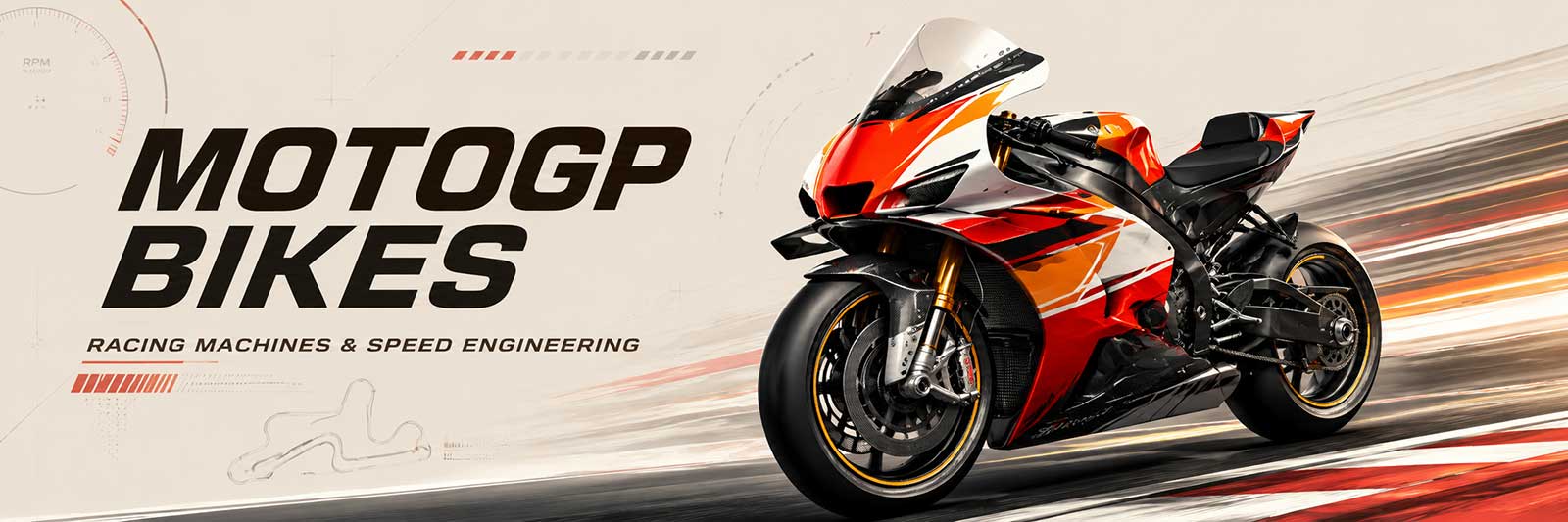
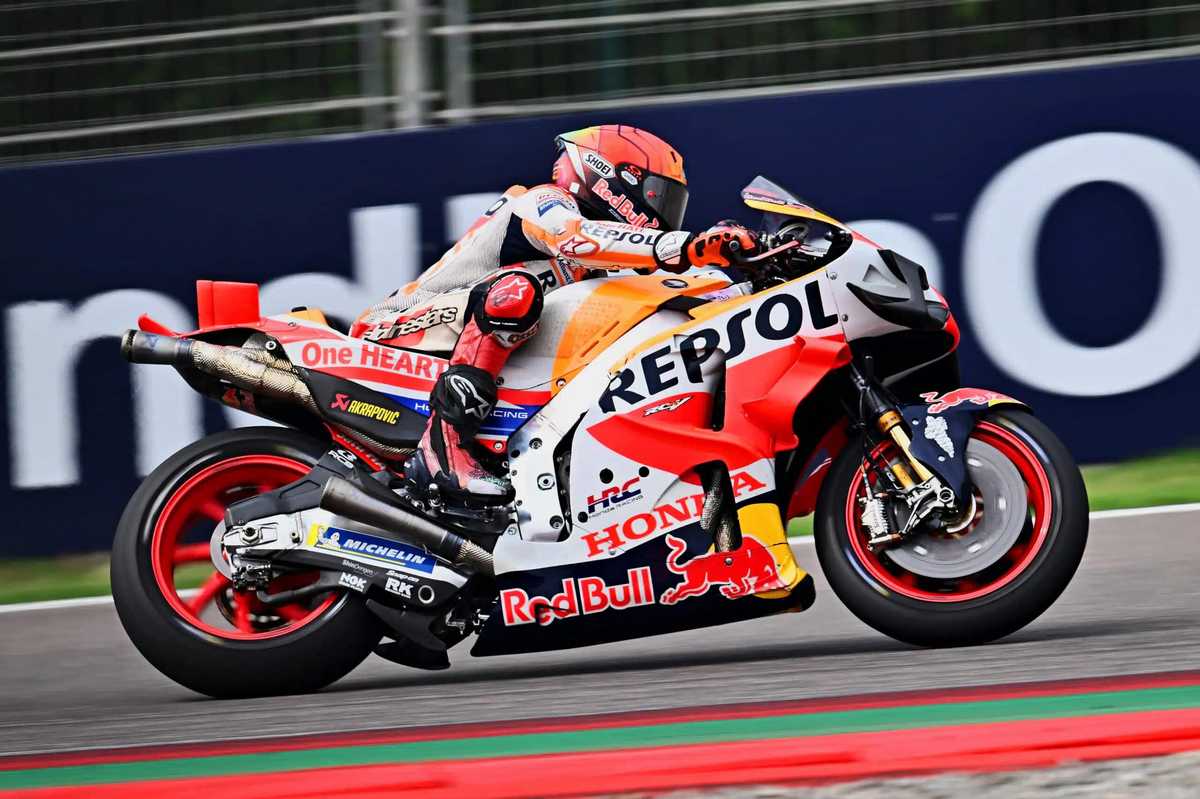
On sight the RC213V lineage is clear: compact, tightly packaged bodywork with a long‑low silhouette in recent evolutions. Public technical coverage of the 2023–2025 development cycle emphasised a longer and lower profile and revised tail and exhaust packaging. Those changes are visible attempts to shift mass distribution and airflow around the rear wheel and under the fairing rather than purely cosmetic refreshes.
Engine layout and drive character
At the core is the RC213V family’s 1000cc liquid‑cooled transverse V4. This V4 architecture has been Honda’s chosen MotoGP layout since the RC213V’s introduction and remains the declared engine family in official HRC materials. In practical MotoGP terms a transverse V4 offers compact longitudinal packaging and an engine character that manufacturers tune for tractable midrange and strong acceleration — attributes HRC have developed iteratively across seasons.
Public documentation does not publish proprietary internal figures such as peak horsepower or exact V‑angle, so interpretation must come from architecture: the V4 layout gives HRC room to concentrate mass centrally and work on gearbox and exhaust routing that influence traction and chassis balance.
Chassis balance and turning feel
HRC lists an aluminium twin‑spar–style chassis as the structural backbone. Over recent evolutions the project has experimented with geometry and structure—reports describe a longer, lower chassis approach introduced during test programs and race‑week development. In practice, that philosophy aims to influence stability at high speed and load transfer under acceleration, often at the cost of some initial turning quickness unless compensated by geometry or suspension setup changes.
Because precise composite layups and stiffness numbers are proprietary, the defensible reading is behavioural: Honda’s changes indicate an attempt to regain front contact and consistent rear traction by altering how the chassis reacts to drive and braking moments rather than changing core material philosophy.
Aero, bodywork and packaging
Aerodynamics has been a clear focus. Public technical pieces and HRC notes detail fairing revisions and winglet concepts across recent prototypes. The longer/lower packaging and revised tail aim to manage wheelie tendency, stabilise the bike under acceleration and tidy airflow for more consistent tyre loading. Those changes are not isolated cosmetic updates but are paired with exhaust and geometry work to change how the machine presents load to the tyre and rider.
Suspension, braking and track contact
Factory Hondas have run Öhlins suspension in recent seasons for forks and shock, as stated on official HRC documentation. That choice aligns with teams’ need for finely tunable damping and a strong range of adjustments to manage a bike that is being reshaped geometrically and aerodynamically. Practical implications: Öhlins hardware lets engineers chase consistent front feel during aggressive braking and precise rear compliance for traction on corner exit.
Public sources do not list brake supplier specifics or tyre pressures as official releases; nevertheless the interaction between revised packaging, chassis geometry and suspension tuning is the route Honda uses to control contact patch behaviour and tyre load cycles during a race weekend.
Electronics and control layer
The RC213V machines use current MotoGP‑standard electronics and IMU systems; external coverage frequently references Magneti Marelli / Marelli IMU and the official ECU software family in recent descriptions. In practice this control layer governs traction control, engine braking, launch behaviour and wheelie mitigation — all areas where Honda’s aero and chassis changes are intended to give the electronics a more predictable physical platform to work on.
Because exact software maps and some supplier confirmations are not fully published, the careful reading is that Honda’s mechanical changes are purposefully aligned with the standard MotoGP electronic stack to make rider inputs more consistent lap to lap.
Development path and technical evolution
HRC has publicly iterated new chassis, exhaust and aero packages across the 2023–2025 tests and race programmes. Technical reporting documents multiple updates rather than a single revolutionary change: the project is evolutionary, testing revised geometry, revised exhaust routing and aerodynamic tweaks to tune stability and driveability. That path reflects a standard Grand Prix approach—identify behavioural shortfalls on track, then apply coordinated updates to packaging, chassis and aero rather than isolate fixes.
Closing interpretation
Seen in concrete MotoGP terms, the Honda RC213V family remains a V4‑centred platform built around an aluminium twin‑spar philosophy and matched to a finely adjustable Öhlins running gear and the series’ electronic suite. Recent changes — longer/lower chassis geometry, new exhaust and aero packages — are coherent moves to improve stability, reduce wheelie tendency and make the bike’s interaction with tyres and electronics more predictable.
That combination tells a clear story: HRC is working to give riders a mechanically stable base so electronic controls and tyre management can produce consistent lap times. The RC213V’s identity today is therefore less about a single headline component and more about the integration of V4 packaging, chassis geometry and aero to create usable performance on race day.
Author: William L.