MotoGP Italy: Mugello’s Unique Identity — high-speed DNA, braking stress and…
The Autodromo Internazionale del Mugello — the Mugello Circuit — is one of MotoGP’s defining high-speed arenas. Located in Scarperia e San Piero, Tuscany, roughly 30 km northeast of Florence, the track combines a very long main straight, flowing fast sections and significant elevation change. For prototypes and riders the result is a clear identity: extreme top-speed demands, repeated heavy braking and a need to balance aerodynamic stability with thermal management.
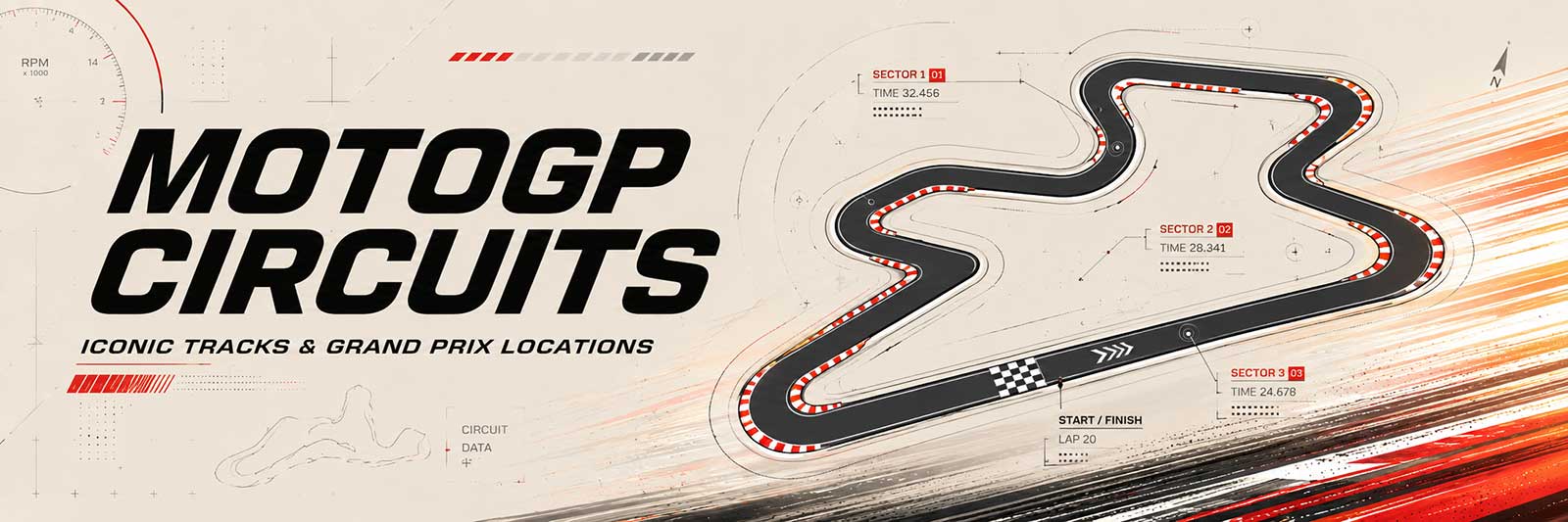
Quick facts: Mugello is an anti-clockwise 5.245 km permanent circuit with 15 corners, one of MotoGP’s longest straights (~1,141 m) and around 40–41 m of elevation change.
Internal links:
First reading of the circuit·Braking zones & acceleration·Setup trade-offs
First reading of the circuit
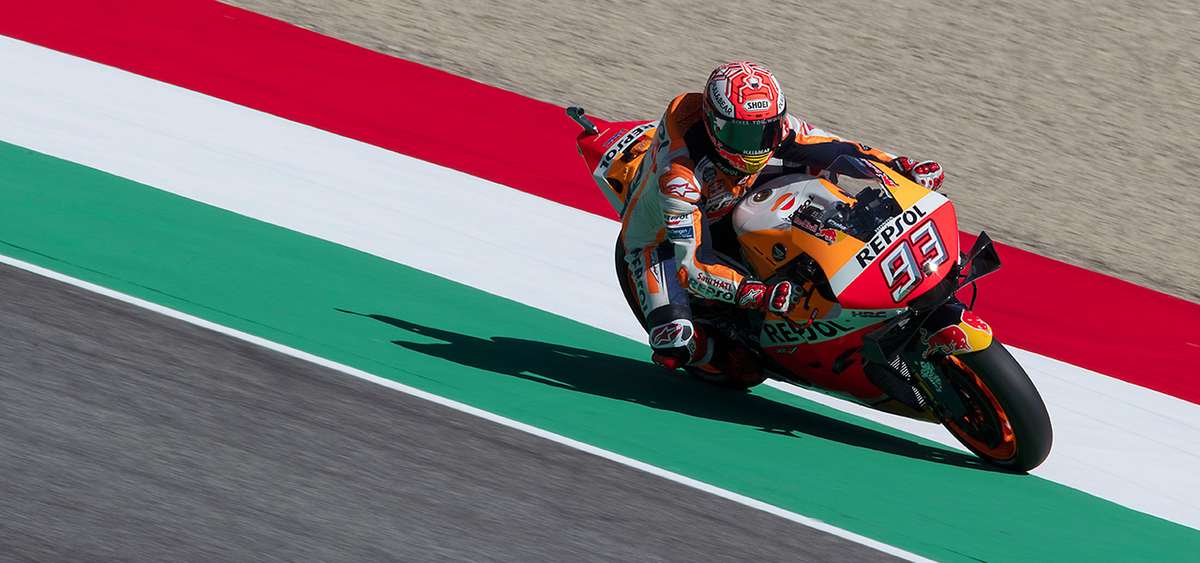
At first glance Mugello reads as a high-speed test for modern MotoGP prototypes. The defining visual is the long pit straight — approximately 1,141 metres — which allows machines to reach speeds reported in recent seasons well in excess of 350 km/h. Around that straight the lap unfolds as a mix of flowing fast corners and undulations: the layout totals about 5.245 km, runs anti-clockwise and counts 15 corners. Elevation swings of roughly 40–41 metres introduce blind crests and compression points that complicate braking and throttle application.
Corner rhythm and flow
Mugello’s lap rhythm alternates long full-throttle runs with sequences that demand rapid direction changes. Long acceleration zones stretch tyre and drivetrain systems, while linked high-speed corners such as Arrabbiata and the Bucine section (noted in circuit descriptions as fast and flowing) force riders to carry momentum and trust chassis stability. The track flows for patches but frequently breaks that flow with heavy stops after long accelerations, creating an unconventional rhythm: sustained speed, then abrupt mechanical load changes.
Braking zones and acceleration demands
The end of the main straight into San Donato (Turn 1) is the signature braking hotspot. Riders decelerate from record top speeds to roughly 90–100 km/h there; the rapid change imposes extreme thermal and mechanical loads on brakes and tyres. Multiple other heavy braking points follow long full-throttle sectors, so the lap repeatedly cycles between near-maximum engine output and intense deceleration. That pattern defines much of the physical and mechanical stress across a race distance.
Elevation, camber and visual complexity
Mugello’s approximately 40–41 metres of elevation change matters more than raw numbers suggest. Blind crests and compressed cambers alter braking markers and line visibility, making on‑board judgement and trust in the bike crucial. Riders must adapt braking references for crests and dips, which increases mental workload and elevates the premium on consistent vision and feedback lap after lap.
Tyres, grip and track contact
The long full-throttle sections, coupled with frequent heavy braking and quick direction shifts, create a mixed tyre-load profile. Repeated thermal cycles from high-speed passages into hard deceleration raise tyre temperature and wear stresses, so grip evolution over a stint is a key race variable. Teams and tyre suppliers focus on compounds that can cope with elevated temperatures without losing too much mechanical grip into the braking zones.
Setup trade-offs
At Mugello teams face visible trade-offs: aero and top-end stability versus low-speed turn-in agility. High-speed stability and aerodynamic balance are critical on the long straight and fast sweepers, yet too much emphasis on straight-line stability can blunt turn-in for the frequent heavy-braking corners. Brake-disc choices and cooling specifications are also part of setup thinking: larger or more aggressively ventilated solutions help control temperature but carry weight and aerodynamic consequences. Every setup decision that improves brake or tyre thermal control can change chassis behaviour in the flowing sectors.
Overtaking and race behaviour
Because of the high-speed build to San Donato, the main straight into Turn 1 is the primary overtaking location: slipstreaming into the long straight and braking late into Turn 1 remain the clearest pass opportunities. Elsewhere, overtakes tend to come from momentum economy through the fast sequences or from mistakes induced by tyre degradation and braking fatigue. Over a race distance the repeated heavy decelerations and thermal stresses can open windows as rivals struggle to keep consistent braking performance.
Historical and competitive context
Mugello has been a long-standing stop on the MotoGP calendar and hosts the Italian motorcycle Grand Prix at the permanent circuit which was modernised in the early 1990s. Its continued presence on the calendar is tied to the way it exposes the full set of prototype attributes — power, aero, brakes and rider endurance — making it a benchmark event for manufacturers and riders assessing package performance in a demanding, high-speed environment.
Closing interpretation
Mugello’s identity in MotoGP terms is unambiguous: a high-speed, undulating circuit where top speed, brake resilience and sustained tyre management converge. The long straight and severe braking into San Donato create the headline stresses, while elevation and flowing sections demand stable aero and confident chassis balance. Understanding Mugello means appreciating the repeated shifts between maximum acceleration and intense deceleration — and how those cycles expose both machine limitations and a rider’s ability to manage heat, grip and concentration across a long lap.
Author: Alex R.