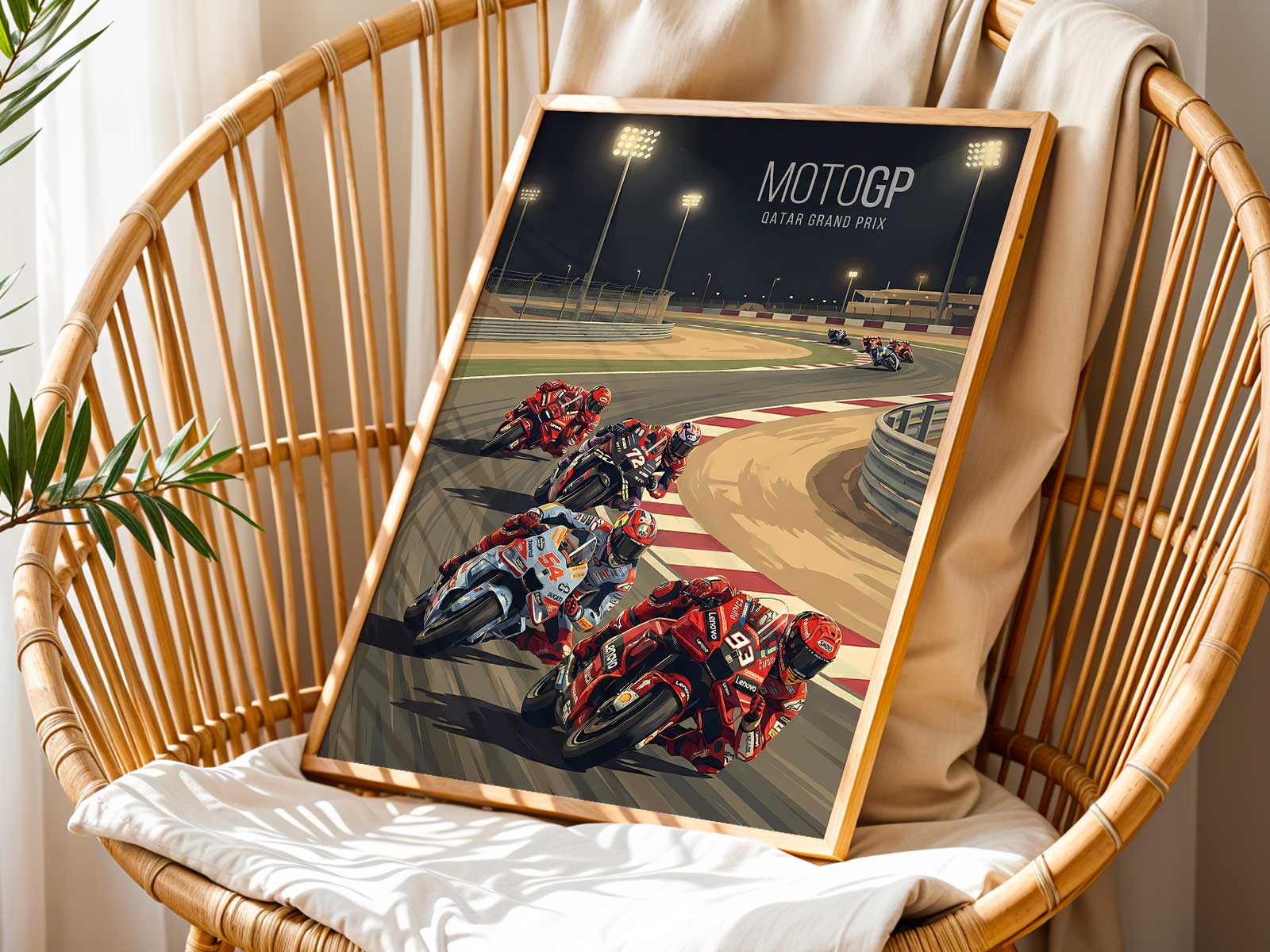
MotoGP braking explained: why stopping is the sport’s decisive skill
Braking in MotoGP is not simply about slowing a machine — it is a precise, repeatable performance that governs corner entry speed, overtaking opportunity and crash risk. This article explains how braking force is distributed on a MotoGP bike, how front-tyre load and rider technique control stability, and why mastering the brakes is one of the most decisive skills in the paddock.
Quick summary: The front brake supplies most stopping force because deceleration shifts load forward, increasing front tyre grip. Riders use posture, tank and knee grip, and trail braking to control that load. Tyres, brakes and engine braking all interact, making braking both a technical and tactical advantage.
Quick access:
Definition · How it works · Rider technique · Tyres & brakes · Racecraft
Clear definition
When we say "braking" in MotoGP we mean the controlled deceleration of a race bike using front and rear brakes plus engine braking to prepare for a corner. In practical terms this covers the magnitude and timing of brake application, how much brake is held into the turn (trail braking), and the rider’s bodywork and posture adjustments to manage tyre load and stability.
How it works: physics and force distribution
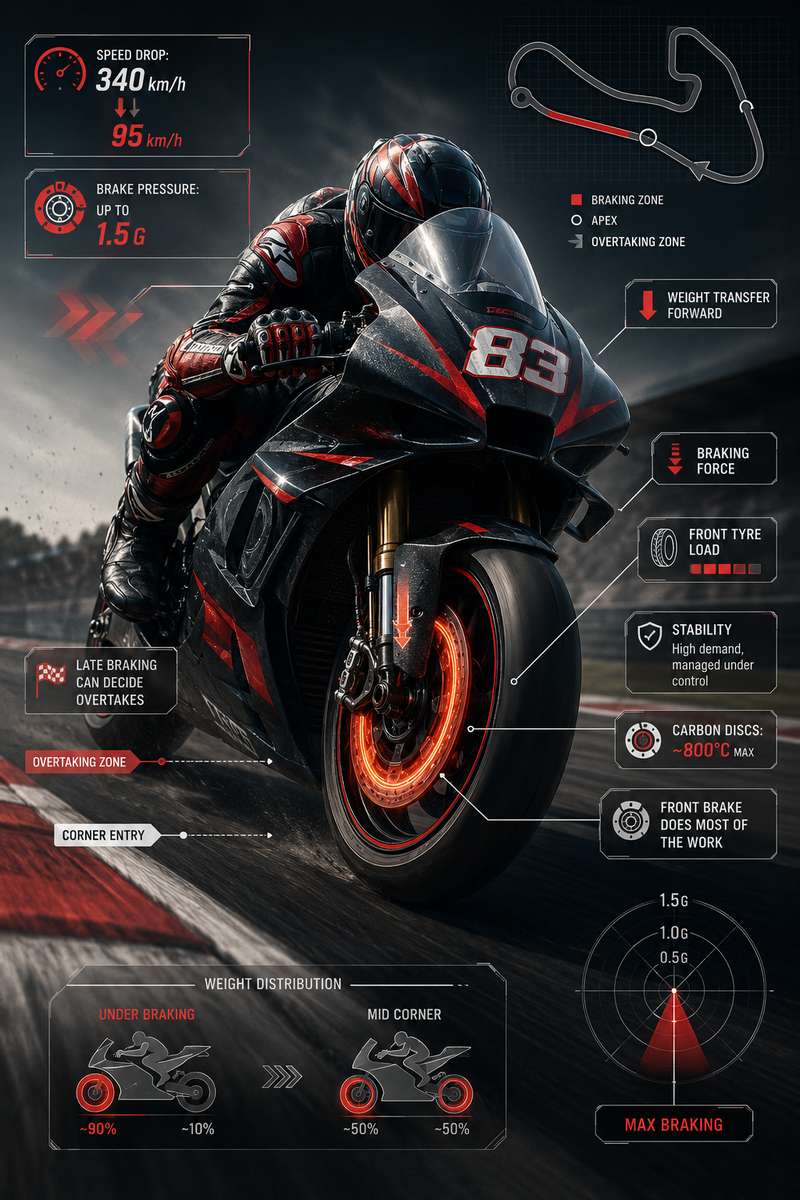
Under heavy braking the bike’s mass transfers forward. That forward weight transfer raises the normal force on the front tyre, increasing the frictional force it can supply — which is why the front brake provides the majority of stopping power on a MotoGP machine. Modern braking systems (high-performance front discs, carbon materials, calipers and master cylinders) are designed to operate at extreme temperatures and loads so riders can repeatedly convert that available front-tyre grip into deceleration.
Rider technique: posture, tank grip and trail braking
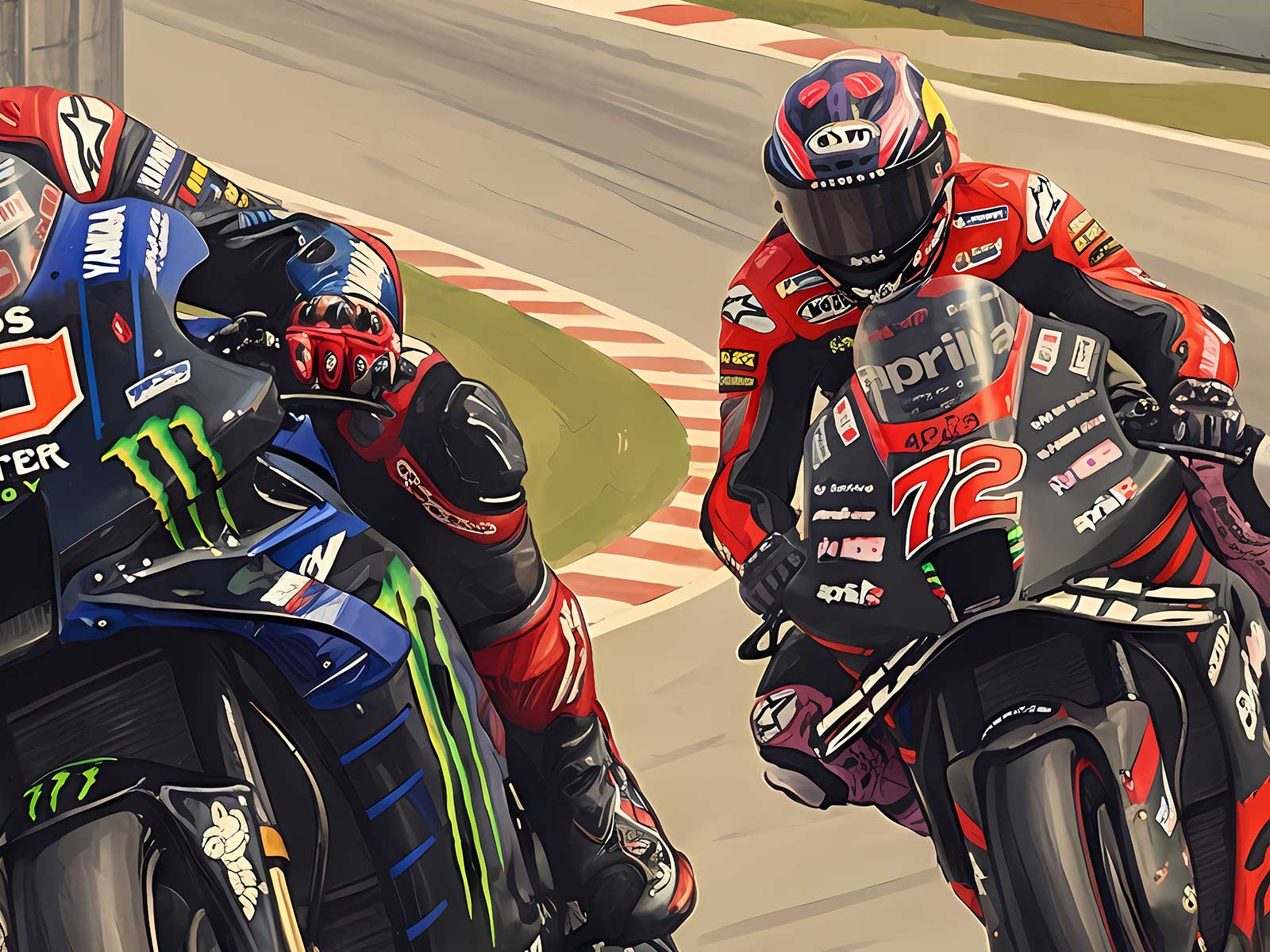
Riders use body position and contact points to stabilise the bike under braking. Gripping the tank with the knees and tucking the upper body reduce unwanted movement, keeping the chassis aligned with the brakes’ forces. Sometimes a rider will extend a leg when braking to help balance and provide a reference point for the bike’s attitude.
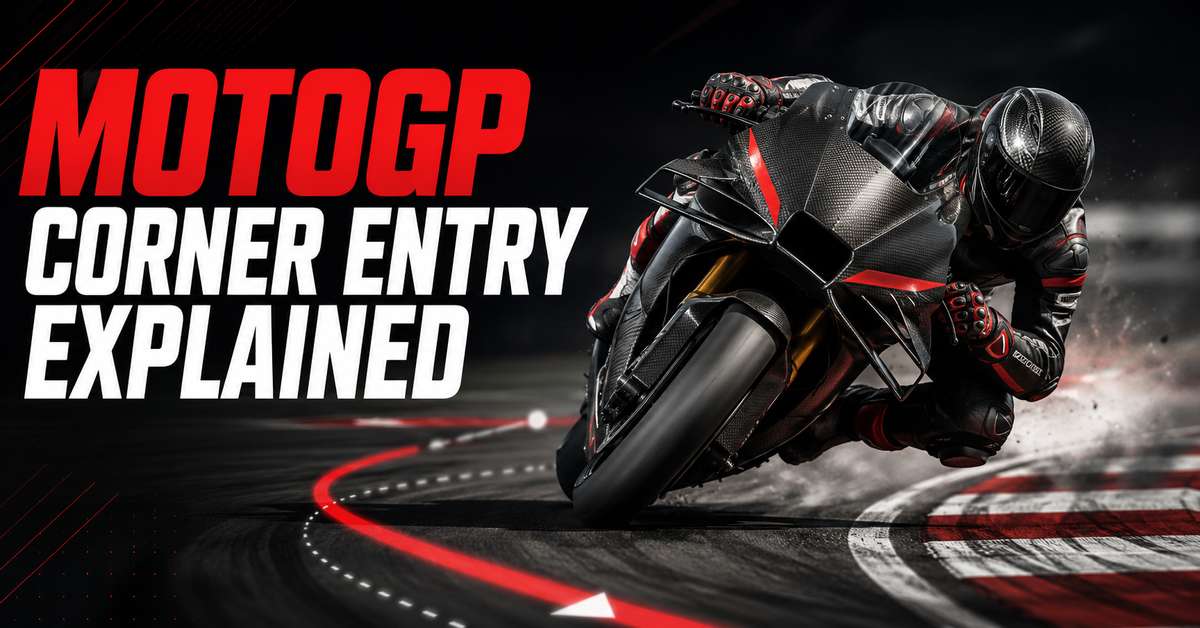
Trail braking is a central technique: riders progressively ease front brake pressure while beginning to lean, keeping load on the front tyre so they can brake later and carry more speed into corner entry. The trade-off is that the front tyre now shares braking and lateral demands, reducing the margin for error.
Bike behaviour and technology: tyres, brakes and engine braking
Tyre behaviour governs how much of the braking force can be used. Front-tyre temperature, compound choice and sensitivity to load directly affect braking performance and stability, so tyre allocation and characteristics are critical. Brake hardware from specialist suppliers is engineered for repeated high-load laps; teams and suppliers monitor brake usage and forces to manage performance across a race.
Engine braking and the rear brake are complementary tools. Engine braking helps slow the bike and stabilise the rear, while modulation of the rear brake influences balance and corner-entry behaviour. Riders blend all three—front brake, rear brake and engine braking—to shape the bike’s geometry for the corner they are about to enter.
Strategy and racecraft: braking as an overtaking tool
Braking defines where overtakes can be attempted. Late, precise braking into a corner allows a rider to out-brake an opponent, but it demands confidence in front-tyre grip and bike stability. Small differences in braking precision and consistency change overtaking success and also the risk of losing the front end. Because braking affects corner entry speed and exit position, it has a direct effect on lap time, tyre wear and the ability to defend or attack during a race.
Safety and risk: margin, stability and consequences
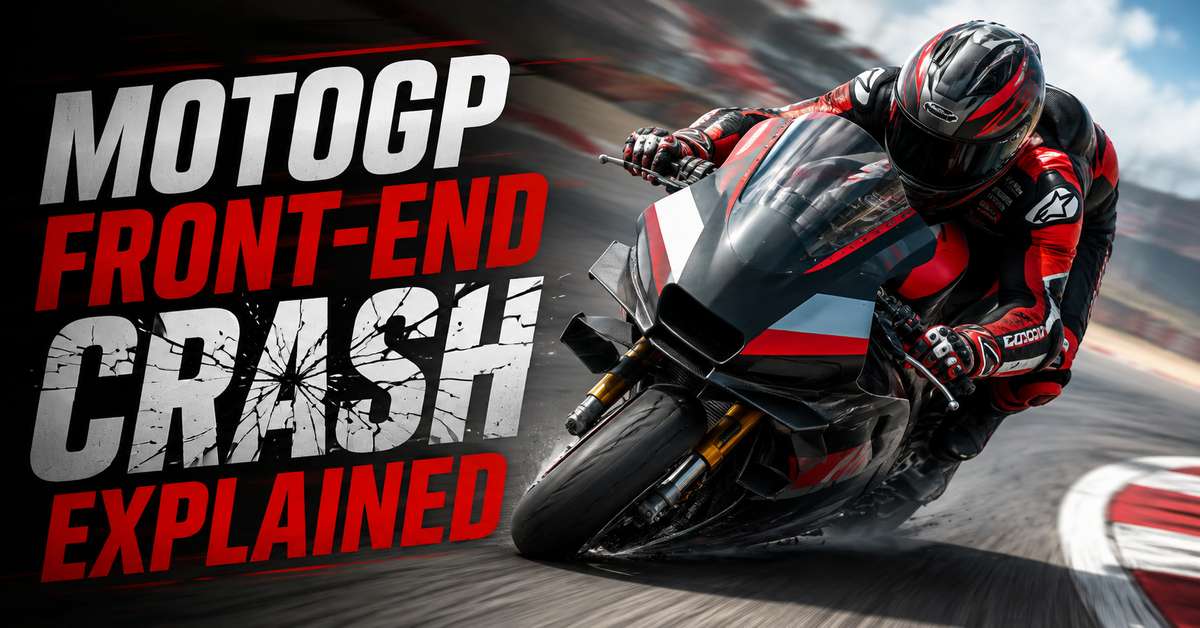
Braking pushes the front tyre to its limits. When a rider asks the front tyre for both braking and cornering grip, the available friction is shared; exceed that combined demand and the front can 'go'—a predictable route to a crash. Brake hardware, tyre choice and consistent technique reduce that risk, but trail braking and late braking inherently reduce the margin for error, making braking a primary safety focus for riders and teams.
Common misunderstandings
Beginners often assume the rear brake or engine braking does most of the stopping; in MotoGP the front brake does the majority because of forward load transfer. Another misconception is that trail braking is simply about being brave; in reality it is a controlled redistribution of forces that increases corner entry speed while narrowing the safety window because the front tyre carries combined loads.
Closing interpretation
Braking in MotoGP sits at the intersection of physics, technology and rider skill. It is mechanical—driven by front-tyre load and engineered brake systems—and human—shaped by posture, timing and feel. Because it determines where a rider can brake, how they enter corners and how they can attempt or defend overtakes, braking is one of the sport’s most decisive skills. Understanding that balance of forces helps fans read every late-braking move as a technical, tactical and sometimes risky commitment.
Estimated reading time: 6 minutes
Author: Alex R.