MotoGP Australia: The Historical Evolution of the Australian Grand Prix Venue
The story of motogp Australia is a tale of two venues and a shifting calendar identity that settled on one of the sport's most celebrated circuits. From the first World Championship Australian round at Phillip Island in 1989, through a six-year period at Eastern Creek, to Phillip Island's long-standing status as the home of the Australian MotoGP, the event's trajectory reflects sporting priorities, venue strengths and ongoing commitments between organisers and track owners.
Summary
The Australian Motorcycle Grand Prix made its World Championship debut at Phillip Island in April 1989, moved to Eastern Creek (now Sydney Motorsport Park) from 1991–1996, and returned to Phillip Island in 1997 where it has remained the primary MotoGP venue, with agreements in place through at least 2026.
Reader preview
- How the Australian GP began in the World Championship era
- Why the event switched venues in the 1990s and then returned
- Phillip Island's modern status and significance on the MotoGP calendar
Quick access
Origins of the Australian Grand Prix
The World Championship's official Australian stop began at Phillip Island Grand Prix Circuit. The first World Championship Australian motorcycle Grand Prix weekend took place on 7–9 April 1989 at Phillip Island, marking the event's entry into the 500cc World Championship calendar. That inaugural top-class race produced an Australian winner: Wayne Gardner claimed victory in the 500cc race, immediately tying the new-round status to the nation's riders and spectators.
The first premier-class era at the track
Phillip Island's initial role in the World Championship established the circuit as capable of hosting premier-class competition. The 1989 event demonstrated the island venue's suitability for international grand prix racing and set the stage for its early association with the World Championship. Those opening years framed Phillip Island as a modern host for motorcycle Grand Prix events within the international calendar.
The Eastern Creek years (1991–1996)
After the initial run at Phillip Island, the Australian Grand Prix moved to Eastern Creek beginning in 1991. Eastern Creek Raceway, which is now known as Sydney Motorsport Park, hosted the Australian Motorcycle Grand Prix from 1991 through 1996. The transfer of the event to New South Wales followed a period of organisational and commercial change around the race's staging; Eastern Creek provided an alternate venue in the Sydney region for six seasons.
Return to Phillip Island and long-term consolidation
In 1997 the Australian Grand Prix returned to Phillip Island on a permanent basis, re-establishing the island circuit as the primary venue for the Australian MotoGP round. From 1997 onwards Phillip Island has been listed as the host venue for the event across multiple seasons. The circuit's status as a MotoGP-capable facility is backed by its FIM Category A licence, the highest FIM track category, which enables it to host premier-class events.
Phillip Island's place in the MotoGP calendar
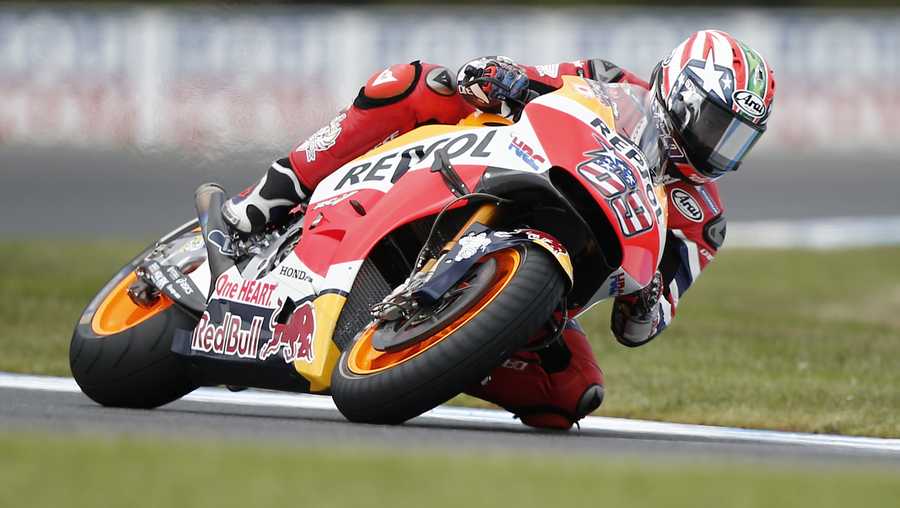
Phillip Island has been the consistent face of the Australian MotoGP since its return, appearing on official MotoGP calendars for the period listed as 1997–2019 and again from 2022 forward. Organisers and Dorna/AGPC have continued to secure the event at Phillip Island through contract extensions, with agreements that keep the Australian MotoGP at Phillip Island through at least the 2026 season. That continuity has reinforced the circuit's role as a fixed and celebrated round in modern MotoGP.
Venue identity and significance
Across its World Championship life the Australian Grand Prix evolved from a new entry to an established highlight. Phillip Island is widely cited by MotoGP and motorsport sources as one of the fastest, most scenic and iconic rounds on the calendar. Its return and long-term contracts reflect both the circuit's appeal and its operational readiness to host top-level racing under FIM standards.
What this history now means
The Australian Grand Prix's path—from debut at Phillip Island in 1989, through the Eastern Creek interlude in the 1990s, to Phillip Island's enduring status—illustrates how venue strengths and commercial decisions shape a Grand Prix's identity. Phillip Island's FIM Category A licence and its repeated inclusion on the MotoGP calendar position the circuit as the event's modern home, while the Eastern Creek years remain an important chapter in the race's calendar evolution. Contractual commitments through at least 2026 point to the event's ongoing significance for MotoGP and for Australian motorcycle racing heritage.
Author: Alex R.