MotoGP Barcelona: Deciphering the Historical Legacy of the Circuit de…
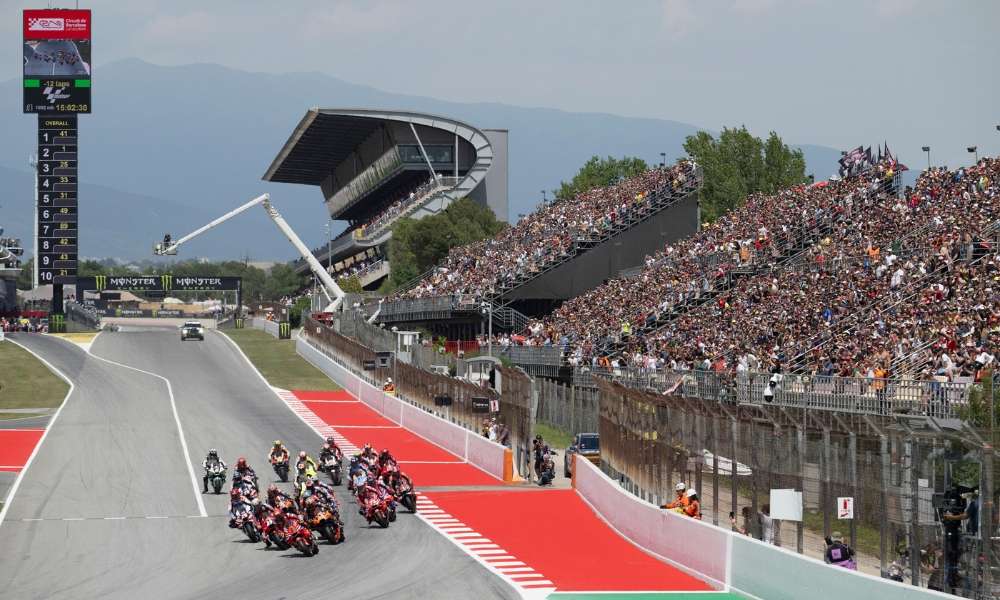
The Circuit de Barcelona-Catalunya has been a constant presence in world championship motorcycle racing since the early 1990s. Built in 1991 and hosting its first motorcycle Grand Prix in 1992, the venue’s story is defined by iterative changes that balanced sporting challenge with increasingly stringent safety demands.
Summary
The Catalonia circuit entered international motorsport in 1991 and started hosting motorcycle Grand Prix racing in 1992. Known today as the home of the Catalan Grand Prix (name used since 1996), the track has been reshaped repeatedly—most notably in response to safety issues after 2016—and has seen its final sector and specific corners altered to serve both motorcycle and car championships.
Quick preview
- Origins as a 1991-built international motorsport venue
- Motorcycle Grand Prix presence from 1992; Catalan GP name from 1996
- Multiple safety-driven layout changes, especially after 2016
Quick access
Origins of the venue
The Circuit de Barcelona-Catalunya was constructed in 1991 and immediately positioned as an international motorsport facility. Its initial configuration and infrastructure allowed it to host top-level events across disciplines. The circuit’s inclusion in the motorcycle Grand Prix calendar began in 1992 with a meeting billed originally as the European motorcycle Grand Prix; that event marked the start of a sustained relationship between the track and world championship motorcycle racing.
The first MotoGP or 500cc era at the track
From 1992 the venue established itself in the championship rotation. By 1996 the event name in the motorcycle calendar had stabilised under the Catalan motorcycle Grand Prix designation, reflecting the circuit’s regional identity and its growing association with Grand Prix motorcycling. Across those early years the track offered a combination of high-speed sections and technical corners that made it relevant to premier-class competition.
The venue as it changed over time
Throughout its life the circuit has been subject to repeated physical interventions. A notable modification came in 2004 with the tightening of the La Caixa / Turn 10 area, implemented for sporting and safety reasons. In 2007 an F1-style chicane was introduced in the final sector to reduce speeds for car racing and to alter the flow of the lap. The site has also seen resurfacing, runoff changes and grandstand/runoff removal projects carried out periodically to meet FIM and FIA standards for international motorcycle and car racing.
Safety-driven change: the impact of 2016
The death of Moto2 rider Luis Salom at the 2016 meeting was a watershed moment for the circuit’s motorcycle configuration. That incident prompted urgent layout changes for that year’s event, including the temporary use of an F1-style chicane, and led to subsequent permanent modifications at the request of the FIM. The episode accelerated a process of re-evaluating the final sector and other areas where runoff and corner geometry required improvement for two-wheeled competition.
Post-2016 iterations and testing
Between 2016 and 2018 organisers experimented with different chicane configurations and final-sector options. Rider safety concerns influenced the choice of layouts during race weekends; for example, MotoGP reverted to the F1 chicane during the 2017 weekend while further adjustments and resurfacing works were tested and implemented in subsequent seasons. MotoGP coverage from 2018 records testing on a resurfaced circuit and final-sector layout choices intended to balance safety with the sporting character of the lap.
Later updates and cross-discipline convergence
The circuit continued to evolve into the 2020s. Turn 10 was modified for 2021 to improve safety and runoff, reflecting ongoing attention to areas that affect rider risk. In 2023 Formula 1 reverted to a layout that uses the MotoGP final-sector configuration—removing the 2007-installed F1 chicane—illustrating moments where layout requirements between car and motorcycle championships converged and the circuit’s multiple configurations influenced each other.
Riders, eras and the circuit’s identity
Over its decades-long role in Grand Prix racing the Circuit de Barcelona-Catalunya built strong associations with repeat winners and milestone moments in premier-class history. The venue’s combination of high-speed sectors and technical corners made it a meaningful test of bike and rider across eras. That continuity—hosting motorcycle Grand Prix action since 1992 and carrying the Catalan Grand Prix name from 1996—helped the track remain part of riders’ seasonal narratives and championship campaigns.
What the track came to represent
The Catalunya circuit came to mean iterative adaptation. Rather than a single immutable layout, its identity is defined by decades of adjustments: sport-driven corner tweaks, repaving and runoff works to satisfy international governing bodies, and safety-led reshaping after critical incidents. This capacity to change while remaining a fixed point on the calendar explains its enduring place in MotoGP history.
What its history now means
Seen chronologically, the Circuit de Barcelona-Catalunya’s story illustrates how modern Grand Prix venues must reconcile speed, spectacle and safety across eras. Built in 1991 and hosting motorcycle Grand Prix racing from 1992, the track has been repeatedly modernised—2004 corner tightening, the 2007 chicane, the 2016 safety-driven redesigns, 2018 resurfacing and 2021 Turn 10 changes among them. The result is a venue whose legacy is not only measured in memorable races or repeat winners but in how it has adapted equipment, layout and infrastructure to meet the evolving demands of premier-class motorcycle racing.
Author: Eric M.