Highside vs Lowside MotoGP: what they are, why they happen and how to spot them
Highsides and lowsides are the two classic solo crash types fans see in MotoGP corners. Both begin with tyre grip loss, but their mechanics, rider risk and on-screen appearance are quite different. Understanding the distinction helps viewers read crashes correctly and appreciate how riders and electronics try to prevent the worst outcomes.
Quick summary: A lowside is a progressive slide where the bike falls on the low side of the corner; a highside starts with rear-wheel slip then an abrupt regain of traction that violently catapults the rider over the high side. Highsides carry greater ejection energy and injury risk.
Quick access: Definition • How it happens • Visual signs • Safety & risk
CLEAR DEFINITION
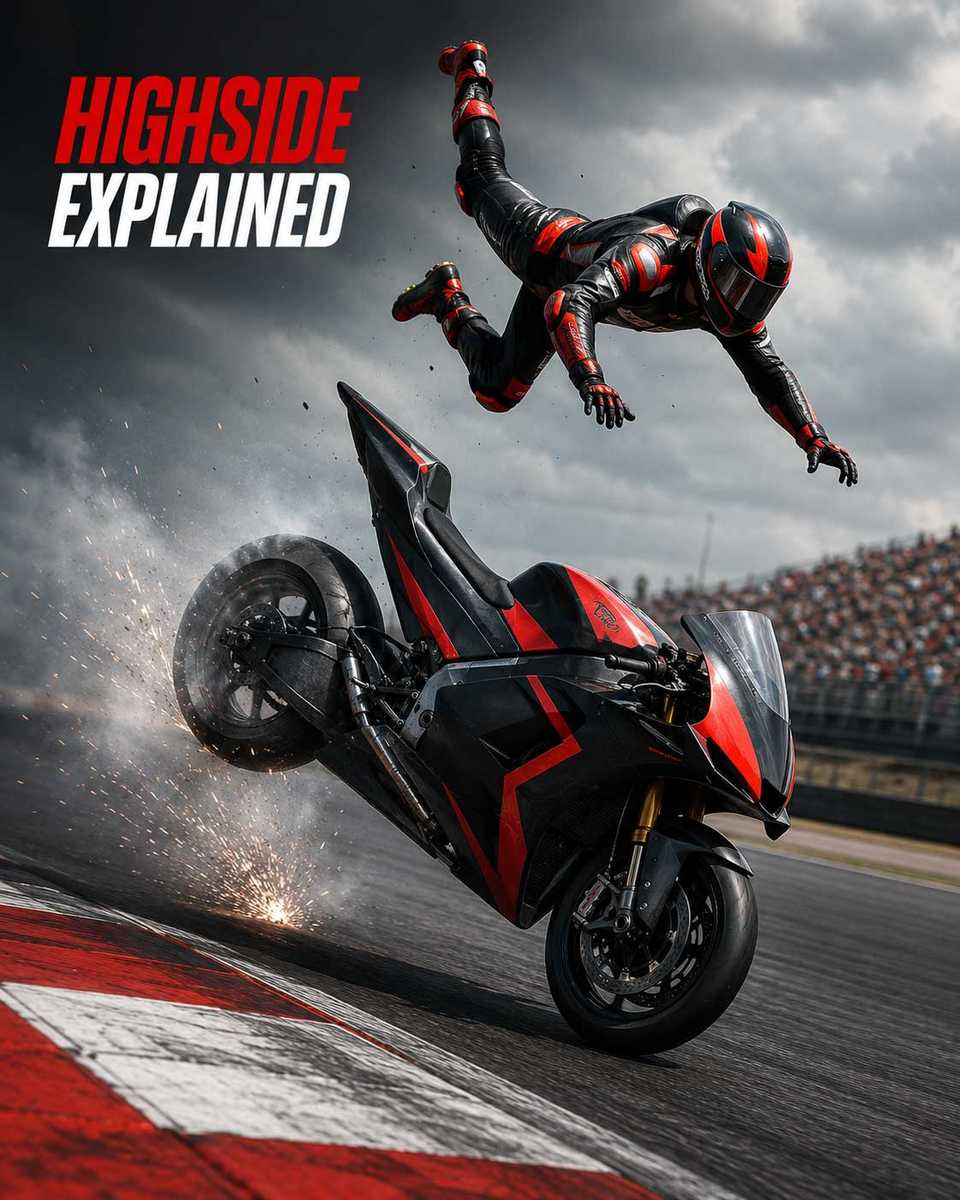
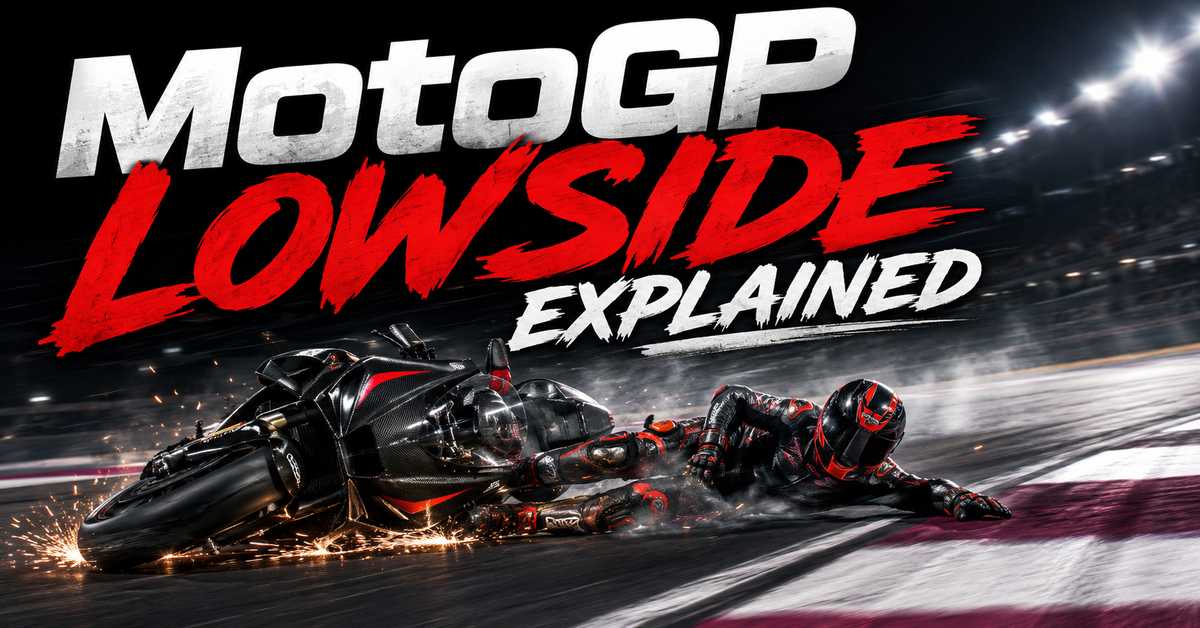
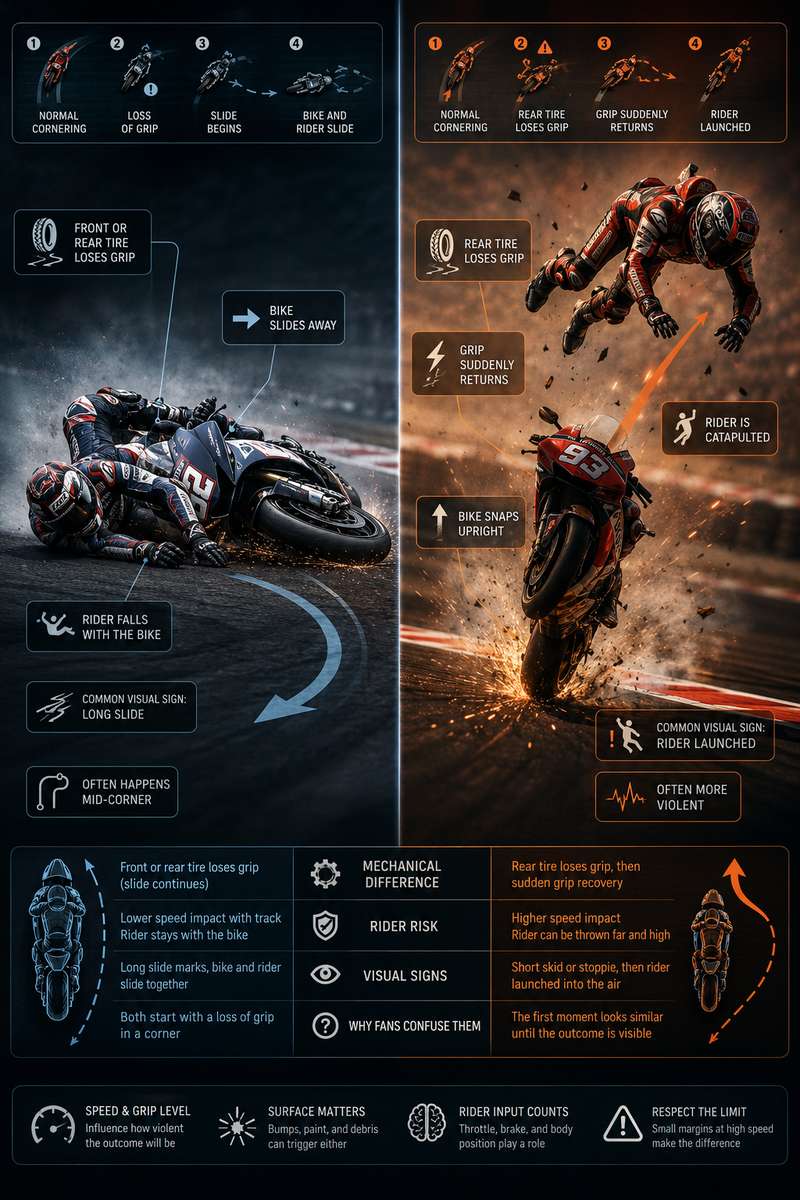
In MotoGP terms a highsider is a crash where the rear wheel loses traction (it slides) and then suddenly regains grip, producing a violent rotational moment that flips the bike and often ejects the rider over the "high" side. A lowsider is when the bike simply falls onto the low side of the lean because one or both tyres progressively lose grip and the machine slides out from under the rider.
HOW IT HAPPENS OR HOW IT WORKS
Highsides typically begin with rear-wheel slip: the rear tyre is sliding relative to the track surface. If that sliding tyre then rapidly re-grips—because throttle changes, engine braking, a change in surface, or suspension reaction restore traction—the sudden bite creates a rapid rotation that throws the rider up and off the bike.
Lowsides usually start when front or rear grip is lost progressively during the corner. Instead of an abrupt re-attachment of grip, the bike simply drops and slides toward the inside of the turn, often travelling on the tarmac while the rider slides beside it.
VISUAL SIGNS ON SCREEN
On video a lowside is relatively easy to recognise: the bike and rider collapse to the inside and slide along the track, sometimes producing sparks and a steady scraping motion. A highside often shows the rear stepping out first, then a sudden snap as the bike snaps upright and the rider is flung over the top—an abrupt, catapult-like motion rather than a continuous slide.
COMMON CAUSES IN RACING
Both crash types share root causes: loss of traction from aggressive throttle application, engine braking, abrupt changes in surface grip (dirt, debris, wet patches), or unexpected tyre behaviour. Suspension and tyre interactions can make recovery harder. In MotoGP, traction-control systems and careful throttle modulation are primary mitigations against rear-wheel instability that can lead to highsides.
RIDER TECHNIQUE
Riders try to prevent lowsides and highsides with smooth inputs: progressive braking and throttle, measured body position, and subtle correction rather than harsh countersteer. For highsides the key is avoiding sudden re-grip situations—smoothly rolling on the power and relying on electronics helps. To limit lowsides riders focus on maintaining contact patches through lean transitions and avoiding abrupt steering or over-leaning on cold tyres.
SAFETY AND RISK
Highsides generally produce higher-energy ejections and pose a greater risk of severe injury because of the violent throw over the machine. Lowsides more commonly result in sliding injuries—abrasions and lower-impact contacts—although they can still be dangerous. Modern MotoGP safety relies on protective gear, track medical response and electronics to reduce the frequency of the most violent highsides.
COMMON MISUNDERSTANDINGS
Fans often confuse the two because both start with a loss of grip during cornering. In live TV footage the subtle sequence—rear slip then abrupt re-grip for highsides versus a continuous slide for lowsides—can be hard to parse without slow motion and multiple camera angles. The initial rear step in a highside may look similar to the first stage of a lowside, which increases misidentification.
FAN VIEWING GUIDE
When watching on-screen, look for the direction and tempo of motion: continuous, low-to-the-ground sliding toward the inside indicates a lowside; a sudden snap upright and a rider being thrown over the bike indicates a highside. Slow-mo replays and onboard footage usually make the difference obvious.
CLOSING INTERPRETATION
Understanding highsides and lowsides reveals how small changes in tyre grip and rider input can produce very different outcomes. The distinction matters for safety, for how teams set electronics and suspension, and for fans who want to read crashes accurately. Knowing the mechanics turns an alarming image into an understandable sequence: loss of grip is common, but whether that slip re-grips violently or simply slides away is the key difference between a highside and a lowside.
Author: Alex R.