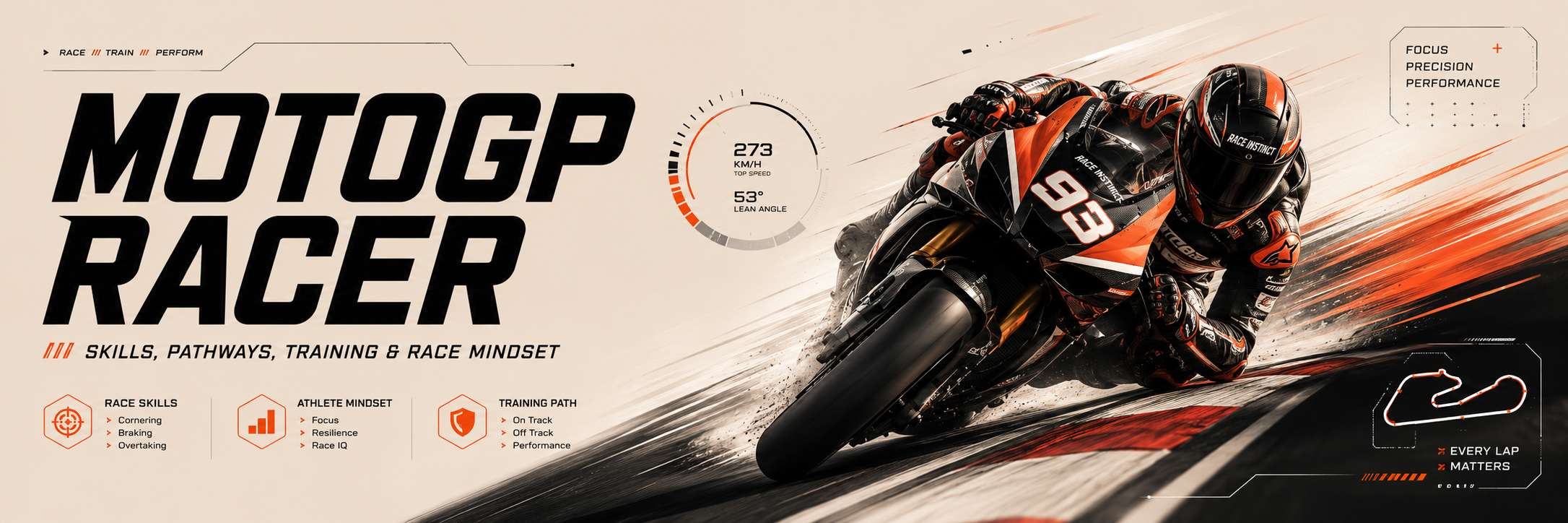
What skills do MotoGP riders need — the real abilities behind the helmet
Want a straight answer? MotoGP riders need razor-sharp braking and throttle control, elite racecraft, clear technical feedback, adaptability to changing conditions, and the physical and mental fitness to repeat it all under pressure. That's the core — but the reality behind each item is deeper and often misunderstood.
Speed alone won't get you there. The difference between a fast lap and a consistent podium contender is repeatability: the ability to perform precise inputs, read evolving bike behaviour, and communicate changes to engineers while remaining calm in a fight. Below we pull each skill apart so you can see what matters, what is trainable, and where most riders stall.
Direct answer
At the simplest level: braking precision, smooth throttle & engine-braking management (including electronics use), elite racecraft, adaptive feedback to the team, physical control, and emotional resilience are the non-negotiables for MotoGP riders.
Reality check
Each of those skills is compound: braking precision depends on body position, carbon-brake behaviour and tyre temperature; throttle control ties into traction control maps and tyre life; feedback relies on data literacy and concise technical language. Teams evaluate the whole package, not only raw corner speed.
What this article explains
- Which abilities matter most and why teams value them.
- How physical and mental demands shape technique and repeatability.
- Where adaptability, feedback and electronics knowledge change outcomes.
The realistic answer: what “having it” really means
When people ask "what skills do MotoGP riders need?" they often expect a single trait. In reality teams look for a cluster: precise deceleration control with carbon brakes; masterful throttle and engine-braking modulation tied to electronics; racecraft that balances aggression and risk; reliable, informative technical feedback; and the fitness plus mental control to make those actions consistent over a race weekend.
Those are not optional extras. Failure in any one area can erase a rider's raw speed — a misjudged braking point, poor throttle release, or vague feedback that leaves engineers guessing will cost lap time and increase crash risk.
The abilities teams cannot ignore
Break this down and you get distinct, observable skills:
- Braking precision — managing extremely high-speed deceleration with carbon brakes without front-wheel lockups, using progressive inputs and body position to control the bike.
- Smooth throttle & engine-braking control — feeding power back on corner exit and managing engine-brake effects to preserve stability and tyre life; this interacts with electronic maps and traction control.
- Racecraft — lines, late braking, clean overtakes, situational awareness and deliberate risk management; essential both for avoiding crashes and winning races.
- Technical feedback — delivering precise, repeatable observations to engineers so suspension, chassis and electronics settings can be tuned from telemetry.
- Adaptability — adjusting to tyre degradation, changing track conditions, fuel load differences and electronics adjustments across sessions.
- Physical and mental resilience — the fitness to hold body position and control under load, and the psychological control to make high-speed decisions under pressure.
Physical and mental load: what fitness actually supports
Fitness in MotoGP is not about bulk; it's about specific control. Core strength, neck and upper-body conditioning, leg stability and cardiovascular endurance let a rider hold precise positions, resist G-forces under braking, and maintain fine muscle control for throttle and brake modulation across a race distance.
Equally important is focused mental training. Riders work on concentration, decision-making under fatigue and emotional control with sports psychologists so they can judge risks and stick to strategy when tyre performance drops or a rival pressures them into a risky move.
Technique and biomechanics: why the body moves the way it does
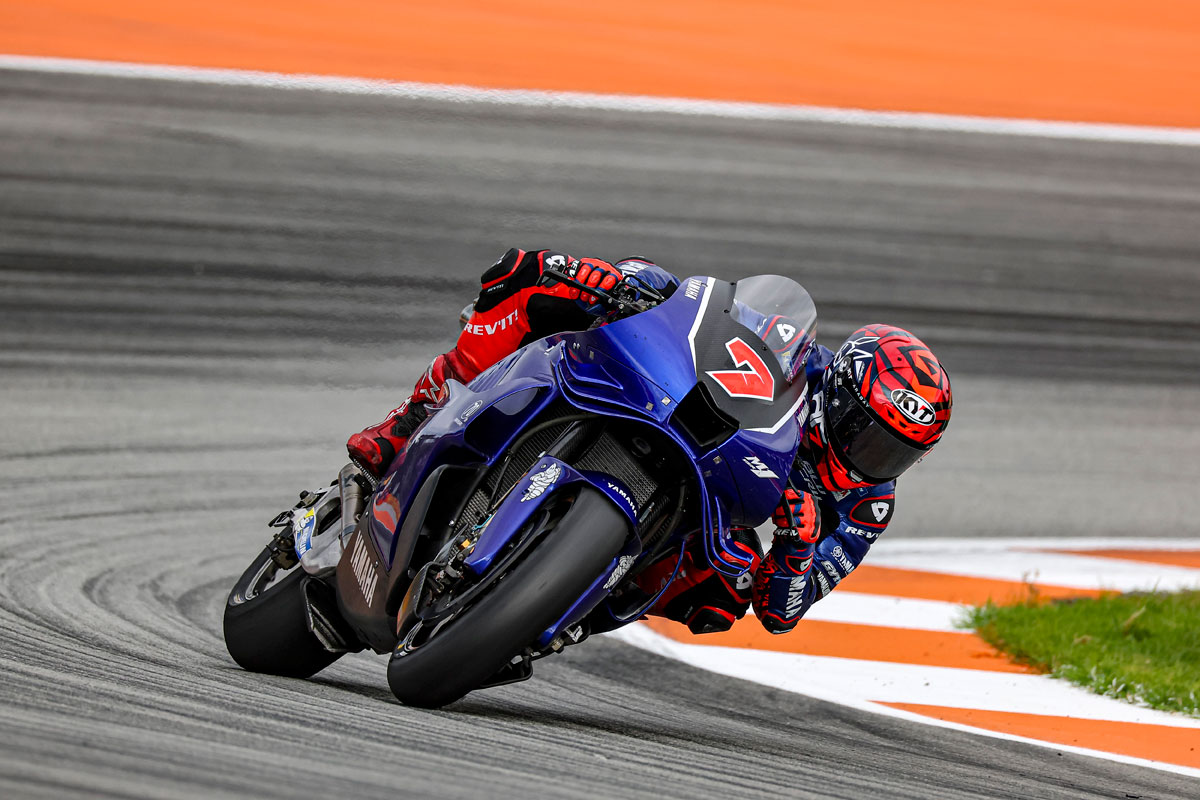
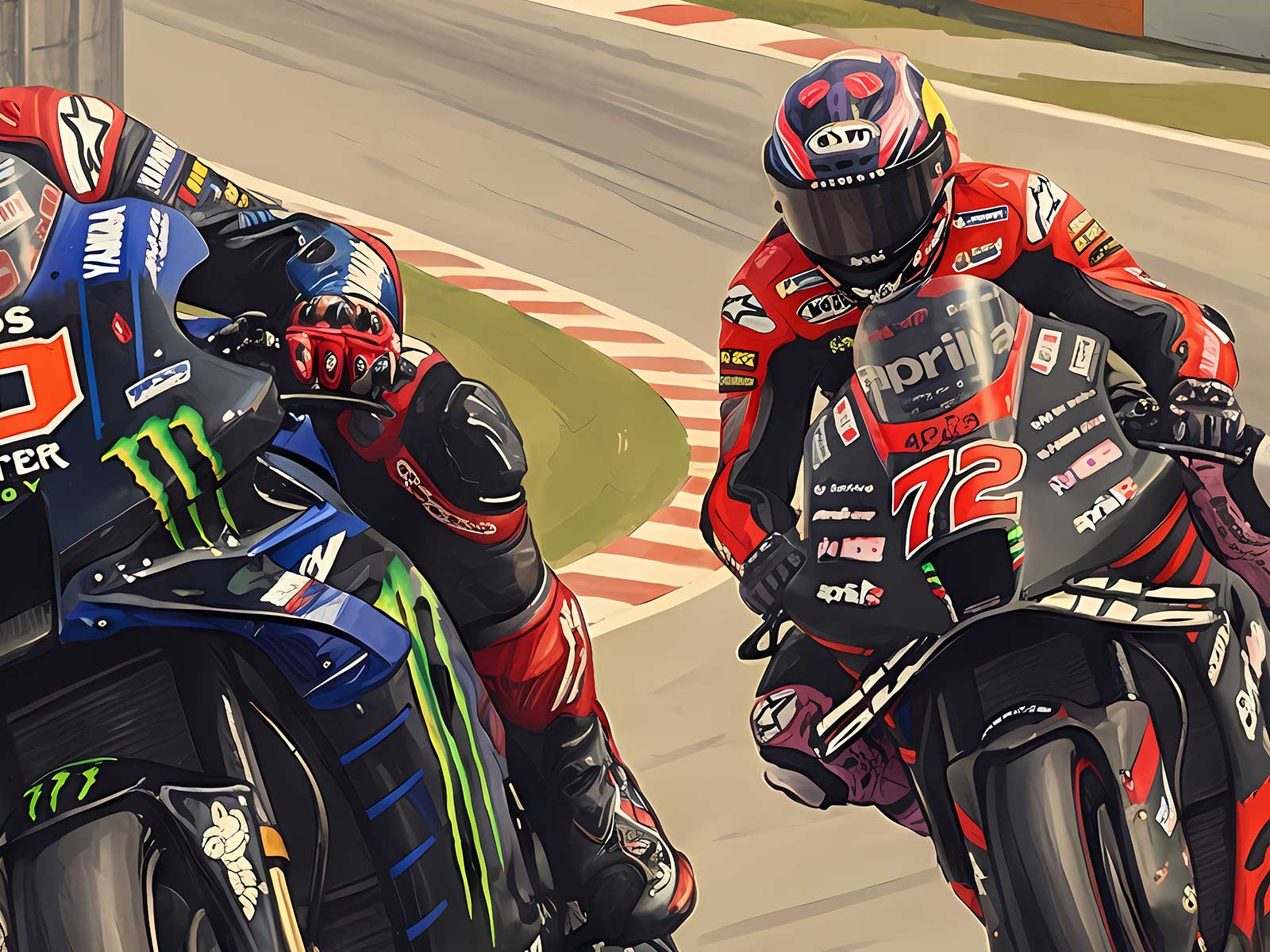
Every visible movement has a mechanical purpose. Extreme lean angles, knee and elbow dragging, and deliberate body shifts change the bike's centre of mass, tyre load and steering geometry to increase cornering speed and stability. Those techniques also provide tactile feedback; at MotoGP angles this feedback helps a rider sense grip limits that instruments alone cannot convey.
Because braking uses carbon rotors with different bite characteristics, body position and hand pressure must be finely matched to avoid front-end instability. Technique and biomechanics are therefore inseparable from braking and throttle control.
Electronics, technical feedback and teamwork
Modern MotoGP bikes are complex systems. Traction control, engine-brake maps and other electronic settings materially change how the bike responds to the rider. Smooth throttle control only pays off when matched to correct electronic maps; similarly, engine-braking must be managed both by the rider's inputs and the team's setup choices.
Riders must translate seat-of-the-pants sensations into concise technical feedback so engineers can interpret telemetry and adjust suspension, chassis or electronics. The best riders speak the language of data, allowing rapid setup evolution across a weekend.

Adaptability and racecraft: performance that survives the weekend
Tracks change between morning warm-ups and race distance. Tyres degrade, temperatures shift, and fuel load changes affect balance. A rider's ability to adapt riding style, braking markers and lines — while keeping tyre life and race strategy in mind — separates race winners from one-lap heroes.
Racecraft ties into this. Choosing when to attack, when to ride defensively, and how to execute overtakes without destabilising your own bike are decisions made in fractions of a second and trained through race experience.
The talent funnel: why many skilled riders never reach MotoGP
Being technically excellent is necessary but not sufficient. Teams evaluate how skills combine: consistent braking, repeatable feedback, adaptability, and mental control under pressure. Riders who lack one of these elements often find progress halts even if lap times look impressive in isolation.
Another hidden obstacle is the interplay between rider and machine. A rider who cannot translate sensations into actionable setup changes leaves teams with guesswork. Similarly, riders who struggle to adapt to electronics or tyre degradation will see performance drop over race distance, limiting their career progression.
What can be trained — and what takes longer
Trainable skills include braking technique, throttle modulation, physical conditioning, and mental strategies for focus and stress management. Structured practice, simulator work, telemetry analysis and psychologist-guided routines accelerate these areas.
Slower-to-develop traits include the intuition that comes from thousands of race miles (racecraft and split-second judgement), and the ability to consistently translate sensations into concise technical feedback — skills honed in real competition contexts with experienced engineers and teammates.
Practical next steps if you care about this path
If your goal is to understand or pursue the MotoGP ladder, focus early on measurable elements: develop progressive braking skills, practice smooth throttle and engine-braking control, build sport-specific fitness that prioritises control and endurance, and learn to record and describe bike behaviour in technical terms. Racing experience is the crucible where adaptability and racecraft form.
Remember: the combination of repeatable technique, clear feedback and composure in changing conditions is what teams reward — not only the occasional fastest lap.
Final verdict: realistic, not impossible — but exacting
So, what skills do MotoGP riders need? The short verdict is clear: elite braking and throttle control, racecraft, technical feedback, adaptability, and specific physical and mental conditioning. The deeper truth is that each skill is interdependent and must be repeatable under pressure. Teams hire the package, not a single highlight.
If you ride or coach, treat these abilities as connected systems: improve input precision and body control, learn to interpret and communicate bike behaviour, and train the mind to act reliably when everything else is changing. That's the path from being fast to being MotoGP-ready.
Author: Eric M.