Fernandez MotoGP: Decoding Raúl Fernández’s Riding Signature and Jerez Reading
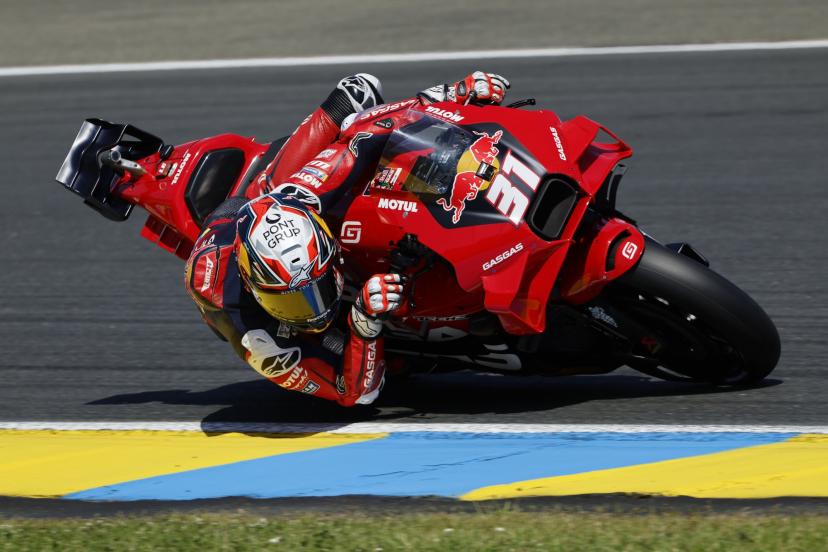
Raúl Fernández has become one of the more discussed young talents in MotoGP precisely because his riding calls for specific technical responses. At Jerez — both in race comments and in subsequent testing — Fernández and his team have publicly documented a clear process: he uses the front of the bike a lot, Aprilia have worked on the electronics to suit that preference, and he himself recognises areas where personal execution limited results.
Quick summary: Verified quotes and test data show Fernández pushing front-end usage, Aprilia adapting electronics, a measurable Jerez test lap improvement (1'35) and post-race reflection that bike potential exceeded his execution.
Quick access
First technical reading | Braking and corner entry | Adaptation and electronics
FIRST TECHNICAL READING OF THE RIDER
The most consistent, verifiable clue about Fernández is his front-end reliance. In public comments he has said he uses the front of the bike a lot. That single statement frames how to interpret subsequent behaviour at Jerez: his fastest test laps and race feedback should be read through the lens of a rider who trusts and extracts performance from front-end grip rather than being purely rear-driven.
BRAKING AND CORNER ENTRY
When a rider emphasises the front, two practical consequences usually appear on track. First, corner entry tends to be committed to a heavier front load and earlier, confident turn-in. Second, the bike and team often need to tune electronics and chassis behaviour to support that front bias. In Fernández's case the verified reporting does not provide telemetry, but his own admissions and team work indicate braking and turn-in are central to his technique and to the adjustments made at Aprilia.
MID-CORNER AND LINE CHOICE
Although precise line maps from Jerez are not published in the verified material, the broader, defensible reading is that a front-biased rider will seek lines that allow the front to maintain bite through turn apexes and stabilise the chassis. Fernández’s test progress at Jerez — notably hitting a 1'35 lap for the first time — is consistent with improved mid-corner stability that lets him hold speed where the front must carry load.
EXIT TRACTION AND TYRE MANAGEMENT
Fernández has publicly reflected on tyre and pace management after the Jerez race, explicitly saying “the bike was ready for more, I wasn't.” He also cited riding behind another rider (Johann Zarco) as a factor affecting tyre and pace. Those remarks point to two defensible interpretations: his exit traction and tyre life are areas where race context and wheel-to-wheel positioning affect his ability to extract consistent late-race performance, and racecraft dynamics (following another rider) had a measurable effect on his tyre management.
ADAPTATION TO BIKE, ELECTRONICS, AND TESTING
Multiple reputable outlets confirm Aprilia worked on electronics to better suit Fernández’s front-end use. That is an important, verifiable fact: the team recognised his natural inputs required electronic and setup changes. The Jerez test where he recorded a 1'35 lap supports a narrative of adaptation — measurable progress during testing aligned with targeted technical work.
RACECRAFT AND POST-RACE INTELLIGENCE
Fernández’s post-race quote about the bike being capable of more is an admission of self-evaluation rather than a technical blame. It also reveals tactical awareness: he identified following another rider as a condition that altered tyre and pace behaviour. That kind of candid, factual reflection is useful when judging how he manages duels and in-race compromises — he recognises when external factors change his tyre window and his own capacity to exploit the machine.
CAREER ARC AND FACTUAL CONTEXT
Verified reporting across MotoGP.com, GPone, Paddock-GP and others consistently frames Fernández as a rider who has needed adaptation — notably in electronics and time-attack approach — to fit MotoGP machinery. Articles and interviews describe a rider still calibrating one-lap attacks versus race rhythm. The Jerez test improvement and team adjustments are the concrete way those broader career observations are manifesting in on-track performance.
CLOSING INTERPRETATION
Seen only through verified evidence, Raúl Fernández’s MotoGP identity is best described as a front-end orientated rider in the process of technical accommodation. Aprilia’s electronics work and the Jerez test lap time provide measurable markers of progress; his own post-race honesty about execution versus bike potential offers a clear window into his race intelligence. For analysts and fans, the interesting variable now is whether further electronics and setup refinement, combined with tactical evolution in traffic and tyre management, will convert that front-end confidence into consistently stronger race results.
Author: Cynthia D.