Morbidelli: Exploring the Unique Riding Style and Track-Reading That Define…
Franco Morbidelli's profile in modern MotoGP reads as a study in measured technique: a rider known for precision, careful tyre management and an analytical approach to setup rather than a flamboyant, aggressive style. This article explains what that means on track—how Morbidelli reads grip, builds corner speed and adapts his inputs to extract consistent race pace and strong results in circuits like Jerez.
Quick summary: Reputable MotoGP media and feature interviews characterise Morbidelli as a precision rider. He prioritises controlled inputs, interprets tyre behaviour closely and structures both qualifying and races around consistent lap times and tyre life — traits linked in coverage to strong showings at tracks such as Jerez.
Why this matters: Understanding Morbidelli's technical identity clarifies why he often performs when smooth timing and tyre management are decisive, and why his feedback on setup and asymmetric tyres is treated as technical evidence of a methodical riding process.
Quick access
FIRST TECHNICAL READING OF THE RIDER • BRAKING AND CORNER ENTRY • EXIT TRACTION AND TYRE MANAGEMENT
FIRST TECHNICAL READING OF THE RIDER
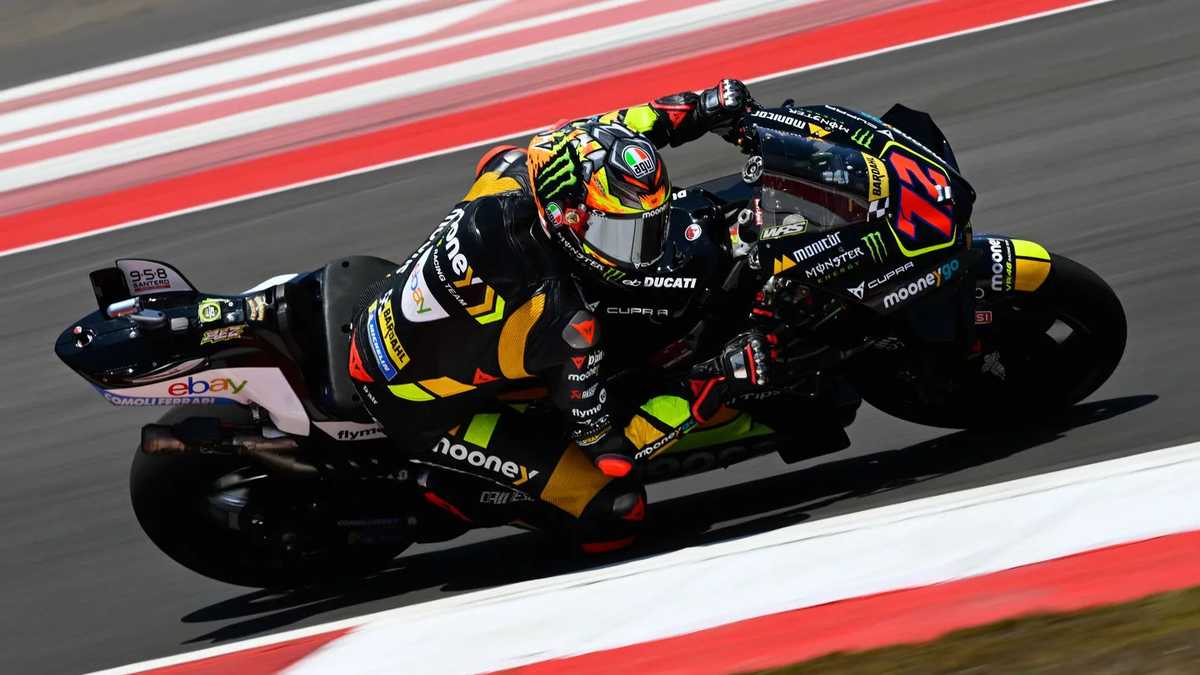
The first consistent description across official MotoGP materials and feature interviews is simple: Morbidelli is a smooth, analytical rider. Unlike profiles that emphasise extreme hanging-off positions or overt aggression at corner entry, reporting and first-person features point to deliberate, precise inputs—a style that privileges predictable machine behaviour and controlled speed accumulation through a lap.
This reading comes from both observer analysis and Morbidelli's own technical comments in feature pieces: he frames riding in terms of track feel, tyre reaction and setup interactions rather than purely raw aggression.
BRAKING AND CORNER ENTRY
Sources that profile Morbidelli highlight his measured approach to braking and entry. He tends to rely on predictable brake zones and progressive deceleration so that the front end remains consistent and the bike remains stable at turn-in. That technique supports late but controlled placement into corners without abrupt inputs that can upset grip.
Feature explanations of his technique connect this braking discipline to his broader preference for precision: by managing deceleration and body position deliberately, he reduces variables at the critical moment of transition from braking to lean.
MID-CORNER AND LINE CHOICE
Across interviews and technical pieces, Morbidelli's mid-corner work is framed as an extension of his precision-first identity. He chooses lines that favour consistent weight distribution and manageable lean angles, enabling steady throttle application through the arc. The emphasis is on preserving tyre life and predictable traction rather than squeezing maximal entry speed at the expense of mid-corner stability.
That controlled mid-corner behaviour supports a racing pattern where gains are made through cleanliness and repetition rather than high-risk, marginal lines.
EXIT TRACTION AND TYRE MANAGEMENT
One of the most-discussed aspects of Morbidelli's profile is tyre awareness. He has publicly discussed tyre behaviour, including the engineering topic of asymmetric tyres, showing a technical interest in how rubber and carcass choices change cornering and exit strategies. Media pieces and interviews reinforce that he adapts his inputs to preserve rear traction and extend tyre performance over a race distance.
That tyre-first mindset links directly to observed competitive form: contemporary reporting credits improved race pace consistency and better tyre management as drivers of his competitive resurgence, with circuits like Jerez often cited in coverage as places where those attributes translated into strong results.
RACECRAFT AND DUEL INTELLIGENCE
MotoGP reports describe Morbidelli's racecraft as tactical and measured. Instead of relying on flash overtakes born from aggressive late-braking gambits, his duels frequently reflect patience and position control: he looks for moments when his refined corner exits and stable mid-corner platform give him advantage over riders who may have pushed harder earlier in the lap and are experiencing tyre drop-off.
This behaviour is consistent with journalistic analysis that links his on-track decisions to a broader technical plan: preserve tyres, keep laps consistent, then exploit rivals' degradation.
QUALIFYING PROFILE AND LAP BUILDING
Features and rider profiles suggest Morbidelli balances one-lap speed with a focus on race rhythm. His lap-building relies on precise lines and repeatable inputs to find peak performance without destabilising the bike. That approach does not preclude strong qualifying; rather it frames qualifying laps as extensions of his precision—finding the limit through consistency rather than through extreme, high-variance attempts.
CAREER ARC AND COMPETITIVE CONTEXT
Published profiles and contemporary race coverage place Morbidelli's technical identity within a career marked by identifiable phases: early promise, tangible results at tracks such as Jerez, and later resurgences credited to improved bike feeling and race pace consistency. Reporting from reputable outlets ties those performance swings to better tyre management and a clearer read of the machine's behaviour rather than purely changes in aggression or riding theatrics.
Profiles and interviews form the evidential base here: they do not offer telemetry but do provide a coherent narrative connecting technique, setup dialogue and outcomes.
CLOSING INTERPRETATION
Franco Morbidelli's technical signature is defined less by flashy style and more by an insistence on precision, tyre understanding and controlled inputs. The picture painted by official profiles, feature interviews and race reporting is of a rider who reads the track analytically, adapts setup and tyre knowledge into his riding, and converts that clarity into consistent race pace—qualities that explain why venues like Jerez appear repeatedly in analyses of his best performances.
For observers who want to understand what makes Morbidelli distinct in modern MotoGP, the useful takeaway is this: his value is visible in the small, repeatable decisions—brake timing, line discipline, exit control and tyre stewardship—that pay off across a race weekend more than in dramatic single moves.
Author: William L.