Inside Red Bull KTM MotoGP: structure, methods and rider dynamics in 2026
Red Bull KTM’s MotoGP operation in 2026 is a two-tier project that combines a factory front-line squad and a closely aligned Tech3 satellite partner. Understanding how the organisation divides responsibilities — from machine development to race-weekend execution and rider management — explains why KTM presents itself as an engineering-led factory effort while running a high-profile satellite programme.
Quick summary: In 2026 Red Bull KTM Factory Racing fields Pedro Acosta and Brad Binder while Red Bull KTM Tech3 runs Enea Bastianini and Maverick Viñales. The programme emphasises iterative development of the RC16, visible in launch events and public engineering commentary.
Quick access:
FIRST READING OF THE TEAM
At first glance Red Bull KTM in 2026 reads as a manufacturer-backed operation with clear factory ambitions plus a branded satellite partner. Public launch activity and team communications present the RC16 as a developed, evolving package; the team frames itself around engineering progress and preparing for a forthcoming phase beyond 2026.
That public posture is reflected in staged events: the 2026 livery and machine presentations were done with both factory and Tech3 riders present at the official launch on 27 January 2026, signalling an integrated paddock identity rather than two isolated entries.
FACTORY, SATELLITE, OR HYBRID ROLE
Operationally the project is a hybrid. Red Bull KTM Factory Racing is the factory squad with Pedro Acosta and Brad Binder as its riders. Red Bull KTM Tech3 is a satellite team fielding Enea Bastianini and Maverick Viñales. Both teams are publicly linked through branding and programme messaging, yet the distinction exists: the factory side carries the direct engineering voice of KTM while Tech3 operates as a prominent partner that still benefits from the factory’s technical focus.
This arrangement allows KTM to concentrate core development resources within the factory environment while using Tech3 to extend track coverage, rider data collection and race-experience bandwidth across two additional high-profile riders.
RELATIONSHIP TO THE MANUFACTURER
KTM’s public commentary emphasises an engineering-led factory focus: iterative development of the RC16 and active involvement of factory engineers and support staff. That narrative positions the factory squad as the primary channel for technical refinement and long-term strategic decisions.
Public statements from KTM’s motorsports leadership and team launch materials underline that factory engineering drives the programme while the satellite outfit contributes operational depth. The shared RC16 platform and coordinated launch activities show a managed technical exchange between the two teams.
GARAGE STRUCTURE AND ENGINEERING CULTURE
Key crew chief assignments in 2026 make the team’s engineering culture legible. Pedro Acosta remains paired with Paul Trevathan, a continuity choice that supports consistency in bike setup and development feedback. Brad Binder moved to Phil Marron as crew chief for 2026, ending a previous long collaboration with Andres Madrid; that shift illustrates how KTM reassigns technical leadership to refresh working relationships and extract different engineering inputs.
The factory’s public material highlights iterative RC16 development, substantial behind-the-scenes engineering work and strategic planning for changes beyond 2026. That emphasis implies structured test programmes and a staff architecture focused on steady refinement rather than abrupt one-off solutions.
RIDER PAIRING AND COMPETITIVE IDENTITY
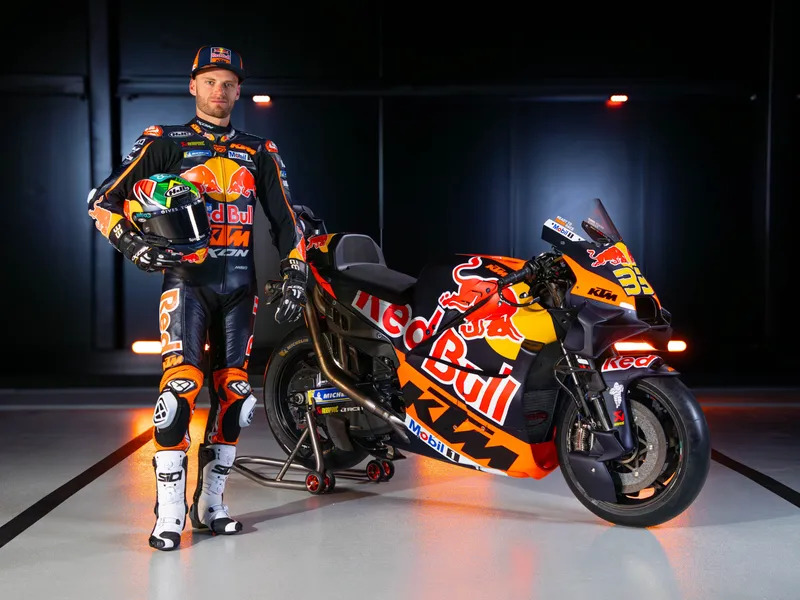
The 2026 line-ups are explicit: Pedro Acosta and Brad Binder at Red Bull KTM Factory Racing; Enea Bastianini and Maverick Viñales at Red Bull KTM Tech3. These pairings combine youth and experience across both teams, giving KTM multiple perspectives on bike behaviour and race strategy.
Crew chief continuity for Acosta (Paul Trevathan) supports a development axis built on a consistent feedback loop. Binder’s move to Phil Marron signals a tactical reset for an experienced rider. Meanwhile, Tech3’s two high-profile signings strengthen the satellite team’s ability to contribute meaningful comparative data to the factory programme while maintaining its own race goals.
HISTORY AND PADDOCK CONTEXT
Public reporting and official pages document the programme’s evolution through 2026: launch events, rider medical and fitness updates, crew chief assignments and ongoing RC16 development commentary. These published touchpoints provide the verifiable footprint of KTM’s organisation without exposing internal charts or proprietary methodologies not released to the media.
The team’s public timeline in 2026 also included medical updates such as a minor carpal tunnel surgery reported for Pedro Acosta, showing how operational realities — rider fitness and personnel changes — are handled within the public record.
CLOSING INTERPRETATION
Red Bull KTM’s 2026 MotoGP picture is that of a manufacturing-led project using a clear factory-satellite architecture to balance concentrated development with expanded race coverage. The RC16’s iterative upgrades, visible crew chief assignments and the chosen rider line-ups reflect a programme that aims to combine structured engineering work with diverse rider input.
Read through the public facts—rider rosters, crew chief moves, launch events and factory messaging—and the consistent theme is engineering continuity married to strategic flexibility: a factory heart with a satellite wing, both working within the same RC16 era to prepare for KTM’s next phase.
Author: Eric M.