How to become a MotoGP rider: the complete progression from minibikes to MotoGP
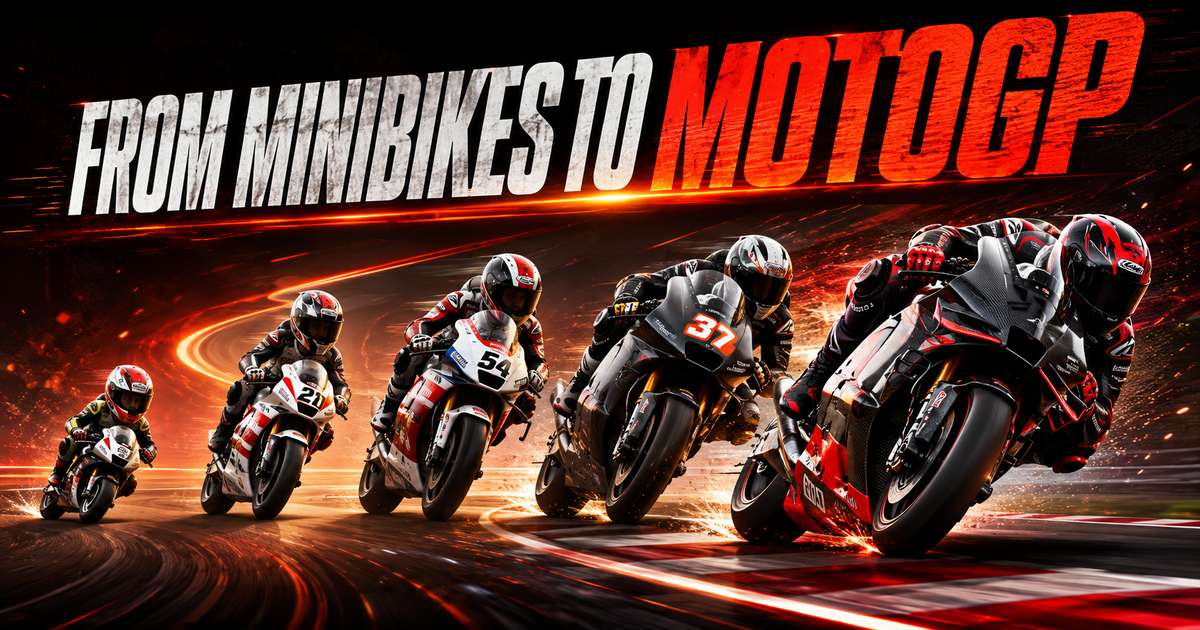
Yes — there is a recognised route to MotoGP, but the pathway is a ladder of specific championships, age rules and talent filters rather than a single guarantee. The short answer: most riders follow mini/Moto4 and national junior series, move into recognised feeder cups (Red Bull Rookies Cup, Northern Talent Cup, Asia Talent Cup, FIM Moto4/Moto3 Junior), progress to the FIM Moto3 Junior World Championship or Moto3 World Championship, then on to Moto2 and, for a handful, MotoGP.
That statement describes the official structure. The deeper reality is a highly regulated, competitive funnel where age limits, championship results and selection by teams or talent programmes decide who advances — and exceptional junior results can create regulatory exceptions to accelerate a rider’s move to Moto3.
Direct answer
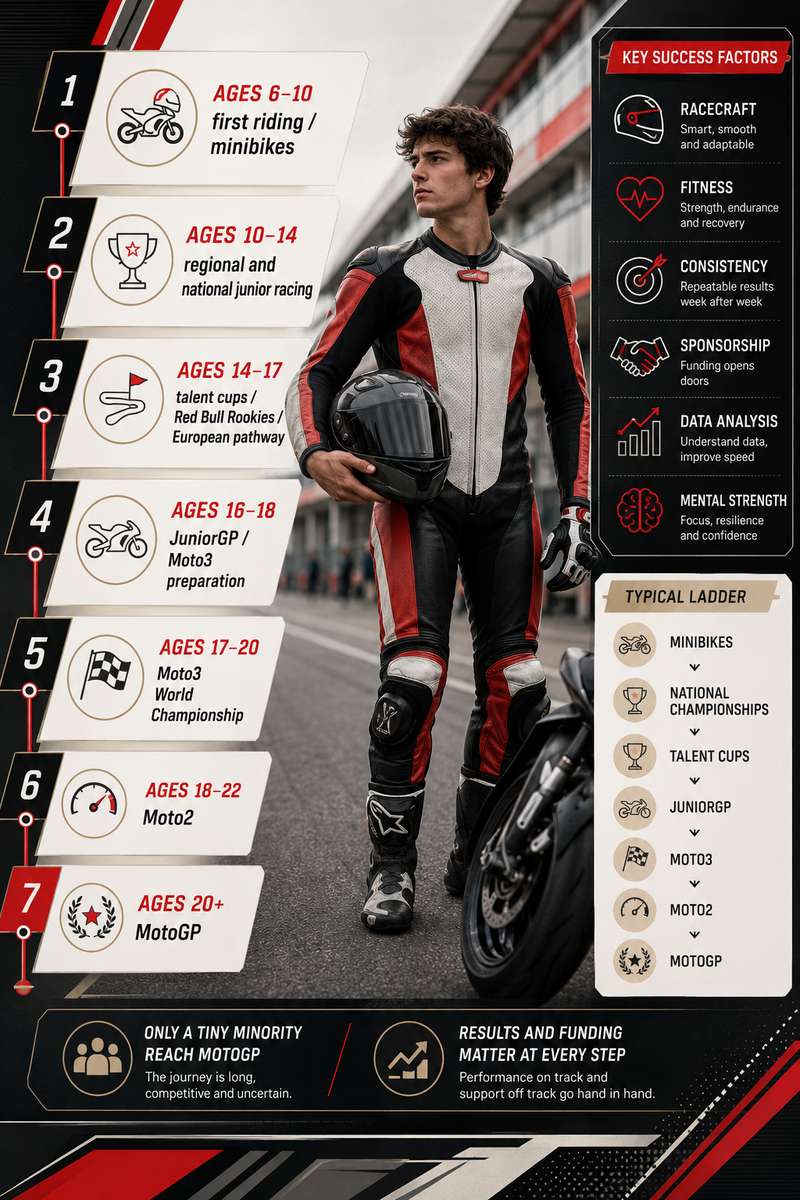
The established Road to MotoGP runs from mini/Moto4 and national junior championships → feeder talent series (Red Bull MotoGP Rookies Cup, Northern Talent Cup, Asia Talent Cup, FIM Moto4/Moto3 Junior) → FIM Moto3 Junior World Championship or directly into the Moto3 World Championship → then Moto2 → and finally MotoGP for the very best riders.
Reality check
What looks like a ladder is an elimination funnel: regulations set minimum ages and eligibility, junior series act as both training and scouting grounds, and only top performers — sometimes with specific podium finishes — can shortcut age limits or earn team interest.
What this article explains
- The staged progression recognised by MotoGP and FIM.
- How feeder series and JuniorGP fit into selection and age rules.
- Why results, regulations and visibility matter more than a single path or school.
Define the real target: what "becoming a MotoGP rider" actually means
"Becoming a MotoGP rider" is not a single licence or certificate; it is reaching the MotoGP World Championship, the top class governed by FIM and Dorna. The Road to MotoGP framework identifies a chain of championships that feed each other: mini/Moto4 categories and national junior championships are where racers learn competitive racecraft, feeder talent series provide equal machinery and international exposure, and FIM Moto3 Junior World Championship plus Red Bull Rookies Cup are explicitly positioned as final steps toward Moto3 and the Grand Prix ladder.
The direct answer: the official Road to MotoGP pathway
The authoritative sequence endorsed by MotoGP and FIM is: start in mini/Moto4 and national junior series → move into continental/junior talent series such as Red Bull MotoGP Rookies Cup, Northern Talent Cup, Asia Talent Cup and FIM Moto4/Moto3 Junior series → advance to the FIM Moto3 Junior World Championship (part of the Road to MotoGP) or into the Moto3 World Championship → then progress to Moto2 and, for the top riders, to MotoGP. This is the pathway described in official MotoGP materials and FIM documentation.
Age rules and regulatory exceptions: the gatekeepers
FIM and Dorna publish regulations that set minimum ages for junior championships and World Championship entry. Those rules define who is eligible to race in Moto3, Moto2 and their junior equivalents. Importantly, the regulations also include specific exceptions: winners — and in some cases top finishers — of key junior series (for example the Red Bull Rookies Cup or FIM JuniorGP / Moto3 Junior World Championship) can be permitted to move into the Moto3 World Championship before the standard minimum age if they meet the published conditions. These age mechanics make top junior results a direct, documented route to accelerate a career.
Feeder series and why they matter
Feeder championships are not only training environments; they are scouting platforms with standardised machinery and high visibility. The Red Bull MotoGP Rookies Cup, for instance, uses identical KTM Moto3-style bikes and is widely recognised by Moto3 teams as a talent pool. The Northern Talent Cup and Asia Talent Cup are similarly identified in MotoGP coverage as feeder championships that can lead riders toward Rookies/JuniorGP and eventually Moto3. The FIM Moto4/Moto3 Junior series and the FIM Moto3 Junior World Championship form part of the formal Road to MotoGP and are explicitly designed to prepare and filter riders for the World Championship ladder.
National championships: the practical starting ground
National junior and senior championships — the usual examples named by the Road to MotoGP programme — are where young riders build racecraft, championship experience and initial results. These national series are also the places where talent programmes and teams first notice riders. Although the specific national feeder championships differ by country, they consistently serve as the first competitive step before riders enter international junior competitions.
Schools, academies and selection programmes: useful but not automatic
Racing schools and talent academies provide coaching, seat time and sometimes exposure to talent scouts, but they are distinct from the official feeder championships. The Road to MotoGP framework emphasises results in recognised series and championship performance over attendance at any single school. Being selected by a programme can help with development and visibility, but it is not a guaranteed ticket into the Grand Prix ladder.
The talent funnel: why many strong juniors stop short
The Road to MotoGP is a narrowing funnel. Each level reduces available seats and increases competitiveness: junior series feed a limited number of Moto3 seats, Moto3 offers fewer Moto2 promotions, and Moto2 supplies only a handful of MotoGP opportunities. Regulations, age limits and the formal exceptions for top junior finishers shape who can advance quickly; team selection and championship results determine who actually gets the chance.
What matters most in practice: results, timing and visibility
Because the official pathway ties progress to championship performance, podiums and title results in feeder series carry outsized weight. A top finish in the Red Bull Rookies Cup or the FIM Moto3 Junior World Championship can create eligibility advantages and attract team interest. Conversely, consistent but middling results in national racing often need the boost of a feeder series podium or selection to open the next step.
Practical next steps for serious riders
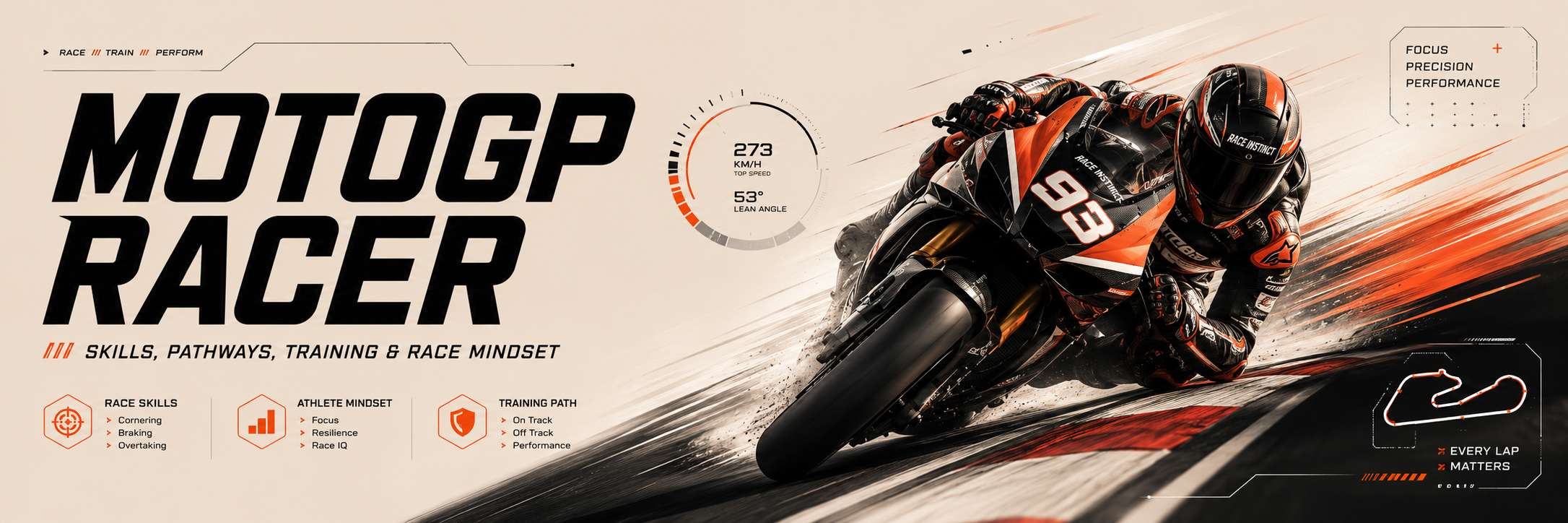
If your goal is to follow the Road to MotoGP, the practical progression is clear: compete in recognised mini/Moto4 and national junior championships, target places in the identified feeder series (Rookies Cup, Northern Talent, Asia Talent, FIM Moto4/Moto3 Junior), and aim for the FIM Moto3 Junior World Championship or direct entry to Moto3 where regulations and results permit. Use feeder series to gain equal-machinery experience and visibility; understand that top championship results are the explicit ticket to accelerated entry under FIM/Dorna rules.
Final verdict: realistic, structured — and still fiercely selective
The Road to MotoGP provides a documented, structured progression from entry-level junior racing to MotoGP. That makes the pathway real and navigable, but it also makes the process highly selective: rules set eligibility, feeder series and JuniorGP status concentrate talent, and only top performers gain the documented exceptions or the team interest needed to progress quickly. In short: the route exists and is official — follow the ladder and aim for top finishes in the recognised feeder championships — but expect a narrowing funnel where championship results and regulatory conditions decide who advances.
Author: Cynthia D.