What is the road from minibikes to MotoGP? A clear map from MiniGP to the…
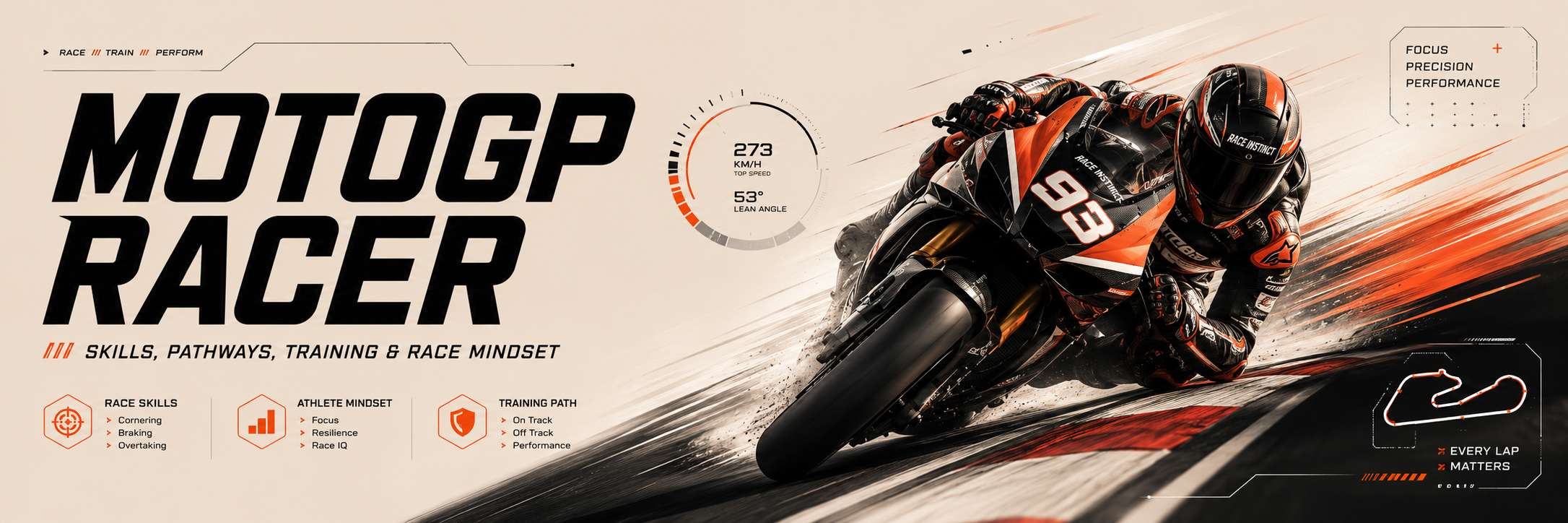
Yes — there is a defined route from minibikes to MotoGP, but it is a ladder of specific series, rules and selection gates rather than a single guaranteed pipeline. The Road to MotoGP begins where most young riders first race: FIM MiniGP / Moto4-level minibike events, then moves through regional talent cups and the international junior championship that feed the world championship classes.
That direct answer is useful, but incomplete: each step carries eligibility rules, selection mechanisms and competitive filters that shape who advances. Below is the structure, the turning points that matter, and what each rung actually does to prepare a rider for prototype Grand Prix racing.
Direct answer
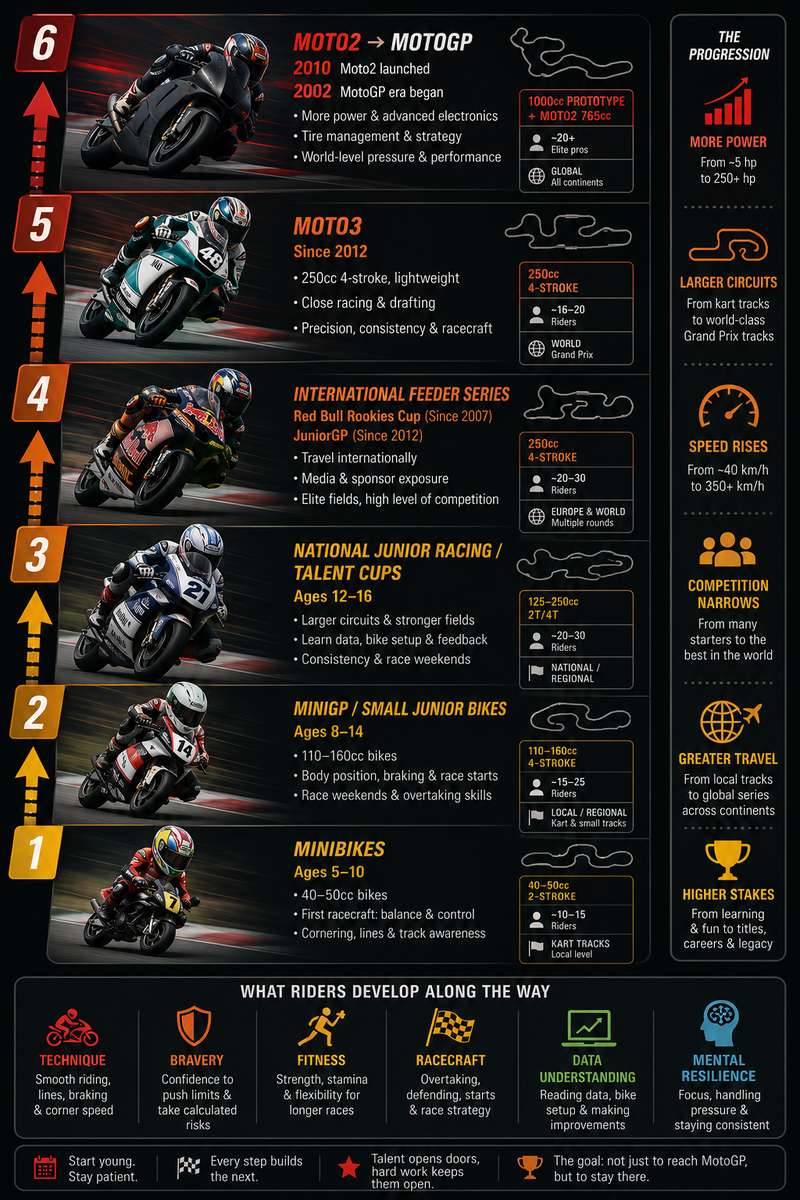
The official Road to MotoGP starts at MiniGP/Moto4 minibike series, continues through regional talent cups (Idemitsu Asia Talent Cup, Northern Talent Cup, European Talent Cup), the Red Bull MotoGP Rookies Cup and culminates at FIM JuniorGP (the rebranded FIM CEV Repsol), which acts as the principal final junior step before riders progress to Moto3, Moto2 and ultimately MotoGP.
What this article explains
- How the official ladder is organised and why each level exists
- Which competitions act as selection gates for Moto3 and higher
- How rules and eligibility shape progression
Define the real target: what 'getting to MotoGP' actually means
When people ask "what is the road from minibikes to MotoGP?" they often mean a single pathway that guarantees a seat. In reality Dorna and FIM present a coordinated ladder: starting categories are designed to develop young riders, while junior international championships identify and prepare those capable of racing in the Moto3 World Championship. From there the traditional progression is to Moto2 and then MotoGP. The ladder clarifies the route, but it does not guarantee advancement—each step selects a smaller group of riders for the next level.
Step 1 — FIM MiniGP / Moto4: the entry point on minibikes
The official Road to MotoGP names FIM MiniGP (also marketed in places as MotoMini or Moto4-level national series) as the entry level. These are regulated, often one-make or tightly controlled minibike series designed to teach circuit racing basics: race starts, braking, cornering, flags and race craft in a low-displacement environment. MiniGP exists specifically to introduce young riders to organised track competition and to provide a common starting ground for talent identification.
Step 2 — Regional talent cups: building international experience
After MiniGP, riders commonly move into regional talent cups. The Road to MotoGP recognises several of these: the Idemitsu Asia Talent Cup, the Northern Talent Cup, the European Talent Cup and similar Moto4-level regional competitions. These series are designed to put riders from a region into a controlled, comparable environment where they race each other on increasingly demanding circuits and on equal or regulated machinery. The Red Bull MotoGP Rookies Cup also sits at this level as a high-profile international talent cup with a strong track record of producing riders who later step up.
These cups do two things: they raise the level of competition and provide scouts, teams and organisers a way to compare riders from different national backgrounds under similar technical rules. Success here brings exposure and can open doors into the next tier.
Step 3 — FIM JuniorGP (formerly FIM CEV Repsol): the final junior step
The FIM CEV Repsol was rebranded as FIM JuniorGP to formalise its role as the final international junior championship. Within the Road to MotoGP, FIM JuniorGP (also referenced as the FIM Moto3 Junior World Championship in related materials) is the principal feeder series for the Moto3 World Championship. It exposes riders to larger circuits, more powerful Moto3-spec machinery and the logistical demands of an international season—making it the key proving ground before the world championship classes.
Rules, age limits and exceptional pathways
Dorna and FIM set eligibility and age rules for each class, and these regulations influence who can advance and when. For example, Moto3 carries minimum age and licensing requirements, but the rules include documented exceptions that allow outstanding performers from recognised junior series—such as top finishers in the Red Bull Rookies Cup or FIM JuniorGP—to move up earlier under certain conditions. That mechanism makes junior series not just training grounds but formal selection pools for accelerated promotion.
What each step actually trains you for
MiniGP teaches race basics and the shortest learning loops: corner entries, exits, and short race strategy. Talent cups add international circuits, denser competition, and media exposure. FIM JuniorGP prepares riders for Moto3-level race pace, tyre management, and the logistical complexity of a longer international season. Each step increases bike power, corner speed and the tactical demands of pack racing—closer to what teams in Moto3 and Moto2 expect.
Selection mechanics: how riders get noticed
Progression is a mix of results and visibility. Talent cups and the Red Bull Rookies Cup are high-profile platforms; performance there is visible to the teams and organisers who staff Moto3 seats and who monitor FIM JuniorGP closely as the main junior world step. Therefore, finishing at the top in recognised series can produce direct opportunities, and the formal Road to MotoGP structure focuses team and media attention where comparisons are simpler to make.
Why many talented riders still fail to reach MotoGP
The Road to MotoGP provides structure, but each level narrows the field. Eligibility rules, limited seats in Moto3/Moto2/MotoGP, and the competitive depth of regional and international junior series combine to create a talent funnel. Even when riders succeed locally, they must replicate that success in talent cups and FIM JuniorGP to stay in contention. The ladder makes progression visible, but the selection is rigorous and competitive at every gate.
Practical next step: what a serious young rider should aim for
Follow the ladder in sequence: start in MiniGP/Moto4-level events to learn racecraft, target regional talent cups to measure yourself internationally, and aim for FIM JuniorGP as the defined final junior proving ground. Because Dorna/FIM recognise specific series within the Road to MotoGP, performing well in those series maximises your chance of being seen and considered for Moto3 seats—especially where rules allow top junior performers accelerated access.
Final verdict: a clear map, not a guarantee
The answer to "what is the road from minibikes to MotoGP" is straightforward: an organised ladder from FIM MiniGP/Moto4 through regional talent cups and the Red Bull MotoGP Rookies Cup to FIM JuniorGP, then onward to Moto3, Moto2 and MotoGP. That coordinated structure is powerful because it standardises development and spotlighting of talent. But the ladder is a filter: rules, seat availability and fierce competition at each stage mean the map shows the route, not the promise of arrival.
Author: Eric M.