Are MotoGP riders born talented or trained? What really builds a Grand Prix…
Short answer: neither extreme is true on its own — MotoGP riders reach elite level through a mix of distinctive natural attributes and structured development. The sport has formal pathways that scout for "something extra" in young riders, then deliberately trains the rest.
That answer still misses the crucial mechanics: what organisations actually look for, which qualities are shaped by coaching, and why progression through junior series and academies matters more than a single childhood gift.
The realistic answer
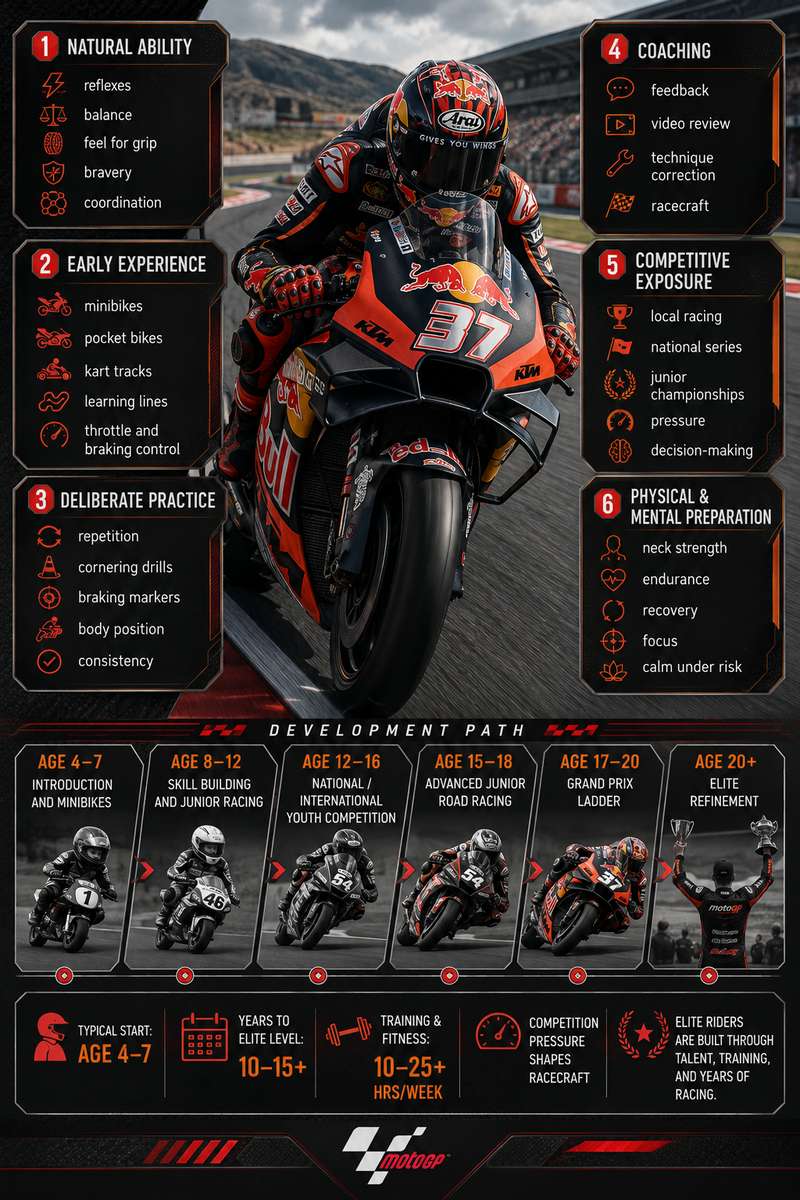
Teams and talent programmes expect an initial mix: natural attributes that are hard to teach plus trainable skills developed through organised practice, racing exposure and coaching. The Road to MotoGP and several junior series exist precisely to turn early promise into consistent performance.
What this article explains
- Why scouts search for both innate spark and trainability.
- How academies and junior championships structure deliberate practice.
- Which rider qualities respond best to coaching and which are harder to manufacture.
Racing a bike, a career, and MotoGP: define the target
It’s important to separate basic motorcycling from the specific target: reaching MotoGP. The sport operates an organised "Road to MotoGP"—a set of junior series and development steps—so the question isn't just whether someone can ride fast, but whether they can progress through those competitive and technical filters to the Grand Prix classes.
How talent pathways actually work
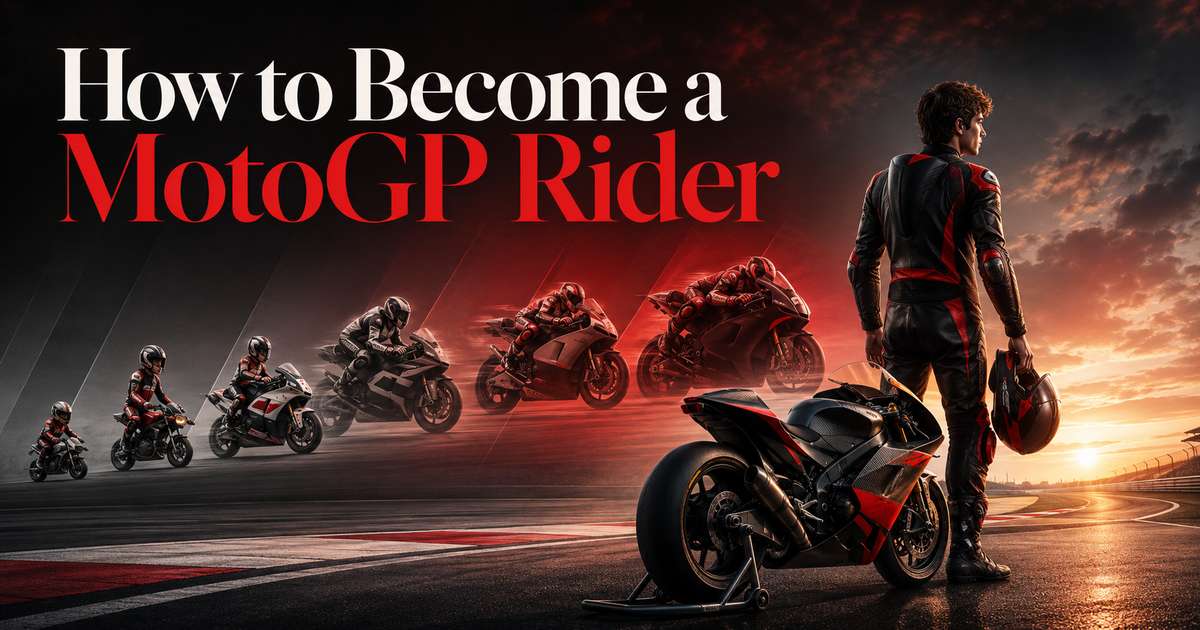
There are structured junior series and feeder competitions that identify and prepare young riders. Programmes like the Red Bull MotoGP Rookies Cup, Asia Talent Cup and FIM CEV/Junior Championships form the pipeline people refer to as the Road to MotoGP. These championships give riders exposure to high-level competition, consistent racecraft testing and visibility to teams and academies.
What academies and factory programmes provide
Factory and independent teams run formal academies and development programmes. These organisations combine coaching, physical training, simulator practice, track sessions and managerial support to build a rider’s skill set. Academies craft personalised training paths that deliberately address weaknesses while accelerating strengths.
What talent-spotters actually look for
People responsible for recruitment describe a two-part profile: an innate "something extra"—an attribute or spark that hints at elite potential—plus trainable qualities. In other words, scouts are searching for raw characteristics that may be difficult to create later, and for evidence the rider can respond to coaching and step up under pressure.
Trainable skills versus harder-to-teach traits
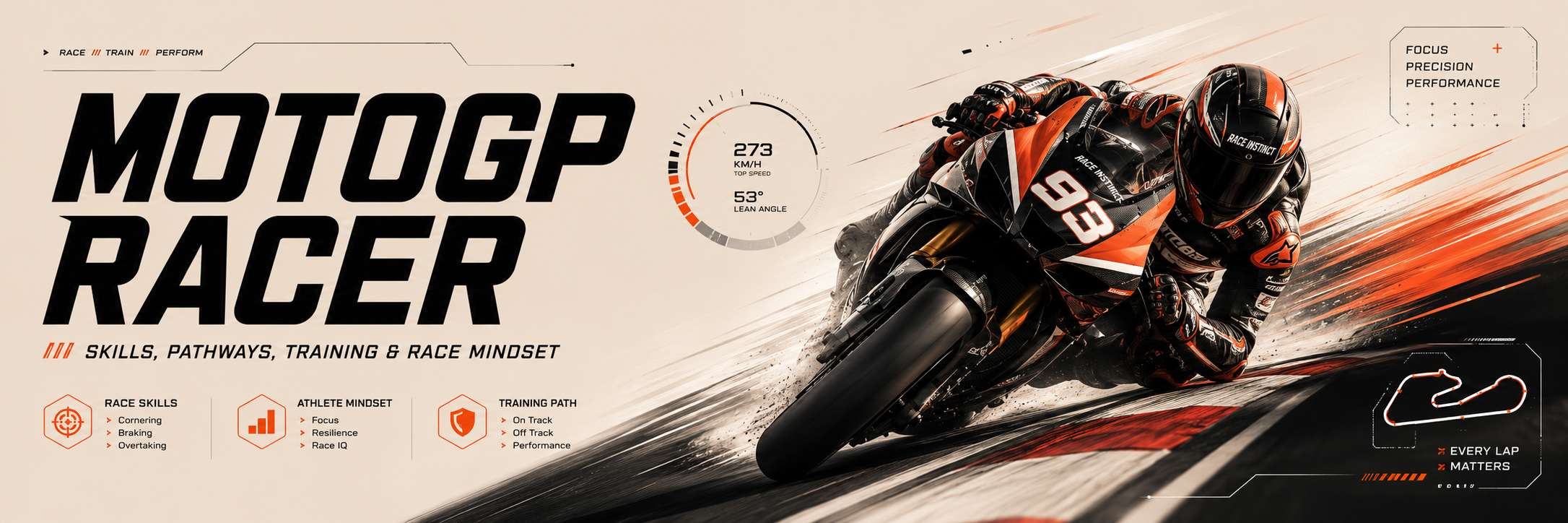
Academies and talent programmes are built around the idea that many important abilities can be improved with structured work: technique, physical conditioning, simulator familiarity, racecraft and consistency. They provide the practice environment and coaching to develop repeatable lap times and decision-making under race conditions.
Conversely, programmes and team staff often point to a smaller set of traits that are harder to manufacture — an instinctive feel for limits, unusually quick perceptual decision-making, or an adaptability under novel pressure. These are the attributes that often attract initial selection.
How deliberate development turns promise into performance
Junior championships and academies create a stepwise development model: competitive exposure, targeted coaching, and progressive machine demands. Riders enter a structured environment where they are measured against peers, given technical feedback, and prepared physically and mentally for higher classes. That progression is how early potential becomes consistent results — the currency teams buy when they recruit.
What evidence the verified sources give us
The verified material documents the system rather than proving a fixed formula. The Road to MotoGP and junior series exist to identify and prepare talent. Established academies explicitly combine track practice, gym work, simulator sessions and coach-led technical training. Team statements confirm they select for a mix of natural attributes and trainable qualities; case studies illustrate that academy development materially contributes to riders reaching MotoGP.
Why many promising riders never reach MotoGP
The pathway’s structure itself explains part of the attrition. Selection focuses on scarce seats at each step, and organisations emphasise both innate indicators and demonstrated responsiveness to training. If a rider lacks the harder-to-teach spark, or cannot convert coaching into improved race results in junior series, progress stalls. Academies can accelerate development but cannot fully replace those initial attributes the scouts prize.
What a rider or parent should focus on now
Given the verified picture, sensible priorities are clear: seek structured competition exposure in recognised junior series, pursue coaching that combines on-track skills with physical conditioning and simulator practice, and look for programmes that offer personalised development rather than one-size-fits-all instruction. Those are precisely the components academies provide to turn early promise into elite readiness.
Final verdict: born, trained — or both?
Teams, academies and junior series show that elite MotoGP riders are the product of both selection and development. Natural attributes create the initial doorway; structured training, deliberate practice and staged competition build the capabilities needed to walk through it. The sport’s organised Road to MotoGP exists because both sides matter: few riders reach the top without a mixture of innate indicators and the deliberate, high-quality development that academies and junior championships deliver.
Author: Cynthia D.