Marco Bezzecchi: The Braking-Led Signature and His Technical Reading of the…
Marco Bezzecchi has built a clear technical identity in MotoGP: a braking-led approach combined with methodical circuit reading. This profile breaks down what that means on the bike — from late, decisive braking to the way he and his engineers dissect each manoeuvre — and how that signature forces adaptation when the machine behaves differently.
Bezzecchi is recognised for late, strong braking and a step-by-step technical approach to corners. He works closely with engineers to map braking, entry, mid-corner and exit phases and must adapt that sequence when bike characteristics change.
First technical reading • Braking and corner entry • Adaptation to different bikes
FIRST TECHNICAL READING OF THE RIDER
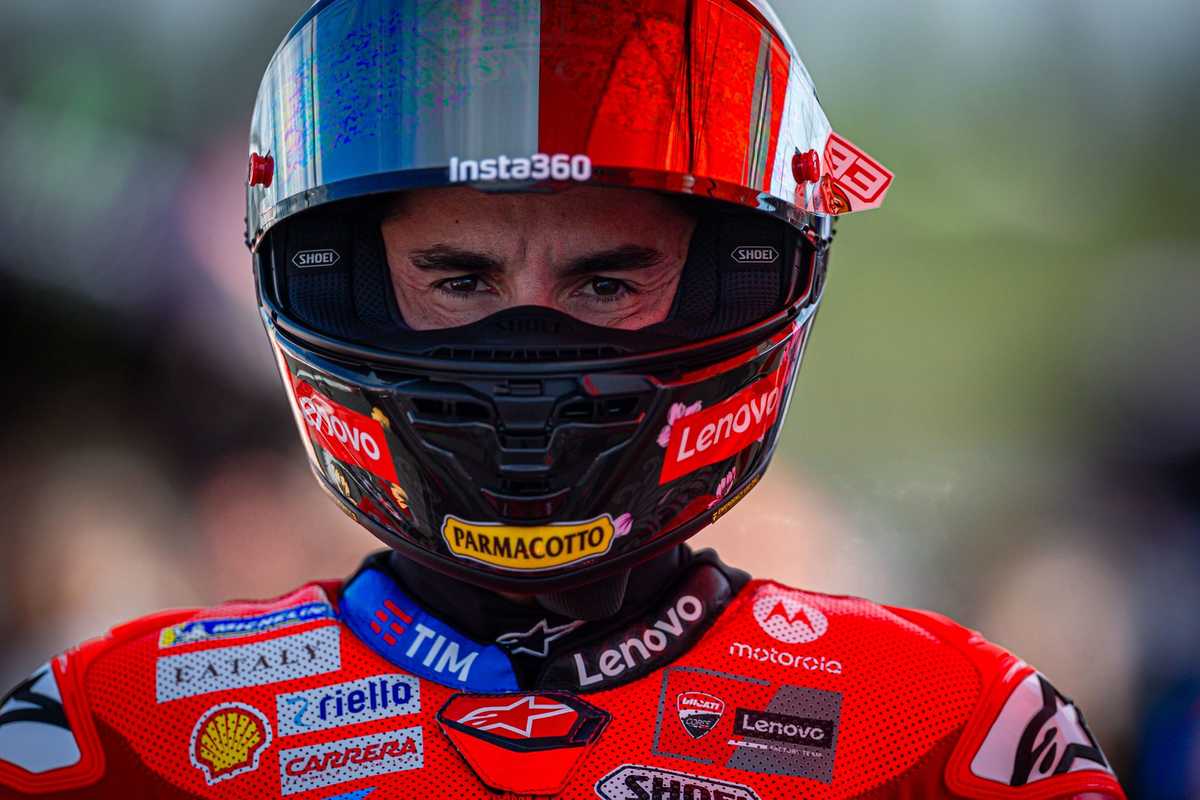
What immediately marks Marco Bezzecchi is the primacy of braking in his riding language. Multiple interviews and technical features identify braking as a defining skill: he times and often delays the brake point to extract decisive deceleration. That pattern is not a loose habit but a central organising principle he and his team use when analysing a lap.
This is paired with a methodical mindset. Bezzecchi describes — and engineers confirm — a step-by-step analysis of each manoeuvre: initial braking, the precise moment of corner entry, mid-corner behaviour and the exit phase. That procedural reading shapes setup choices and on-track adjustments because he communicates each sub-phase in detail.
BRAKING AND CORNER ENTRY
Bezzecchi’s braking is characterised by late, strong interventions and a feel for the timing between rider input and machine reaction. He has spoken about relying on instinct and sometimes delaying the brake slightly longer than expected, trusting the sequence that follows. Team commentary highlights braking as his differentiator: how he approaches the braking zone often defines his entry angle and commitment.
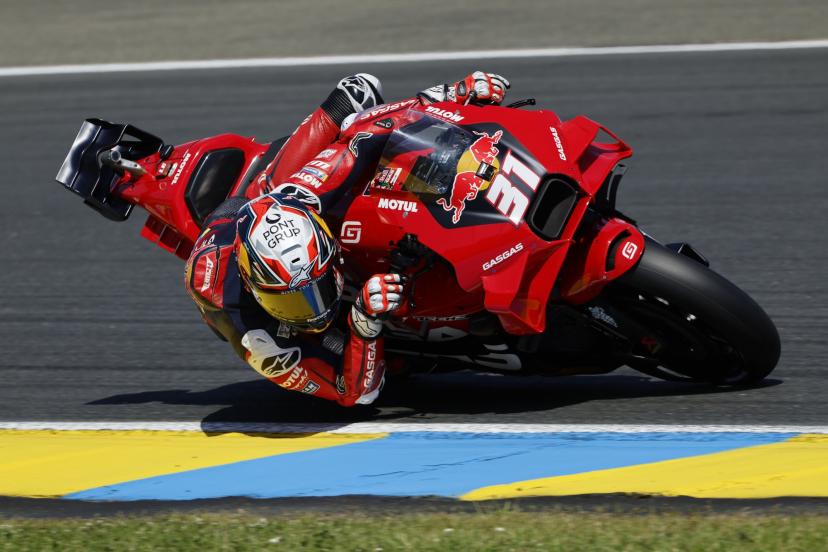
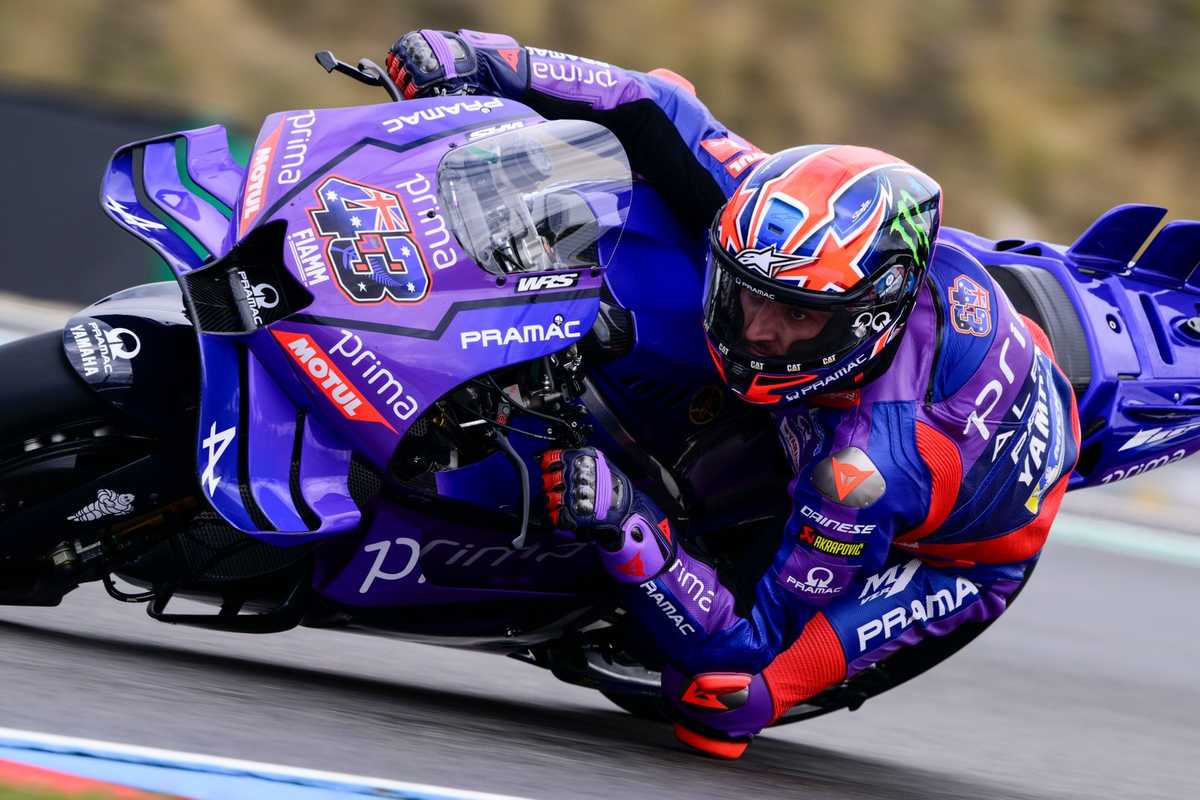
Because braking is central, corner-entry technique becomes a direct extension of his braking decisions. He breaks late to carry speed into the initial phase of the turn, then uses precise inputs to settle the bike for the mid-corner. Engineers note that his descriptions of those moments are granular, which helps translate subjective feel into measurable setup changes.
MID-CORNER AND LINE CHOICE
Observers and Bezzecchi’s own debriefs emphasise that his mid-corner is the continuation of a braking-first sequence. A late stop allows him to preserve speed longer into the turn but also demands disciplined line choice to avoid compromising exit traction. His step-by-step feedback focuses on how the bike behaves through this phase, enabling engineers to tune geometry, suspension and electronics to keep the mid-corner stable under his entry method.
That analytical approach to the mid-corner shows up in setup conversations: rather than broad impressions, Bezzecchi provides detailed notes on what each change does to the mid-corner balance, which in turn refines his line consistency across a stint.
EXIT TRACTION AND TYRE MANAGEMENT
Exit behaviour follows naturally from a braking-led profile. Because Bezzecchi often sacrifices early corner speed to gain a later, committed entry, exit traction and how the tyre is used become crucial. In interviews and technical features he and engineers discuss how electronical and mechanical responses at exit must be matched to his sequence, and how different machines alter that balance.
Bezzecchi’s focus on analysing each corner phase supports tyre management: by isolating braking, entry and exit, he and the team can identify stress points on the rear tyre and adjust riding or setup to limit overheating or sliding on long stints.
ADAPTATION TO BIKE, TYRES, OR CONDITIONS
One of the clearest strands in the verified reporting is Bezzecchi’s need — and willingness — to adapt his style when machinery demands it. He has publicly acknowledged changing his established techniques when riding different-spec bikes, noting differences in braking behaviour, engine braking and overall bike response. Technical analyses have documented how a bike with different grip or engine braking characteristics forces him to rework his timing and mid-corner method.
Team and media pieces underline that adaptation is a collaborative process: Bezzecchi’s step-by-step feedback gives engineers the raw material to alter electronic maps, suspension and geometry to better accommodate his braking-led inputs. When the machine “works the opposite way,” as he and analysts have described, the riding signature must be adjusted rather than applied unchanged.
RACECRAFT AND DUEL INTELLIGENCE
While the verified sources focus primarily on technique and adaptation rather than specific race incidents, the technical identity built around late braking has clear racecraft consequences. A braking-led approach can create overtaking opportunities at the end of braking zones and influence how he times attacks or defences. The consistent theme in interviews and debriefs is that his braking ability and precise corner-phase descriptions allow him to plan and react with a high degree of detail during duels.
Because Bezzecchi treats corner phases as discrete problems, he can use that structure under pressure: identify what changes in the braking phase, adapt entry, and then control the mid-corner to protect the exit — a clear tactical sequence rooted in his technical reading of the track.
CAREER ARC AND COMPETITIVE CONTEXT
The sourced analysis concentrates on technique and the documented effects of changing machinery rather than listing results. What emerges is a career context defined by a stable riding signature — braking-led and analytically described — that must occasionally be reshaped when technical packages evolve. That dynamic explains why commentators and technical pieces return repeatedly to the theme of adaptation when discussing his performances on different bikes.
CLOSING INTERPRETATION
Marco Bezzecchi’s profile is a reminder that in modern MotoGP a rider’s signature survives only if it can be translated into setup and electronic choices. His late, decisive braking and procedural debriefing offer engineers precise inputs, but those same traits demand flexibility when the machine’s balance differs. Studying Bezzecchi is therefore useful: it shows how a clear riding identity can be a strength and a technical challenge, and how detailed rider–engineer dialogue turns instinctive moves into consistent lap-time performance.
Author: Cynthia D.