MotoGP rear slide explained: what it is, how riders control it and when it…
A rear slide is one of the most visible — and technically revealing — moments in MotoGP: the rear tyre loses lateral traction and the back of the bike steps out relative to the front. It can be a controlled tool for faster corner exit or a sudden hazard that causes a lowside or, worse, a highside when grip returns abruptly. This article explains what a rear slide is, how it happens, why throttle, electronics and tyre condition matter, and how riders and machines manage the risk.
CLEAR DEFINITION
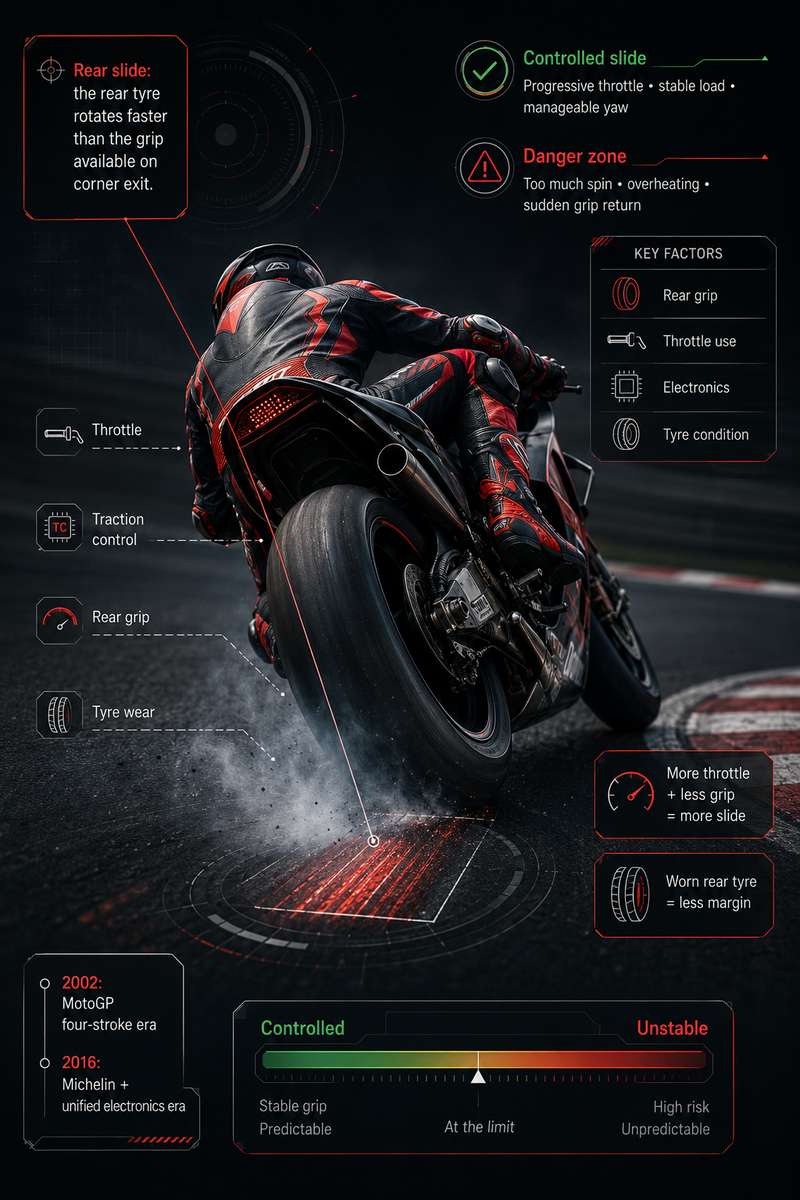
In MotoGP terms a rear slide is when the rear tyre loses lateral traction and the rear steps out relative to the front wheel. It typically happens during corner entry or exit where combined lateral (cornering) and longitudinal (acceleration or braking) forces exceed the tyre’s available grip, so the rear moves sideways while the front stays on line.
HOW IT HAPPENS OR HOW IT WORKS
Several technical causes combine to produce a rear slide. Excessive throttle on corner exit can spin or laterally slip the rear tyre. Abrupt engine braking or aggressive engine-brake mapping on corner entry can upset rear traction. Low rear grip — from correct or incorrect tyre compound, suboptimal temperature, or wear — reduces the margin before the tyre slides. Sudden changes in surface traction, such as bumps or patches, can also trigger an unexpected slide.
WHY IT MATTERS IN MOTOGP
Rear slides influence lap time, overtaking and safety. Controlled slides help riders get on the gas earlier and rotate the bike for a faster exit, but uncontrolled slides risk losing positions or causing crashes. The key danger is that a sliding rear can either allow a manageable drift or recover traction suddenly, which may lead to a highside — a violent ejection when the rear snaps back to grip.
RIDER TECHNIQUE
Smooth, progressive throttle application on exit is essential to modulate rear slip: riders use subtle throttle roll-off and body position to influence load transfer and reduce the rear’s tendency to step out. On corner entry, managing engine braking and line choice helps prevent an initial unsettle. When the rear is unsettled the rider’s measured reactions — not abrupt countersteer or sudden opposite inputs — work best to avoid a dangerous recovery.
BIKE BEHAVIOUR AND TECHNOLOGY (ELECTRONICS)
Modern MotoGP electronics detect rear slip with wheel-speed sensors, IMUs and lean-angle inputs. The ECU and slide-control algorithms reduce engine torque by adjusting ignition timing, cutting fuel or closing throttle butterflies to allow the tyre to regain adhesion smoothly. These systems assist riders and lower the chance that a slide escalates, but they don’t remove the need for good technique.
TYRE CONDITION AND GRIP
Tyre compound, temperature and wear determine how much lateral adhesion the rear tyre can provide. A cold or overly worn rear tyre has less grip and is therefore more likely to slide under the same forces. Teams pick compounds and manage tyre temps with warm-up laps and riding style because small changes in rear grip alter the balance between a controlled drift and a hazardous slide.
SAFETY AND RISK: LOWSIDE VS HIGHSIDE
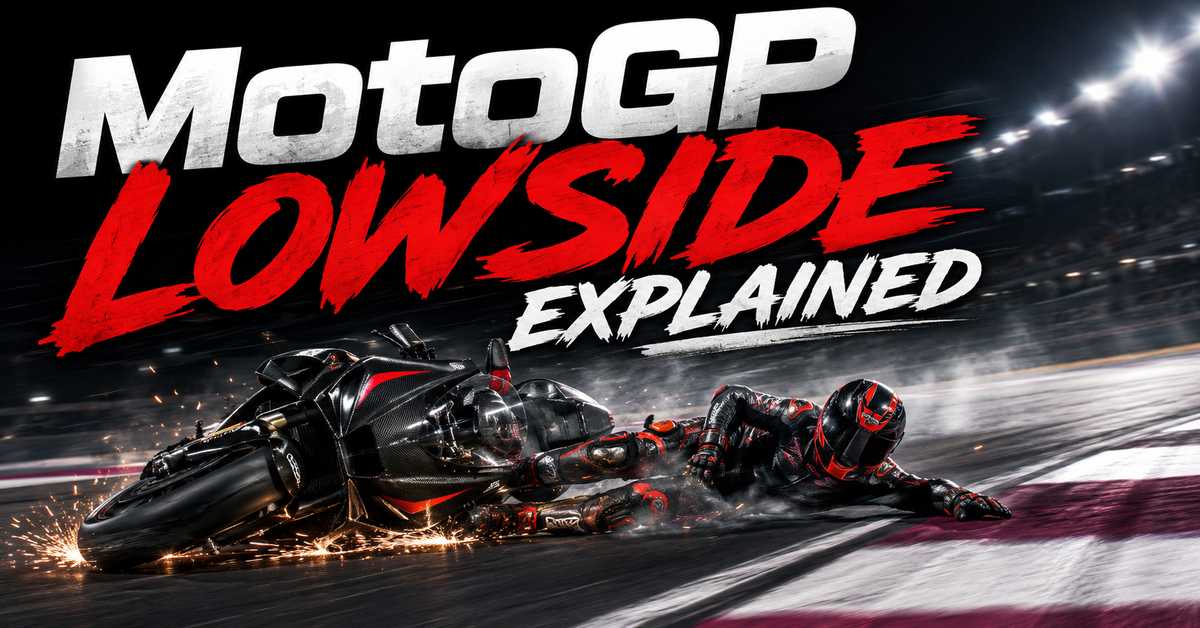
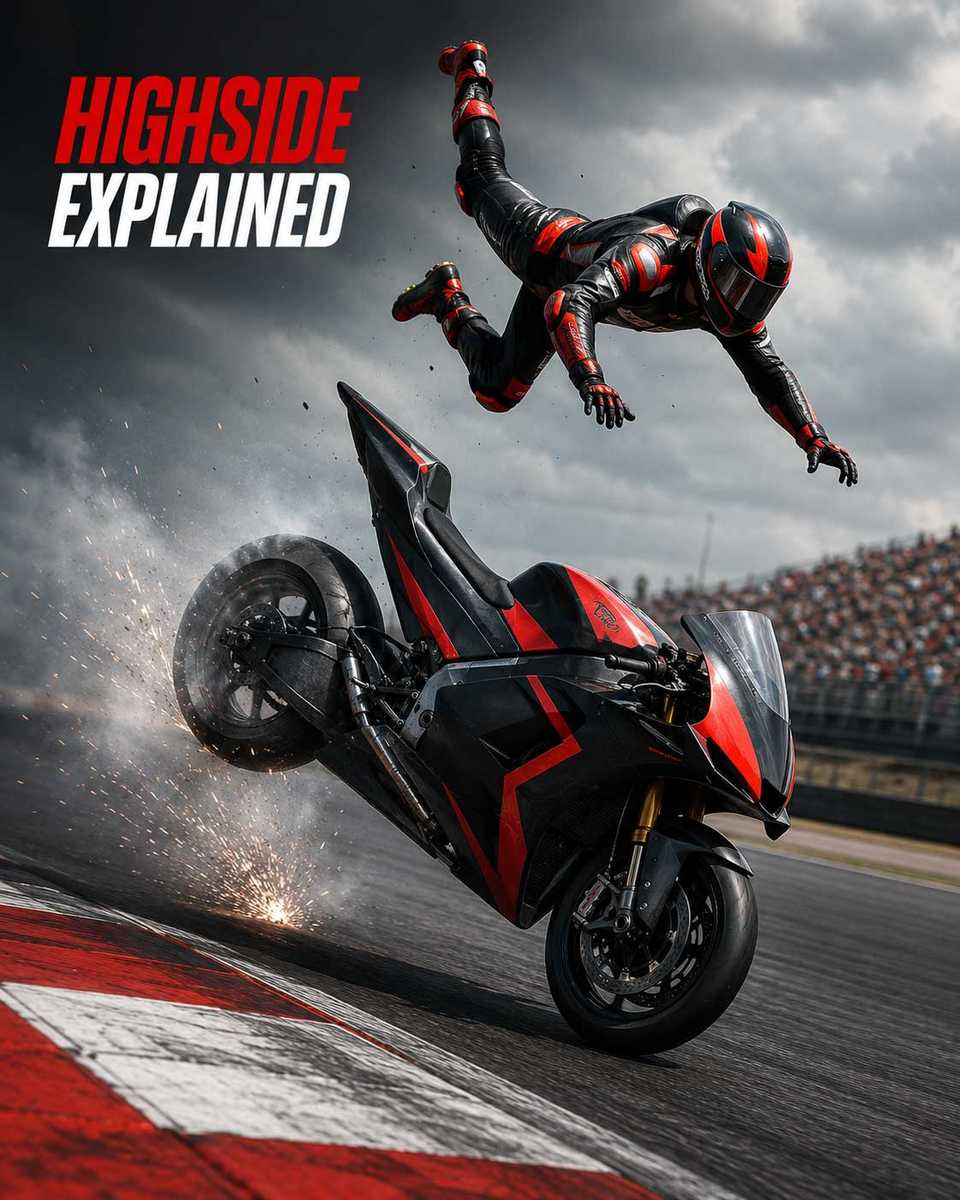
There are two crash outcomes closely linked to rear slides. A lowside happens when the bike and rider slide off the track while the bike stays low and slides away. A highside occurs when the rear regains traction suddenly after a slide and throws the rider off violently. Sudden recovery of a sliding rear tyre is a primary cause of highsides, which is why both rider inputs and electronic interventions aim to make recovery gradual, not abrupt.
COMMON MISUNDERSTANDINGS
Beginners often think electronics eliminate slides; in reality, electronics reduce the frequency and severity but cannot always intervene fast enough for extreme or very rapid slides. TV footage can also make slides look larger or more uncontrolled than they are; experienced riders sometimes use small, controlled slides as a purposeful part of corner exit strategy.
CLOSING INTERPRETATION
A rear slide sits at the intersection of rider skill, tyre physics and electronic control. In MotoGP it can be a performance tool or the start of a crash, depending on throttle use, tyre condition and how quickly the bike’s electronics can respond. Understanding rear slides helps fans read a rider’s risk-reward choices on track and explains why small technique or setup differences change lap times and safety margins so dramatically.
Author: Cynthia D.